…There is always next time.
Rain lashed across the tarmac as we stepped off the plane and hurried into the terminal building. It’s light denoting the only point of refuge in the Bosnian night.
The arrivals hall at Banja Luka’s International airport must be no larger than a small Starbucks. The snaking queue to the passport control took up half the room, struggling to squeeze in all the passengers from our singular plane, leaving the unlucky stragglers stuck in the storm. After we made it past the two passport control officers we entered the second half of the ‘hall’, where we were met with the world’s smallest baggage carousel,. It almost looked as if it had been lifted from some child’s play set, but it did the job and soon we had collected our bags and we went to leave through the one way fire doors that presumably led through to customs.
Except the doors didn’t lead through to anywhere. To our soggy surprise Jacob and I found the doors dumped us, unceremoniously into the car park. We scrambled to find our lift in the darkness hoping we would not be stranded as the sea fell from the sky.
In many ways it felt like a friendly welcome back to Bosnia and Herzegovina, and a reminder that everything here is just that little bit looser. We awoke in the same accommodation as last year, seemingly unchanged from our previous visit. There were the familiar exposed wires sticking out of random walls, the interesting interior design – reminiscent of a Turkish barbers, and of course the inability to open the bathroom door because the sink was still in the way.
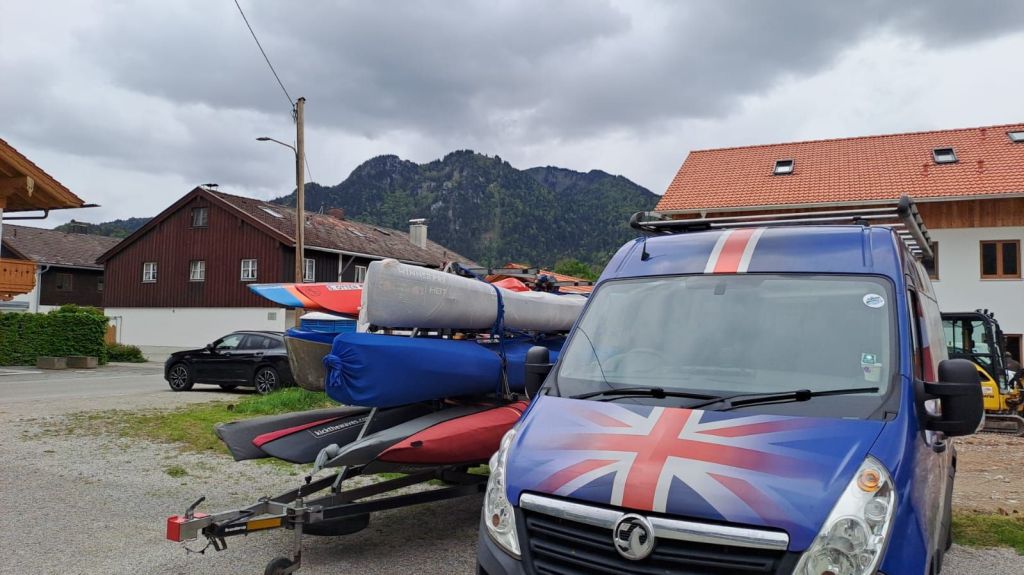
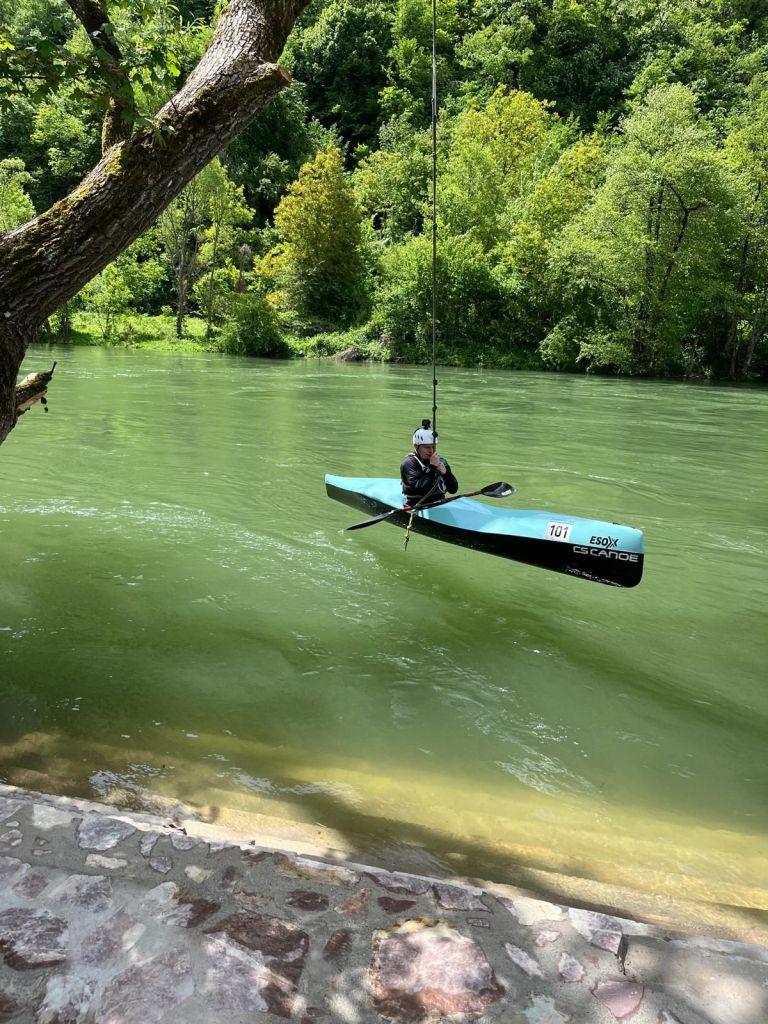
But while many things remained unchanged, the river was not one of them. Unlike the 2025 world cups which were held in the city of Banja Luka, 2026’s World Champs would be held further up the river in the famous Tjesno Canyon. And not only would the section be different, but also the level. Every. Single. Day.
The initial wave of the British Team had arrived nearly a week earlier to maximise training time on the river, with those of us not blessed with as much annual leave arriving in drips and drabs before the competition. Our advanced scouting party discovered that the river level could vary immensely, swinging rapidly between bone dry and a bit too full rapidly, largely controlled by the upstream dam. Unfortunately though the promised race level of about 100 cumecs was still a rare catch, and the storm passing through seemed to make the levels even more unpredictable.
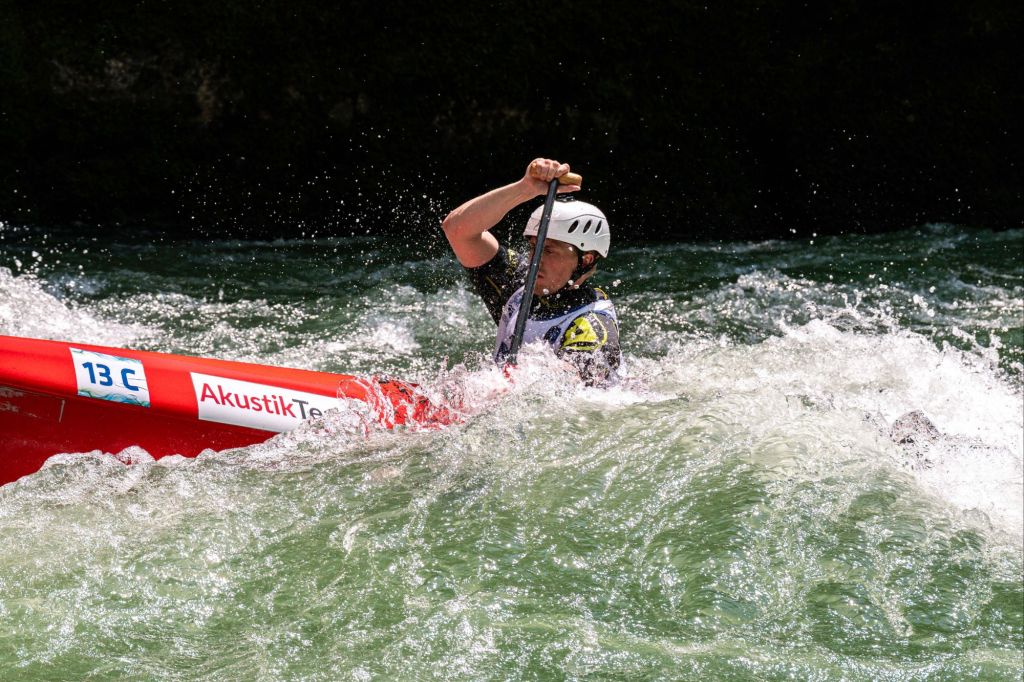
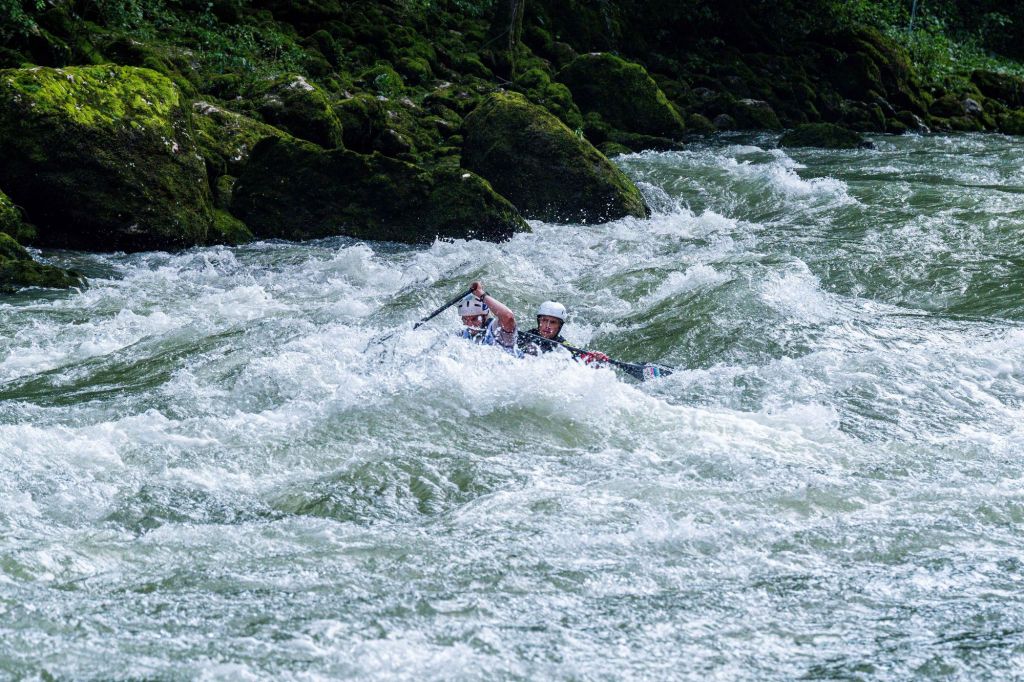
The first session in C1 was a baptism of fire. I’ve slowly been finding my ‘canoe legs’ over the past year or two but I was not prepared for the likes of a high water Tjesno Canyon. As the rock walls enveloped the river, the water began to boil and swirl. I found I was fighting the powerful currents just to keep the boat pointing down stream. In the centre of the river the current met forming sizable waves relentless pitching the boat about. It was slowly dawning on me that I was in for quite the learning experience. But these waves were nothing compared to the sprint course.
We are not strangers to big water in the UK (something may surprise our international friends). But the big water arrives only with storms. It is usually brief and fleeting and not something I’ve ever flirted with in a C1 before.
The sprint course is located roughly half way down the Tjesno Canyon, nestled between steep sided cliffs. As the river approaches it the water settles a little, as if it is letting you catch your breath or perhaps like a tiger playing with its pray.
We pulled into an eddy briefly to discuss lines. Left, right or middle. Apparently all could be viable at this level. We peeled out, and I followed promptly not wanting to be left to fend for myself.
I didn’t quite realise the scale of what we were dropping into until I was about half way down the entry ramp. There dealing with what I earlier that day I would have once thought to be quite chunky waves, the main bulk of the rapid merged from below the horizon line.
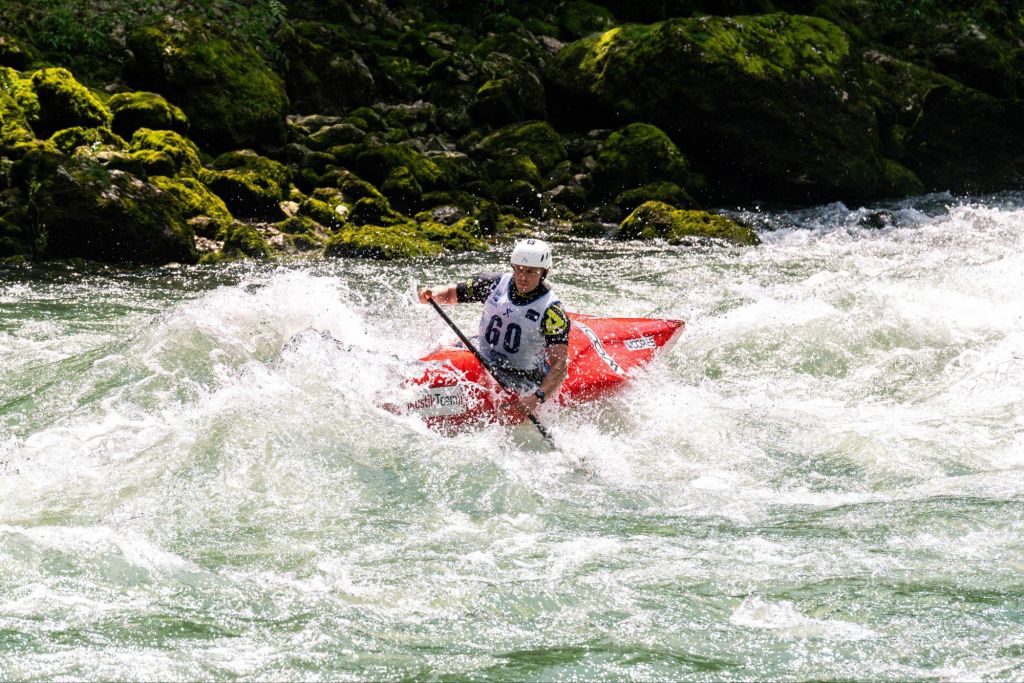
Before I knew it I was enveloped by the towering waves. Lost in the trough between the breaking peaks. I felt like a pinball mercilessly being bounced around inside the rapid. I’d say I was lamenting my lack of a second blade but in truth I was fully focused on surviving. Digging my single blade deep into the water was the only support I had desperately attempting to time my strokes as I crested one wave to plunge into the next.
Somehow I bobbed out the other end. It hadn’t been pretty but I had survived it. And, it had been quite a lot of fun. We completed a second lap that morning, slowly the confidence was building but so was the fatigue. The power of the high water and the stress of C1 was knackering. It was time for some rest and some lunch.
In the afternoon the water had only continued to rise. Looking at the gauge from the safety of our apartment we quickly decided that there wasn’t much point in paddling the course at more than 4 times the race level, but with not that many days until the competition it’d be silly to waste an afternoon of training. A cunning plan was hatched: it was C2 time!
With the race course at silly high, our plan was to hop on the previous years classic course that ran through the city. While this course was quite flat the previous year it would provide a good opportunity to do some team practice. At least we thought it would be quite flat…
When we arrived we discovered the get on the previously alpine water was mud brown, the get on was completely underwater, and the ‘flat section’ was looking remarkably bumpy. We got on undeterred clinging to the bushes that made the closest substitutes to eddies we could find on the swollen river.
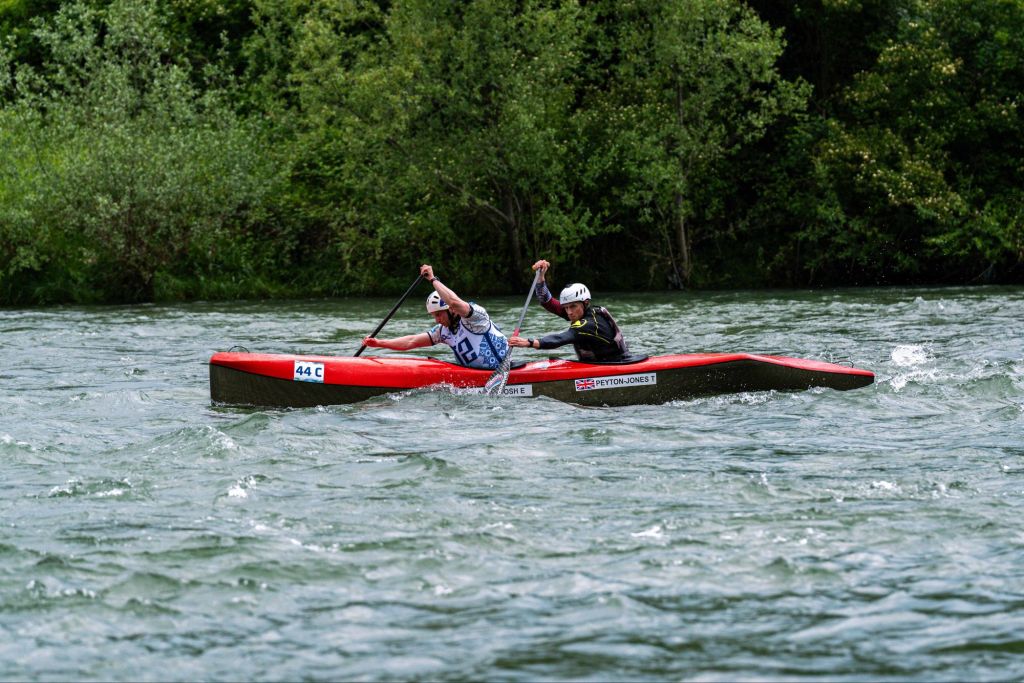
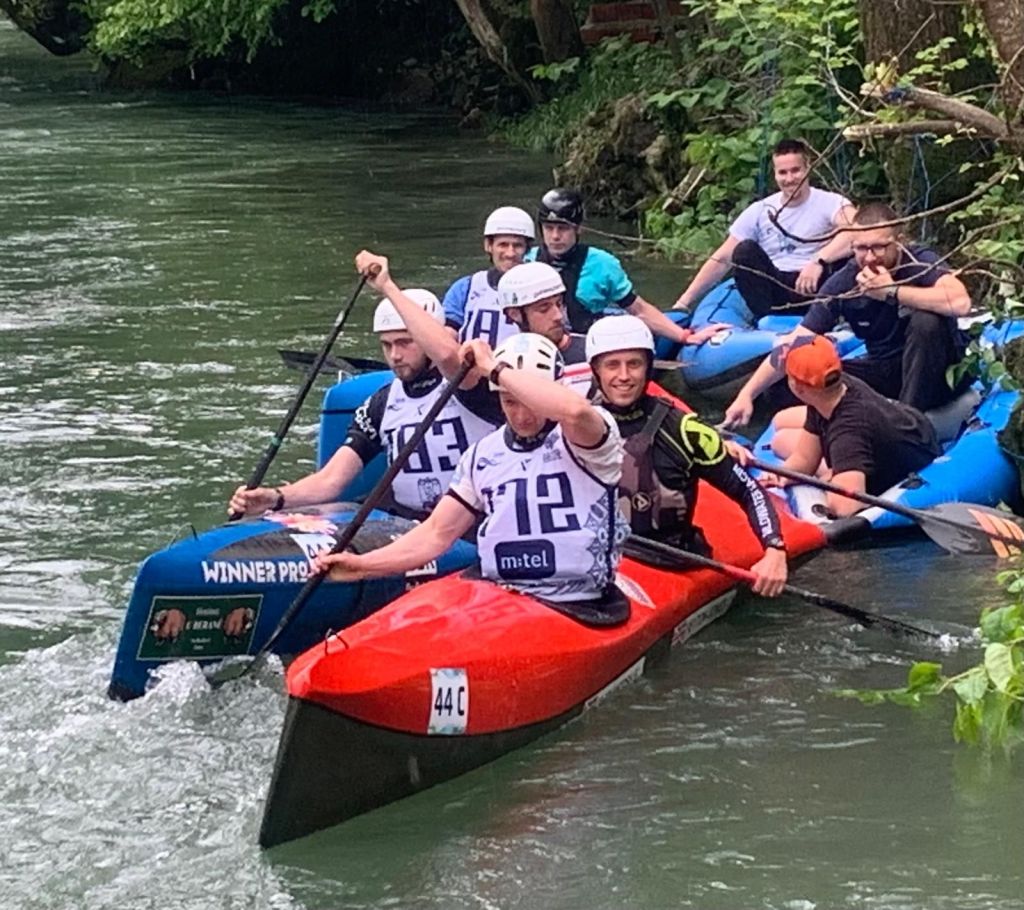
The aim of the session was to practice paddling our C2s in the team formation. This after all would be our best chance at a medal. Without a rudder paddling river races on washes can be a challenge. Even on the flat you have to carefully judge your position an edges to avoid pinging off in a random direction. The challenge gets even harder when the water starts moving, and you get in a big heavy boat, like a C2.
The high water certainly made it difficult keeping in a team formation. Boils, waves and washes kept forcing the boats off line and often we found ourselves snaking down the river. We completed the run in under 20 minutes, even with faff time included. It’d been another steep learning curve, in challenging conditions but we’d all enjoyed our little jaunt down ‘the flat section’. It was almost a shame we didn’t get to race at this level last year.
Training continued for the next few days at a multitude of different levels and we started to get well acquainted with the river. Confidence was slowly building but I was finding the big water tough though, particularly in C1 and could feel the fatigue setting in on my shoulders.
Classic Day
Race day is rarely the best day to change up your equipment but that morning I decided to swap to a slightly smaller paddle, hoping to alleviate some of the pressure that had been building in my traps and surrounding muscles.
My C1 classic went, okay. I got caught by one paddler and didn’t finish last, which I guess counts as a win for my first C1 international classic. But the gulf on the international stage was very apparent. I struggled to find trust in the new blade in the rough, but crucially it no longer felt like my shoulders would be torn from their sockets. Which was important because that afternoon I’d be doing it all again with Jacob in C2.
I’d fancied our chances better in C2 than in C1 but unfortunately Jacob had started coming down with an illness just before racing. We still gave it a good effort, finishing as the second British Boat. Looking down the results, all 3 of the British MC2 were in good stead and we could see that we’d be in the running for a medal. We headed back to luxurious accommodation to contemplate, plan and celebrate. Kerry and Emma had grabbed the Team’s first bronze in C2. Tomorrow it would be our turn!
C1 Classic Team
All our hopes and dreams were set on a MC2 team medal. But that wouldn’t be contested until the afternoon, first I had a C1 team race to survive.
Based off of mine and Phil’s results from the day before we were not expecting anything special. Still we don’t like to do things by half measures in the British camp and we set out all guns blazing.
Across the flat at the start of the course the run felt good, and Phil and I almost seemed to be keeping pace with Andrew as he led the team from the front. However the canyon began to reveal our relative inexperience and the gulf between myself and the Crow grew steadily as I fought the cross currents and swirls.
Not owning a C1 myself, I’d had to borrow a whoopie from British River Racing. Although a beautifully fast boat, the Whoopie, was a lot more unstable than the C1s I’d previously been paddling. In fact within the British Camp the Whoopie, had earned the nickname ‘whoopsie’ due to the number of ‘whoopsie daisy’ moments across the British team.
But throughout the week I’d slowly been finding my confidence in the boat, and in the team run I seemed to nail the sprint course! That was at least until the end, when a poorly timed switch sent me tumbling into the river as I caught an edge on the big boil at the bottom. My turn for an oopsie in the whoopsie.
1st roll attempt, no success. 2nd roll attempt, even less success. With that I was out of the straps, out of the boat and swimming down the river.
It felt like a long swim down the canyon through steep waves until it’s steep sides finally gifted me an opportunity to rescue myself. After fighting off some well meaning spectators and burping up half the river I clambered back into the Whoopsie. I stumbled down the rest of the canyon with Phil and Andrew by my side and we completed the race, but my confidence had taken a battering.
C2 Team
Between Jacob’s illness induced coughing and spluttering and my river induced coughing and spluttering we must have made quite a sorry sight. But we were hungry for a classic medal, and we sensed an opportunity.
Team racing can be quite a tactical affair and we’d spent much of the previous evening debating our order. Finally we had settled on Jacob and myself as the first boat, with Eddie and Harry taking the second position, while Phil and Andrew would make up the rear guard of the formation. There was certainly a tactical justification for this order, but honestly I think they just wanted to put the most beautiful boys in the front!
We’d been focused on this race for the week of training and as we floated down from the pre-start we were locked in and ready to go!
We may have been ready to go but the race organisers were not. Somewhere in the break between the classes they seemed to have misplaced the starting raft. This ended up resulting in a not insubstantial delay to the racing.
Unable to paddle back up to the get on, Jacob and I headed over to one of the islands across from the start to stretch our legs which had already begun to cramp inside the canoe. We were joined by the Americans who, inspired by our previous efforts, had also fielded a full team for the C2. “If the Brits can do it, then we can do it” is an attitude it’d be nice to see more people taking, particularly with C2. We spent the 30 or minutes of delay gently ribbing each other on the bank.
However, when the racing resumed the gloves came off. The Americans were off first, and then 2 short minutes after them, it was our turn. We quickly began bearing down on our American counterparts, catching them in the canyon just before the sprint course.
What ensued then was a moment of chaos. The Americans had tried to regroup just before the major rapid and were now readying themselves to drop in. But as they were doing so we were catching with speed. As the lead boat Jacob and I hollered down the canyon begging the Americans to let us pass, desperate to avoid a pile up of 6 C2s in the crux of the race. Thankfully they heard us and we steamed past as the river began to drop away.
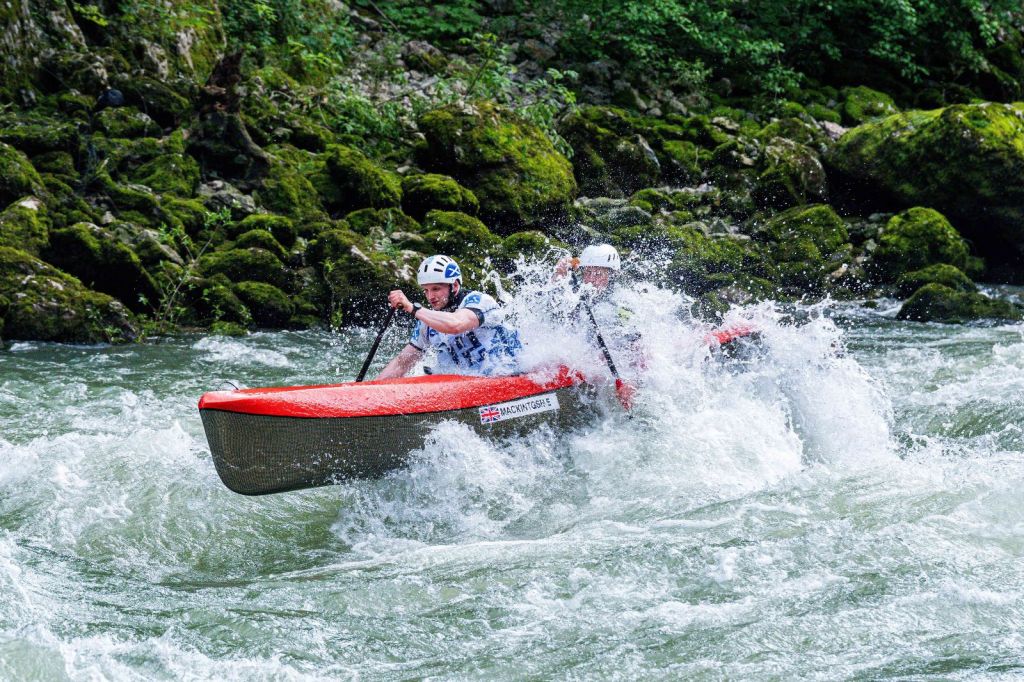
“Just hold it together” was the thought rattling around my head as we battled through the waves. A mistake here could be costly. But Jacob and I kept the boat on track and made it safely through.
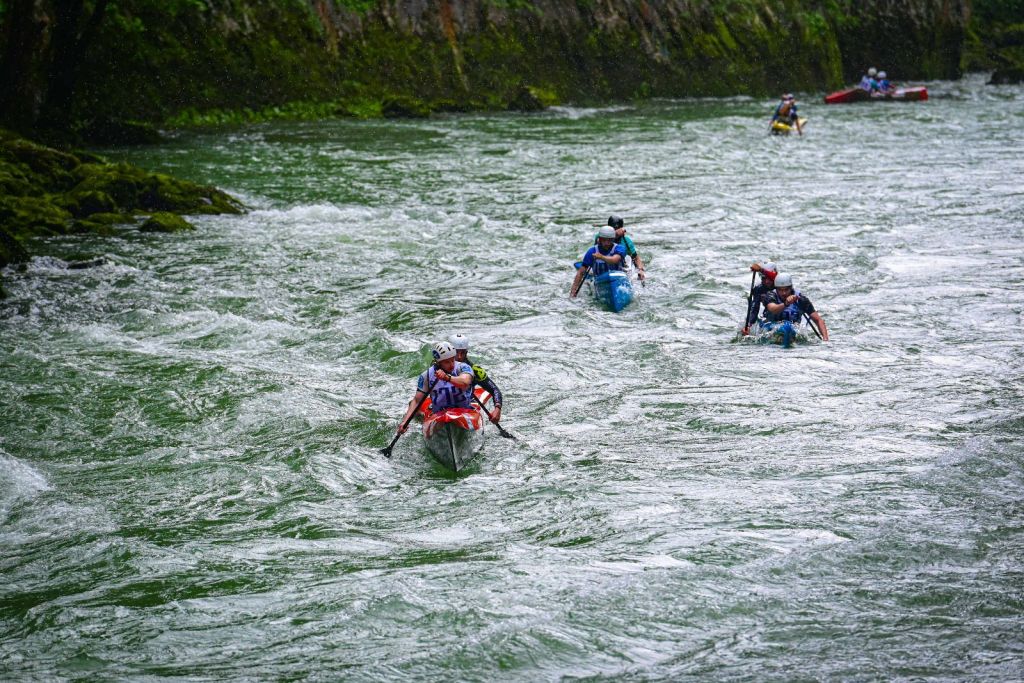
As the water petered out towards the end of the canyon we stole a quick glance behind and were relived to see the other two boats were hot on out heels. Now it was just the long slog over the last couple of kilometres to the finish.
We put our all in. It dragged. And I lost all since of my surrounding, just staring at the back of Jacob’s head, mirroring his strokes on my side. But every time it felt like we would fade there would come another burst of energy another bout of determination to dig in and try harder.
As we rounded the final corner we could hear our coach Billy screaming. What he said – nobody could decipher. But if he was screaming that loud we had to be close to something! One last push, one more effort!
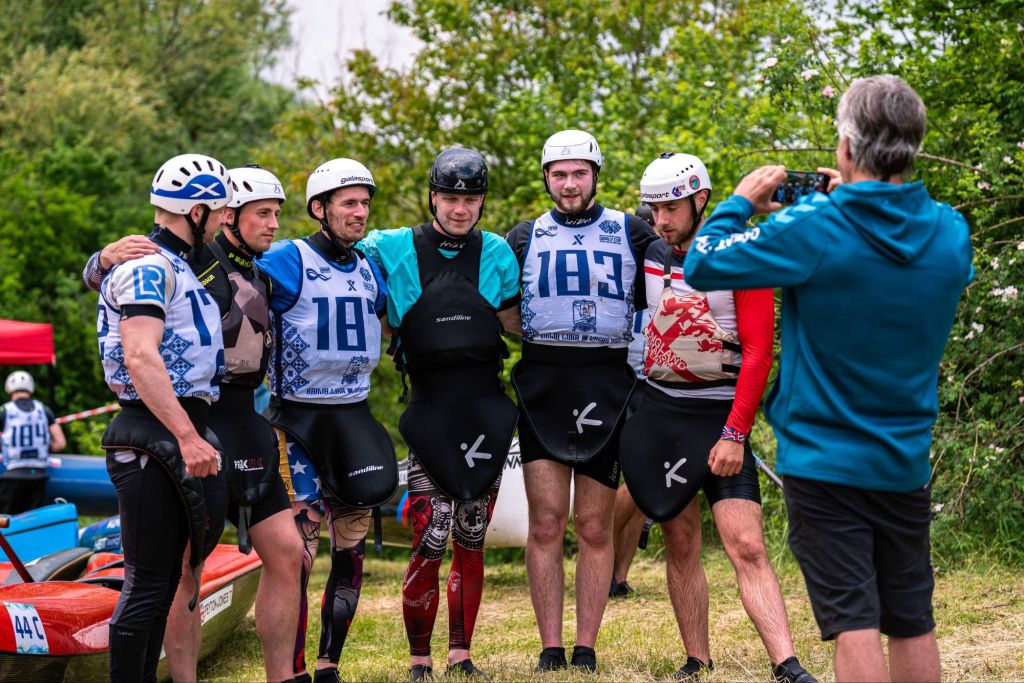
We crossed the line with the whistle and collapsed, almost missing the get out eddy. It took a few moments to realise what we’d managed to achieved. Then the celebrations started, Eddie was in the water and (once we’d limped out of the boats) we were all hugging on the bank, out of breath getting the obligatory bronze medal interview from Jamie Christie.
The success was not limited to just the senior athletes. In the masters event Neil Blackman and Sally Atkinson also took home Bronzes in their respective classes. Back at our Bosnian headquarters there was a lot to celebrate!
Sprints
Sprint day arrived like a brick through a window. During any competition the race days are relentless, but there is literally zero time to rest on your laurels – even if your laurels have left you feeling pretty knackered.
To add insult to the proverbial brick, it felt as if we had somewhat under practised the sprint. The nature of the sprint course being deep inside the canyon, is that the walk back up the course was far from easy. In fact the walk would be better described as a hike. The route took you up the steep sides of the canyon, following some less than safety certified stairs before a roughly 500m walk along a rather busy and narrow mountain road where you would then have to descend back down another sketchy staircase to the river. The whole thing was such a palaver that as a team we generally decided it was much less effort to just do a full classis run. However the general result of this is that we’d spent much less time studying lines like we normally would and, to quote Jacob: “I have never felt so unprepared for a sprint at an international”.
Fortunately I would have plenty of time to get acquainted with the course as I’d have my C1 heats in the morning while the C2 would be left for the afternoon.
Telling the story now, I wish I could say how, in C1, I heroically bounced back from my swim the previous day. How I dug deep through the run and managed to power into a final. However a final was always a little unrealistic. Instead I wobbled down the two runs in C1. I was trying my hardest but the swim the previous day had kicked my confidence out from under me. Ironically it wasn’t the big waves where I would struggle but rather the swirls and eddies where I just ended up fighting with the boat. It was a disappointing end to the C1 individual, knowing I could and had paddled the section better. But that is racing.
I had plenty of time to sulk in the back of the bus and by the afternoon I was ready for some revenge in the C2. We flew off the start raft, and kept accelerating though the choppy waves and down the tongue into the bowls of the rapid. Finally we were in tune working as one in the boat. It didn’t matter that neither of us could see, the waves racing up to blind us. Power on, we kept the boat running true over the line for our best run yet!
We’d finished the first heat in 12th, the fastest British boat and within spitting distance of the final. In C2 the first 5 boats from heat 1 and then the first 5 boats from heat 2 qualifying qualifying for the finals, and we had been just 0.64 seconds off that 10th place. It was tantalisingly close, but it is the 2nd heat that matters.
Then something curious happened. While the WC2s were lining up for their first heat the river began to drop rapidly. As it transpired somewhere further up the valley, someone in the hydro-plant had decided we no longer needed any water for that day and had turned off the release early. Back down in the canyon this led to a long an unspecified delay as the organises waited for the river level to drop and stabilise so everyone could have a fair race. After an hour or so the level finally settled, revealing rocks and hitherto unseen pebble beaches next to the canyon walls. It was a level Jacob and I had never seen before and we would paddle it for the first time in our second heat.
This was of course a little frustrating, especially when you know its the result of someone turning a knob somewhere. But, it is also just part of river racing and being adaptable to changing conditions and levels is just one of the skill you need to have in your toolkit.
We use the break to inspect the course. The entry waves had diminished significantly and the eddy like and whirl pools near the finish line has become pushier and more unpredictable but overall nothing had changed too much.
We gave the 2nd run our all. For our first time at this level it was a run to be proud of, but it was not mistake free. Phil and Andrew reclaimed their position as the best British MC2, and were the only ones from our category to make it through to the finals. There they would join Freya in WK1, and The rest of the girls in C2. Meanwhile the rest of us turned out attention to tomorrow’s sprint teams.
Sprint Teams
After a morning of cheering on our compatriots in the Sprint Finals, and the thrill of some incredibly tight racing it was time for our last races in Bosnia – the team sprints.
Team racing always carries a lot of jeopardy and that jeopardy would be magnified with the water returning to it’s higher levels.
First up for myself would be the C1 team. There were no high expectations for this. Phil and I were firmly out of the mix in the individual runs but we’d never turn down the opportunity to race!
We lined up on the start line just ready to enjoy the moment. As the start buzzer when it tore of the start (or at least tried to, I was in C1 after all). My last C1 run down, and finally everything started to click. Confidence boosted from yesterday’s C2, the wobbles (mostly) disappeared. We crossed the finish line with smiles. It was an improvement on my individual run, and an improvement on our classic result – mostly because we all stayed up right! But this had just been the warm up for the main event.
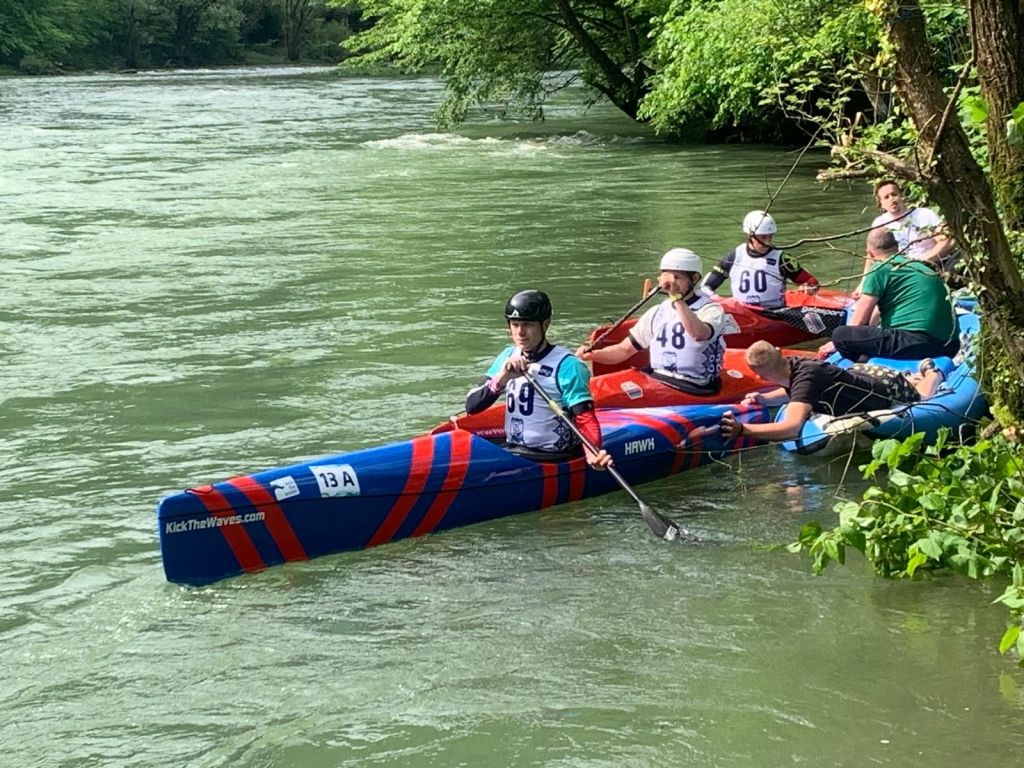
Jamie had given us a challenge the previous night: beat the Germans. Our appetite had been wetted with the Classic Bronze but it almost felt greedy to think we could pinch another medal, particularly when we knew the other teams were geared to the sprint. But we had spent the week practising and prioritising C2s and once again the air of possibility hung over us at the start line.
The plan was simple. Keep the same order – Jacob and I at the front, Harry and Eddie in the middle, Andrew and Phil at the rear. Jacob and I would go hell to leather off the start, Harry and Eddie would try to keep up and Andrew and Phil were to overtake if the opportunity arose.
One run. One chance, no mistakes.
Jacob and I accelerated off the start, instantly opening a gap on Harry and Eddie. Paddles in, hip drive, shoulders straining. We flew into the jaws of the rapid with Harry and Eddie desperately trying to close the gap.
Blades in, drive! Blades in, drive! It was a struggle to keep up with Jacob’s stroke rate but I wouldn’t need to hole on for long. Drive, drive, drive!
So far the lines had been clean, but as we approached the big rock and the boily crux of the finish we made a small mistake. Jacob and I caught an edge in the swirls veering us hard to the right. But there was no time for a correction.
Pointing diagonally towards the bank, we accelerated the boat as hard as we could. We burst through the eddy and rammed into the bank just below the beam.
Then came the waiting.
Fortunately our mistake had left enough room for Phil and Andrew to come through, knocking some vital moments off our time. One minute and two point something seconds. We floated to the bottom and waited.
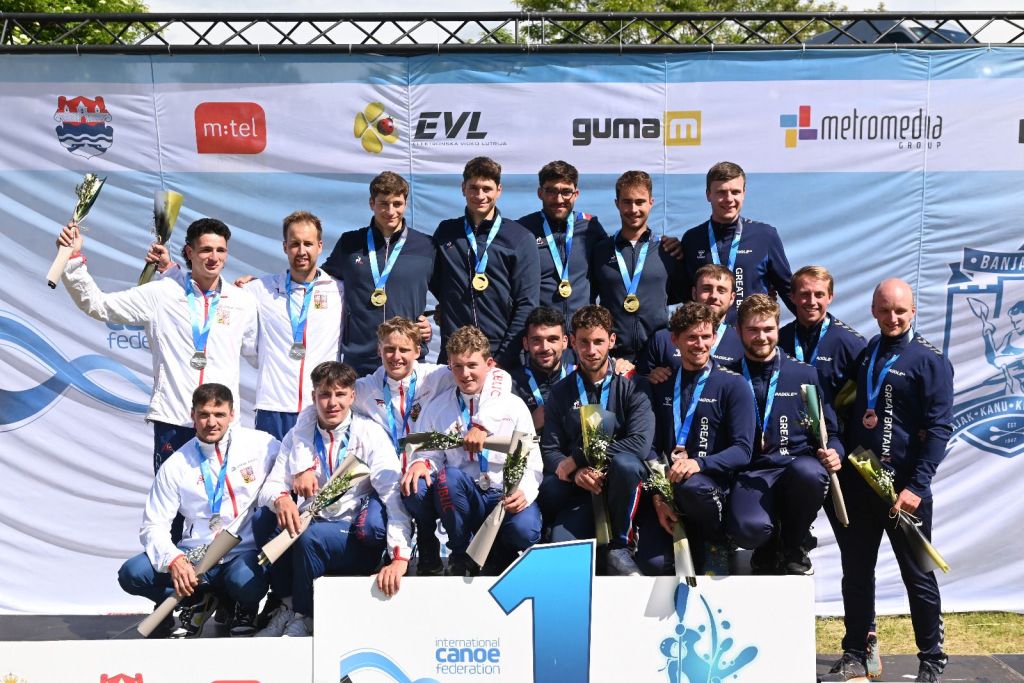
The Germans were also around the 01:02 mark. Then the Czechs, 01:02 plus something. Finally the French with a decisive 00:58. But now there were 3 teams, 18 athletes, all on the same second. One with a silver, one with a bronze and one with nothing.
Phones were anxiously being refreshed, but the internet would not reach the depths of the canyon. But then came the cries. “2nd!” Echoing off the walls it was the voice of Jamie Christie.
We erupted in celebrations and commissions. We’d beaten the Germans and usurped the Czechs. For this, the last of the MC2 medals.
From next year there will be no MC2 team. Or for that matter a WC2 team. Instead we will have Mixed C2 teams, something we have mixed emotions about in the British team – but that is a story for another time.
We celebrated our success and toasted to this, the last MC2 competition.
There is always a next time… At least until there isn’t.
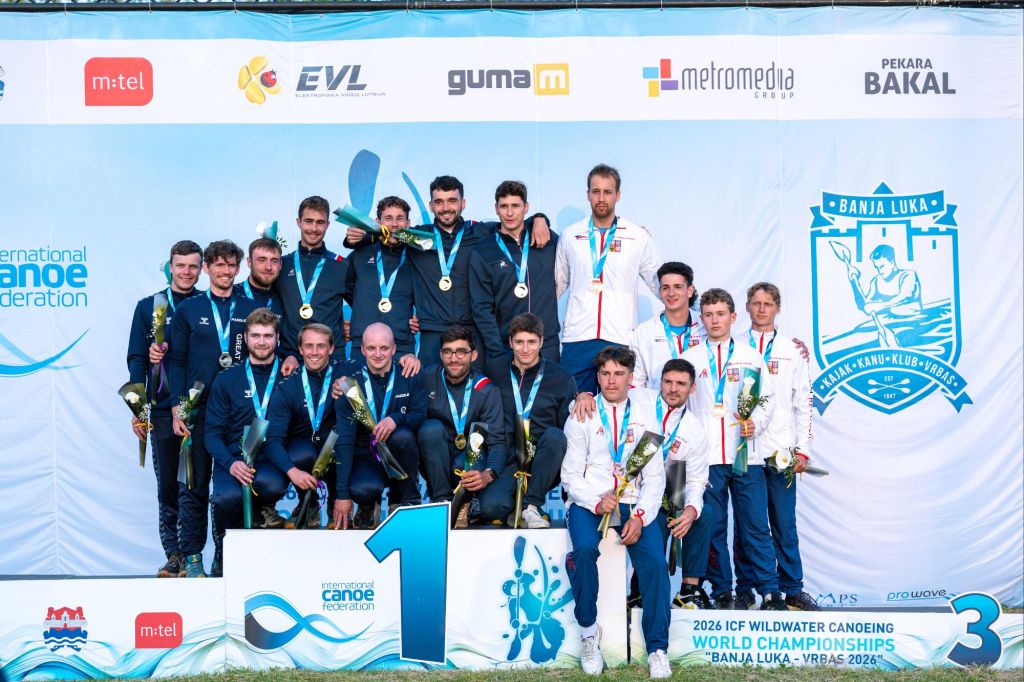
Thank you to Kajak Kanu Klub Vrbas for all the photos!
 River Stench