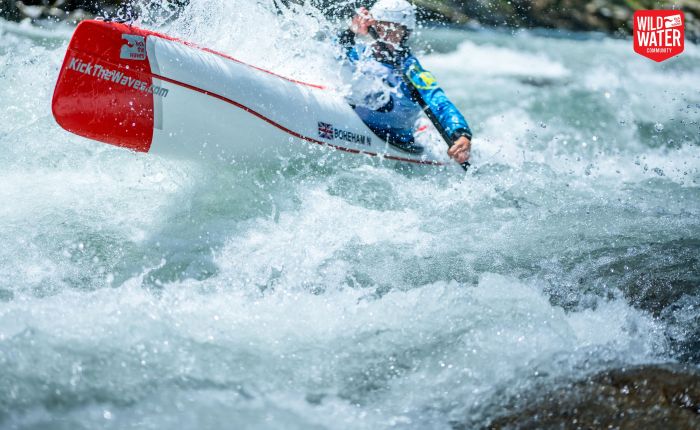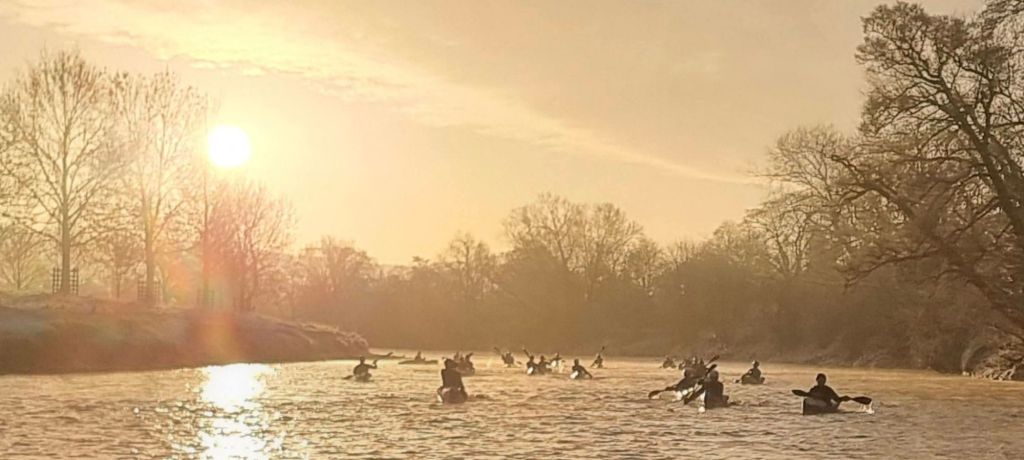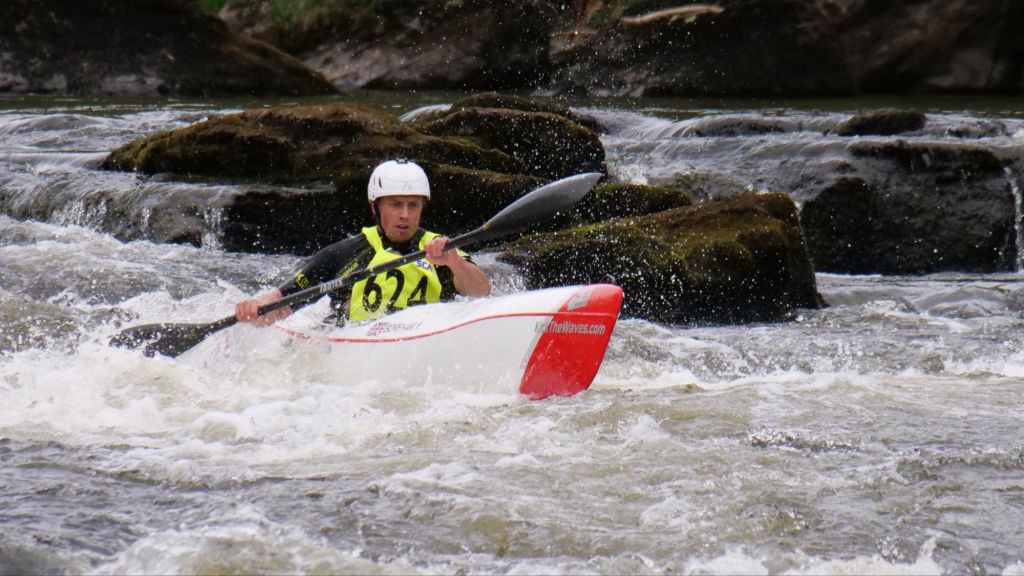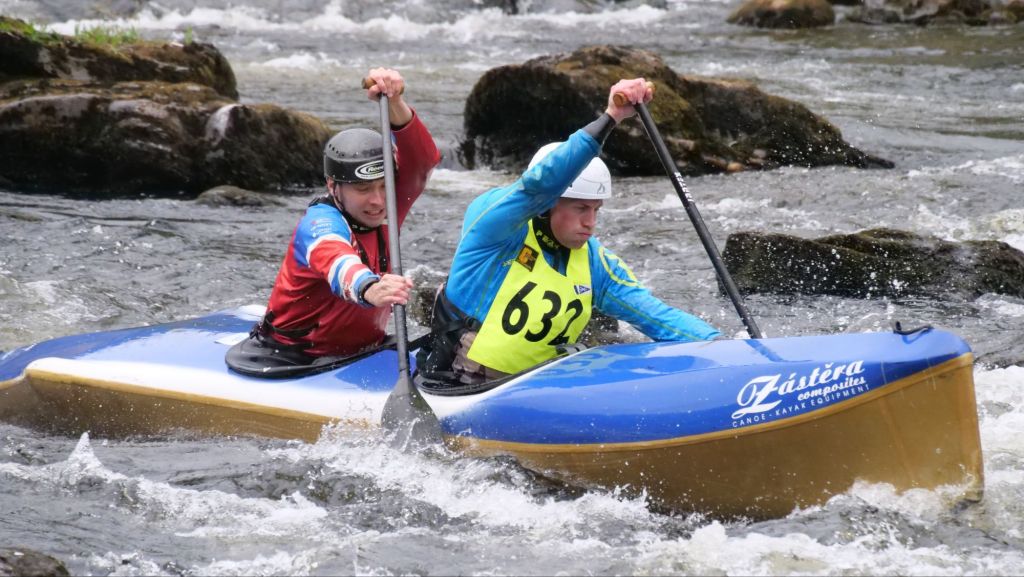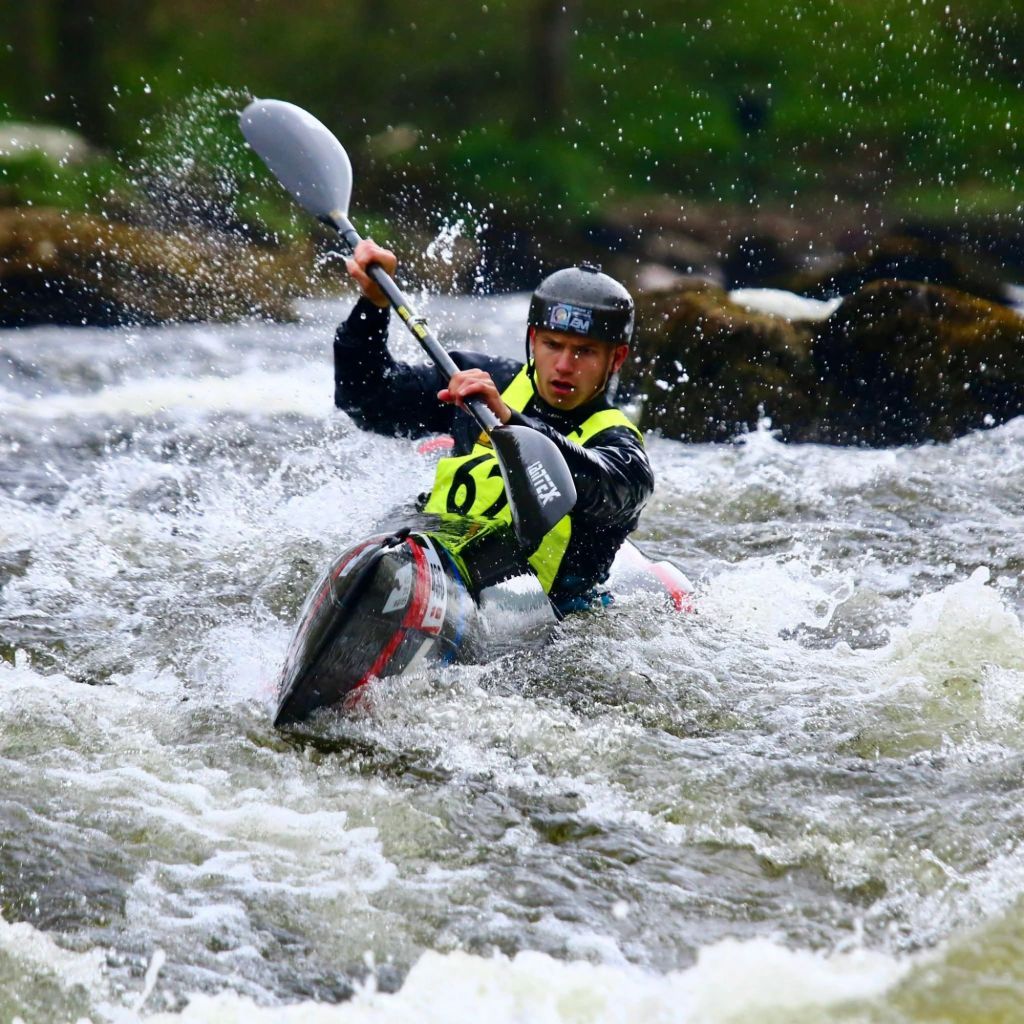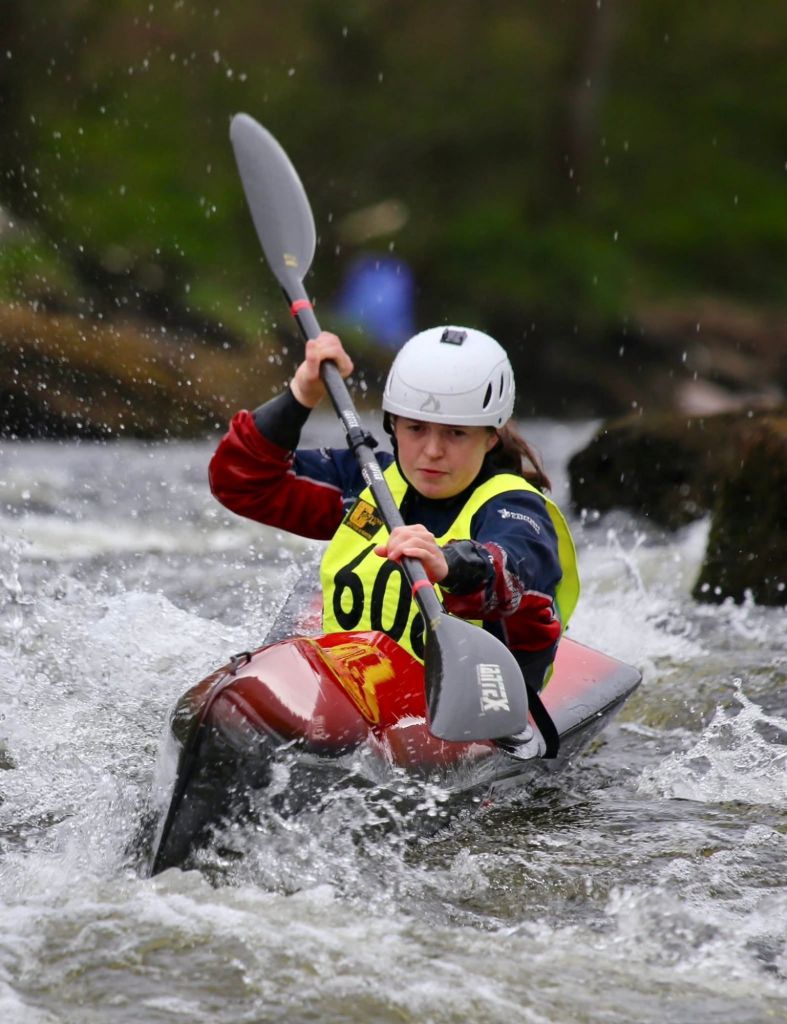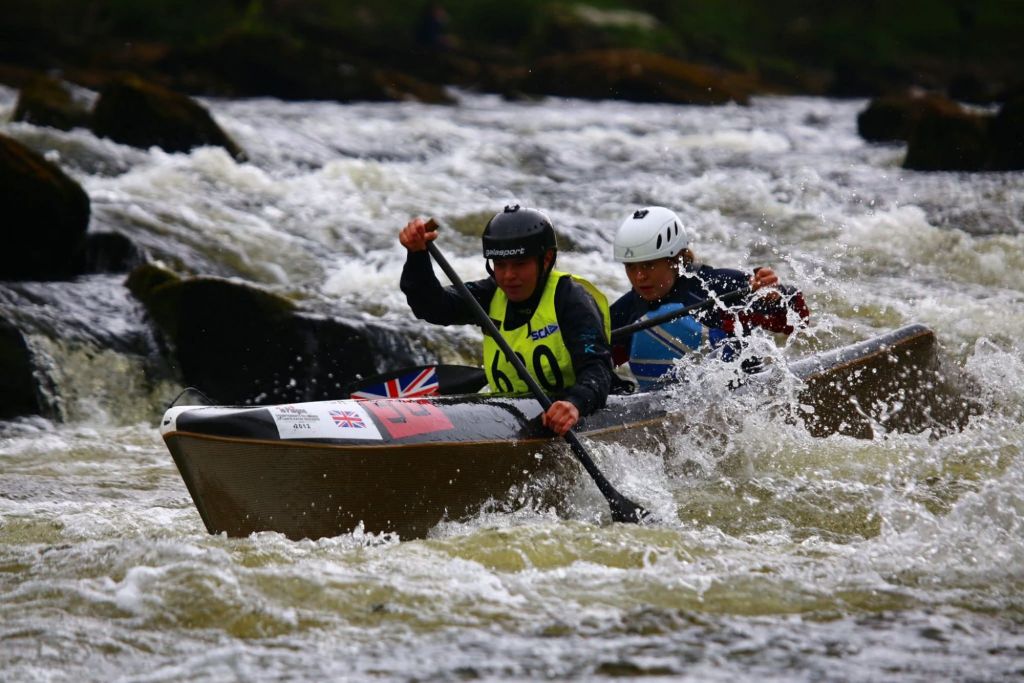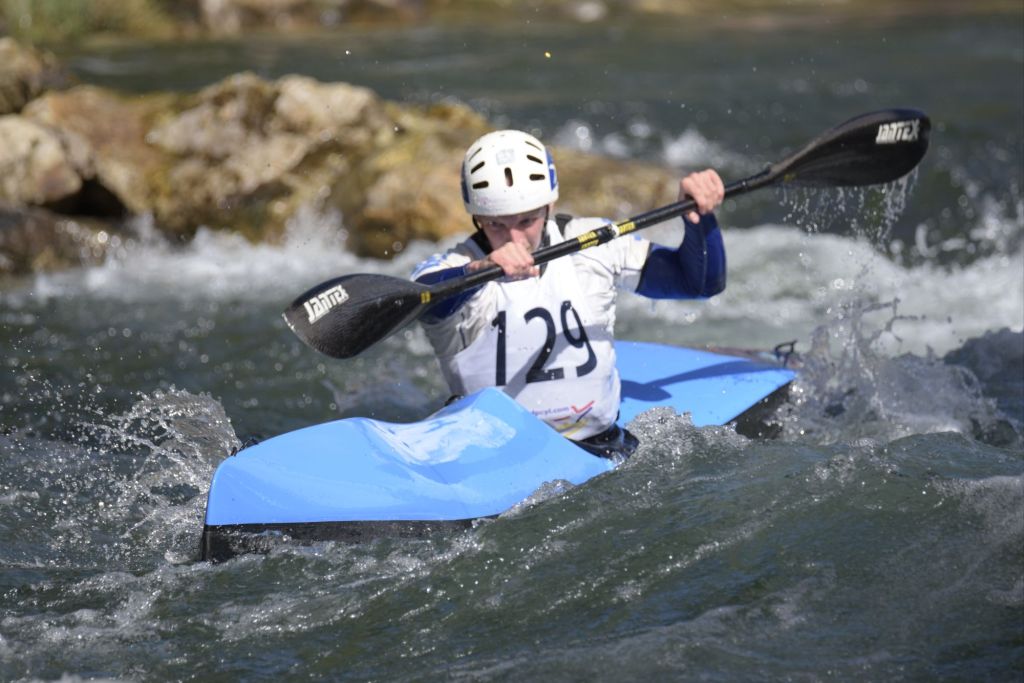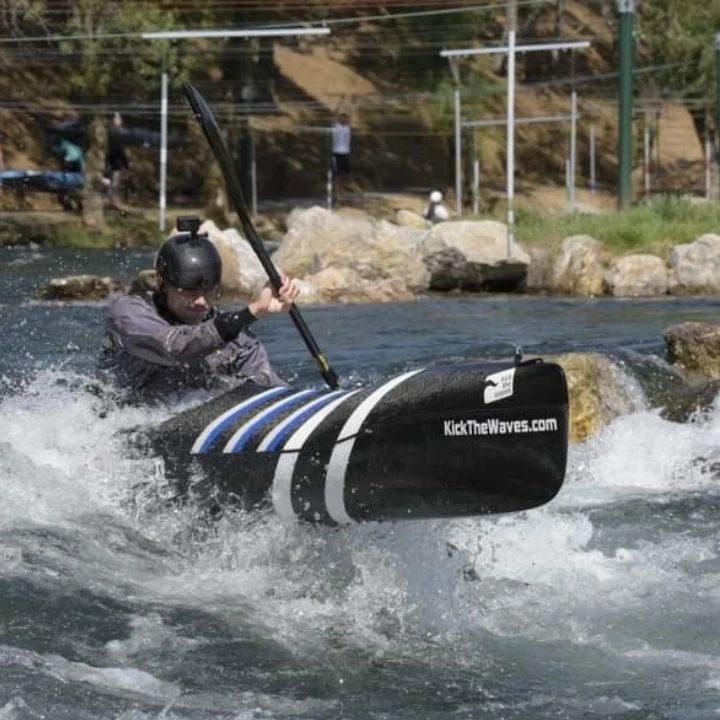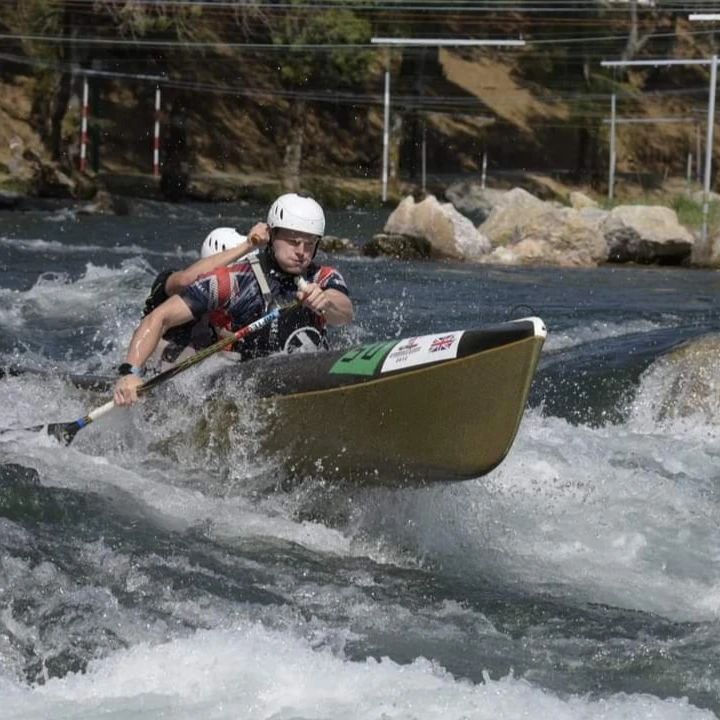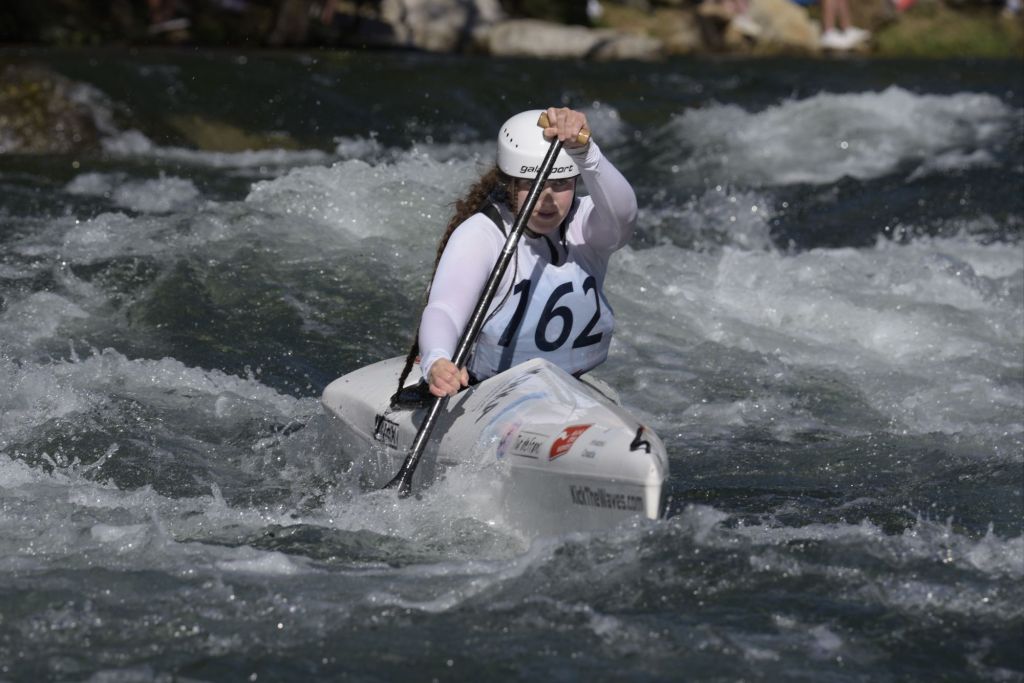
Brawling in Bosnia – World Cups 1,2&3

Brawling in Bosnia – World Cups 1,2&3

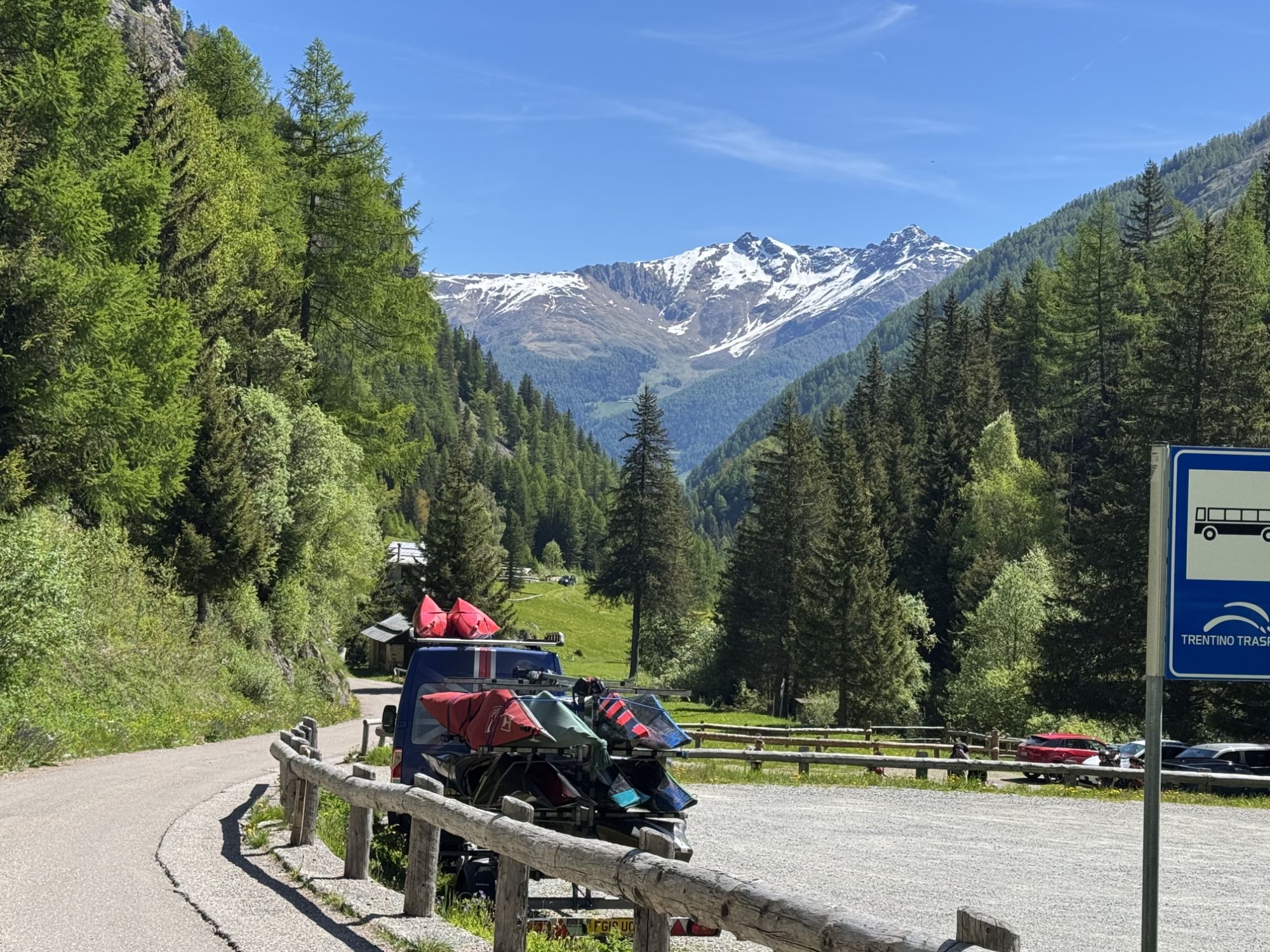
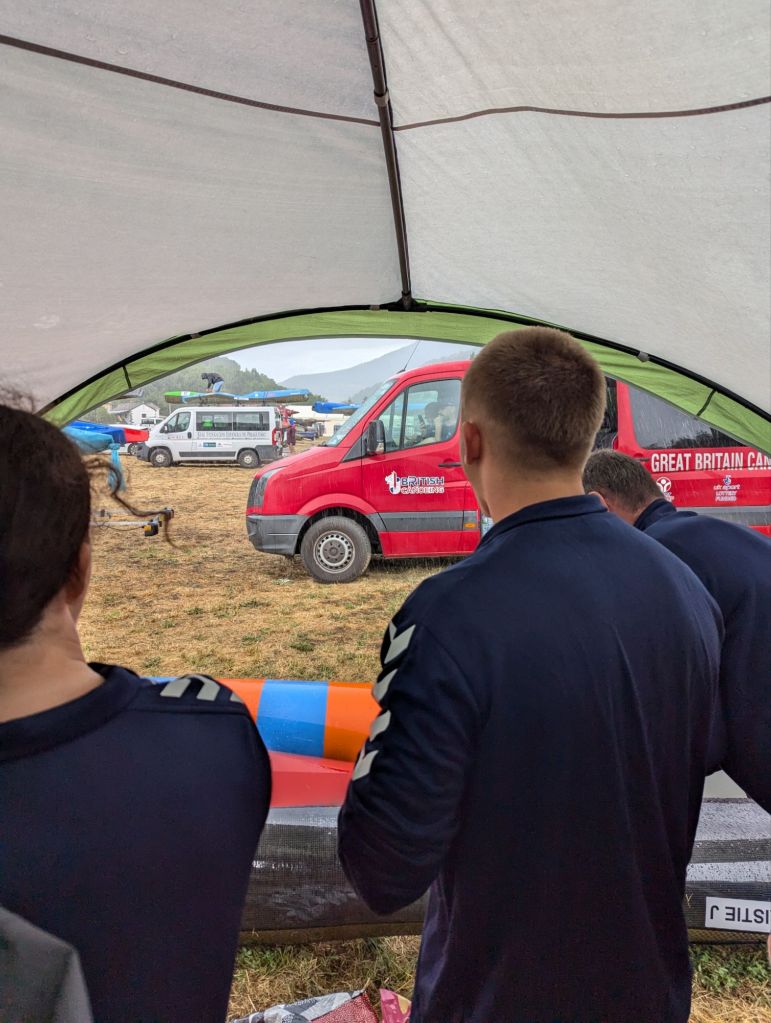
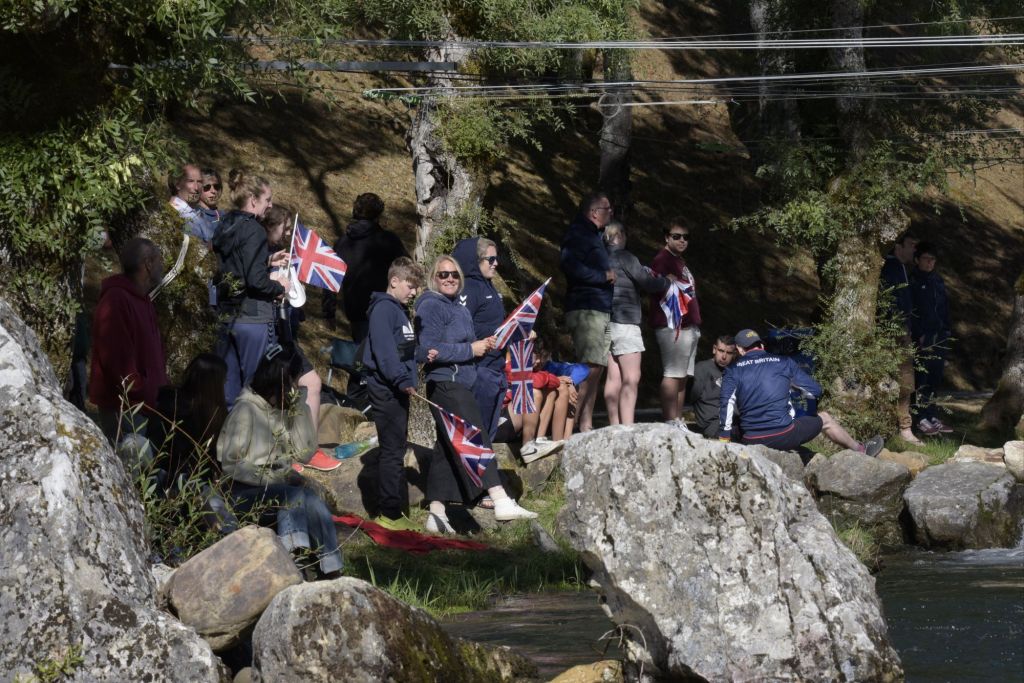
It was an early start for a dawn flight. We were bound for Zagreb where the ever inconspicuous British buses would scoop us up in the searing Croatian heat and carry us forth to Banja Luka, Bosnia and Herzegovina.

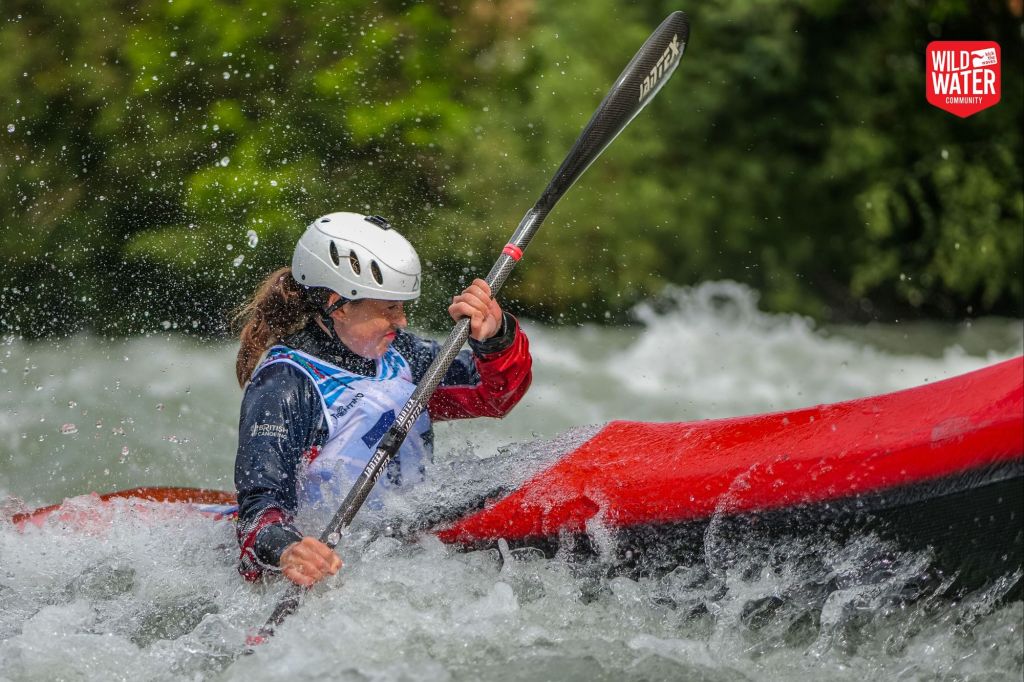
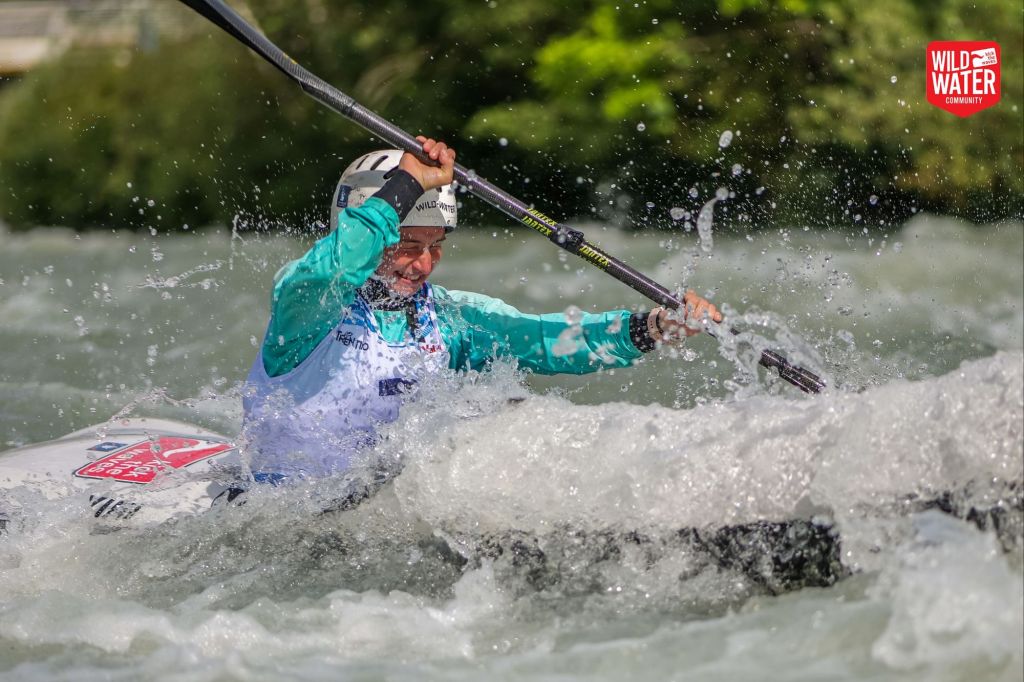
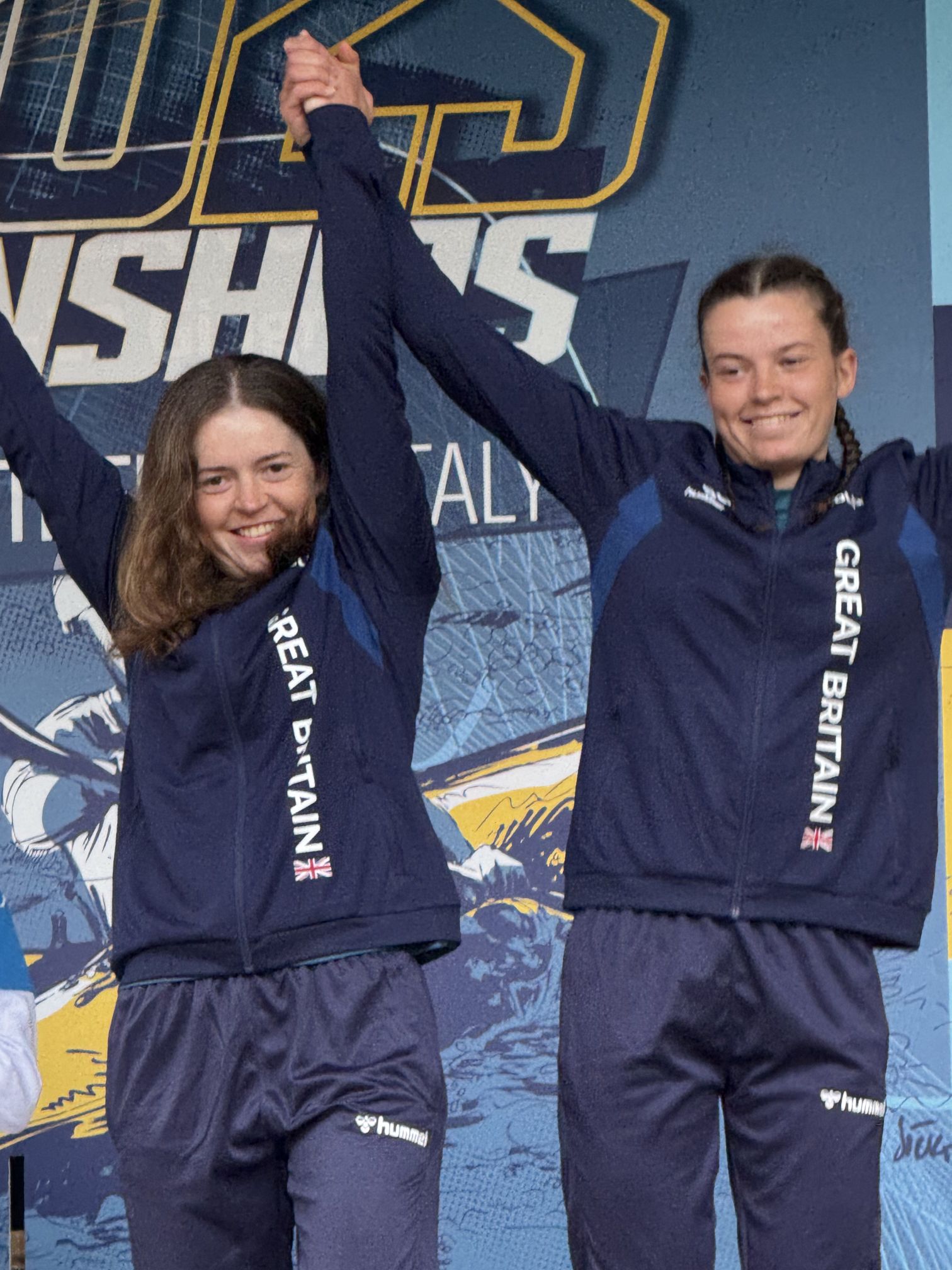
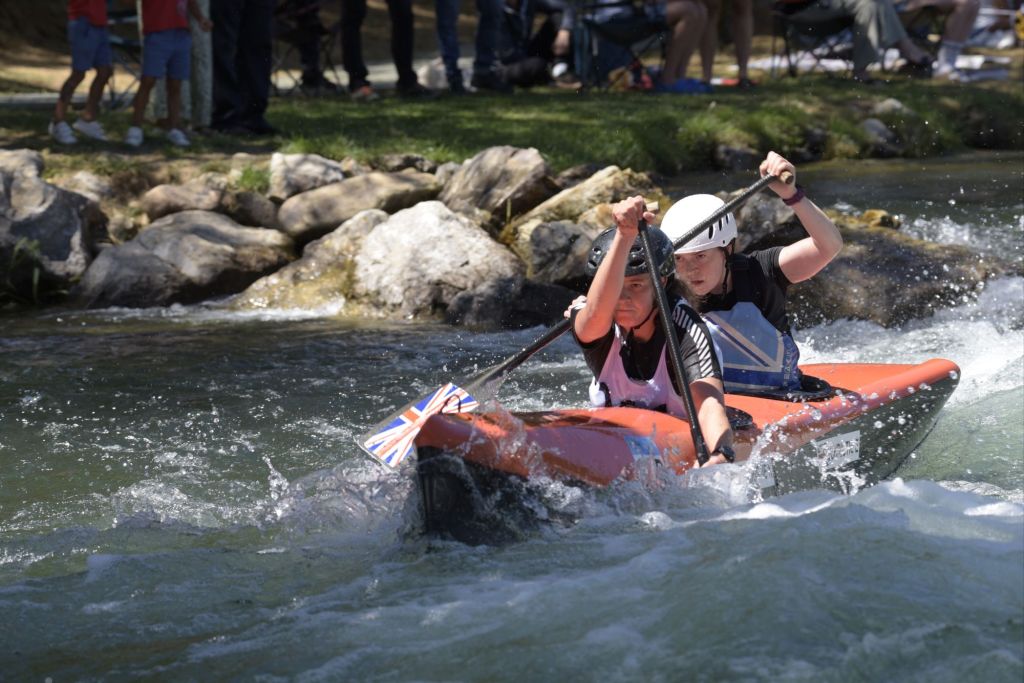
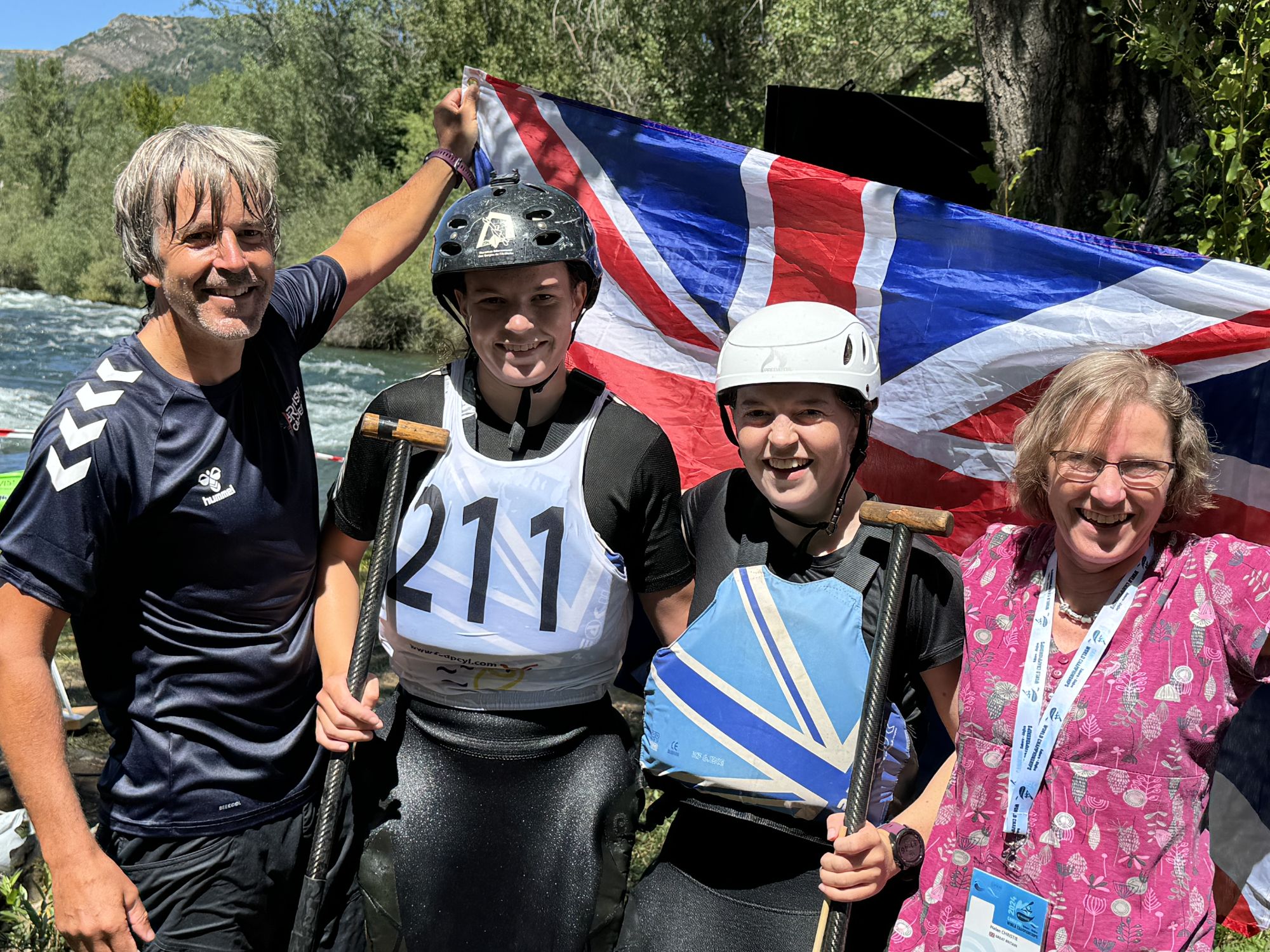
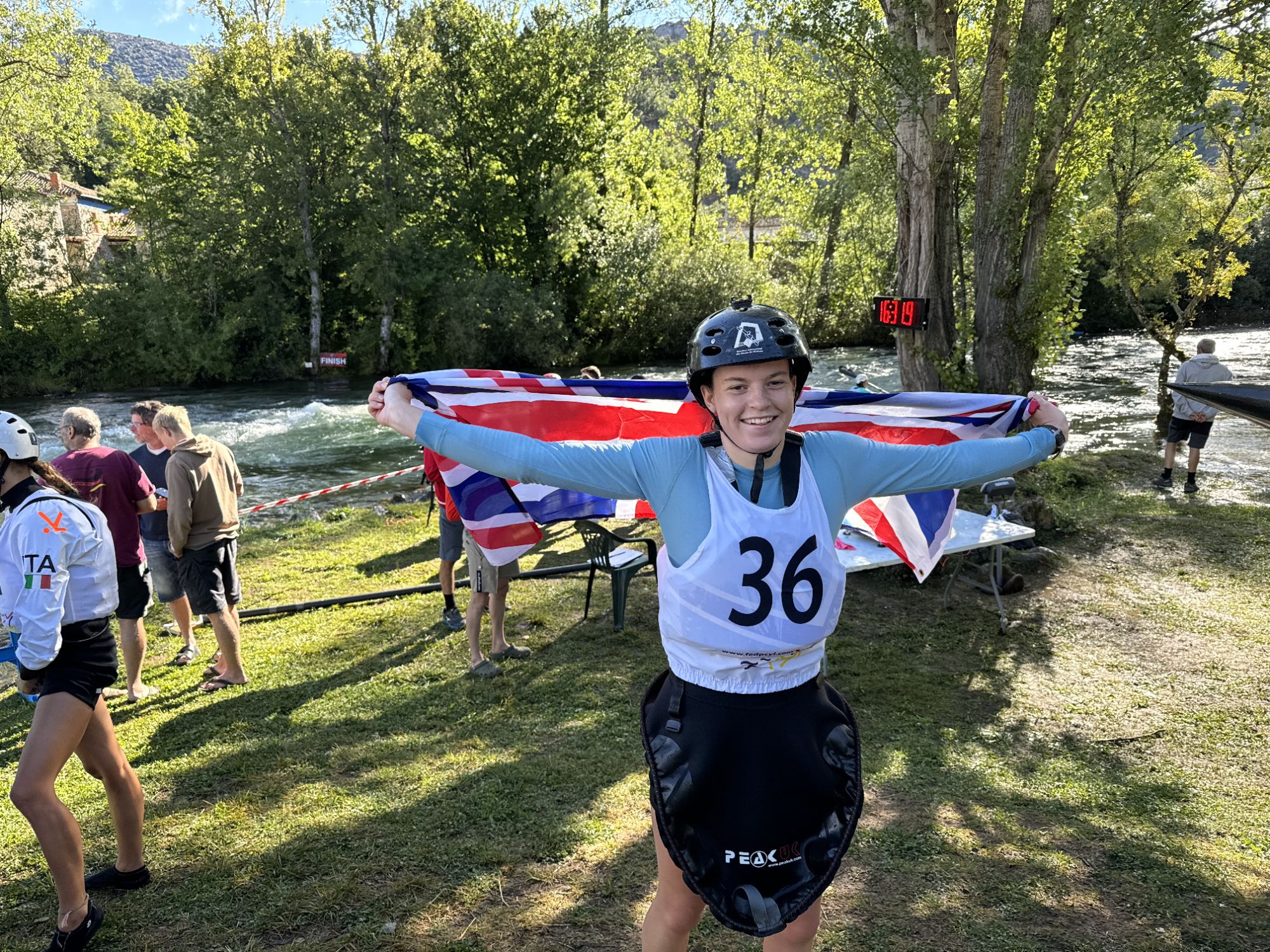
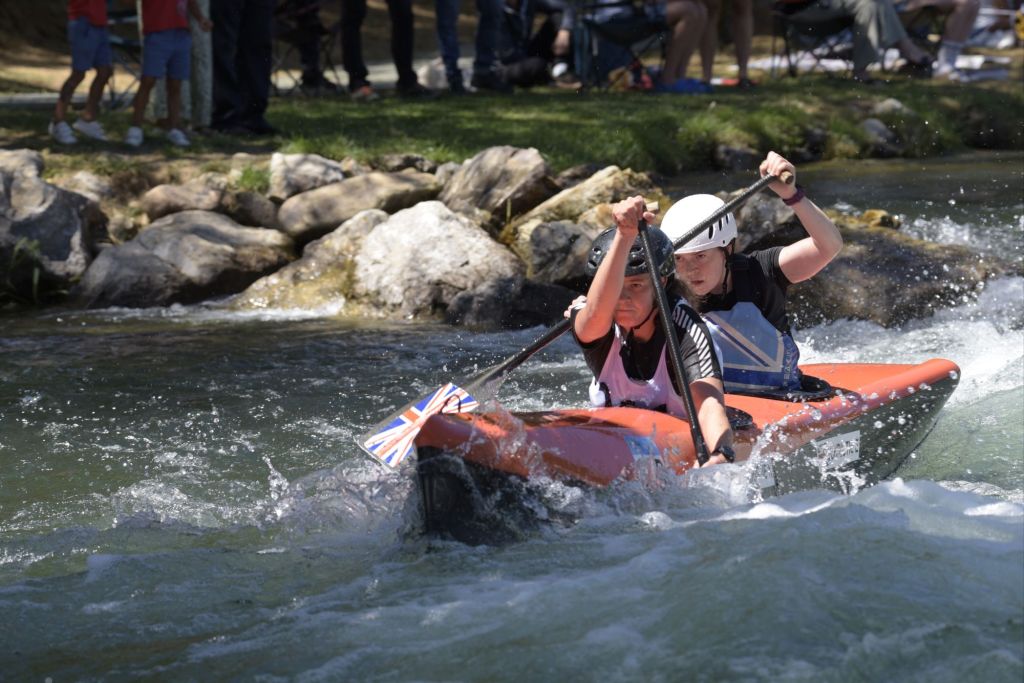
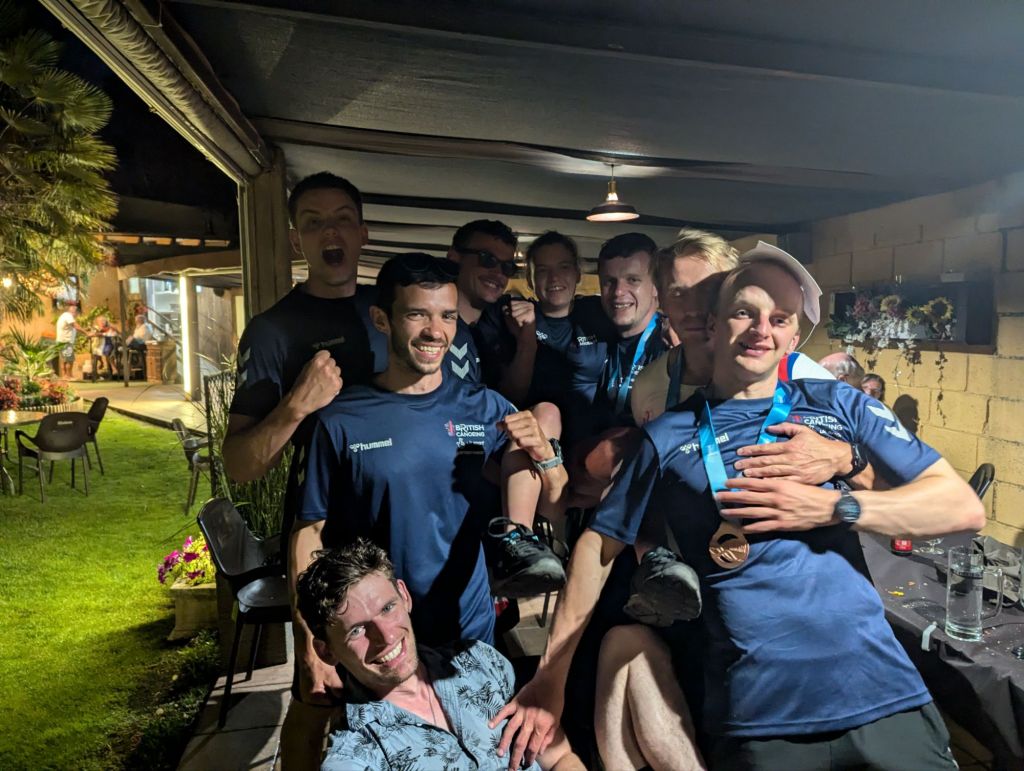
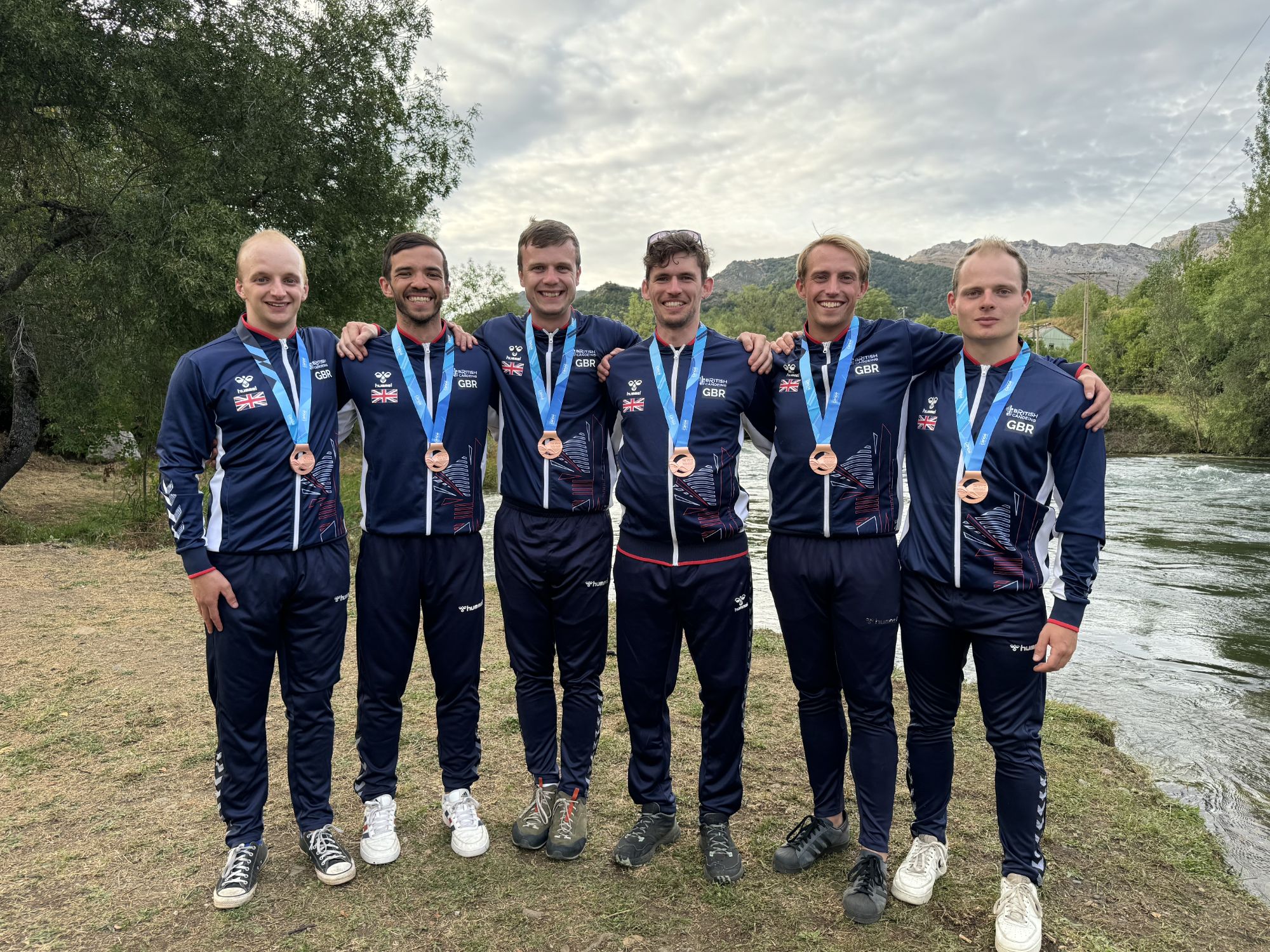
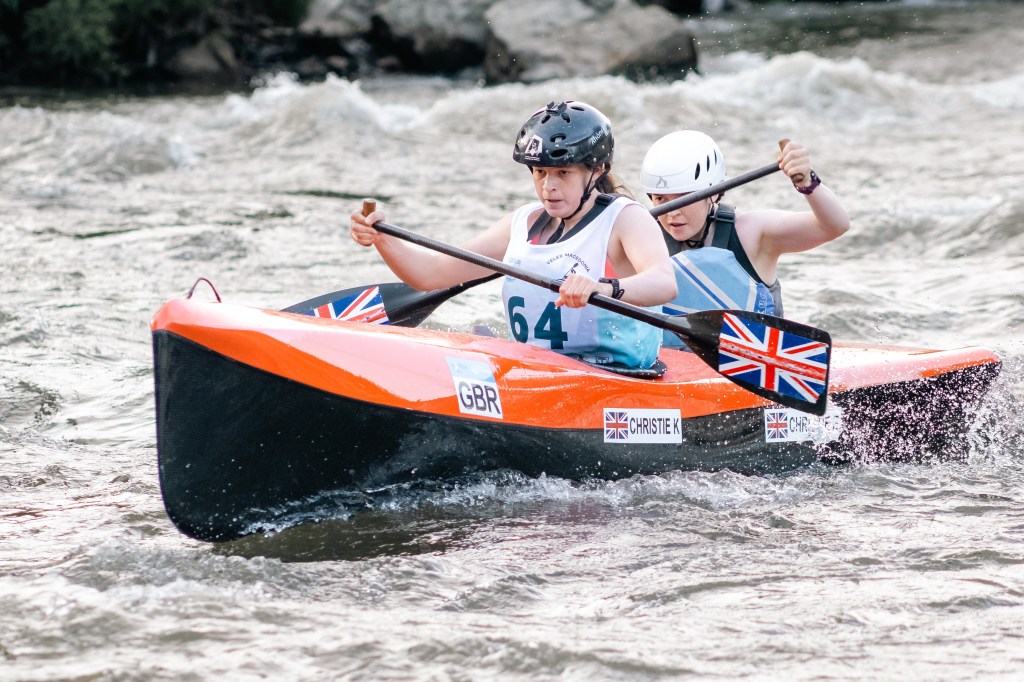
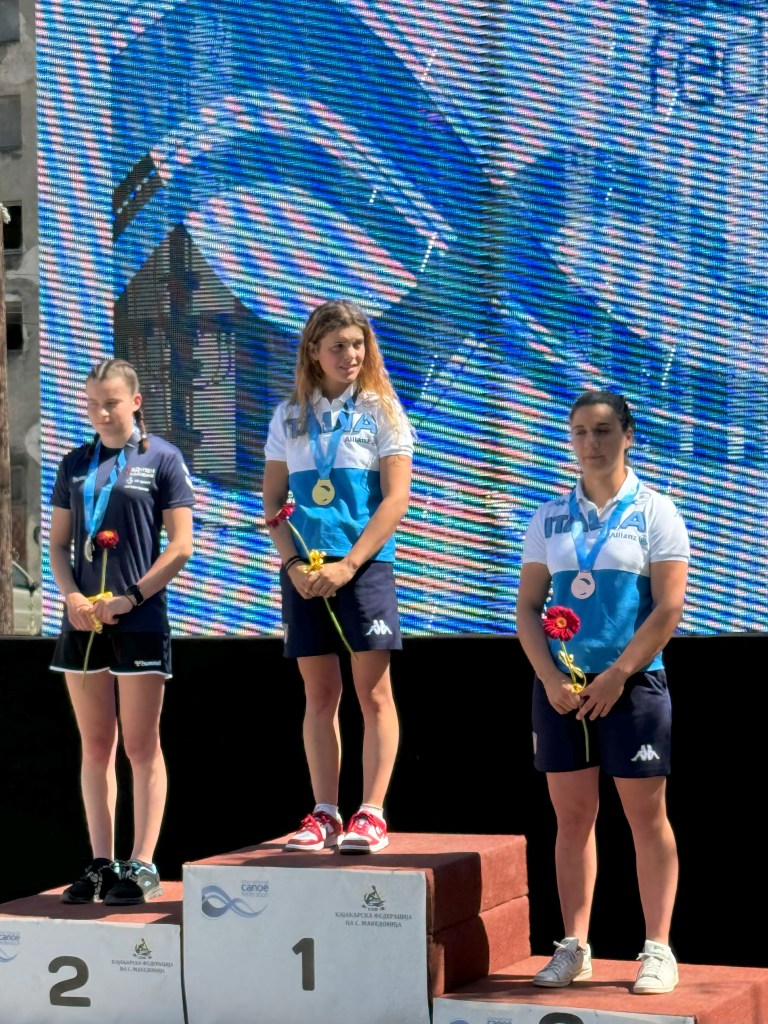
The busses had spent the past week at the Junior and U23 World Championships in Solkan, where the British Team had enjoyed just a modicum of success. The Christies retained their title in U23 C2 winning both the sprint and the classic, and Kerry picked up a silver in the K1 Classic. With Freya Pryce the sisters picked up another Gold in the U23 WK1 Classic team, then with Elsie Landsborough they snagged a silver in the U23 C1 classic team. Not to let the Christies have all the medals Elsie went on to win another silver with her C2 partner Ciara Maloney in the sprint. All the aforementioned girls then teamed up together with Sophie Cameron to pick up yet another silver, in what I believe was the first ever women’s C2 team race – a testament to how the sport is growing and developing.

However it was the junior boys team result that I was perhaps most pleased by. Going into this year we knew the Stevelys were going strong, but two does not make a team. So enter Malaki Grant. Malaki, a strong K1 paddler, had never been in a river racer prior to the winter but we put him on a crash course, with a focus on sitting on washes. The gamble paid off. The boys came in 3rd with Sam and Will helping to knock nearly 2 minutes of Malaki’s individual time. A Bonze medal.

Back home, We’d seen the press releases and Instagram posts, but as the busses carried us forth to Banja Luka we got to hear the inside scoops. The gossip, the drama, the little misadventures missed by the ‘slightly’ sanitized PUK articles. As we crossed the border into Bosnia, we were riding high on their success and exited for what the week ahead would bring.

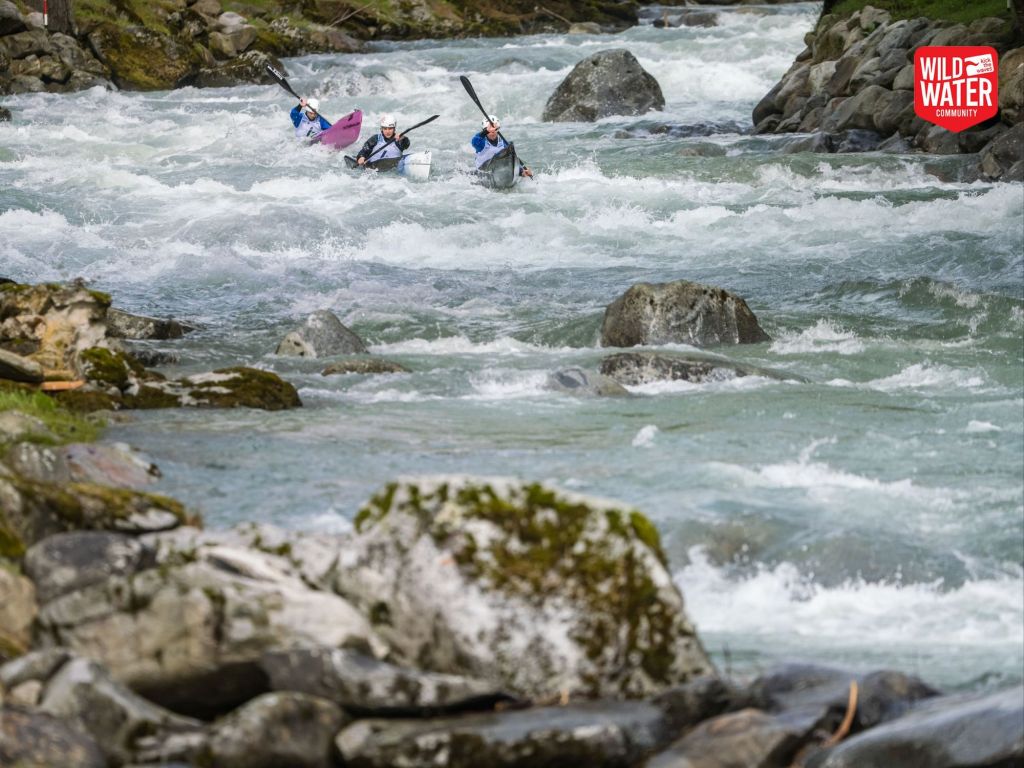
Banja Luka is renowned for the Krupa Canyon section. This section of the Vrbas river cuts a spectacular gorge through the hills outside the city. It’s hosted numerous international competitions and this renowned course, would not be the section were going to race.

We would instead be racing on the much flatter section of the Vrbas that runs directly through the city. Apparently, there was some sort of issue with the road access on the canyon but we were all having flashbacks to last years race in Veles (which was extremely flat). As a general rule of thumb, I think that if you can paddle something in a marathon boat, then it probably should be paddled in a marathon boat. River racers are for the properly bumpy bits.

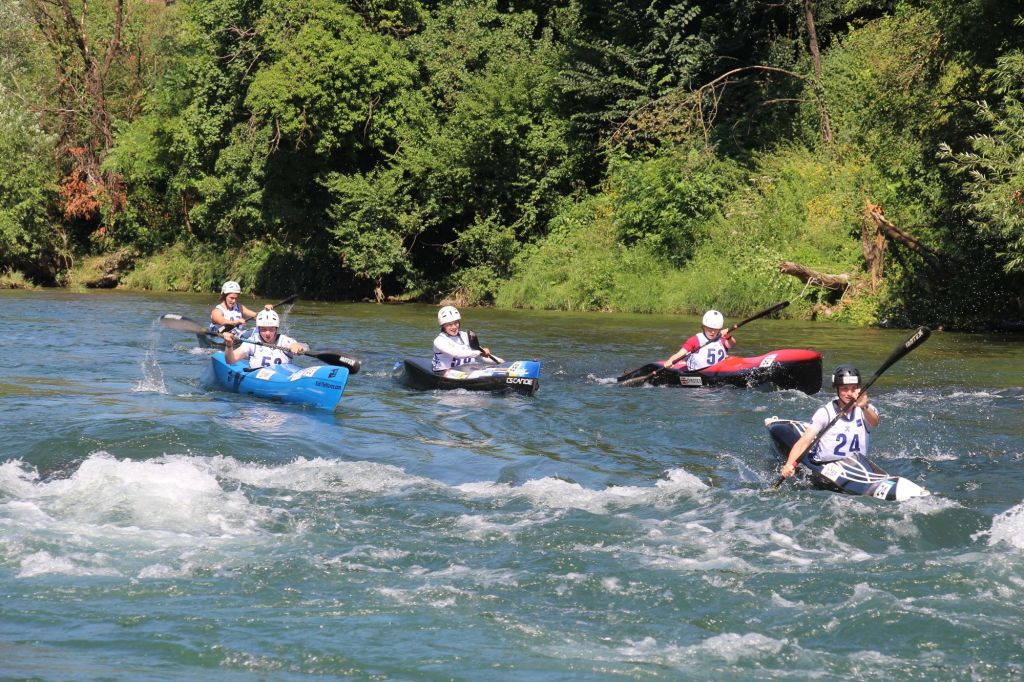
Yet after a first lap on the river we were relived to find there were at least some bumpy bits and a few swirly areas to boot. In fact in places the river almost felt weirdly British, if you ignored the lush blue water and hot weather. Needless to say it was still a bit of a gear shift from Mezzana but it seemed like they’d be enough rough for an interesting race, particularly for the mass start – the event that had drawn me to this set of world cups.
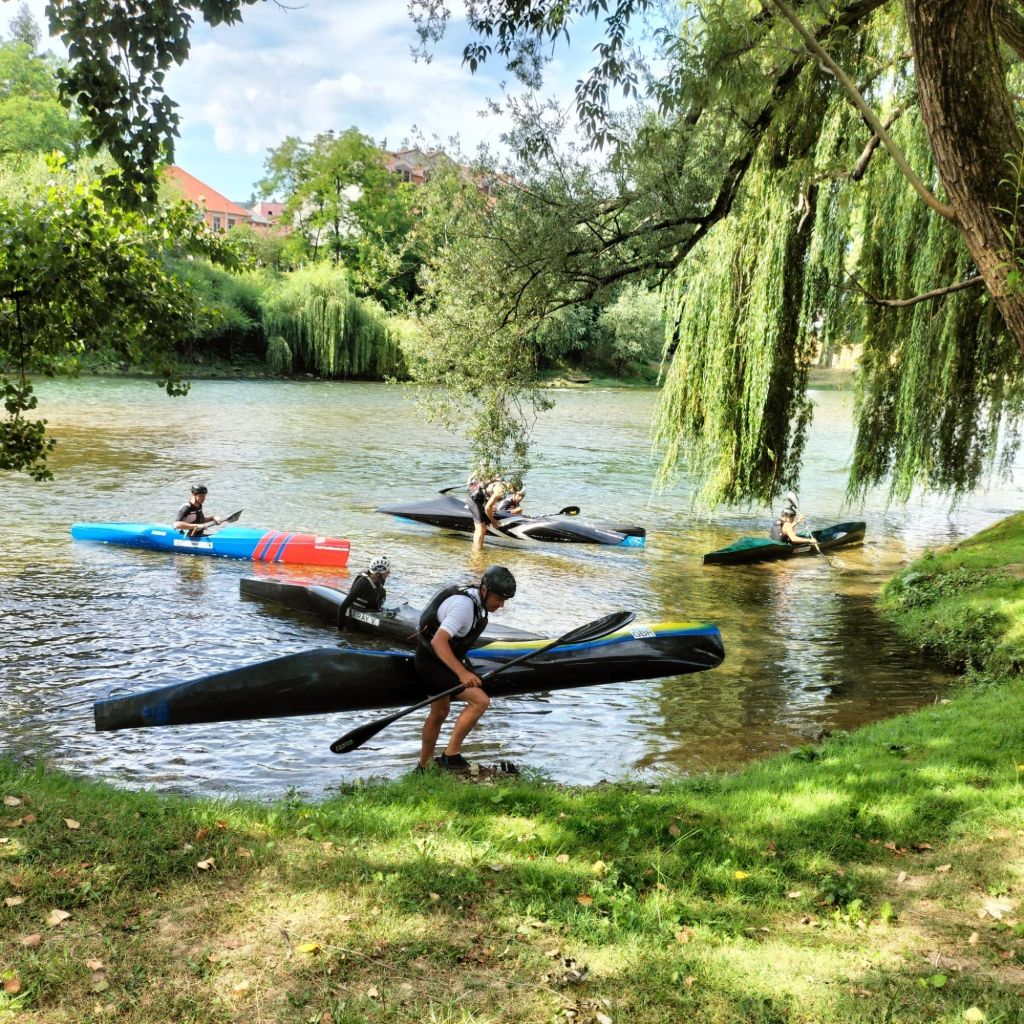
Bosnia is an, “exciting” country. To put it politely, the politics are… complex, however all the people we met were extremely warm and welcoming to us. And, extremely understanding when Alex and I realised we didn’t have any cash for our coffee – we did eventually pay. Just after a short side quest to find an ATM that wouldn’t swallow our cards.

As a general rule of thumb the further east you get in Europe the ‘looser’ things get. I mean that both in metaphorical sense and with regards to the taps in our accommodation.
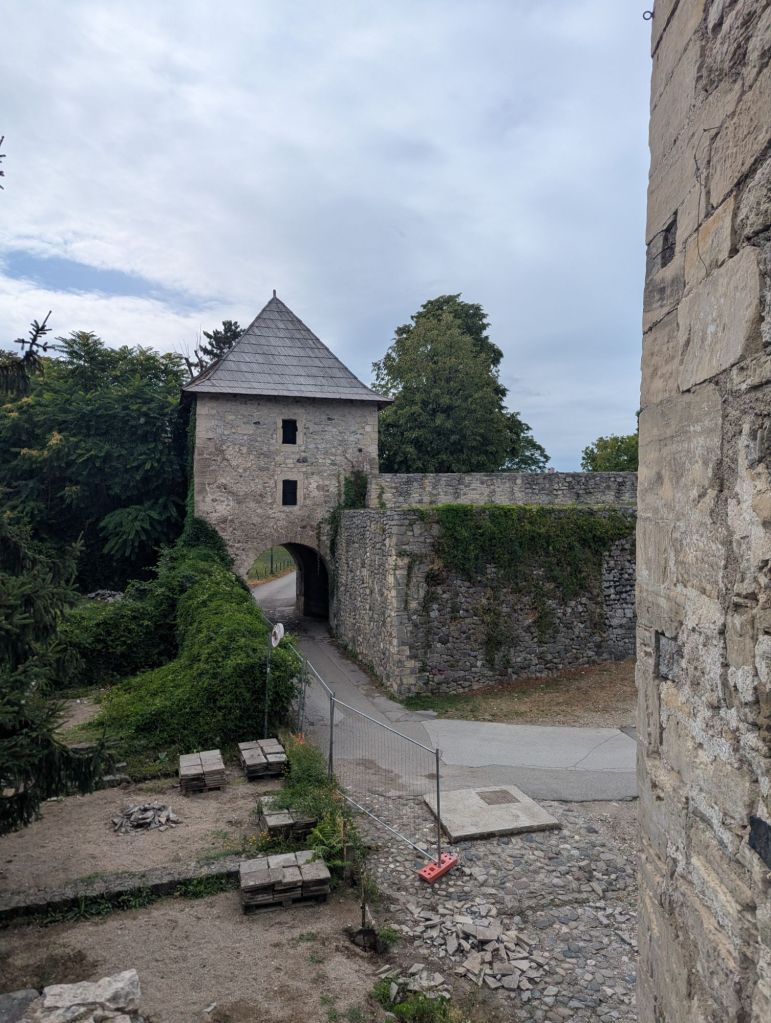
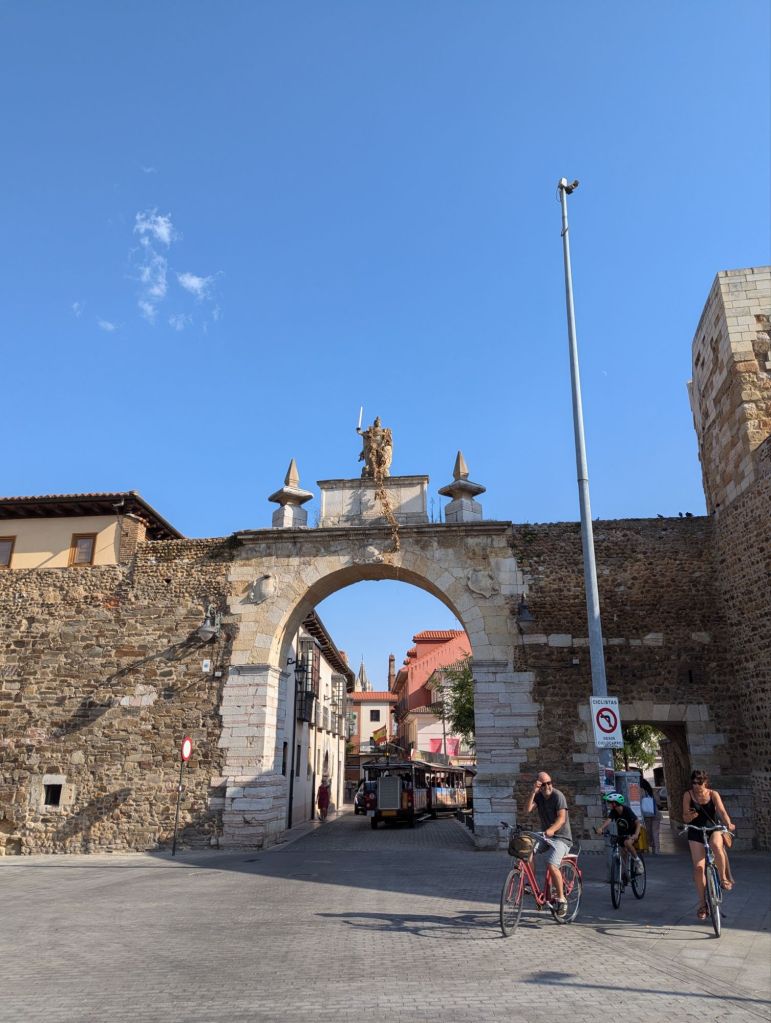
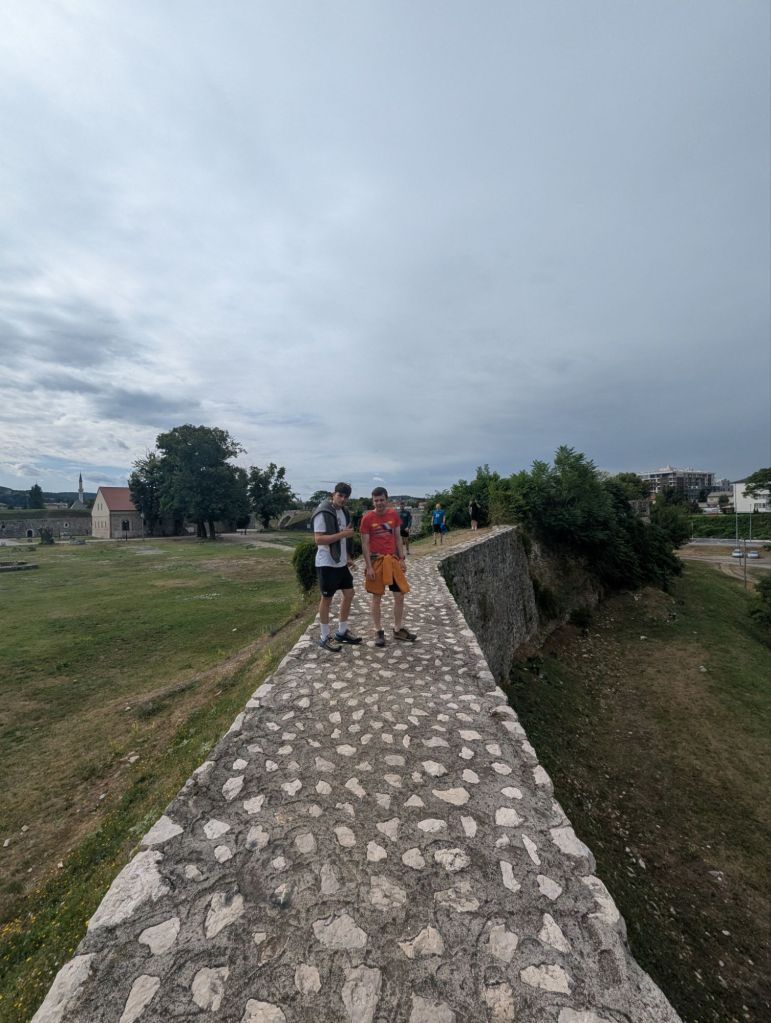
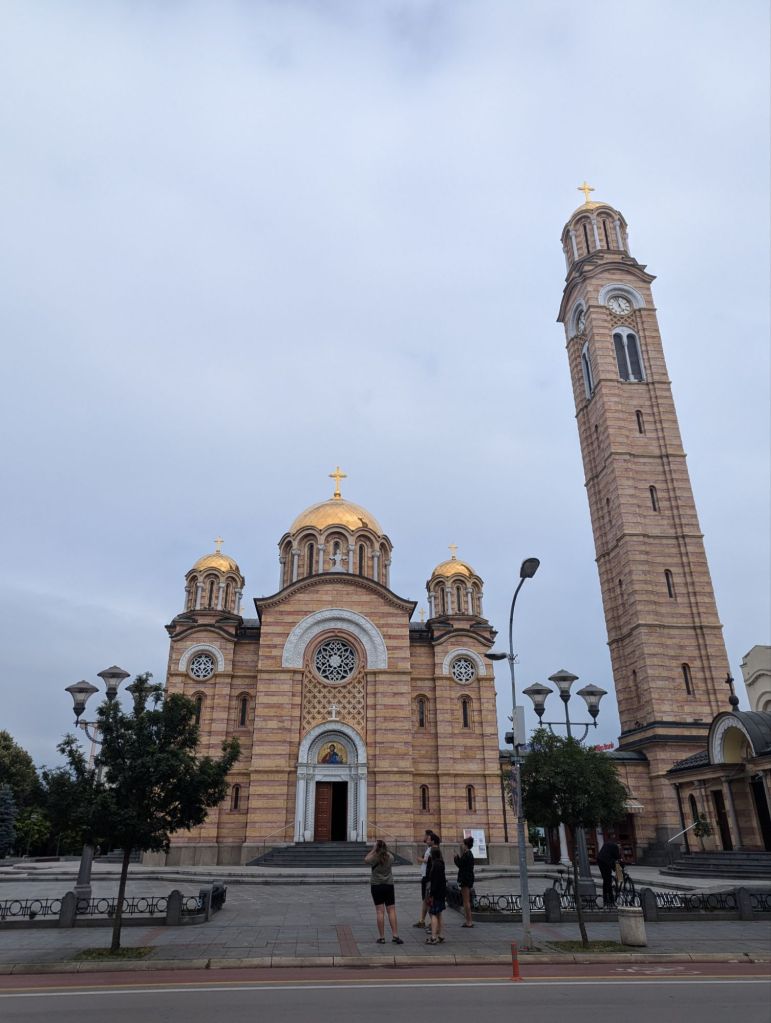
Bosnia’s building regulations are second only to North Macedonia, with our accommodation featuring the presumably mandatory sprinkling of exposed wiring that gives life here that extra little spark. But while this attitude of lax building regulations would send a shock down many a Brit’s spine, it also comes with an air of freedom. During an afternoon ‘tourist-ing’ around the city we found ourselves free to roam the walls of the ‘Kastel Fortress’, despite the star-wars-esque approach to railings (i.e. None – something that would be unthinkable in the UK). It is nice, to be in a place where the powers that be trust you to not to merk yourself at every available opportunity. Or at least accept that if you do, it was your own damn fault.
Of course the quirks with our accommodation didn’t end with the exposed wiring. Us boys were situated up in an attic apartment which had been recently redecorated. No expense had been spared on the fixtures, but clearly the fitting had been a slight afterthought. A large luxurious sink in the bathroom, now obstructed the door from opening forcing any would be loo-user to awkwardly shimmy through the skinny gap that remained. Meanwhile the kitchen sink was tucked so far under the rafters, that it required a Quasimodo impersonation any time you wanted a drink. And whoever had installed it had clearly given up before connecting the overflow. Alex best summed up the accommodation, exclaiming “Its like staying in a Turkish Barbers”. There were even glimmers of sunlight around the edge of the hole, the aircon unit had been thrust into. However, we were grateful for the unit. It was over 30 degrees outside, but mercifully that overworked unit kept our room at a cool 17 – cold enough to give me the shivers at night.

Still it managed to rank as one of the better places, we’ve stayed. Having a bakery on the ground floor was wonderous. Leon alone must have spent a fortune there with his new found penchant for their ‘cheesy bread pastry thing’ (Pita Zeljanica?)

Not being particularly complicated, we more or less had the river down in the first couple of days. That gave use Wednesday as a rest day, before the onslaught of racing scheduled for the Thursday, Friday and Saturday. And what to a bunch of canoeists do on a rest day? Go canoeing of course!

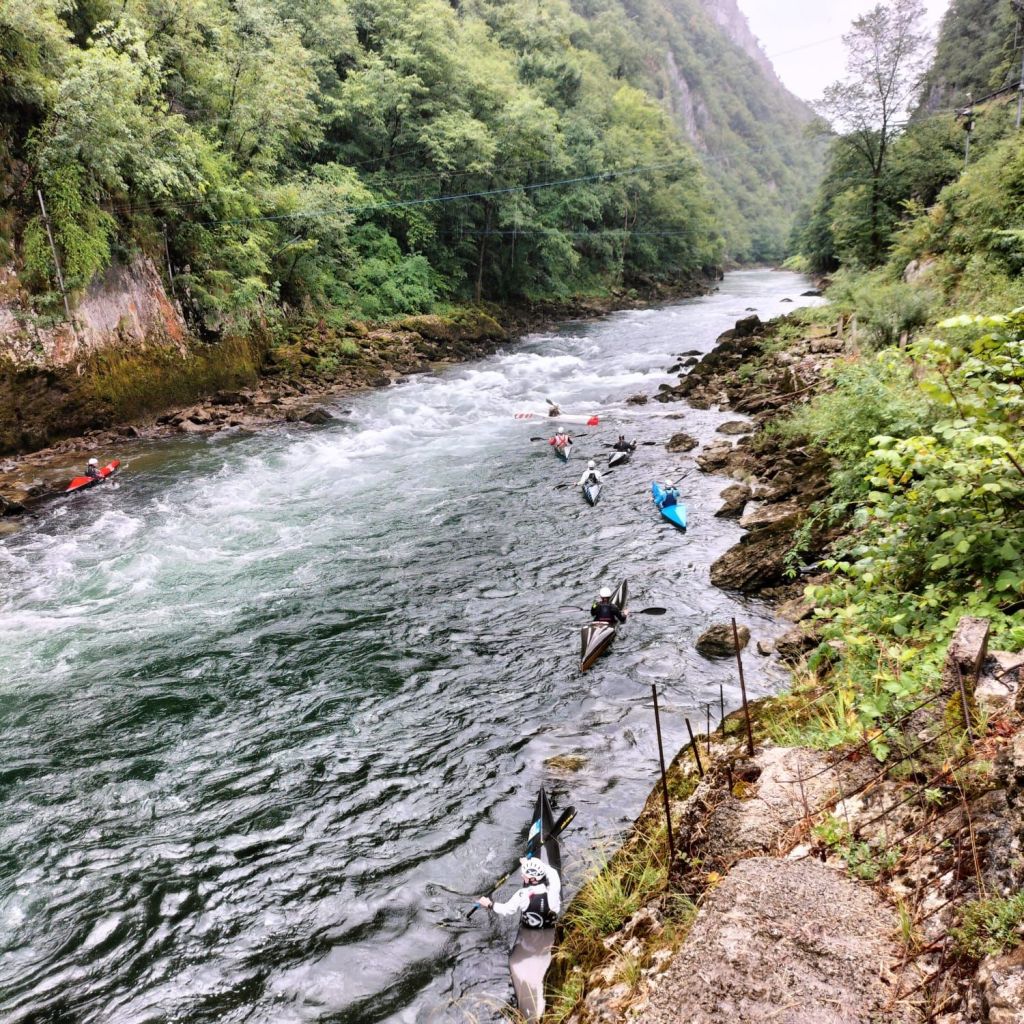
While we weren’t racing on the Vrbas Canyon Section this year, next year it will host the World Championships. To us it seemed very rude not to go give it a little scout while we were in the area! The rest day meant a leisurely morning departure heading south from Banja Luka into the hills. The glaring sun that had defined most of our practice days had been usurped in the night by a thunderstorm. Now we were greeted with drizzle, coating the mountains in atmospheric mist.

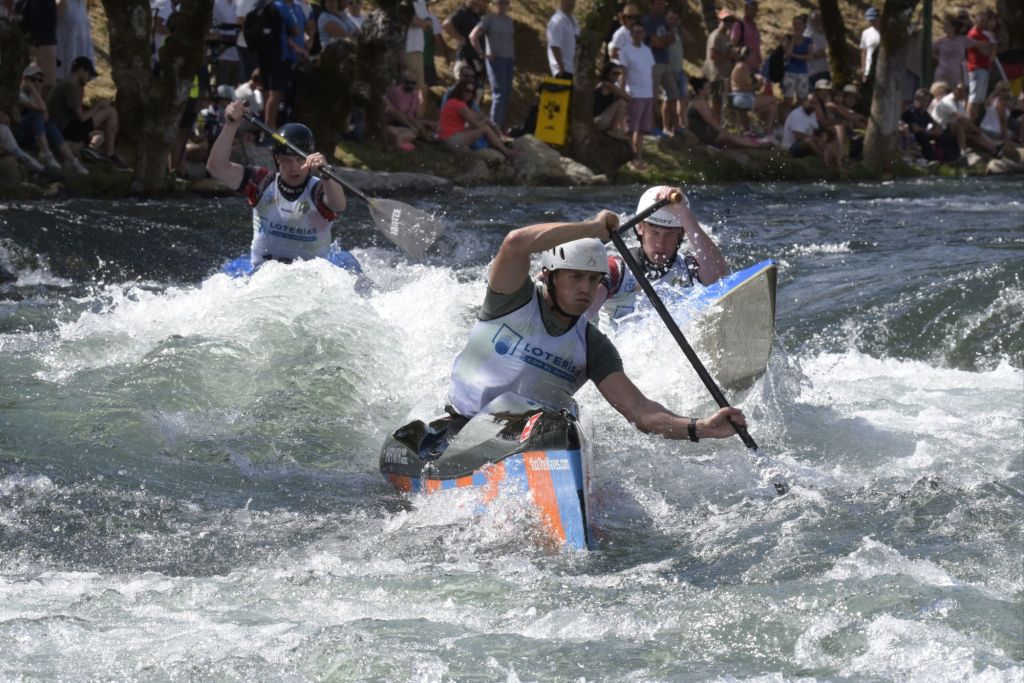
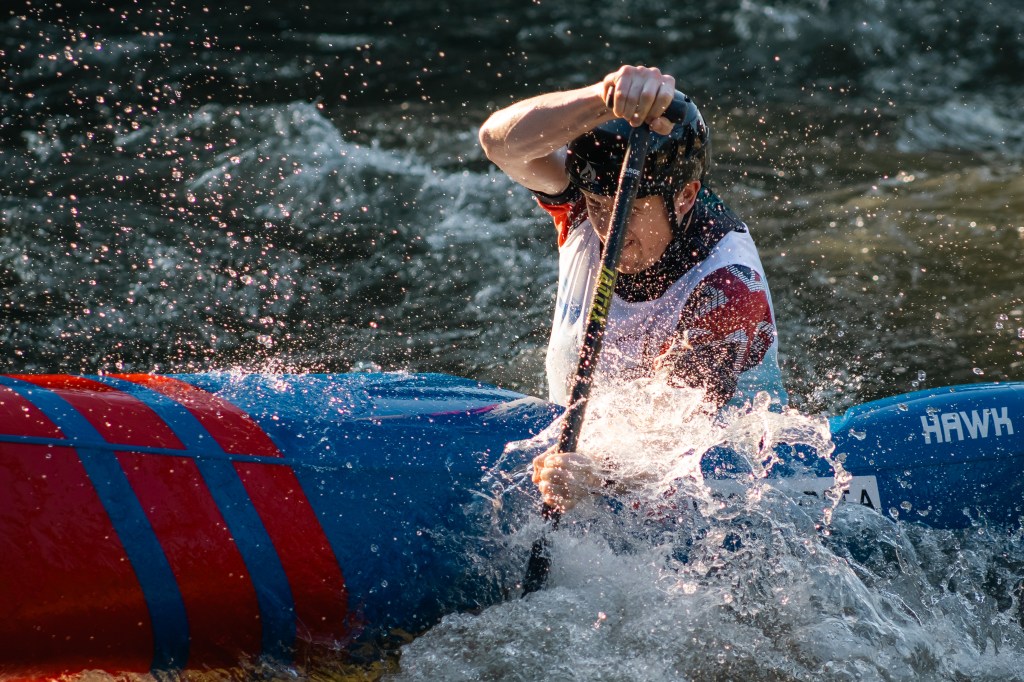
As the canyon enveloped us the river narrowed giving rise to playful rapids mixing waves and boils as the rock walls further encroached. Then came the horizon line. The start of the sprint course. Suddenly the river dropped, only to rise again in peaking and crashing waves. We took a moment to eddy out and watch everyone through the grand rapid. Then it was playtime. We took it in turns to cross the mighty haystacks, and taunt the crashing waves. River racers are not the easiest of boats to surf, but they are a lot of fun!

Once we had had our fill, we continued on down the second half of the sprint. Another steep section, more waves and then cutting it close to the house sized boulder at the bottom. it was pure joy! From here the river calmed returning back to playful rapids and boils until these too faded as the canyon released us from it’s grasp.

That day we exchanged stories of our extremely restful activity over lunch as Leon devoured yet another cheesy bread.
“Any requests for this afternoon?” asked Jamie.
“Could we go again?” replied Eddie. We all burst into laughter.
“Your supposed to be resting”
“I know, I just love canoeing”.
I think we’re all excited to paddle again here next year, but sensibility prevailed and instead we took the opportunity to do a little ‘tourist-ing’ around the city.
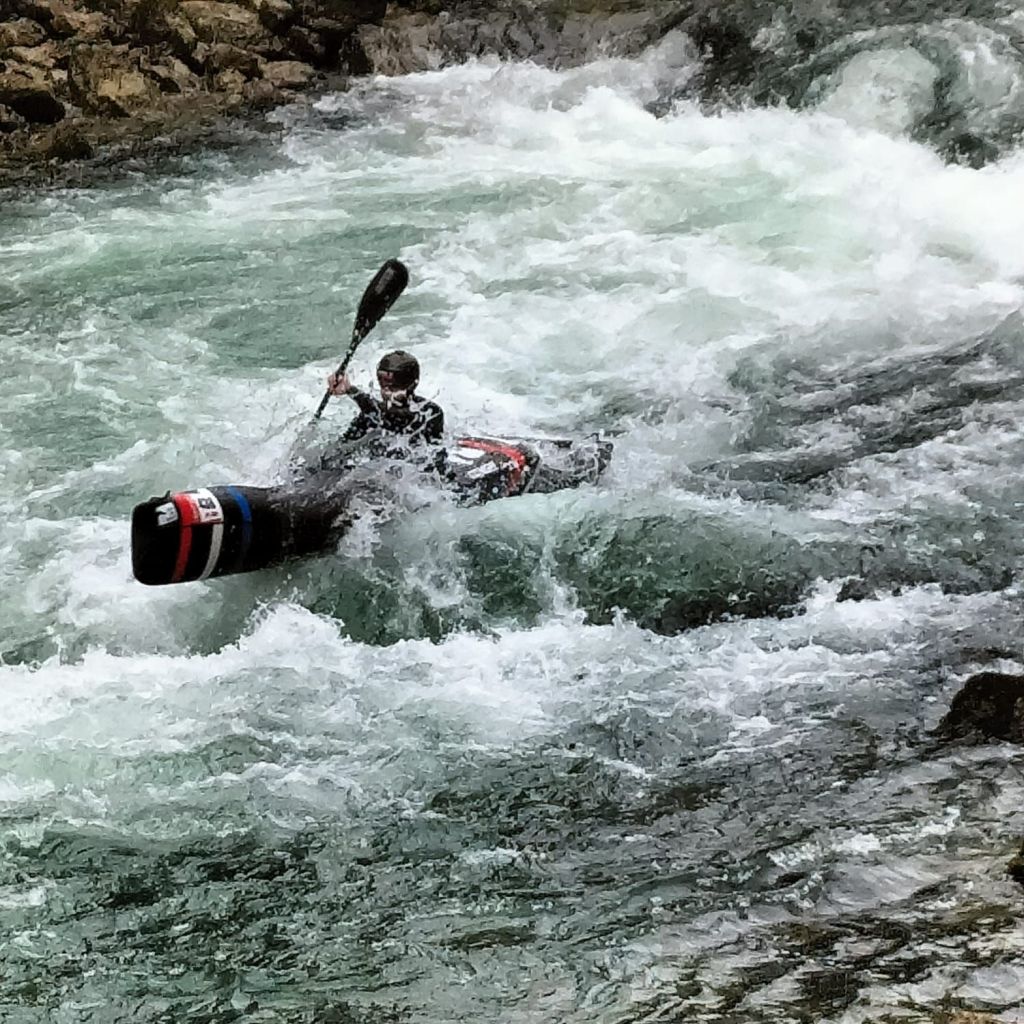
Classic Day arrived, and with it the Sun and the heat returned. It had all the makings of a suffer-fest. As we waited for our starts we sheltered from the Sun in the bus. Despite the odd joke the focus amongst the team was strong. So strong, that Eddie managed to walk into a giant metal chariot, that he somehow didn’t see. We waved the girls off for their runs, and eventually it was time for us to race too.

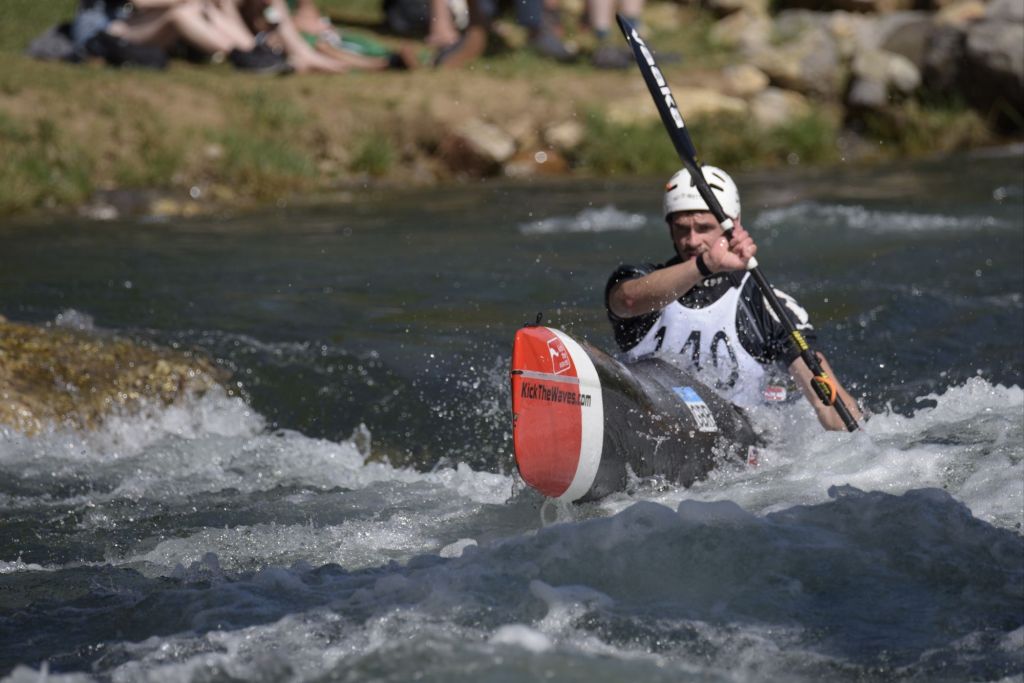
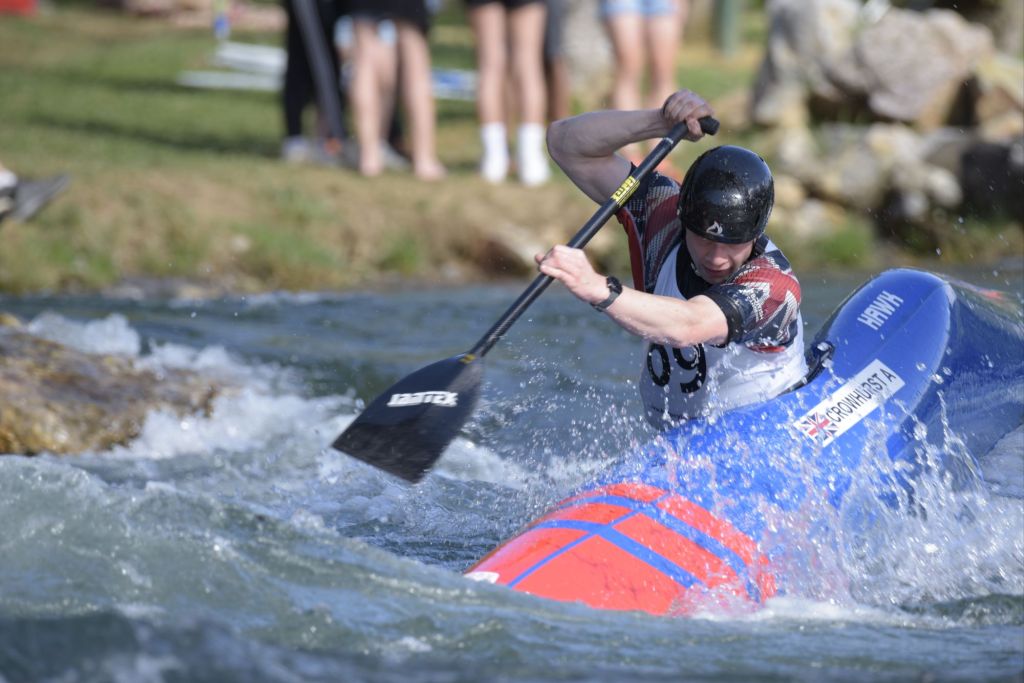
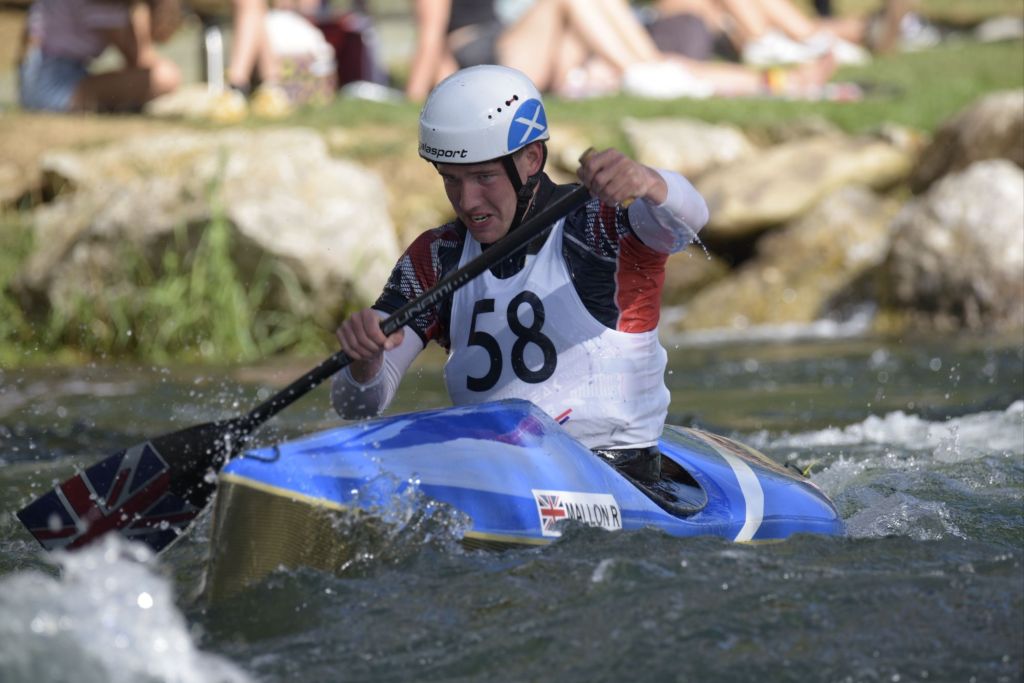
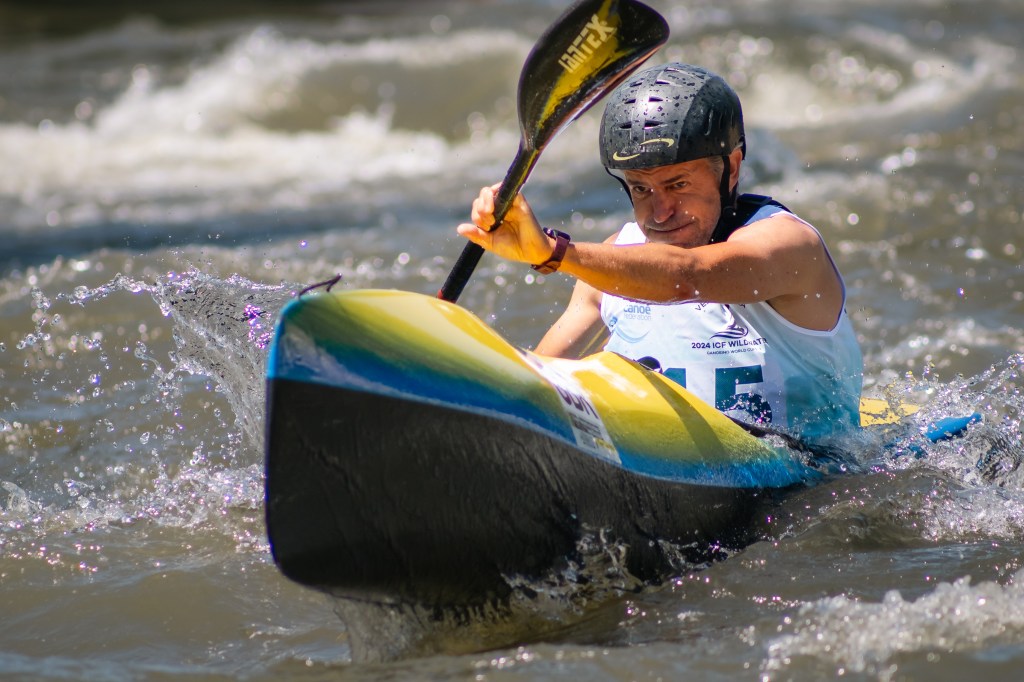
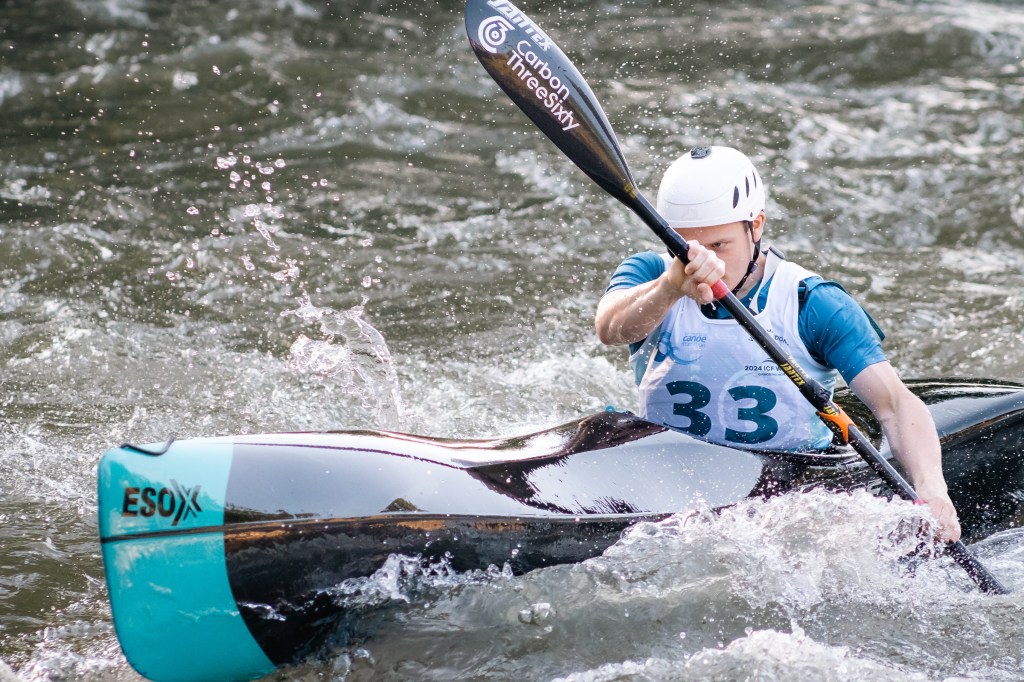
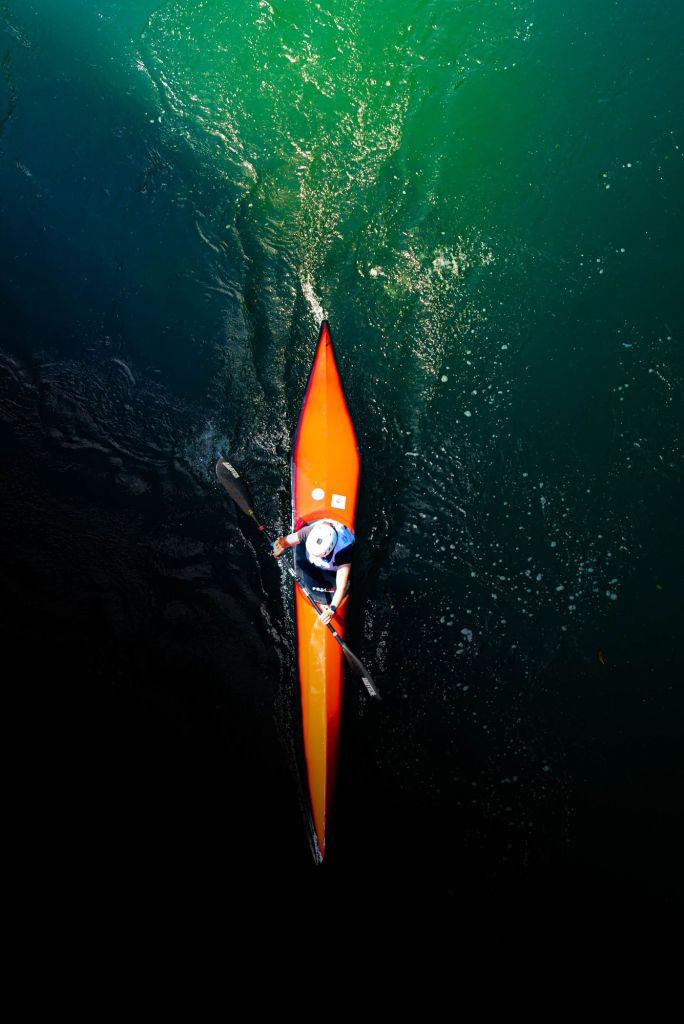
The sun was hot, but mercifully the water was cool. No kags today, just a spray deck and the lightest top I could find. I was boat 99, chasing down previous European Champion Maxence Barouh. I’d joked with Leon earlier about how I was going to catch him – though truth be told I was more relived he wouldn’t have the chance to catch me! My race went okay – I tried hard and there wasn’t any drama, but something seemed to be missing from my form. I finished 23rd, a respectable time, but not one I’m particularly proud of. Unfortunately I didn’t quite catch Maxence who eneded up in 3rd.
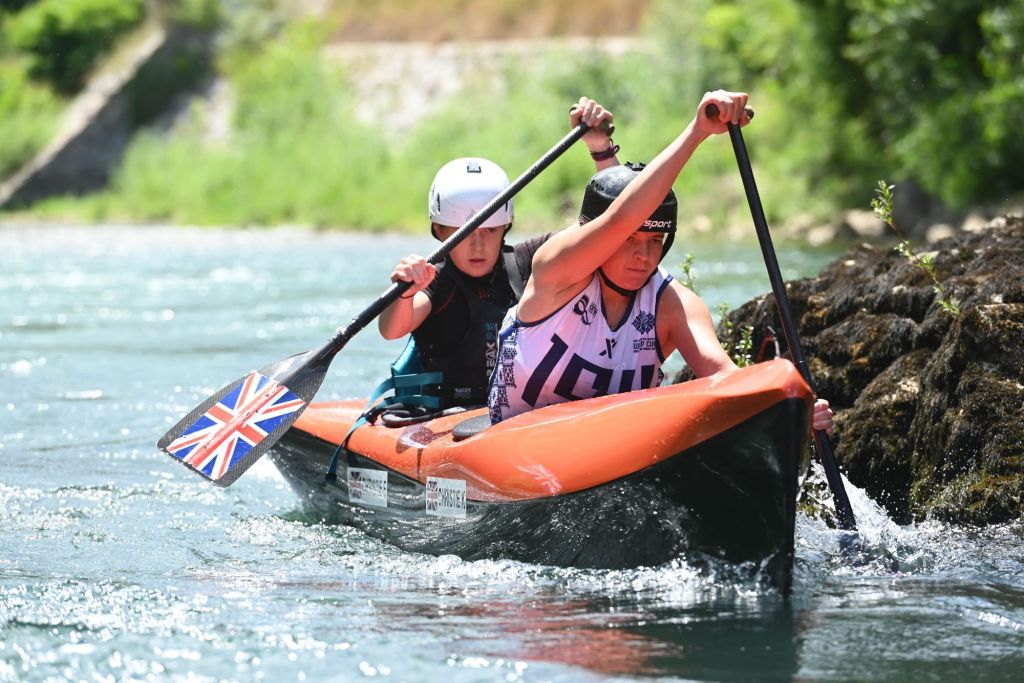
However, any disappointment in my classic result was soon forgotten as Freddie crossed the line. Freddie had decided that today was the day to trial his new nutrition strategy: bicarbonate of soda. Any athlete will tell you that race day is always the best day to try something new. For those not keyed up on the science, sodium bicarbonate (aka baking soda) is an alkali, which means it can help neutralise lactic acid that builds up in your muscles. However, the side effect of bicarb can include bloating and nausea, which isn’t too surprising given bicarbonate of soda is what you put in those kids volcanoes!

Freddie crossed the line in visible discomfort – which to be fair, is pretty common for a classic. Yet, this looked to be quite an extreme and different discomfort to normal. He claimed he’d been fine during the race but a few moment after finishing he began doing his best volcano impression – much to our amusement. Everyone in the British camp had predicted this exact outcome, and to see it manifested like the fountains of Versailles brought tears to our eyes.

Those, not in the British team were less amused. In fact they looked quite concerned. Probably because in his wisdom Freddie had washed the bicarb down with a healthy amount of beetroot juice. Said beetroot juice was now colouring everything a dark red, making the whole scene look pretty macabre to the casual observer. We tried to reassure everyone, through breaks in our laughter, that Freddie was okay and was definitely not dying. Tjaš, from Slovenia, remarked that this is how he wanted to finish every race as he watched the scene unfold. Freddie quipped back “yeah, but you wouldn’t do this just to get a WK1 time” before expelling more beetroot juice from his body.

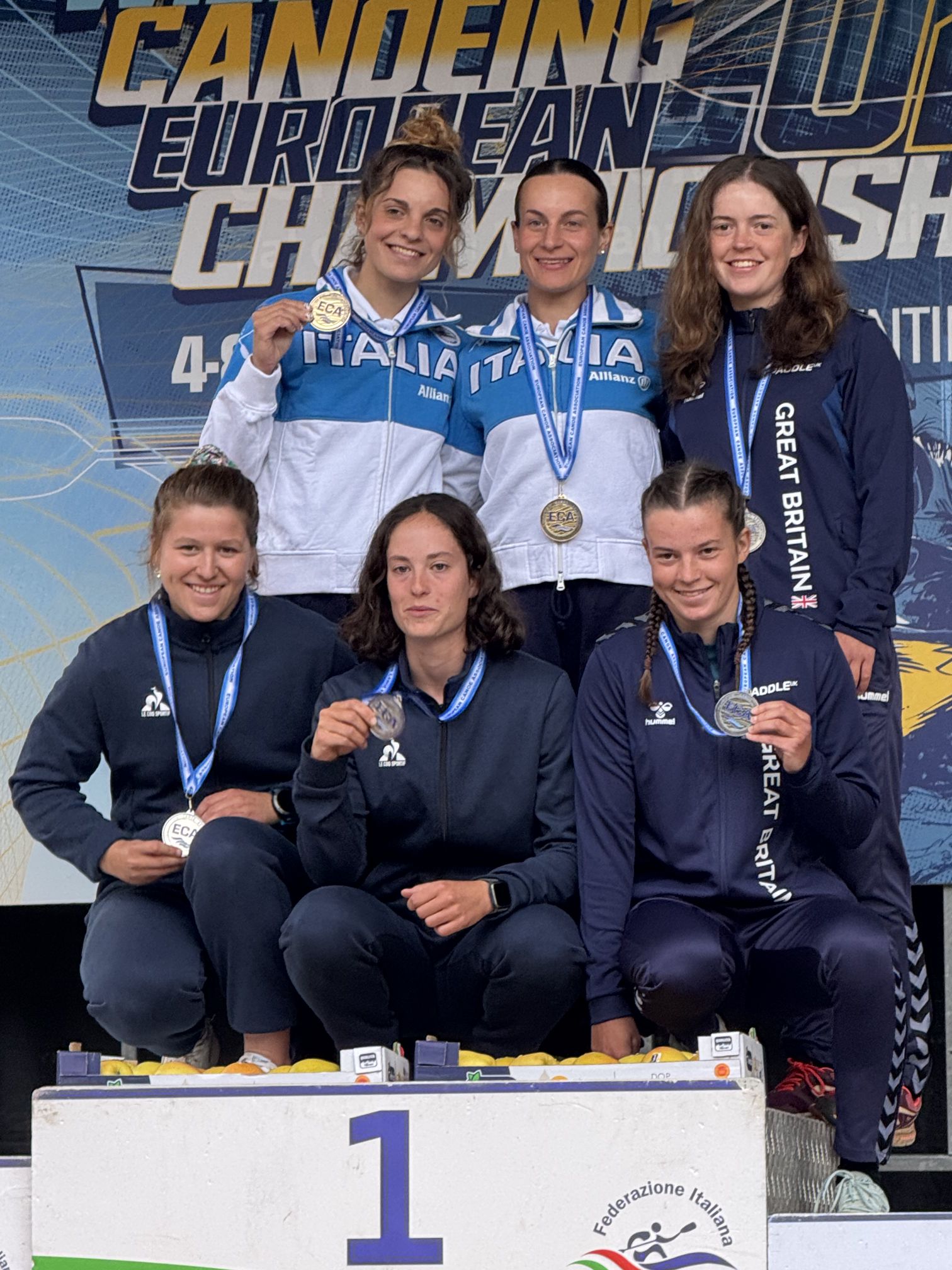
Kerry took a bronze in the WK1 and then the a Silver with Emma in the WC2. Freddie decided not to bicarb the following days.

The following day was sprint day. We’d taken great care to rest up the previous evening in the manner that all great athletes do – lounging on the sofa, marathoning the Shrek films.

The sprint course through the centre of Banja Luka was very reminiscent of the course in Veles: Flat. There was lot of flat. A long old flat section, before dropping into a few waves and powering through to the finish. The waves were a bit bigger than Veles, and it was certainly possible to get them wrong. Something that wouldn’t be too difficult after absolutely burying yourself on the initial flat pool. Though arguable the hardest aspect of the course was narrowly avoiding a hidden reef just off the start, and then making sure you lined up correctly over the horizon line before the waves. However after a few days of practice we were feeling pretty confident, and hopes in the team were high for for a final given the similarities to Veles.

In Wildwater Sprints there are two heats, followed by finals. In the first heat, the first five paddlers qualify for the finals. Then, everyone who didn’t qualify in the first heat races in the second and the first ten paddlers from the second heat qualify for the final. The final is a one and done type affair, and everyone who didn’t qualify for it is ranked by the time from their 2nd run. This means that unless you make it through in those first 5 qualifiers (which I am extremely unlikely to do), the first run is just a practice. Everything is all on the second run.

Personally, I don’t think that makes a great format. But I’ll be damned if I don’t exploit it for my own ends! My race plan was simple: chill out a bit on the first run, – I mean still try, but not the full 110%, just treat it as a practice. Then, smash it on the 2nd.

I finished my first run with a time of 51.87s. All the way down in 46th place, over 7 seconds off 1st. But that didn’t matter, it was part of the plan. And I had rehearsed the important things. Not just the line and locking onto the water with powerful strokes, but also the warm up, getting changed, faffing about and all those little parts that add up to make the race routine.

Then the day got a little chaotic. With heats and finals all on the same day, the schedule was packed. It kept changing up until that morning as the organises shuffled the different classes around. We should have had an hour or two between runs, just enough to have a little nibble of lunch and rest, but as 2nd runs drew near we still didn’t have a start list. Then came word that we’d keep bib order, 10 minutes later we were going on heat 1 timed (a difference of nearly 30mins for myself!). Then the girls started their 2nd heat – in bib order? Needless to say the confusion didn’t make the race prep any easier.

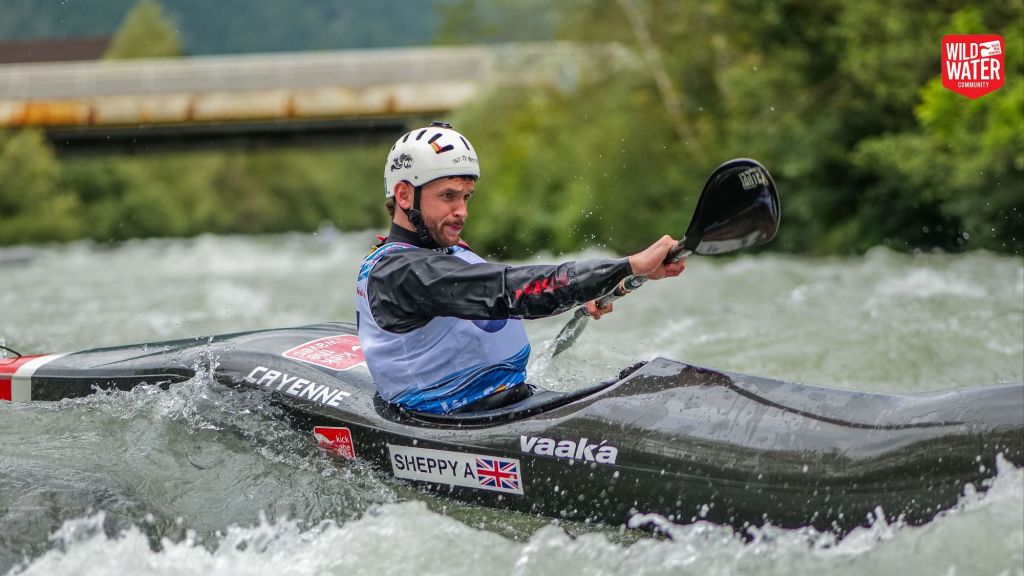
I got on, leaving myself plenty of time to spare. A slightly extended warm up then slotted into my place in the queue. Go time. The only thought in my head was “pick it up, pick it up”. Based off the first run, to qualify for finals I had to knock 5 seconds off my time. To do that I’d have to bleed out my eyeballs before I got to the horizon line. Bleed I did. Somewhere in the midst of the race I faintly heard our coach Billy screaming “Up! Up! Up!”. Time to dig even deeper, 110%. I don’t really remember the rapid, it was pure-auto pilot, but I knew it felt smooth as I poured everything into the last few strokes to over the line. 47.72 seconds. A colossal improvement of 4.15 seconds. But not quite enough. In the end I came 22nd, 2nd fastest Brit – just two hundredths of a second behind Alex. But neither of use were through to the finals.

We gathered along the banks to cheer on Kerry and the C2s. Kerry had managed to qualify for her final in the 1st heat and put in an incredible run to finish joint 4th, 0.2 seconds off the medal. She’s yet to achieve a K1 sprint podium, but it feels like it’s on its way. The C2 was another matter though, with Kerry and Emma securing another silver to match their result in the classic. Amongst the boys there was a little disappointment that none of us made it to finals. We take a lot of pride in the girls’ success, but we’re hungry to replicate it – difficult though that may be. But, as I watched back my Sprint with Billy on his phone I couldn’t hide a smile. It was one of my best sprint results to date, and for that I was proud of it.
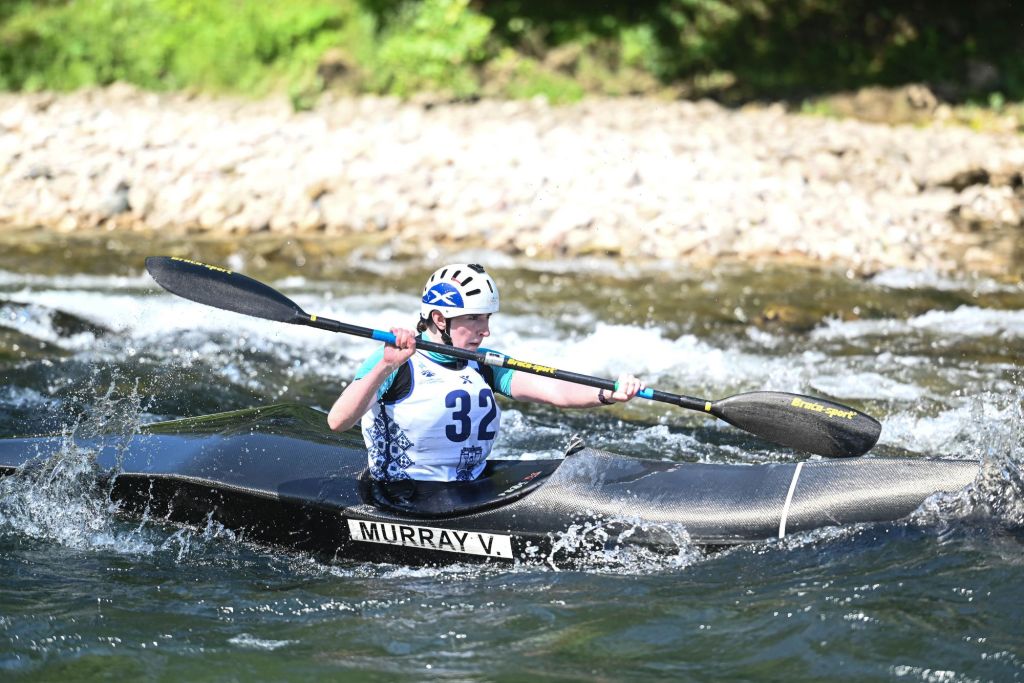
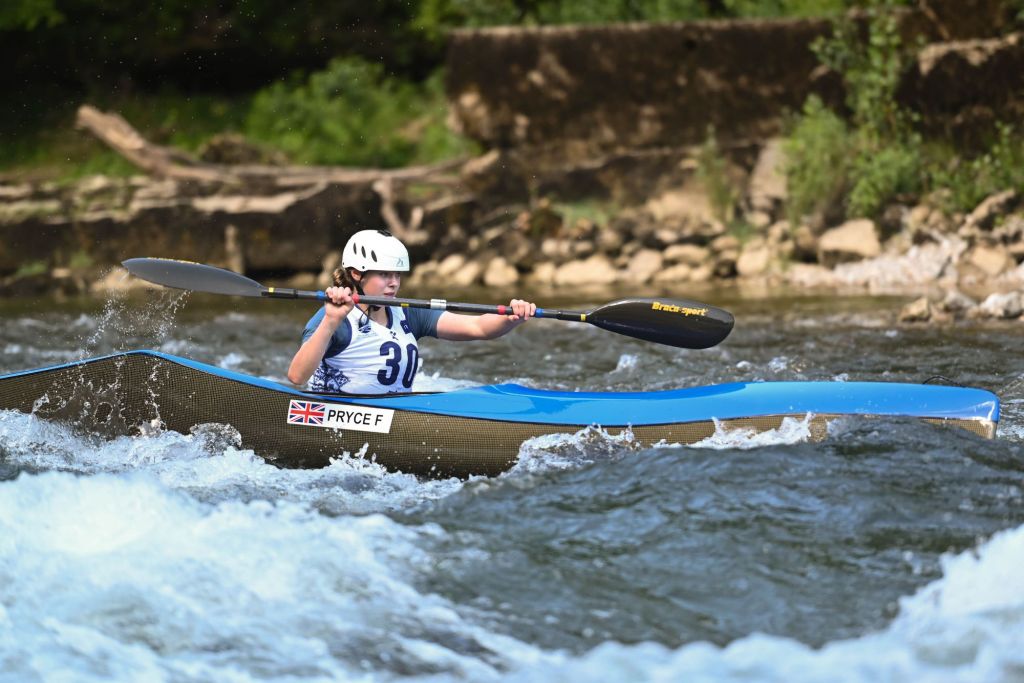
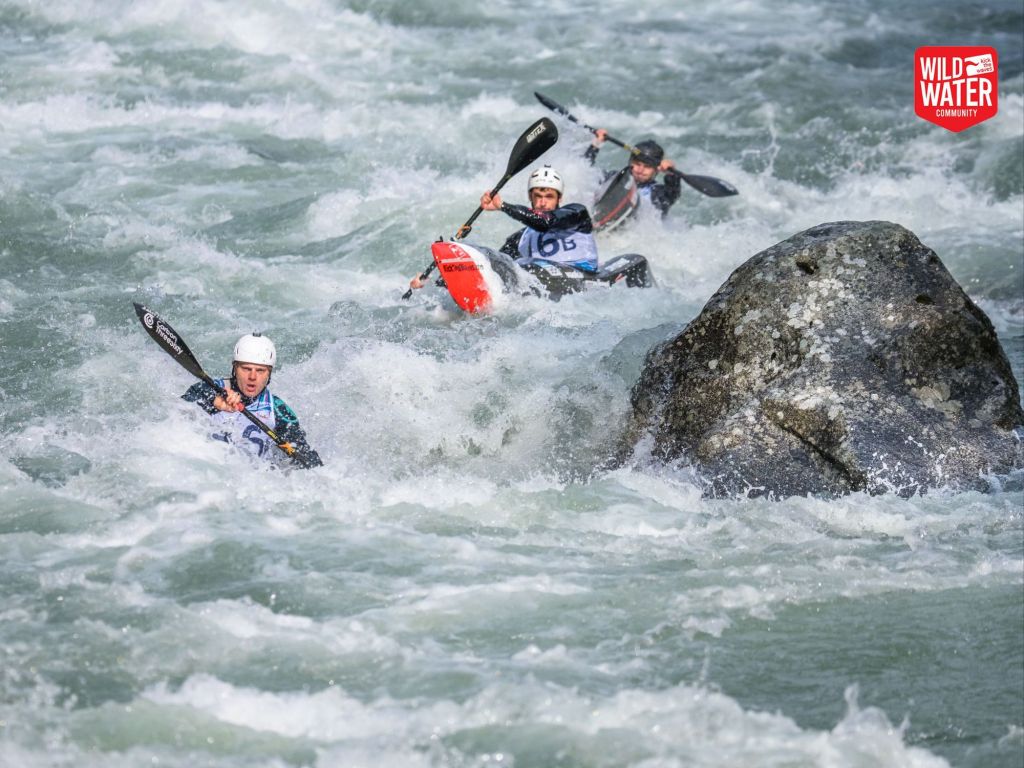
The third and final day of racing brought the Mass Start Classic. River racing usually operates on a time trial format which gives everyone a fair race. In contrast, mass starts are chaotic carnage, but that is exactly what make them so much fun. We normally run a few in the UK throughout the year, but rarely (if ever) do we get such a stacked start line.

Any start procedure on a moving river is destined to be a little troublesome. We were instructed to line up behind a rope which would be raised on ‘GO!’, but with flow nothing is that simple. Any attempt to push or jump the start would lead to disqualification. The line was tight with over 50 boats crammed across the river. I’d been planning to sort of sneak in at the last moment and find a gap between some faster boats in the hope they’d pull me clear from the impending melee. However the plan began to go awry as my ‘last moment’ extended into minutes and the gaps came and went as everyone jostled for position. The tension was building, the pressure was on, and the start line felt like a powder keg ready to…

“GO!”

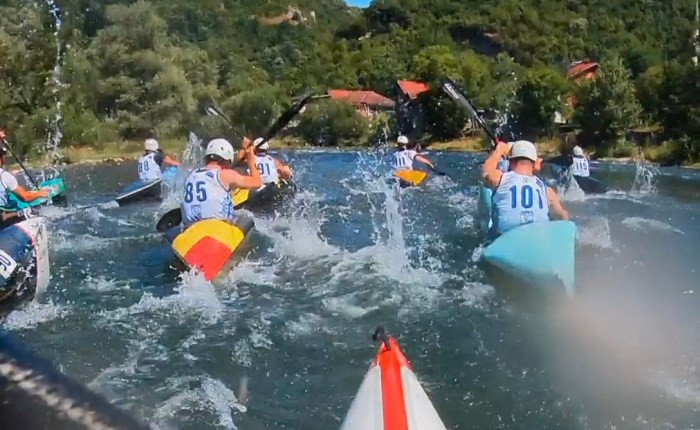
The air exploded with water and whirling blades. I guffed my first stroke. I’d been busy trying to reposition myself on the other side of Lean Bogaerts (111, BEL) but it was to late – I was now in the brawl for positions. Ahead of me Tristan Meersman (72, BEL) and Ilija Kleut (76, SRB) collided, screaming across the river, but fortunately the wash carried my bow over the two paddlers and I tried to power round the side. Ilija came back quick though, now on my right but then someone (Tristian maybe?) clipped my stern spinning me into the Serbian forcing us and a few other unfortunate competitors into the the shallows of the first rapid.

(In retrospect I probably should have backed off and tried to go around Ilija, but isn’t that just the power of hindsight.)

It felt like we were stuck in the shallows for an eternity, watching the whole field come past. The carnage continued as we tried to re-join the flow on the first rapid. Swaths of boats continued to pass, nearly forcing us back into the slow and stagnant parts of the river, but fortunately I was able to bounce my bow over some of the mess and back into the narrow conveyor belt of water.
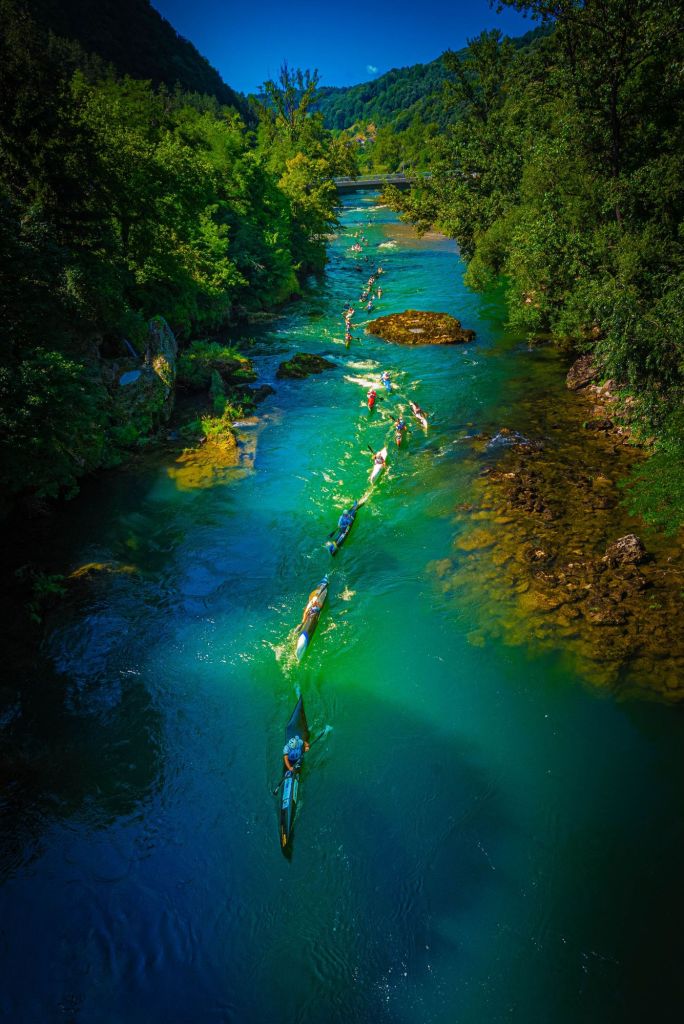
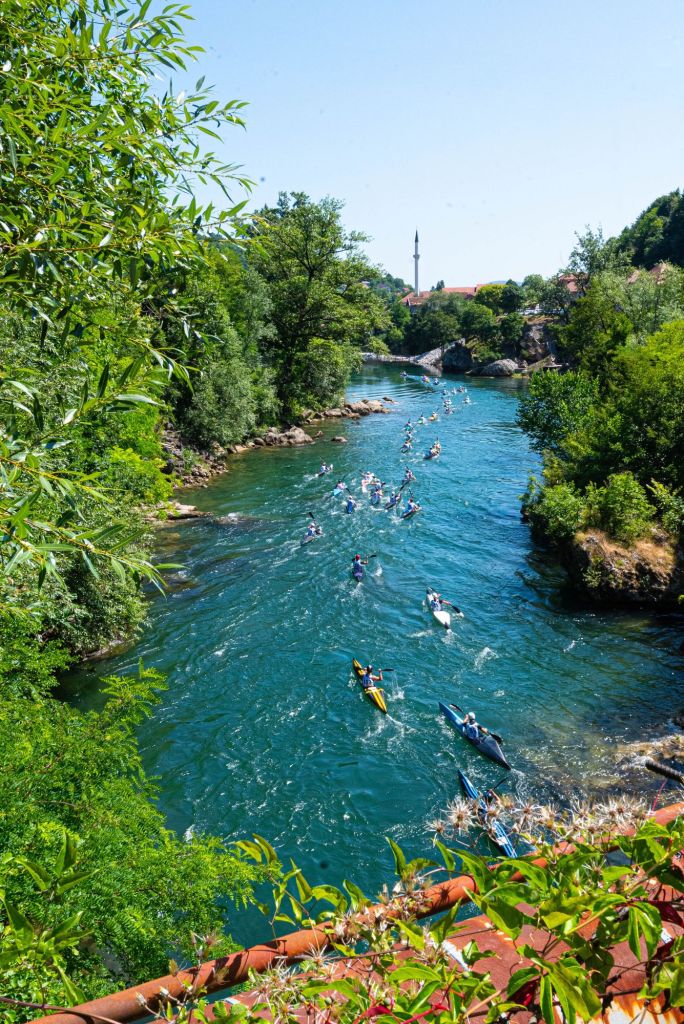
I’d been seeing red since the collision. The frustration had given me a little extra oomph to claw myself back into the race, but as the everyone strung out I began to realise I’d over cooked it a little. I still had some good fight left in me, putting in burns here and there to defend lines but climbing over the wash was becoming a struggle and after the sprint course I hit a wall.

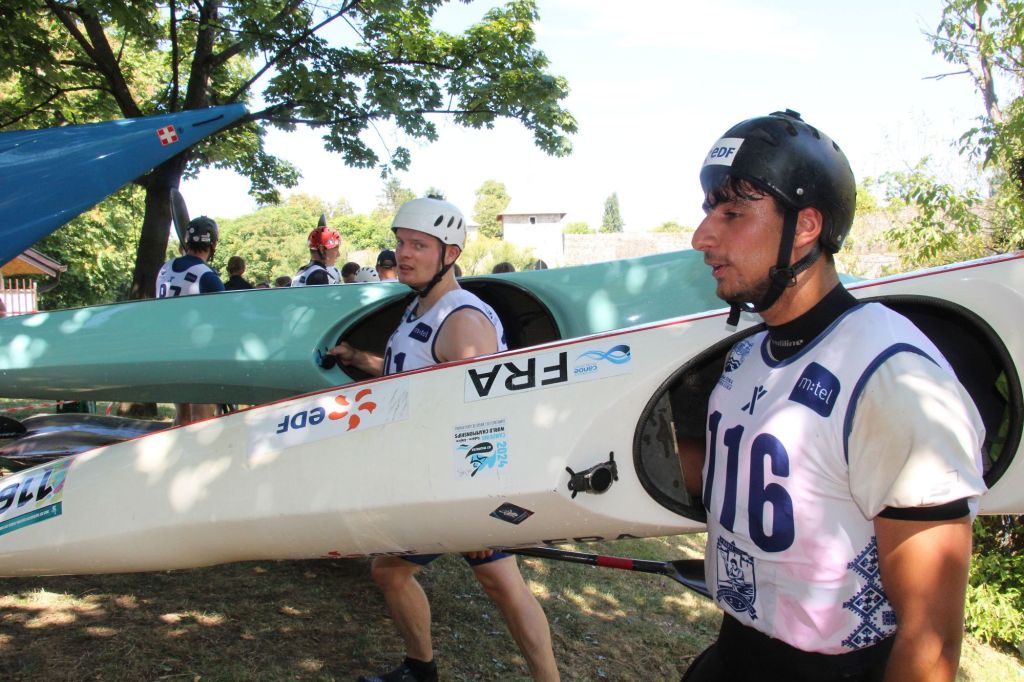
From here it was roughly 2km of flat and once again, to my dismay, the positions started slipping away. Maybe the biggest insult was watching Luca Barone (107, FRA), a self confessed sprinter pull past. It wasn’t a slight I was going to take lying down. I took a brief moment to recover, trying to bring my heart rate down a little, and breath a little bit of life back into my muscles. Then it was time to turn and burn.

I slipped past Aljosa Travar (86, BIH) but it wasn’t exactly a sprint to the finish. My arms felt like concrete, and my lungs where on fire, but I dug deep and paddled as hard as I could. The last the last two minutes of the race seemed to stretch out for an agonising eternity, but slowly and surely I was clawing Luca back in. As we came in towards the line we were level pegging. With my vision beginning to black out and on the verge of cardiac arrest I found one last ounce of power to just inch ahead.

It was a small victory, but a valuable one. Aljosa let out an almighty scream as he crossed the finish it’d been a hard fought race, but an enjoyable one. The smiles around the finish line were testament to that. Everyone gathered to swap stories of one eventful race. As we got off the water for the last time the mood was clear, we want more of these races.
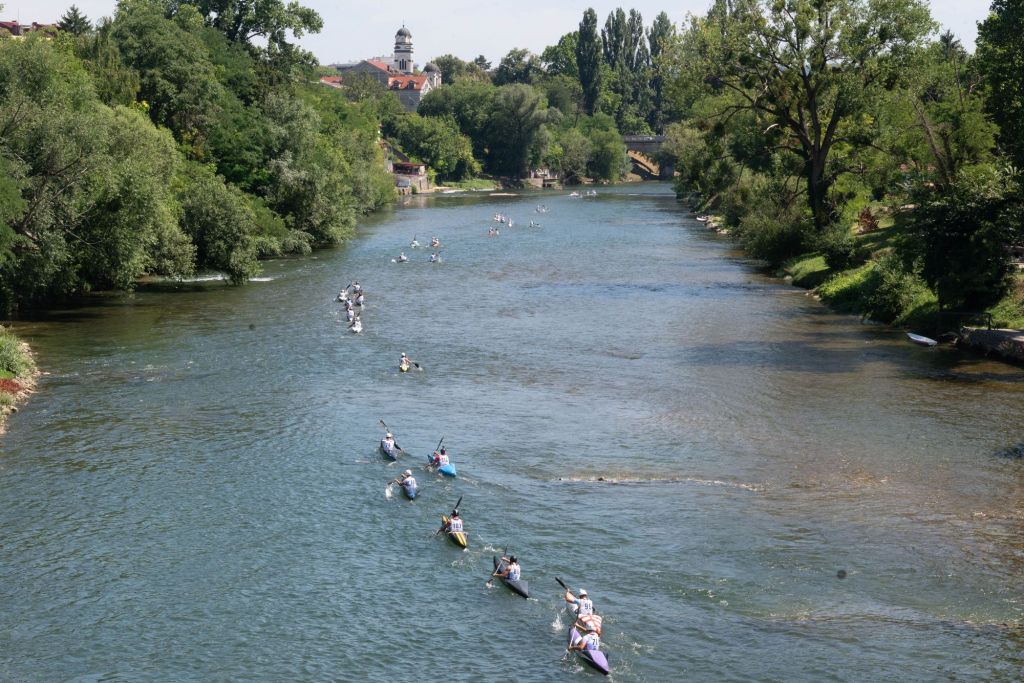
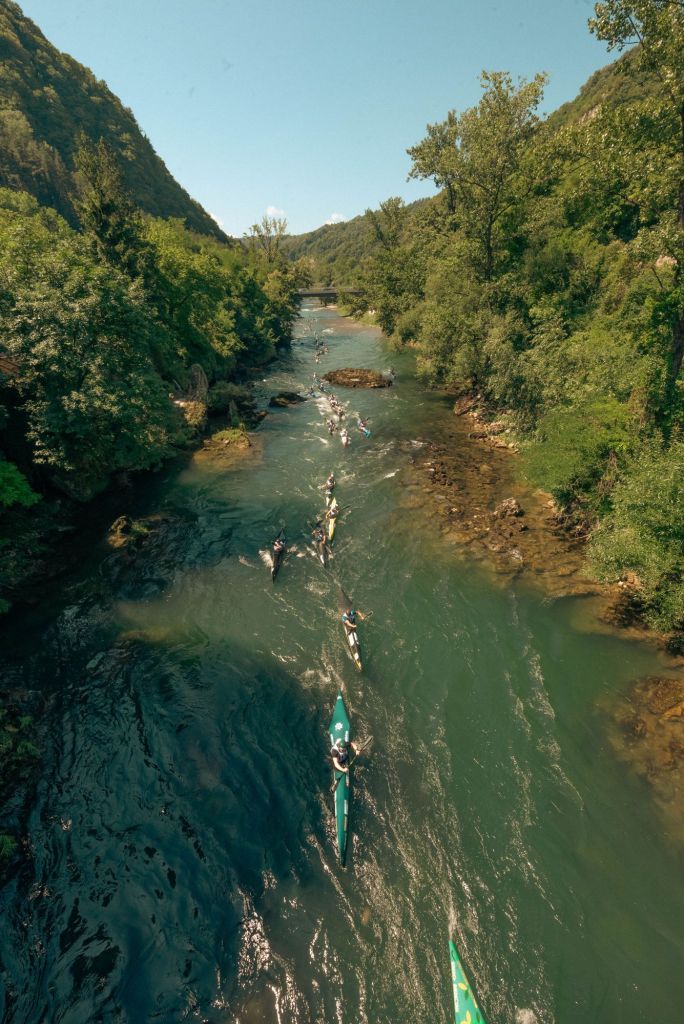
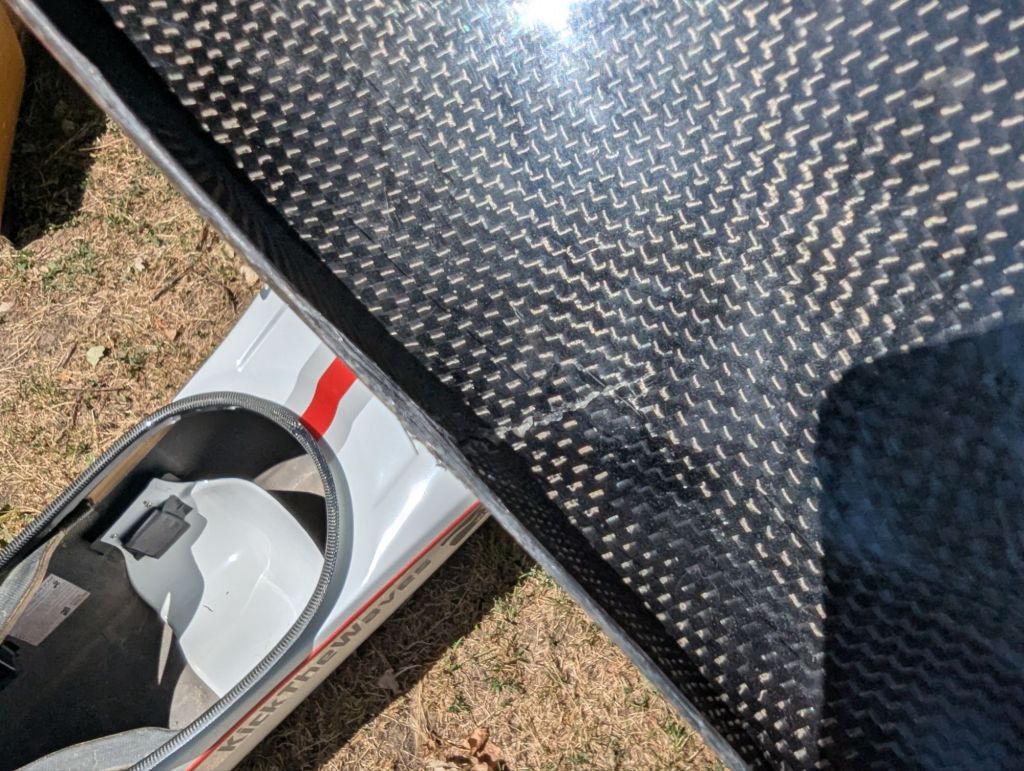
There was however one small oopsie. Somewhere in the scrum off the start I broke my right paddle blade. I’d heard it crunch in the first few strokes and to be honest, I was just grateful I still had a blade at the end. I don’t think I even hit it on anything, but lets be honest river racing blades do not live an abuse free life. So on the off chance, you fancy donating to the ‘Nick’s new paddle fund‘ it wouldn’t go unappreciated.

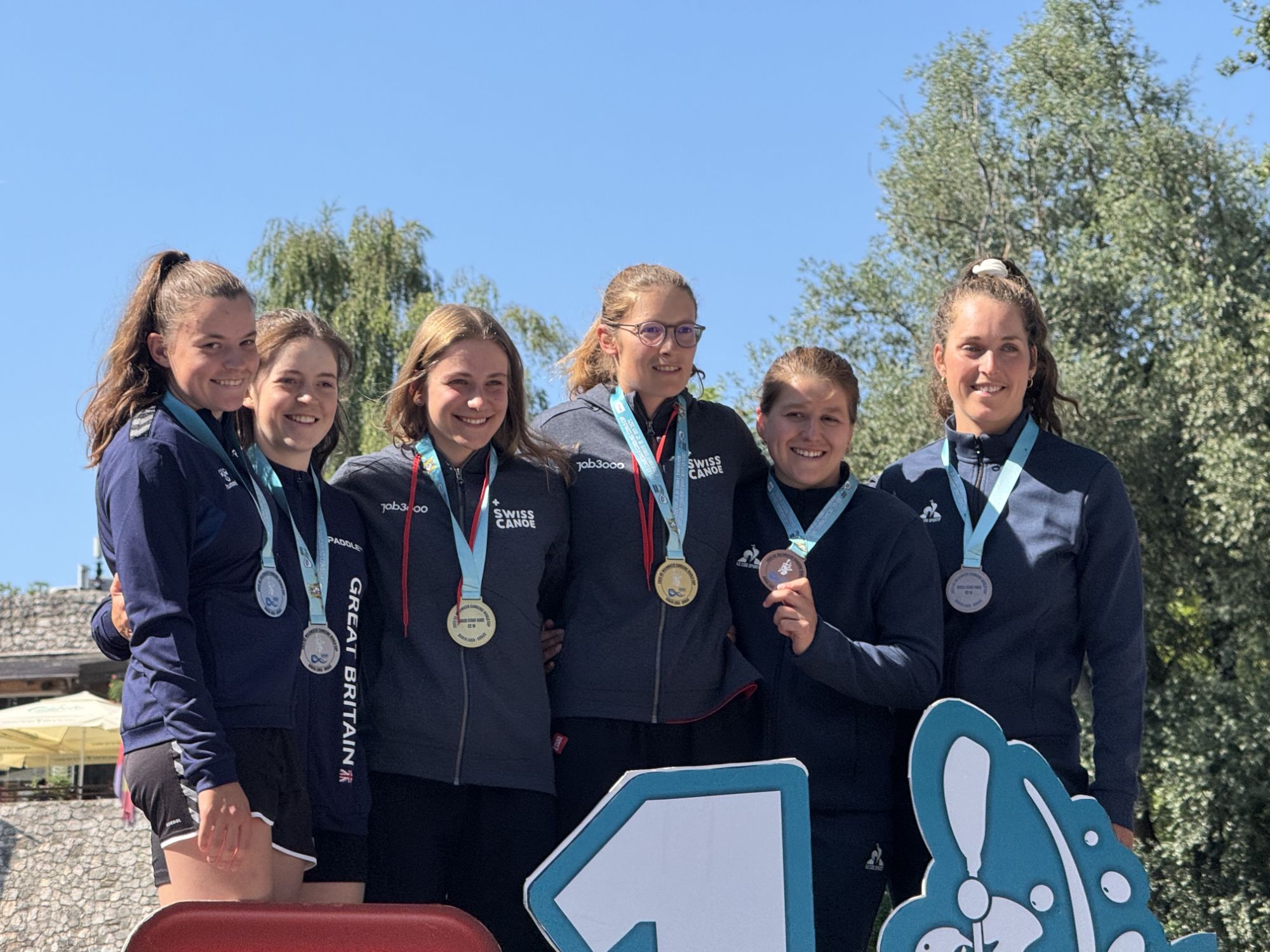
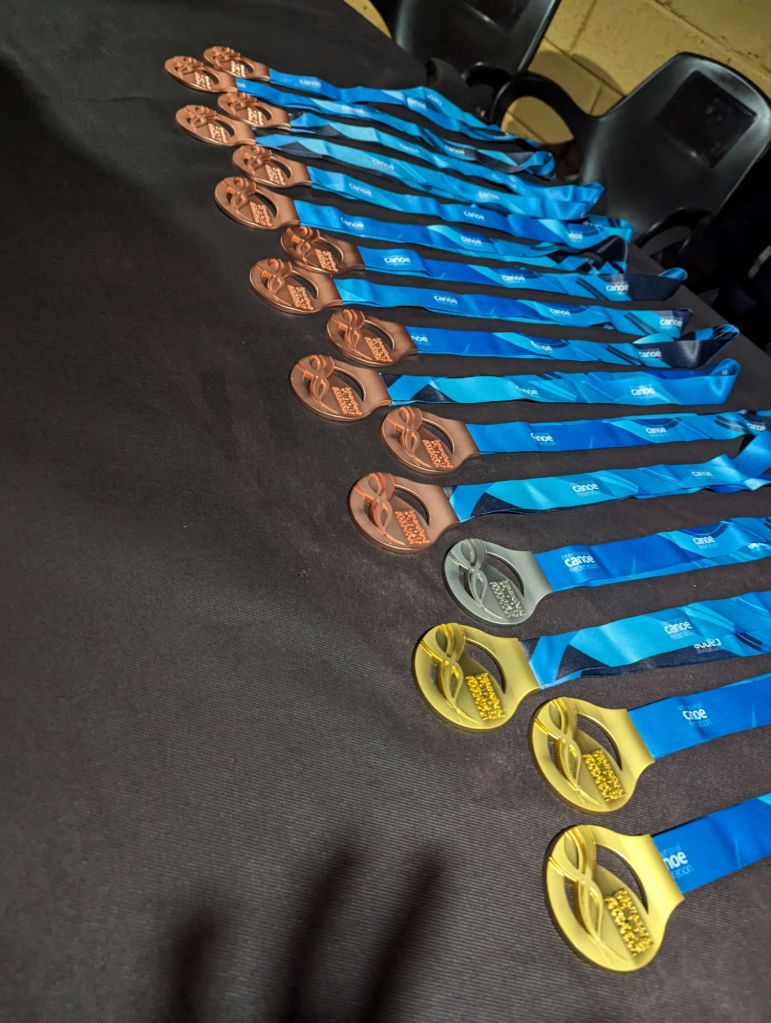
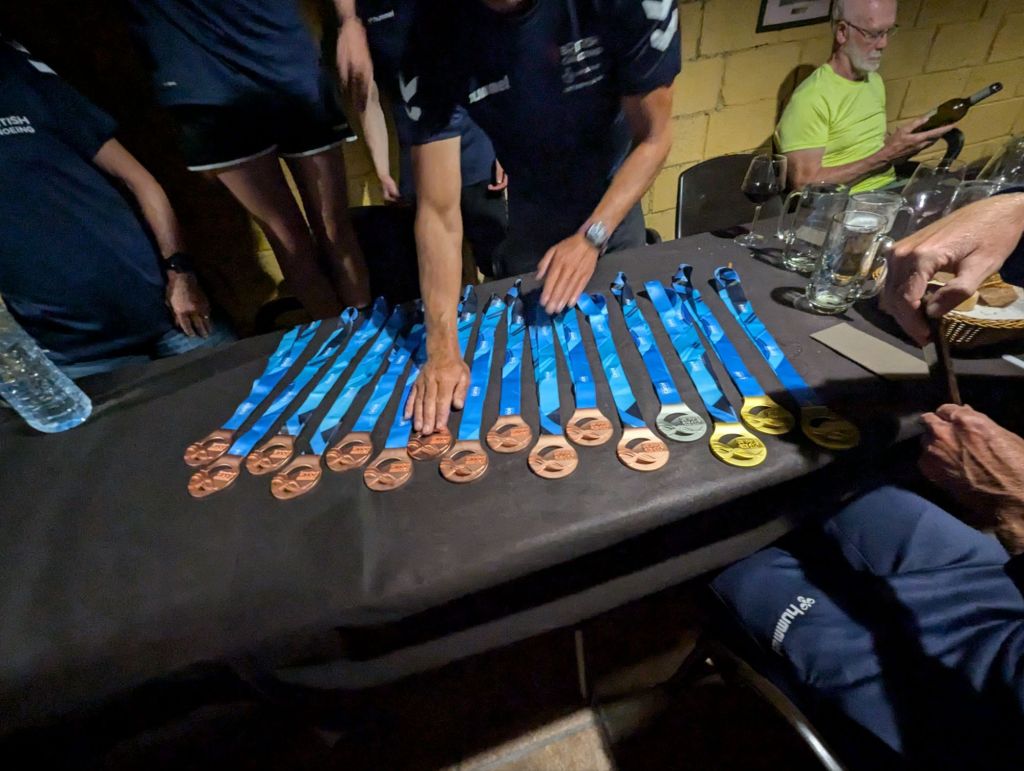
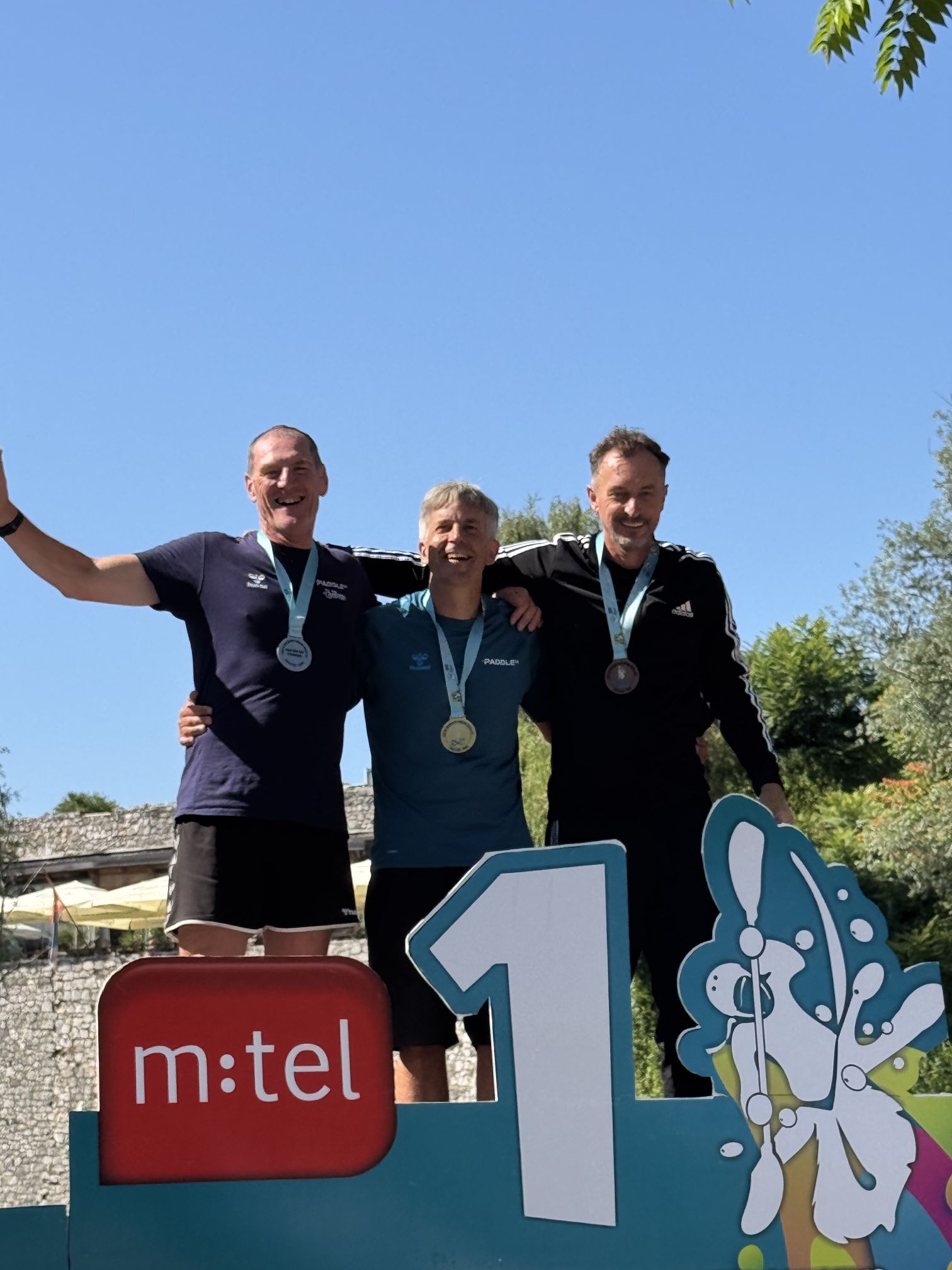
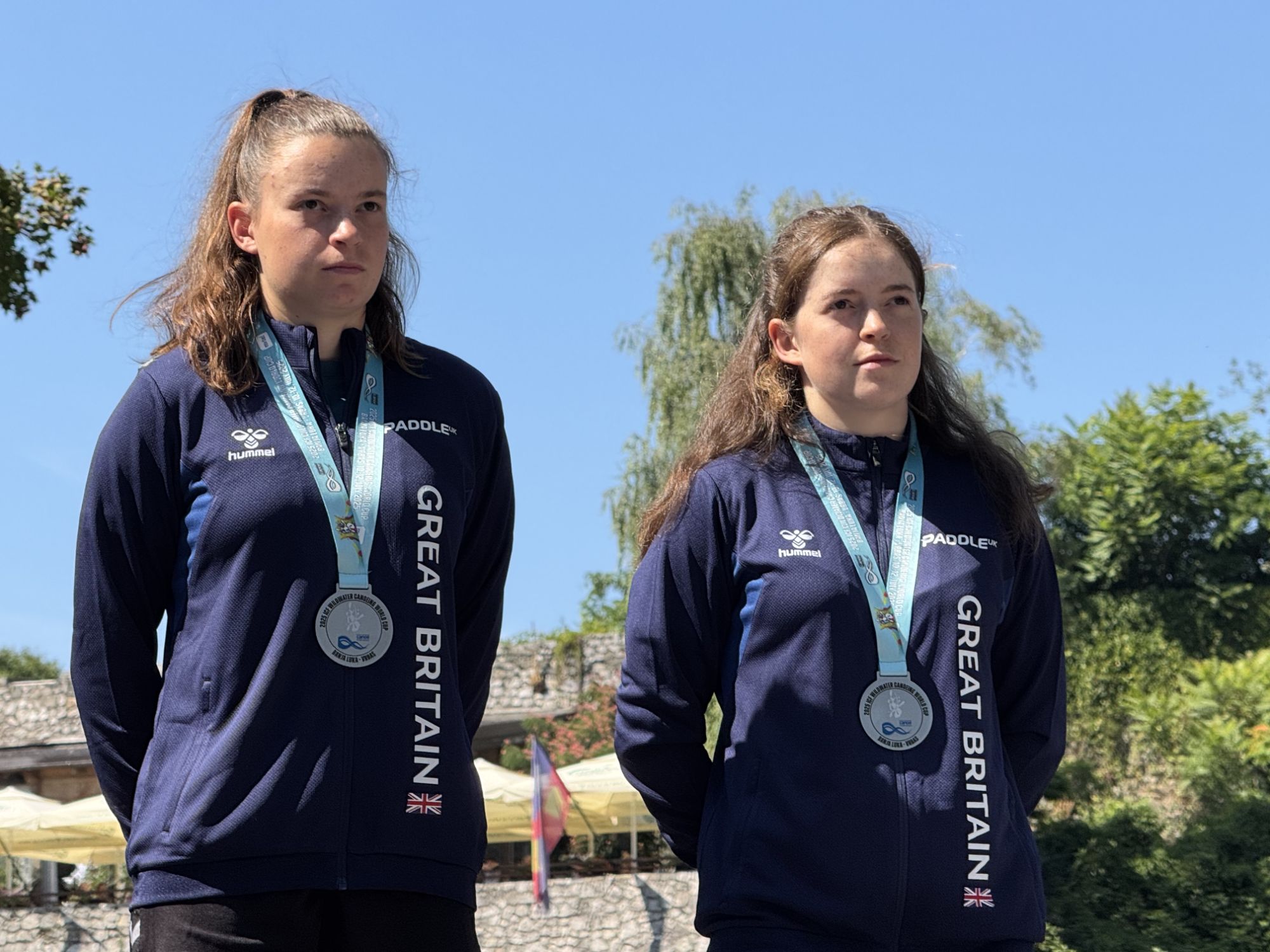
Finally it was time to pack up, prize giving and home. The Christies’ collected their medals – this time including Jamie who’d won the masters mass start race (Billy also came a close second). We set off for the long journey back to the UK still buzzing from our races.
Third time’s a charm: Mezzana 2025 European Championships

Third time’s a charm: Mezzana 2025 European Championships

Last year the River Noce was high. And I mean really high. In the UK we don’t get that much steep big water. It’s a different style of paddling from what we are used to but what shocked me most was the sheer power behind the water. Not half way through the classic race and my forearms were so pumped that gipping my paddles was a challenge and pulling them back against the heavy water was near impossible. So, when it was announced that the river Noce would host the 2025 European championships I knew I had to do one thing: Get strong.

This blog has a tendency to get a little sparse over the winter months. That’s not because I’m not paddling, far from it in fact. The UK Wildwater calendar is at its busiest over the wet season, but its also the time of year where I tuck myself away and focus on training for the biggest events of the year.

I’m a paddler at heart. I enjoy being out on the water more than anything else, even through the tough winter months. But paddling isn’t always the best way to get stronger so this winter I beat a retreat to the warm sanctuary of the gym. That’s not to say that I did no paddling (I still paddled nearly once every day), but rather I shifted the focus to lifting up big heavy things in the hope it’d help with the big alpine water. The gym is less fun than paddling but Tamsyn McConchie, my bestest gym buddy, was on hand to keep the fun, motivation and discipline alive.

But winter wasn’t all about getting “swole”. For every one part of fitness, racing requires another 2 parts of skill. From my marathon days, I’ve always been reasonably good on the flat, but (and despite all my plastic boating) translating that onto whitewater has always been a bit of a challenge. The answer to that is simple though, more boat time! And not just more boat time, but maximising the time spent on the rough.

We were fortunate with the rain this year and scored a massive high water day on the Dee, and another on the Dart. Comically on the Dart, the water didn’t come until we’d finished racing. But we hung around and ran laps and laps and laps until the light faded and our bodies couldn’t take another run. It was a very good day!

Over the winter it seemed nearly every weekend was spent paddling a different river, and when we weren’t away I’d be on our local whitewater course at HPP. As spring dawned and we regained some light in the evenings, resistance sessions dropped off the plan to give way to Dalek Mondays – A sessions featuring attainments and sprints down the bottom “Daleks” section of HPP. I could already feel the benefits of the time spent in the gym with an ability to grip the water like never before.

By the time selections rolled around I was feeling reasonably confident. Once again it was the now familiar trip up to Grandtully. The result: A decent enough classic (3rd) but 5th in the sprint – probably my best ever sprint result. Combined they were enough to book my ticket to the European Championships.

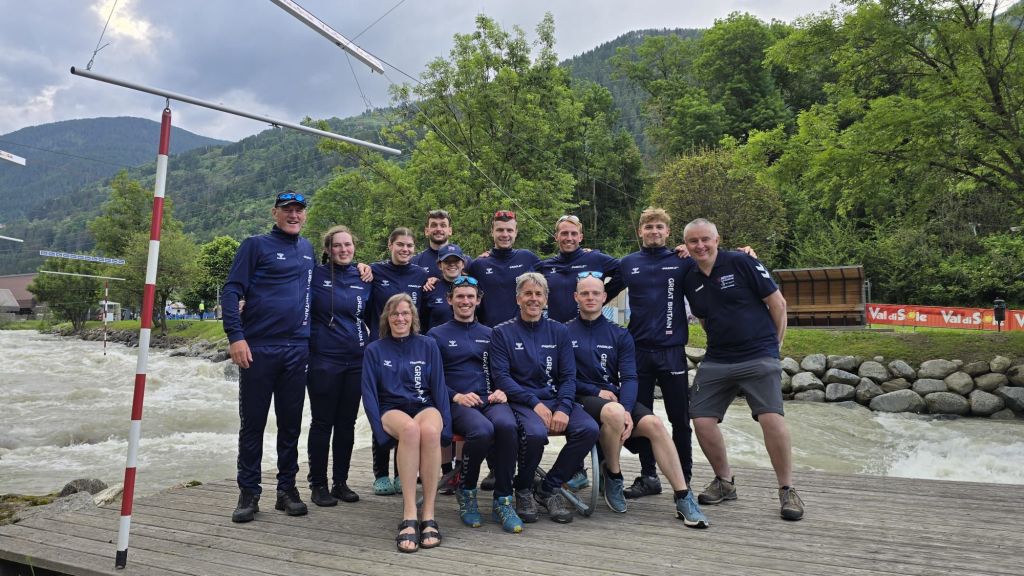
On the evening of the 30th of May and elite strike group departed the UK. Said strike group was comprised of Myself, Freddie Brown as well as Kerry and Emma Christie – basically everyone who’d raced the previous year and understood just how challenging the river could be.

When we arrived in Mezzana we were met with a very different river to the one we had left behind the previous year. The high water (or potentially some diggers) had moved around some of the larger rocks on the river bed, changing some of the racing lines, most dramatically on the sprint course.

The other noticeable difference was the river levels which were dramatically lower than the year previous. High water is a relatively rare occurrence, but the extent of the difference came as a surprise, with the Noce being transformed into a rock dodging obstacle course.

We set about figuring out the lines and adjusting to the fast flowing water. The slightly lower level suited us. The water was still a lot heavier than anything in the UK but it wasn’t too much of leap. That said the level was far from static, often rising and falling over 10cm between laps. Fortunately this changed the character of the river more that it did the lines but after a week of paddling on the Noce we were starting to feel happy with it at any level.

One thing that was harder to adapt to was the altitude. Mezzana sits at nearly 1000m. While that’s not an extreme altitude in and of itself, it is almost 1000m higher than Nottingham, and it really showed whenever we tried to pull hard. Through adrenaline and altitude, I seemed to screech up to my maximum HR on nearly every session, and it took a fair bit of focus to pull it under control.

By the time the second half of the team arrived we’d just about got everything figured out – and then the heavens opened and the river began to rise. Once again we found the character of the Noce shifting and changing. There were no major changes to lines, but as waves steepened and stoppers flushed out we could take on a little bit more this or afford to be a little less left of that. But slowly the paddling shifted from the familiar rock gardens to big volume and high power water.

By the time classic day arrived the river had risen to 0.85m and we got a familiar message from the race organisers: The water was too high for the sprint course and the classic would now finish at the bridge above it, rather than the bottom of the sprint course. It was a mixed feeling around the British team – the sprint is a brilliant section of water and we all wanted to race it, but given how heavy the classic felt already, we’d probably wouldn’t miss it all that much.

Unfortunately my classic didn’t quite go to plan. It started strong-ish (once I got off the awkward starting raft). It seemed as if all the strength work had paid off, at least it did until I got to about the half way point. All of a sudden the wheels feel off. As I struggled within the waves I made a few surprise line decisions with empty arms carrying me to previously unexplored areas of the river. The result: 31st. Not great, not terrible. Possibly still not strong enough.

Following a strange schedule, Thursday, the second day of the competition would hold both the team sprint and team classic races. This left us with an interesting problem as we normally decide the members for the team run based off of our individual results. We could follow the normal approach for the team classic, but we wouldn’t be doing our individual sprint runs until Friday. After some “discussion” we concluded that the best way to decide the team would be to hold our own little time trial.
The river had dropped slightly following the classic and our contacts on the inside said, we’d likely be back on the sprint course proper for the team racing. So, after a brief lunch break, we returned to the top of the sprint for our time trial. The rules were simple: Best of two runs, fastest 3 paddlers would be in the sprint team.

My first run went a little askew. A raft was out training and nearly pulled out in front of me. Collision narrowly avoided, I brought the run home into 4th, less than half a second behind Alex, but still in 4th place. Safe for now, Alex, Freddie and Huw waited for me to do my second run. Pressure on, but raft no longer a factor, I pulled as hard as I could muster and shaved more than a second off my time. I was now sat in 2nd, just behind Huw and it was Alex and Freddie in the hot seat. Unfortunately for me both Alex and Freddie managed to improve their times, landing me back down in 4th. But the racing was close with less than 0.03s between Alex and myself. Next to nothing on hand timing, but the result is the result and I conceded the place in the team race. Still the race practice was invaluable and we all felt fired up for the races the following day.

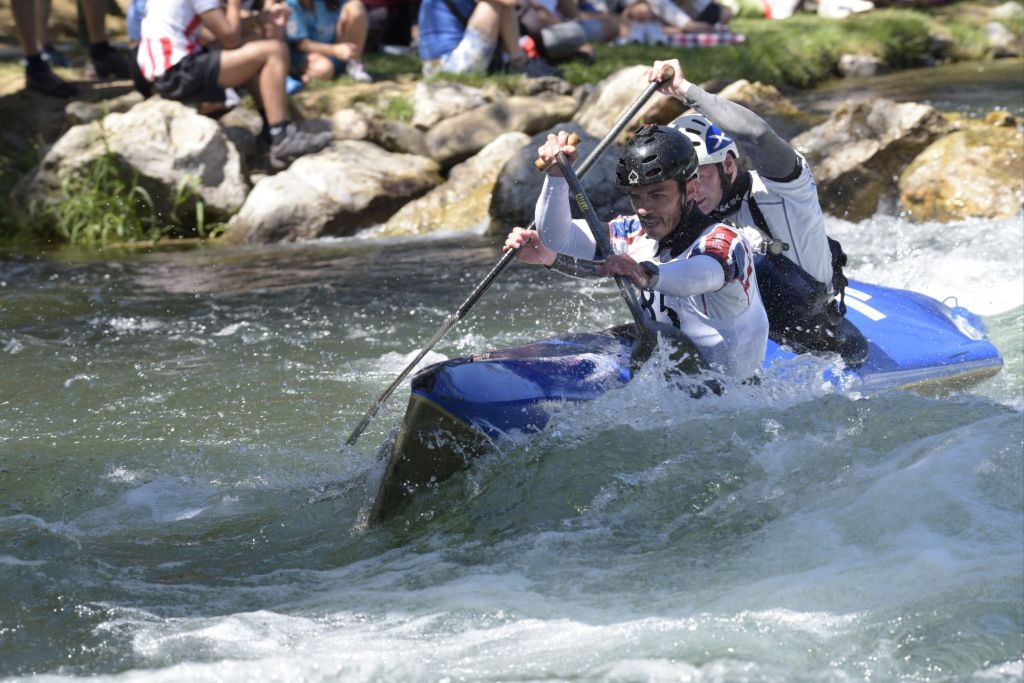
The Thursday kicked off with the sprint team race, which can only be described as carnage. With minimal practice on the proper sprint course even the top teams were struggling. The mix of white water and washes always makes team racing difficult, and Mezzana is an extremely difficult course. Across the board there were some ‘creative’ lines as paddlers found themselves carried offline to undesirable locations. Unfortunately both the British women’s and men’s teams suffered spin outs. At one point Alex and Huw found themselves virtually on top of each other, leading to Huw spinning out just before the finish, inevitably leading to a DSQ, as the 3 teammates failed to finish within 15 seconds of each other.

It was a disappointing result but it lit a fire under us for the team classic that afternoon. We picked our running order from the classic times. Freddie would lead, I’d follow and Huw would bring up the rear, hopefully being able to use his burn to close any gaps at the end. The plan worked a charm, off the start I stuck to Freddie like a magnet. Following him down was like a master class in big water boating, and down the bigger bit he acted like my own personal Mosses, parting the waves for me. However after the half way point again I started to faulter, and instead of remaining on Freddie’s wash I started acting like a bungee as I fell off and then had to fight to get back. Everything came to a bit of a head down the gorge where I missed Freddie’s lunge to the right and I ended up stuck on the wrong side down the left. The mistake put several boat lengths between us, meanwhile Huw had gotten lost further back. We had to ease of the gas a little to regroup as we headed down towards the sprint course that made up the final leg of the classic.

The lesson from the morning was clear, leave each other room, but not too much room down this difficult section. At this point I was blowing steam out of my ears as I attempted not to let Freddie pull too far ahead, but we managed it. As we crossed the finish line my forearms were so blown I briefly lost hold of my paddles, but Huw closed the gap on the line and I managed to pull myself back together narrowly avoiding a little dip in the river. We came in 8th place, very respectable and a big improvement over the morning.

Unfortunately my detour down the left hand side of the gorge had put a not insubstantial hole in my race boat. This left a slightly bitter taste in my mouth as I realised I’d be spending a slightly stressful evening doing boat repairs. Last minute boat repairs are part and parcel of a river racing trip. Over the course of the week I was far from the only one with the angle grinder out – Phil and Andrew had to improvise a new skeg one evening after the river claimed the original one from their C2.

My hole, was in the tail, which is an infamously difficult area repair as the boat geometry gets all funky and you can no longer use square patches. Fortunately I’d spent the trip spectating Freddie, our resident composites experts on all of his repairs and, after a brief consultation, I set about my work. The rest of the team departed for the classic/team prize giving (Kerry and Emma picked up a silver the the WC2) but by the time they returned I had finished one of the cleanest repairs I’ve ever done – although it did turn out to still leak a little so I had to redo it once I got home!

I’m not sure if I slept much that night before the sprint heats but it didn’t matter because the mood down at the sprint course was electric. The Mezzana Sprint course is difficult. But that difficulty brings an air of possibility. Mistakes are costly, but anyone could make one, and that means opportunities for all.

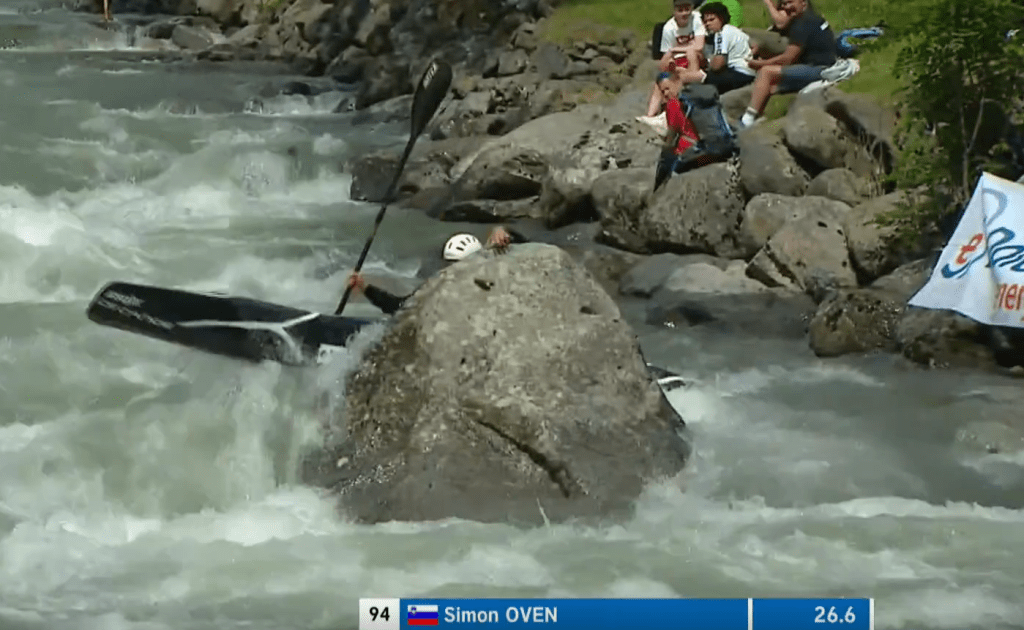
Simon Oven of Slovenia, and winner of the MK1 classic, demonstrated this best during his first sprint run. One small mistake dramatically pinned him up against ‘Freddie’s Rock’ to an audible gasp from the onlooking crowd. Fortunately, he managed to work his way off and rectified the mistake in his 2nd run

Somehow, amongst the chaos of the sprint course I managed to put down two pretty solid runs of 1’00.41 and 1’01.30. Still a way off the finals but it did land me with another 31st place (there must be something special about that position) but 3rd Brit, quite the achievement for a classic specialist.

The big dogs above must have been very impressed, as after my 2nd run I was invited to do commentary for the remainder of the runs. With Jamie Christie as my partner in auditory crime, we attempted to spice up the live stream with all our insider knowledge on which waves contained the hardest rocks. Of course we promptly gave the commentators curse to nearly anyone we complemented. Our friend Jan Sindelar, was maybe the hardest done by the curse. Jamie had been praising his clean paddling style just before he got dumped into a hole. Although Luca Barone came a close second with my compliments on his sprinting pushing him into every rock on the course. We may have also called Tjaš Til Kupsch ‘the smallest of the Slovenians’, a comment he called me up on while towering over me at the after party. Strangely they didn’t ask us to do commentary for the finals…

The rest of the British team posted some strong times but not quite strong enough to make the finals, with both Freddie and Huw missing it by the skin of their teeth. Only the C2s ended up qualifying for the last day of the competition, a slightly disappointing end to an otherwise fantastic trip.

Except for it wasn’t the end. Just because the racing stops, doesn’t mean the fun does! The 1993 world championship course has become the stuff of legend. Starting further down the Noce than the current course, it is bigger steeper and even less forgiving. We’d run it a couple of years back much to the envy of some of the other teams, and with no racing for everyone except the C2s we began eyeing it up again.

Over a couple of end of competition beers messages were sent out to rally the troops, most notable to Sasha from Czechia who’d dubbed us the crazy Brits when she spotted us paddling the section last time – high praise from the crazy Czech!

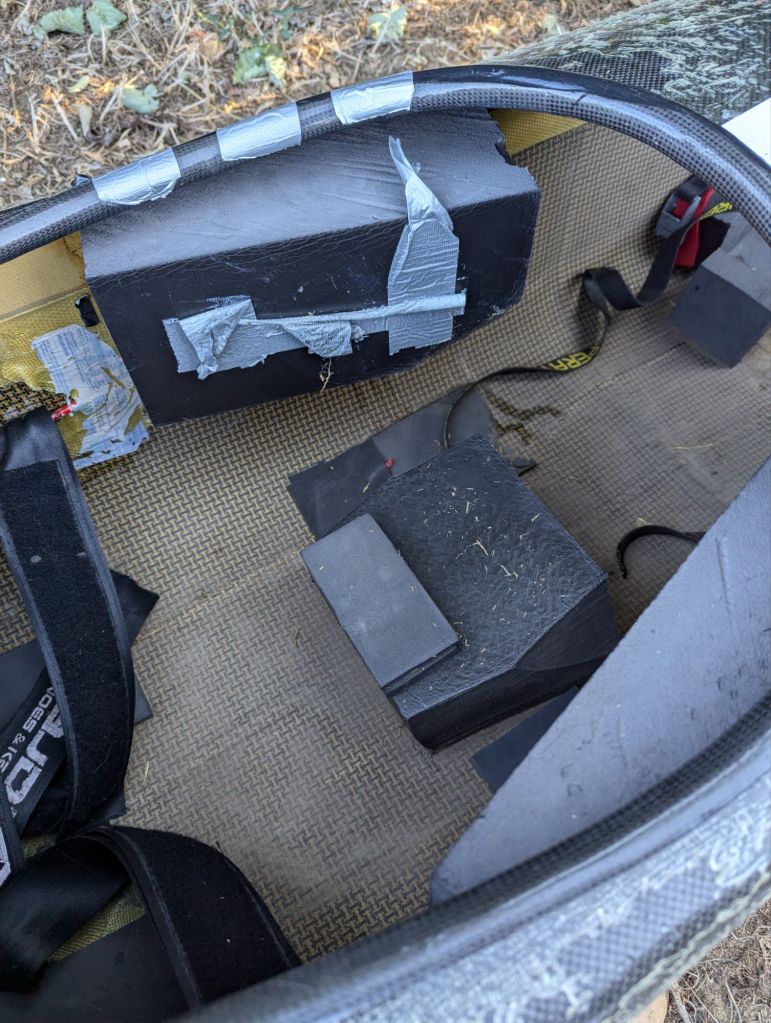
The next morning, after a little bit of miscommunication, we gathered at the start of the 93′ Classic course. The river was looking higher than the last time we’d paddled it putting a few people off. But we still had a tough little troop of myself, Jamie Christie, Freya Pryce and Sasha soon-to-be-Biscuit. As we’d been waiting for Sasha to arrive I’d found a massive hole in the bottom of my practice boat and was desperately duct-taping it to try and plug the leak, but as we put on it seemed like it may just hold.

The 93′ Classic starts innocuously enough. A few fun rapids but nothing too much to write home about. Then you come to a weir. Its’s an awkward drop but there is a clean-ish line to be found on the left. After the weir the bimbley rapids continue for a short while, lulling you into a false sense of security. But then by a bridge the river just drops away. The gradient increases, the waves tower above your head, and it doesn’t stop. No flat bits to recollect yourself, no pauses to catch your breath, just rapid after rapid after rapid.

Jamie led the group down with Freya and Sasha following in tow, while I formed the rear guard. That was until Jamie over cooked it on one of the turns and span out, leaving Freya, a relatively green paddler to find her own way down one of the steepest sections. Fortunately Sasha managed to find a sneaky overtake amongst the waves and holes to come to the rescue. Jamie, made it back out into the flow behind me, and we kept this order skirting past holes big enough to clean my arm pits all the way to the get out.

The mood at the end was ecstatic, with grins stretched across everyone’s faces. Sasha proclaimed it was the best river she’d ever paddled, and it was even better than… – well I won’t say. It had been difficult but we’d all survived in one piece and a new found respect for the paddlers of old.
We returned to the sprint course to cheer on our C2s and then it was time to pack our bags. It was hard not too feel a little sad as we prepared to depart. 2 weeks had flown by and I didn’t feel ready to leave the mountains behind. We started saying our fond farewells at prize giving, comparing stories of lines gone wrong, catching flack for some of my commentating and boasting of our run down the 93′ classic course. There were some beers, a band and some dancing. Then a long walk home, before the long drive back to the UK.

At some point someone said some kind-ish words to me: “It is so good to see you all trying so hard. You’re still not very good, but you are improving and improving. You always come from so far a way, with so much enthusiasm and it is an inspiration to all of the other small nations.”

I think he meant the bit about being us being shit in a good way? But overall the sentiment seemed positive. Mezzana is perhaps my favourite place to race, and while it’s not currently on the calendar for next year, I’m crossing my fingers that there may be a last minute addition. Maybe even on the 93′ course…

Dream work makes the team work!

Dream work makes the team work!

We first came to Sabero three years ago for the 2021 European championships. At the time just making it there had felt like an achievement. Looking back now, it is crazy to see how far we have all come…

I didn’t make the cut this year for Worlds in K1. I wrote a little about it at the time here. It’s a testament to the increasing standards in the UK, but it also sucked. Fortunately there is a tried and tested strategy for failed kayakers: getting in a canoe.

The canoe has been a long overlooked discipline in the UK, at least within Wildwater. But, thanks to a push from Nicky Cresser, it has started to gain some traction, with the women even seeing just a little bit of success! Us men however, had done our utmost to steer clear of the one bladed witchery. But with a swathe of us missing out on the K1 selection this year, the canoe categories were suddenly our last hope for a holiday in the sun.

Queue the world’s most frantic training montage as, in a matter of a few weeks, I went from wobbling and unable to keep a C1 in a straight line, to just about getting the boat to where I wanted it be and finding a modicum of power. Those early weeks in the canoe were a lot of fun as I leapt up the learning curve. And as the second round ‘canoe selection’ event neared I almost felt confident.

What confidence I did have, had been misplaced. While I finished first out of the non-canoe canoe paddlers at the event, I still didn’t meet the minimum time required by the performance criteria. The minimum performance criteria exist to prevent the UK from sending absolute muppets to World Championships, but with mere weeks under my belt in C1, it appeared that I was still a muppet.

Luckily I hadn’t put all my eggs in the same boat. With a little encouragement from Nicky, Freddie and myself had decided to also enter in C2. Here it seemed our inexperience managed to balance itself out on each side of the boat, leaving nothing but power! – or at least that’s what I told myself. Afterall, false hope is better than no hope. Mercifully we were able to put in some solid-ish races and secured our holiday to the World Champs in Sabero, Spain.

My trip to Sabero started in the traditional fashion. A complex string of planes, trains and buses to transport myself from a wedding in the middle of nowhere to a competition in a different middle of nowhere (this time in Spain). The journey time just scraped under the 20 hour mark, most of which was spent attempting to sleep on whatever seat or floor I could find. But as always it was worth it and I arrived at the team accommodation just in time to find everyone tucking in for our favorite dinner: pasta and shite.

The rest of the team had arrived a few days earlier and that evening we settled down to watch some of the GoPro footage they’d taken and revise lines for the classic. Not that I had to remember that much as I’d be in the rear of our C2 staring at the back of Freddie’s head.

The lines were mostly as I remembered; a mix of wave trains and flat swirly pools. The key, as always, was remembering which corners could be cut and by how much while hunting down all the little flow ladders that could carry the boat speed.

Towards the end of the classic and nearing the start of the sprint was one particularly tricky little rapid where the river fell diagonally off a weir-like ledge. It was a chaotic mix of boiling pools and shallow little ladders which led to a heated debate over the fastest line through the mess. Eventually the consensus settled on staying high over the pool and dropping into the choss towards the end of the weir, but Jamie was quick to add “if you find yourself getting sucked off, just go with it”. I’m 90 percent sure he was talking about the weir but there was no way we weren’t going to mercilessly rip that phase out of context! On the plus side, at least everyone would remember that section.

We’d taken three MC2s out to Sabero, a full team, and the first time we’d had a full MC2 team in recent memory. Out of the three MC2 crews Freddie and I were the most inexperienced. Rob and Jacob had paddled (albeit briefly) together at Treignac and had flirted with C2 a few times since then, while Andrew and Phil had put in at least one solid weekend training together at Stanley. Meanwhile Freddie and I had paddled together at selection. Thus our few days of training before the competition were mostly spent learning how to paddle the boat together.

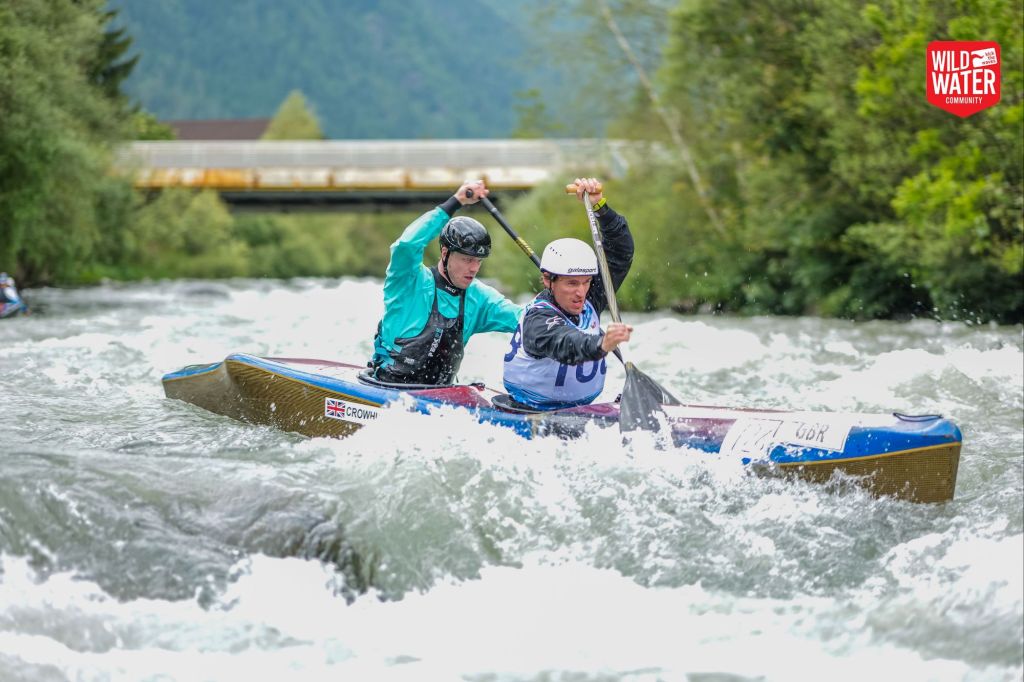
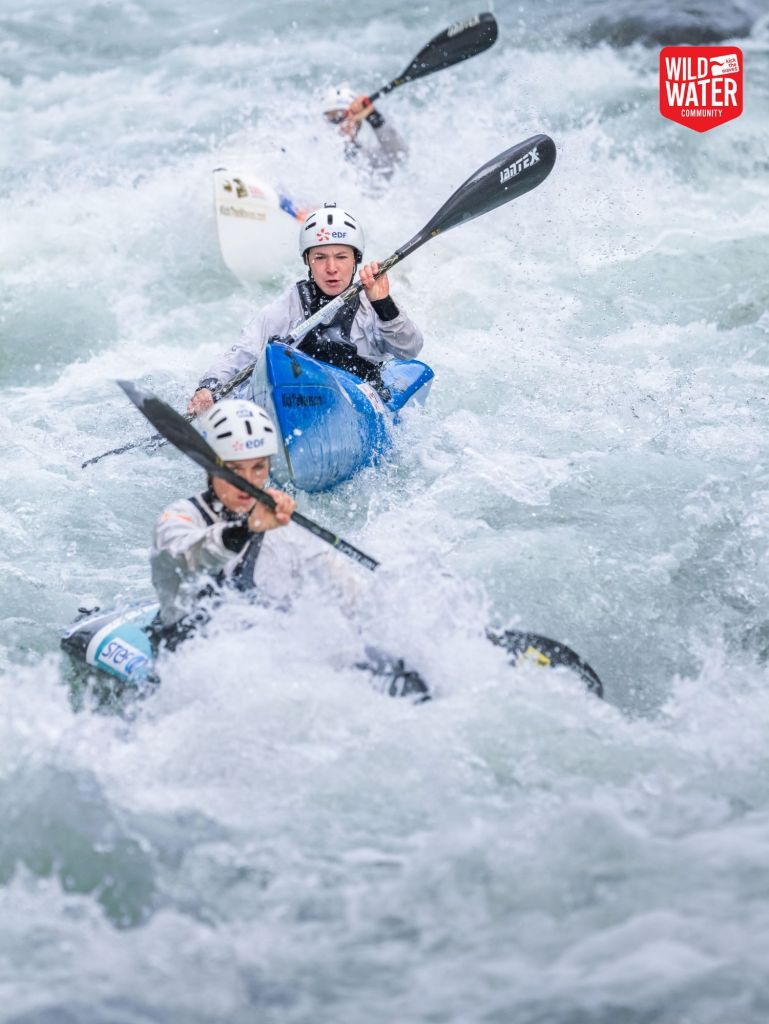
The C2 is an absolute battleship of a boat. They carry a lot of momentum and once the boat starts tracking off line it can be very difficult to correct it. Jamie says there is a dark art to C2 paddling, and he is right. Between the two of you you must be in agreement about where the boat is going, which edges are needed and maintain stroke timing. The best crews do this almost instinctively. Freddie and I were not quite at that level but over our two days training we managed to mostly coordinate our edges, with cries of ‘left’, ‘right’ and ‘up’ to differentiate our edges from wobbles in the tricker sections.

Arguably the biggest challenge was not getting the boat to run but rather the seating position. Whereas in Kayaks you get a nice comfy seat to sit on, in canoes you kneel. As anyone who’s been in a canoe for more than five minutes can attest to, this can be more than just a little uncomfortable. Even with my regular attendance at NKC’s Canoe Thursdays, I’d finish a classic with dead legs unable to walk. Meanwhile Freddie, not used to spending so much time on his knees, was really suffering. In an attempt to relieve some of the pressure on his legs, Freddie attempted to raise his seat a little, but misguided over where he was perched on the seat, he only succeeded in building himself a little ‘ball plinth’. Eventually through plenty of boat time and some strategic yoga we got ourselves into a state where we would at least survive the classic.

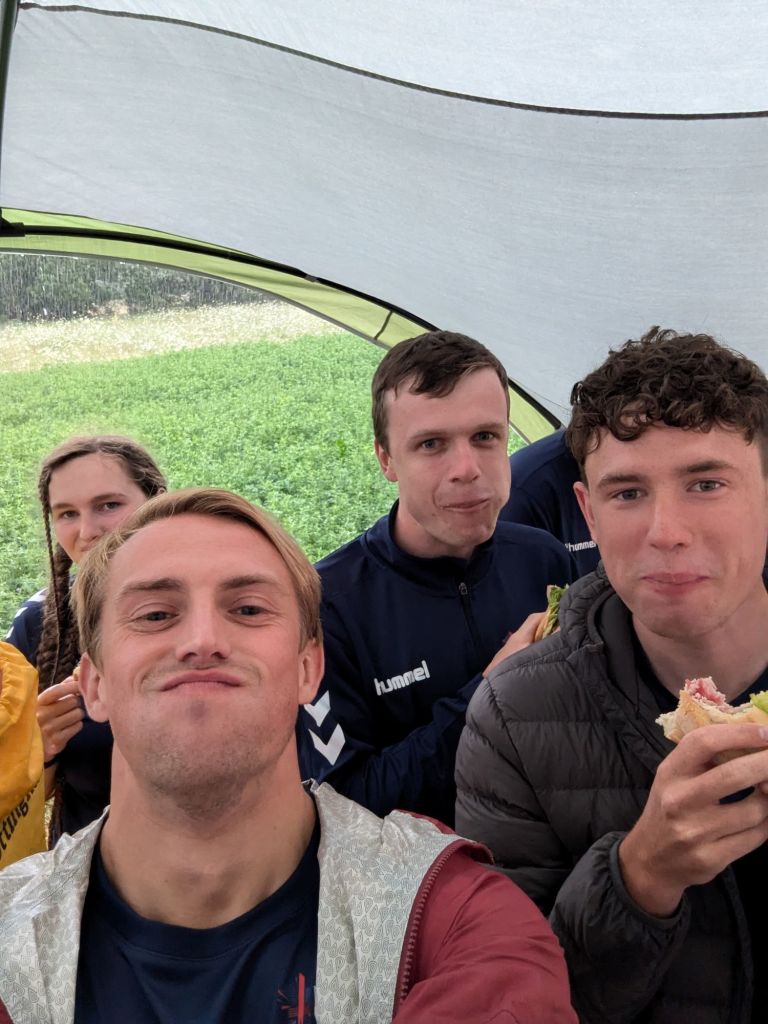
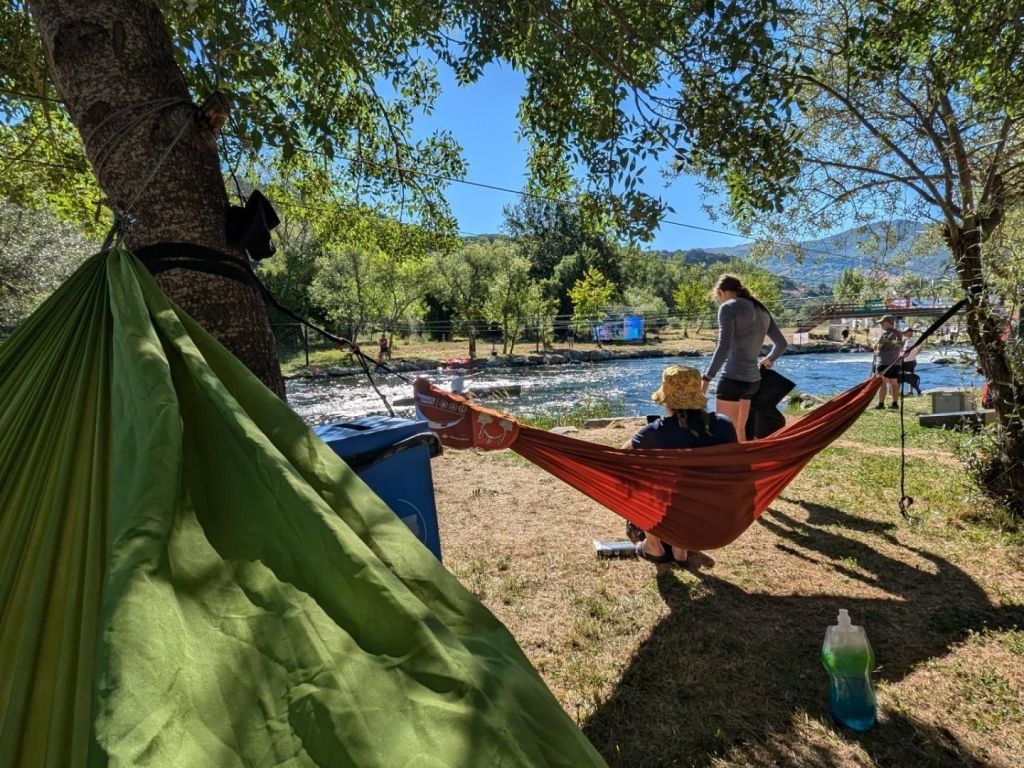
Once the final day of training was over it was time for the opening ceremony. As our accommodation was a good 50 minute drive from the river and the ceremony, we’d elected to hang around after our final afternoon training session and enjoy a picnic in the hot Spanish weather. However, someone clearly forgot to inform the weather of our plan. Instead it had decided to piss it down. Fortunately we’re the British Team and while the weather could dampen our sandwiches it couldn’t dampen our spirits! As the other teams arrived we all huddled under what shelter we could find, enduring their many jokes on how we’d brought the rain. Eventually though there was a break in the weather and after a few speeches in Spanish were loosely translated into English the ICF anthem played and we were all off to bed – only slightly soaked.

Race day started leisurely for the C2 crews. We weren’t racing until 14:00 and as such we relished a rare lie in. Made all the sweeter by the fact the K1s and C1s were forced to depart at the crack of dawn. We caught up with the rest of the team over lunch at the finish. Classic day had already yielded some great results, PBs for many of the team and a silver for Kerry. The first British medal at a senior world championships since 2016. The pressure was on for our C2s!

We should take a second to talk about the MC2 class. It is a class that has been dominated by the French and Czechs for as long as anyone can remember. Maybe one day we’ll be able to challenge them again, but for now they are well out of reach, already locking up the first 7 places between them.  Making up the rest of the start line was a swiss boat, the Germans, Croatians, Italians and of course the good old US of A. For us the aim of the game here was just to be the best of the rest.

We set off on our run. The previous day Jamie had followed us down carefully coaching our edges which we put into good practice. The course seemed to flow well and we had a rather successful ‘sucking off’ section before dropping into the sprint course and screaming across the finish line.

We crossed the line into 3rd place just behind the other 2 British boats, but inevitably we wouldn’t hold those positions. As the other boats finished, we were steadily bumped down the standing, eventually finishing in 11th, 12th and 13th. Behind the French and Czechs, the Germans had slotted in, tailed by a Spanish and a Swiss crew. It was a reasonable result for three new crews, but excitingly as we counted back up the results list it put us as the 3rd fastest team. Could we scrape a medal in tomorrow’s team race? If we could it would be the first time any of us had stood on a podium. Theoretically the next fastest crew was the Spanish and we had 20 seconds on their slowest boat. It almost seemed too good to be true and yet it was so tantalizingly close.

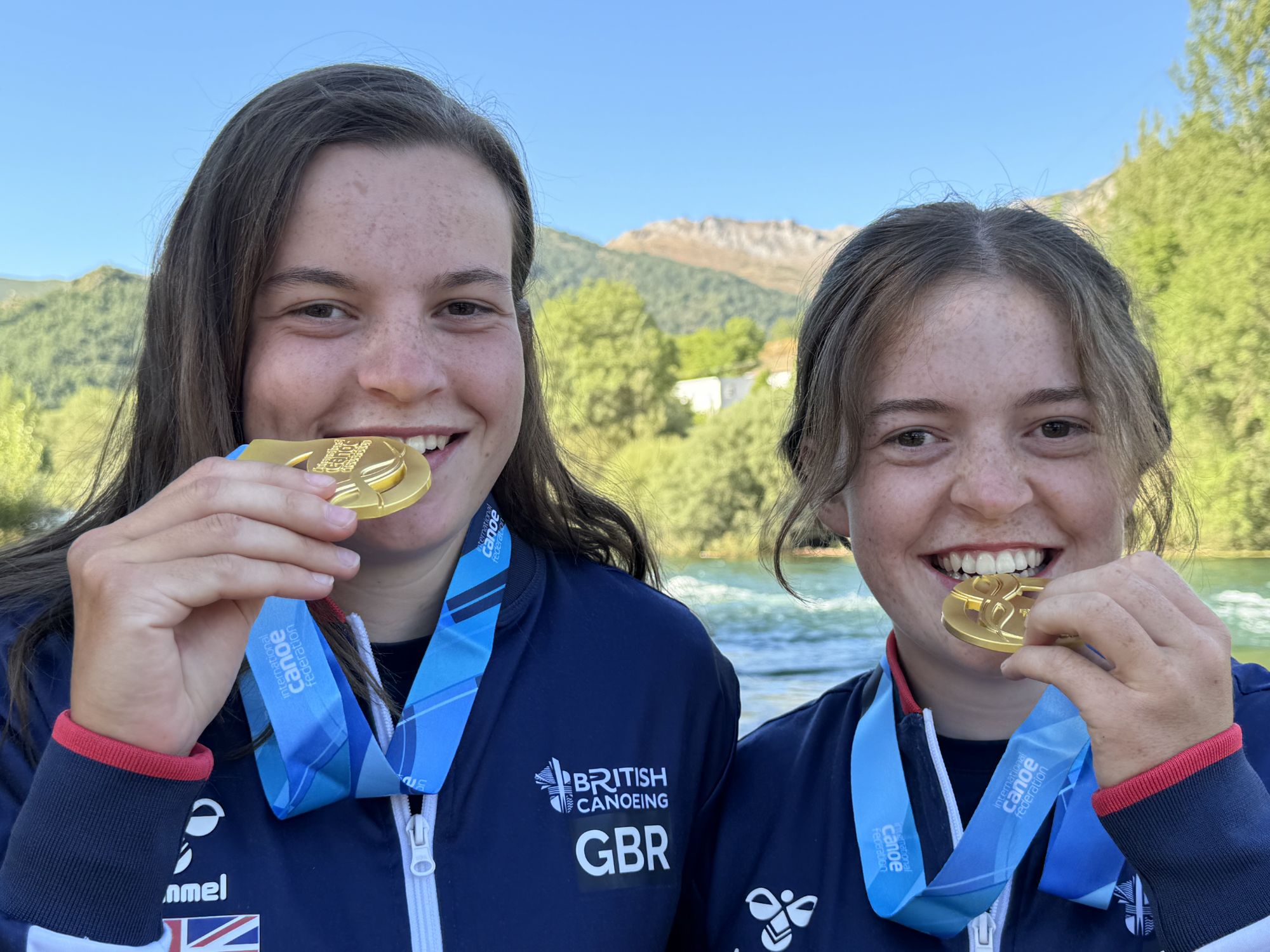
Of course, the girls had already shown us up, with Kerry and Emma taking the gold in the WC2 race.

Team racing is hard. The first boat across the start line sets the clock ticking and the last boat across the finish stops it. The aim is to use each others washes to help pull everyone along, but anyone who’s tried to wash hang in a river racer will tell you that it’s no easy feat. Trying to do it on the rough is even harder. Trying to wash hang on the rough in a C2 is near impossible.

We left the accommodation early the next day to get in a sneaky practice run for the team race, although we quickly discovered we weren’t the only ones with that idea. We tried a few different combinations for the order and played around with the start a bit finally concludeding that we’d send me and Freddy down first followed by Andrew and Phil with Rob and Jacob taking up the rear. “1%” said Phil, “that’s all you and Freddie need to beat the fastest Spanish crew. 1% faster and we could do it”.

“12 down!” that was the split we got from Nicky at the half way bridge. We’d already been racing hard and it was not the split we wanted to hear. Freddie and I were trying are damnedest to find our 1% and yet we were already 12 seconds down on the fastest boat ahead of us. Freddie and I grit our teeth and tried to dig a little deeper. The other two crews trying to hold on.

With muscles screaming we crossed the finish line. “Segundo para Gran Bretaña”. My Spanish isn’t great but it’s good enough to translate that. 2nd. Not good enough. The French and the Czechs were still on the course and they would inevitably slip into 1st and 2nd bumping us down into 4th and off the podium. Had it been too much to dream that a team of fairly inexperienced C2s could steal a medal at the world champs? Probably.

But upon inspecting the results we realised we couldn’t be too disappointed. We had beaten the Spanish (our main rivals) and we had improved upon mine and Freddie’s time from the previous day. But it was the Germans who snuck into 3rd place. A couple of their boats hadn’t raced the classic yesterday and so they hadn’t factored into our team race calculations. They beat us by a healthy margin too, about 30 seconds. There was  experience in their boats and it showed.

Any sorrow was short lived and we patted ourselves on the back, a good result and a job well done. Onto the celebrations Billy Blackman and Jamie had collected Bronze in the over 35 C2 and Billy had won the Over 55 race, to claim his first gold! – Proving there was still hope for us yet. Tina and Mags also bagged some more bling in the senior ladies while Laura, Chloe and Kerry picked up a surprise Bronze in the WC1 team and Kerry collected her Silver from the other day as we baked in the Spanish sun through the prize giving.

We celebrated over dinner. “This is already the most successful world championships I can remember” said Jamie, “and we’ve still got the sprints to go!”.  Kerry thanked  everyone to a thunderous amount of applause. “These medals, and these results are a team effort. They’re thanks to all pushing each other on all the training camps and early mornings”.

“Ignore the medals, ignore the positions. If you look at the times everyone is closer to the winners than the last time we were here. We are all on a good trajectory” said Nicky. “Success breeds success”.

Success does breed success. But I’d argue the thing that grows and sustains success is a positive and supportive culture. Building this culture within the team might be Nicky and Jamie’s greatest achievement. The day before racing Nicky set a challenge to the team: everyone had to write down an anonymous compliment  for everyone else on the team. These were compiled into envelopes and distributed out to everyone. It was a joy reading of my classic ‘prowess’ vs Freddie’s power on the sprint. These messages went a long way for the less confident members of the team and gave everyone a boost before racing.

The sprints didn’t bless us with the gentle start of the previous days. Instead the whole team was up early to sneak in an extra couple of practice runs. Freddie was feeling pretty broken from two days of classic racing so we kept it short and sweet, confident that if we could replicate our lines in the race we’d nab a pretty reasonable time. So we set up camp to cheer on the team and rest up for our race.

As soon as the buzzer went Freddie found an extra gear, leaving me struggling to keep up with the rate. Not looking entirely dissimilar to an epileptic spider we crashed through the first few drops but then in the waves we lost an edge. We managed to prevent the boat from swinging wildly off line but we bled a lot of speed and crossed the line eager to improve.

For the second run I felt more prepared. I now knew Freddie would find a feverish stroke rate and was prepared to match it. We came down the first couple of drops nice and smooth and kept everything together through the waves and swirls. It felt near perfect – at least up until the last bend. We must have gotten the angle ever so slightly wrong down the penultimate drop as we found ourselves careening into the wall. We’d flirted dangerously close a couple of times, but this time we smashed into it at full speed. Freddie doubled over on the impact while I ripped out the straps holding me in place, flying forwards and nearly joining Freddie in the front of the boat!

Obviously this wasn’t the result we were hoping for, it was a disappointing end to our debut in C2, but there was still hope, could we redeem ourselves in the C2 team sprint the following day?

MK1 Team (featuring a ‘mounting’)

We sat on the start line. We’d had a few good practice runs as a team, but executing the plan in the race is always a challenge. After the disappointment of the team classic I don’t think anyone dared dream too big, but then from the top of the course we could here the commentator:  “Primero para  España”! At that moment my heart skipped a beat. We knew we could beat the Spanish, and after us was only the Czechs and the French. Could we do it could we steal a medal. “No, focus” I thought, “just do the job at hand”.

As soon as the buzzer went it was a blur. We peeled out of the eddy in close formation. Nose to tail we made it through the first drop, then the second. Still together. Shoulders screamed as we tore through the wave train then at the last crux it seemed like we would almost loose it, but we held on. We crossed the line in close succession, Andrew and Phil cutting a heroic line across the finish and into the eddy.

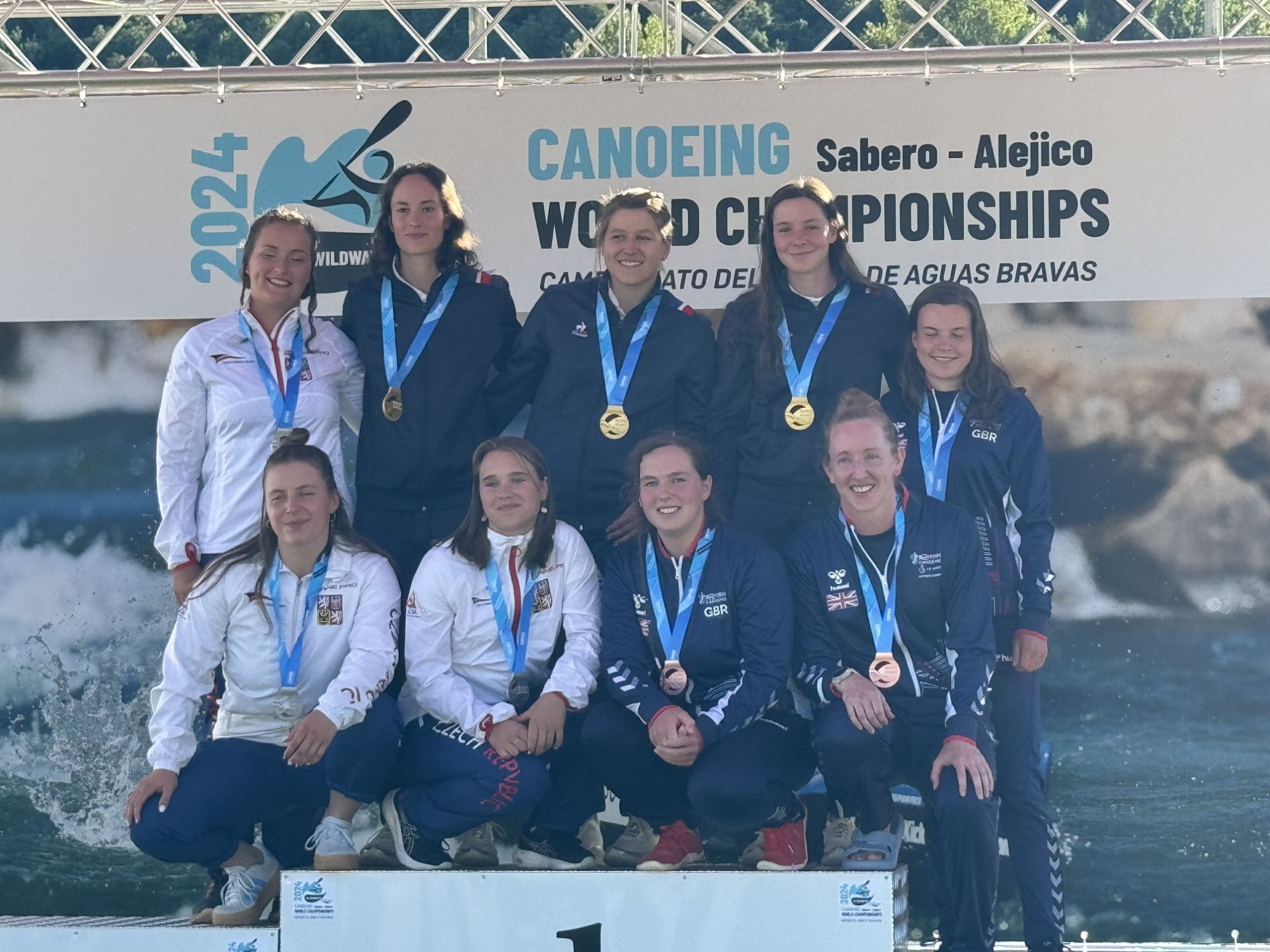
“Primero para Gran Bretaña”. There was a moment of stunned silence as we glanced at each other. We’d done it. A guaranteed 3rd place, our first international medals. The Czechs and French crossed the line into 2nd and 1st, but we were already celebrating. Water was thrown into the air as we were joined in the water hugging and cheering.

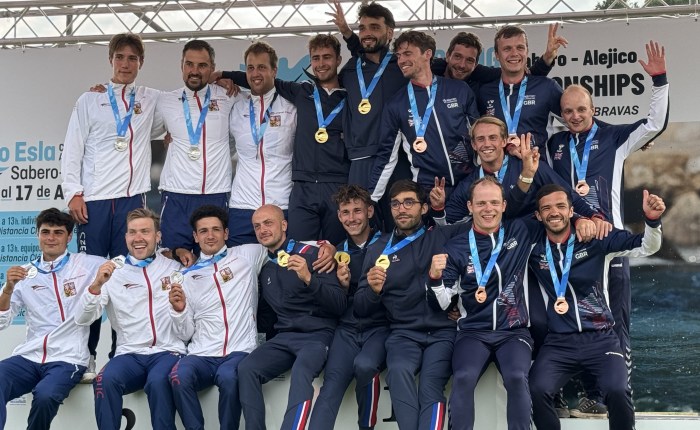
What followed was a blur of congratulations, celebrations and at least a couple of beers. It was a struggle fitting everyone onto the podium to but we just about managed it. The celebrations continued on the bus ride back to the accommodation (featuring a rousing rendition of the kings of Leon song – ‘This C2 is on fire’) and well into the night upon our return. 

We’d just about recovered by the time we disembarked the ferry back to the UK. 

“Anything to declare?”

“Just all these medals!”

It’s now been a short while since we got back, and honestly it’s taken a while to process everything and come down off Cloud 9. As always there was so much I had to leave out, Huw’s 18th, Jacob leaving his paddles on the wrong bus, Lucy’s broken thigh bars, teaching the Estonians to paddle C2 and so much more. These write ups are done so heavily from my point of view but it is incredible to see the progress the whole team has made.

On the ferry home I overheard Jamie chatting to Ciara & Elise, our upcoming Junior C2 boat. He asked them “How good do you want to be?”. Success begets success because it allows you to believe that success is possible. It would seem it is dream work that makes the team work.

Happy Tears Are Good Tears: World Cups 1&2 Macedonia 2024

Happy Tears Are Good Tears: World Cups 1&2 Macedonia 2024

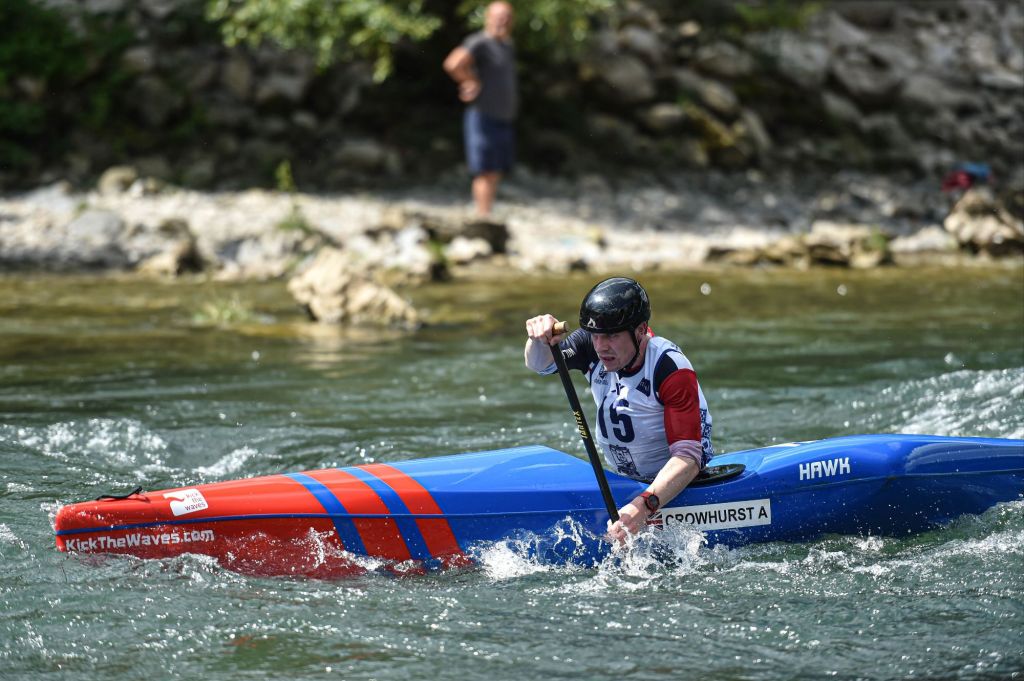
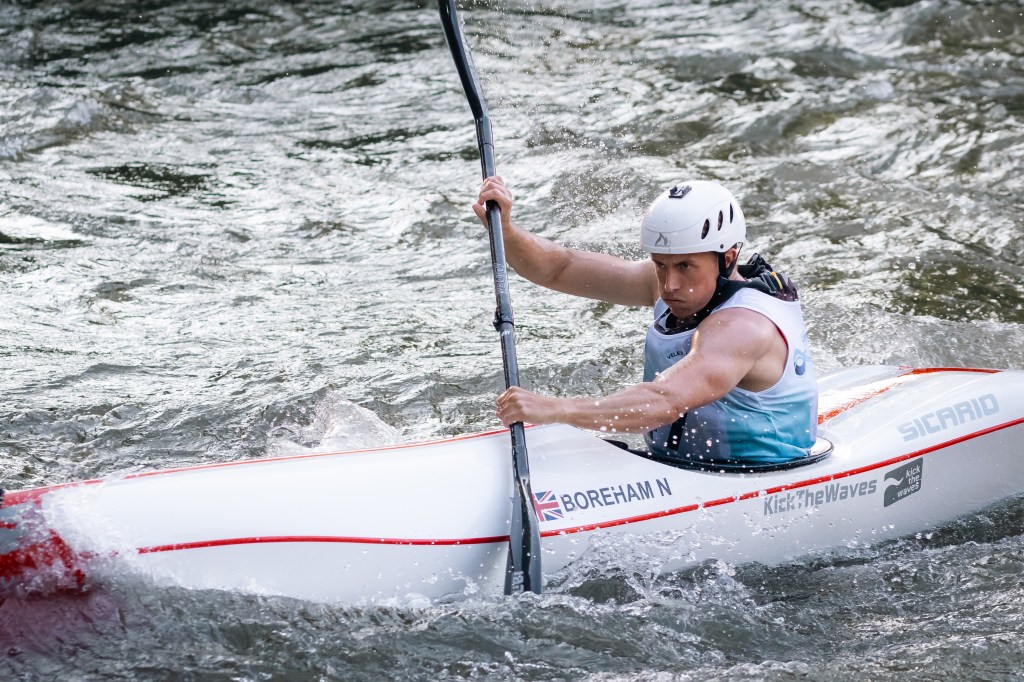
The British team for the world cups 1&2 consisted of Kerry and Emma Christie in WC2 and WK1. Competing in MK1 were Alex Sheppy, Freddie Brown and (yours truly) Nick Boreham. Andrew (the Crow) Crowhurst raced MC1. Billy Blackman along with Helen and Jamie Christie made up the coaching and support staff volunteers.

The sun had already set when we emerged from Skopje airport. A heat wave over the southern Balkans had brought the daytime temperature up to 40⁰ in North Macedonia, and in the evenings it showed little sign of abating.

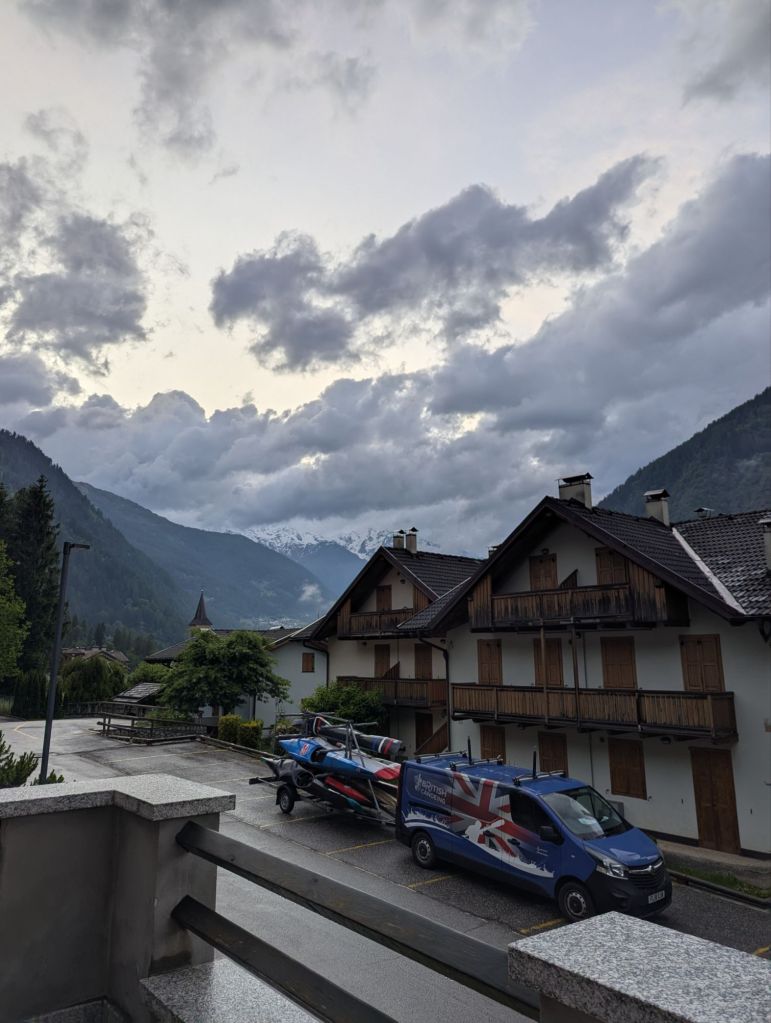
There, in the car park to meet us was the inconspicuous blue bus, subtly plastered with large Union Jacks on every available surface. The bus and trailer had once again made the long journey all the way from the UK, this time bravely piloted by a crew of Helen, Jamie and Billy. As they greeted us they carried a warning: It was only going to get hotter, and that we would be sleeping in a 5 star gulag.

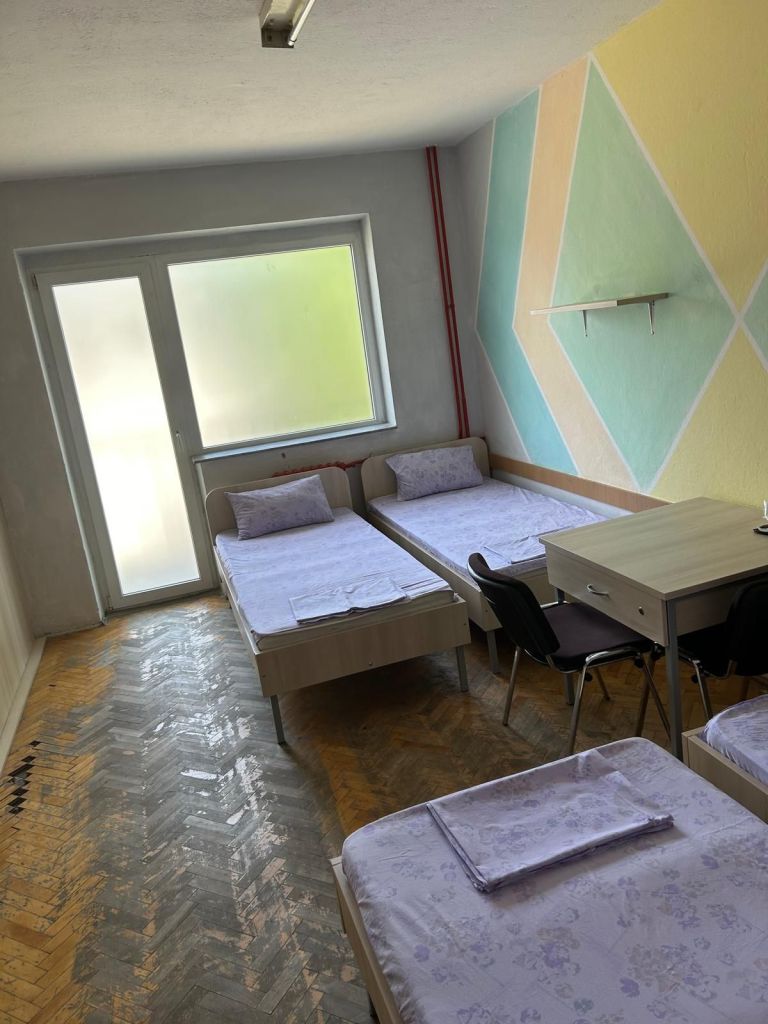
This year’s world cup races would be held in Veles, just a short hours drive from Skopje the host of last year’s European Champs. Our ‘gulag’ was buried somewhere within the centre of the city. In truth we were not staying in a gulag but rather a local boarding school. But, between the squat bogs, concrete communist architecture and rows of beds, to untrained eyes the differences were somewhat negligible. The school was kindly playing host to us, the Australians and the Serbians. The other teams however, had turned down the offer.

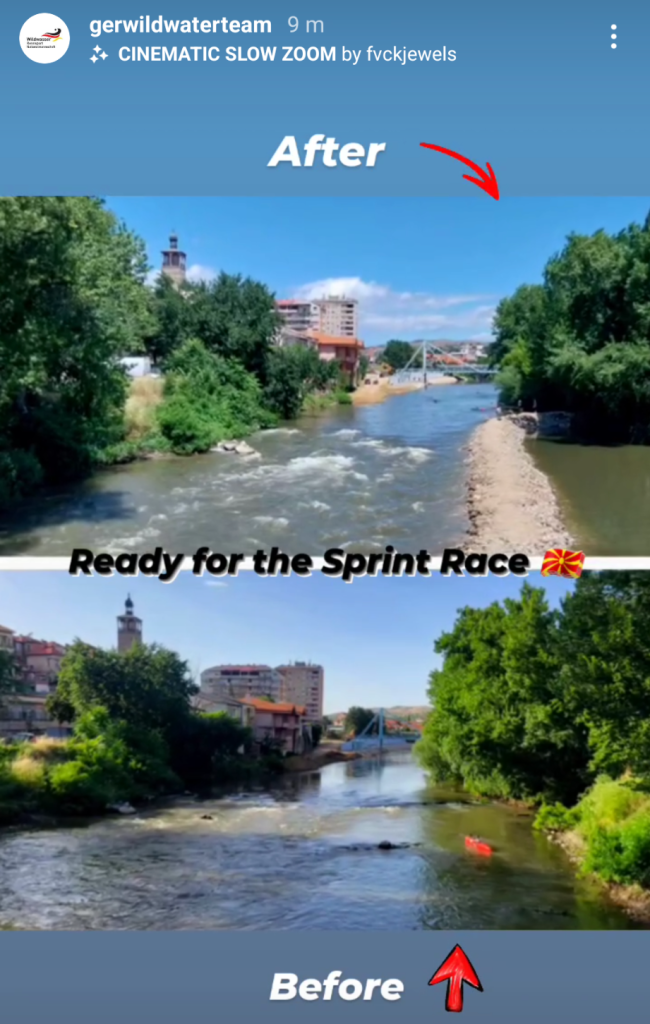
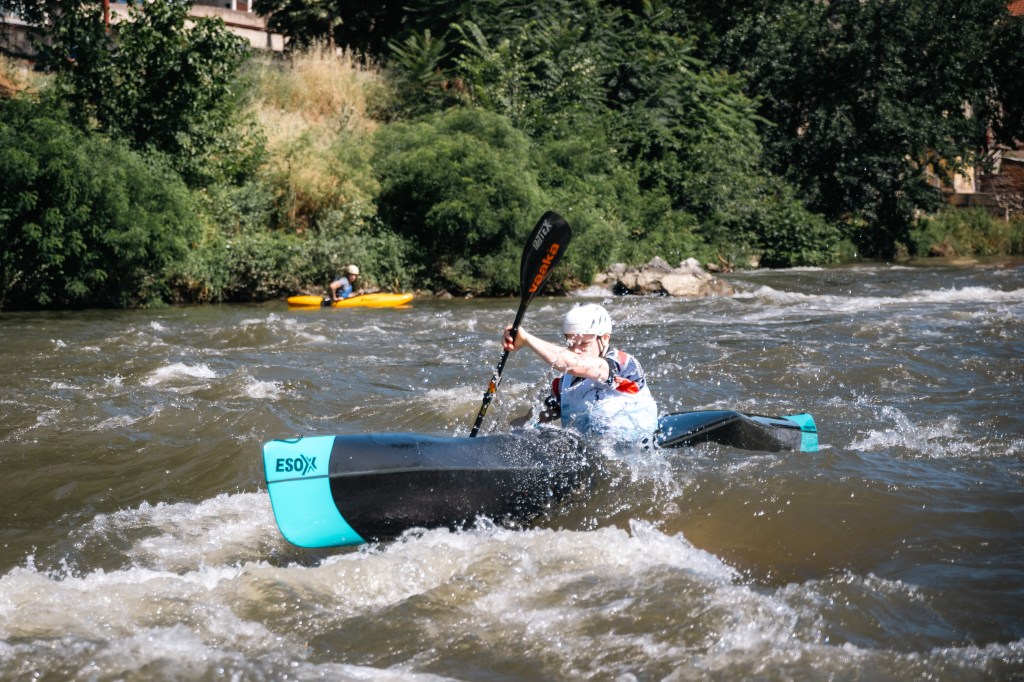
We awoke in the morning, sweaty, from something resembling sleep and departed for the river. Through Veles the Vadar River is quite flat. So flat that both Sheppy and Freddie opted to paddle without a deck. The flat course had drawn a little bit of flack from the international community, questioning how ‘wild’ the racing would really be. But, to Veles’ credit, by the time we finished our second run a digger had appeared in the river near the finish. As we paddled past it was busy constructing a rapid. By competition time this, combined with some well timed releases from Matka produced some reasonable waves to race on.

Transformative work!

Dinner at the gulag was included for all the residents. Although, to our surprise, we Brits found ourselves squirreled away in our ‘private dinning area’. Maybe, it was Helen’s buttering up of the staff, maybe they thought we’d get in a brawl with the Aussies, or maybe they just wanted to contain the spread of vegetarianism. Either way, the room was one of the few places with Aircon, and we weren’t complaining!

Breakfast consisted of bread, cheese and meat but steadily tended towards cornflakes as the kitchen staff grew to understand the British palate.

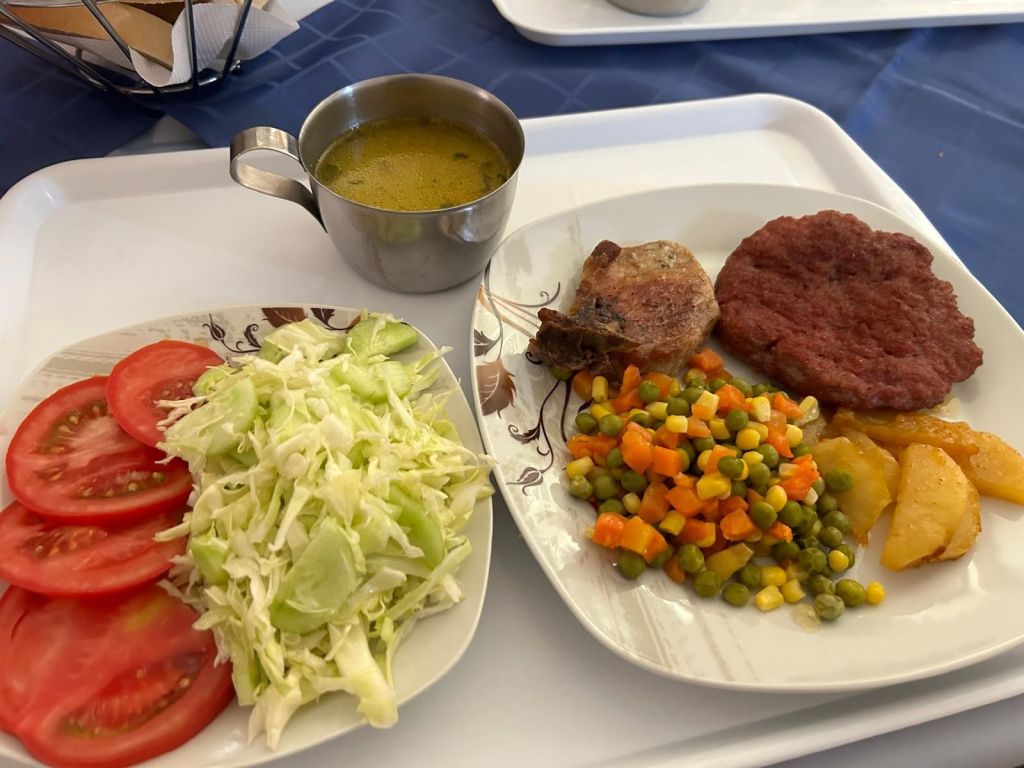
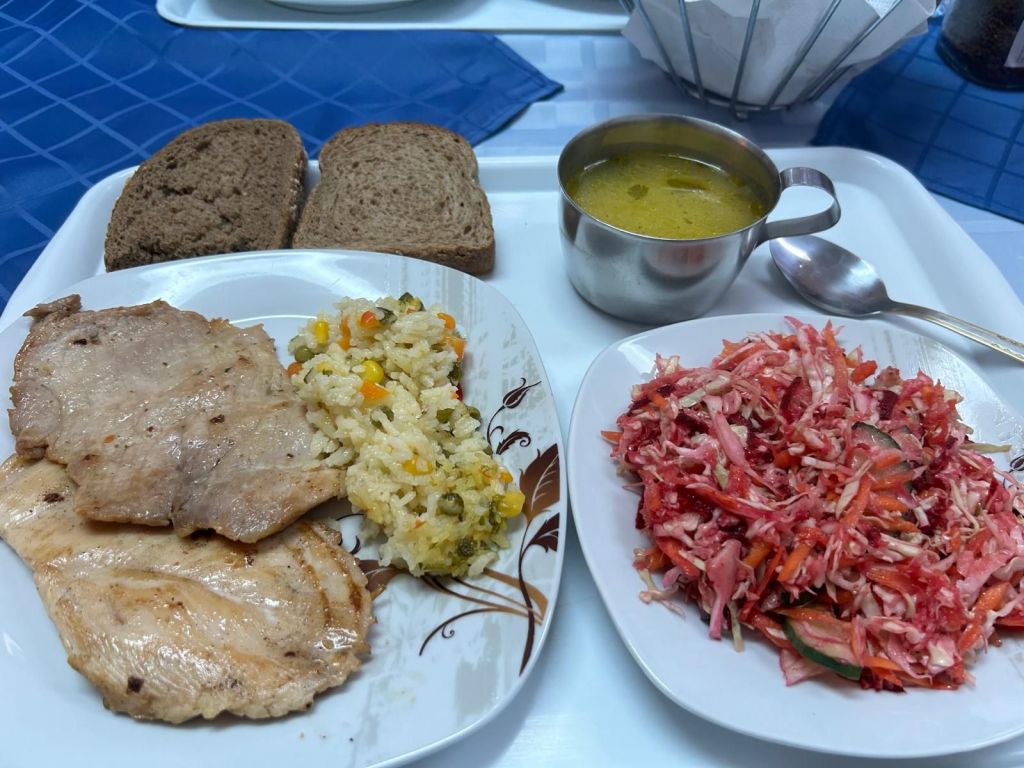
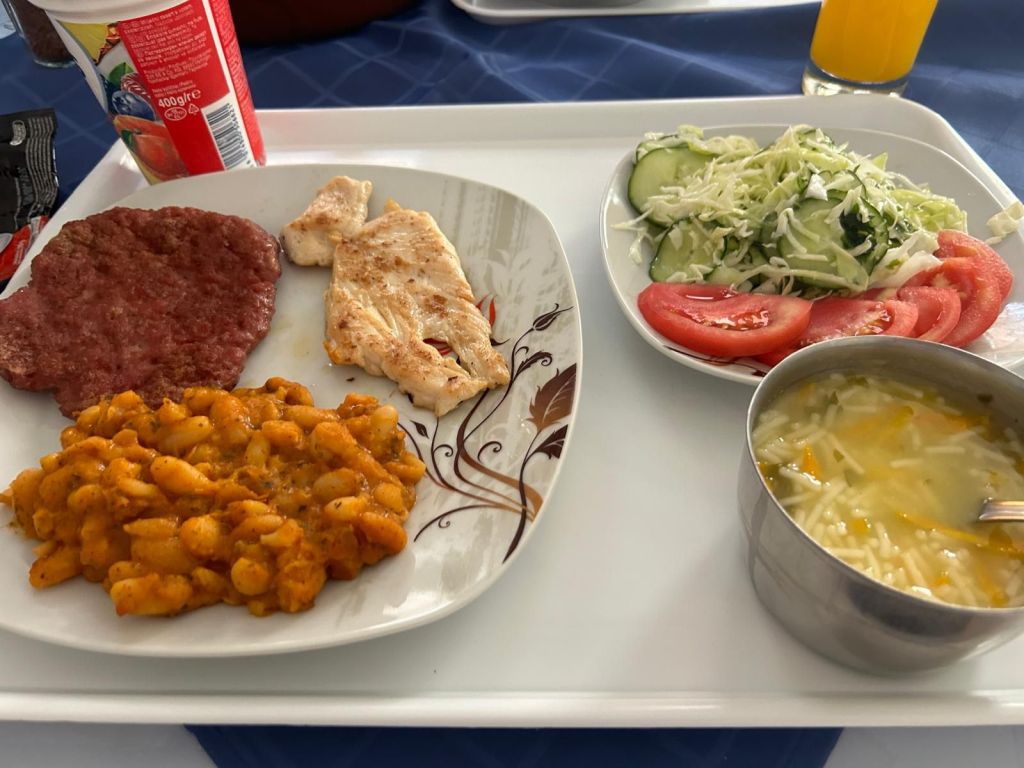
Lunch and dinner both followed the same pattern. A bowl of ‘probably chicken soup’, a side salad with varying ratios of cabbage to cucumber, and a main of ‘mostly meat’. Veggie options were perhaps not inspiring, but as far as I can tell the kitchen staff bent over backwards trying (regardless Kerry is quite a fussy eater).

I don’t really know whether our menu at the school qualified as ‘tradional Macedonian’. But, assuming it does, Macedonian dishes largely seem to consist of ‘two meat and one veg’. A dramatic departure from the British classic of ‘one meat and two veg’. It must be said though the Macedonians do cook good meat.

In addition to being a tad flat, the other downside to the river was the smell. While I’m not well versed on the ins and outs of the Veles sewage system, it would appear that most of it just seems to be dumped straight in the river. Again this is a stark departure from the UK where we pay an ever increasing amount for water companies to pretend to process sewage before dumping it into our waterways. So as in Ceske Budjovice, as in Nottingham we were on strict sanitation protocols, coating ourselves in hand sanitizer the second we got out of the river.

Fortunately these protocols worked to great effect, which was a massive relief as nobody fancied a ‘bum-wee’ on the squat bogs. Well, nobody except for Billy, who got ill on the last day.

Despite the efficacy of the protocols, in an effort not to try our luck, we retreated to lake Mladost for a day. Located just to the north of Veles, lake Mladost is set in a scenic location between the hills that doesn’t stink of shit. The lake boasts fishing, swimming spots, a spa and makes an excellent 4km loop to paddle around. Be warned though, it can get hot out there and when the wind picks up in the afternoon it can get Bumpier than the Vadar!

As always on a river racing trip the time flew, and before you knew it the digger had finished construction and it was time for the opening ceremony. We caught up with our friends from the other nations and settled in for the celebrations. Last year the Macedonian open ceremony scored a 10/10 because we all got big comfy seats to sit in. This year we were outside in an amphitheatre, slightly less cushionned but equally seated. The ceremony featured a cracking live band, confused but charming dances from the local primary school and some surprise fireworks, that definitely wouldn’t have passed UK health and safety regs. Another 10/10.

Saturday was sprint day. Usual format, 2 heats in the morning, finals in the evening (mercifully avoiding the midday sun). The first heat went well, Kerry made the top 5 in WK1 to move straight through to be followed by the Crow in C1 and the Christie C2. Sheppy, narrowly missed out on a top 5 spot but promisingly all the senior MK1 (yours truly included) made the top 15.

This promise was fulfilled in the second Heat when all three of the MK1 qualified to the final. Emma also qualified in the the WK1, making this the first time all British Boats and all British Paddlers had made it to the sprint finals! For nearly everyone on the team this was our first senior sprint final and the sense of jubilation on the bus was palpable as we headed back for lunch.

The afternoon saw the Balkan Championship taking place, into which Jamie and Billy, our coaches were entered. We watched the livestream, safe from the sun in the gulag as Jamie took 2nd and Billy took 1st, making the British the fastest Balkans.

Sprint finals started at 18:00. Late enough that the trees were mercifully casting some shade onto the river, but not late enough for the midday heat to have dissipated. It seemed the water from Matka had failed to arrive and the river had dropped from what it had been during the heats. Freddie and I stood on the bridge warily eyeing the level and debating whether the lower flow now favoured the frenchie middle line or wether our previous left line was still the best line.

Kerry stuck to her guns powering down the left line to take an incredible third place with Emma less than half a second behind in 11th. The Crow took 7th in C1M down the left. But above in the warm up area Freddie and I were still debating. I still didn’t know which line I was going to take as I lined up for the start. Ahead of me Lazarov (Macedonia) went left, Marien (Belgium) went middle. Fuck it I’m going middle too.

I’d done it once in practice (although not very well) and I knew I wouldn’t beat most of the paddlers there in a straight head to head race, so why not take a gamble on a different line? A hail Mary. Death or Glory!

I nailed it, avoiding the worst of the waves and settling into a final position of 12th, my best ever sprint result. Freddie also placed a bet on the middle, taking a slightly different line to finish 10th. But it was Alex Sheppy, placing his faith on the left that took our best result.

He crossed the line into 1st place. Unable to breath. 5 paddlers left to go. Perilously close to a podium. Freddie and I rafted up to Alex to count in the paddlers. Ciotoli (ITA) into 2nd, Sheppy is still in 1st. Montulet (BEL) into 4th, Sheppy is still in 1st. Nejc Znidarcic (SLO), the legend of the the sport, 1st. Sheppy is now in 2nd, only 0.21 seconds behind Nejc, but there are still 2 paddles left.

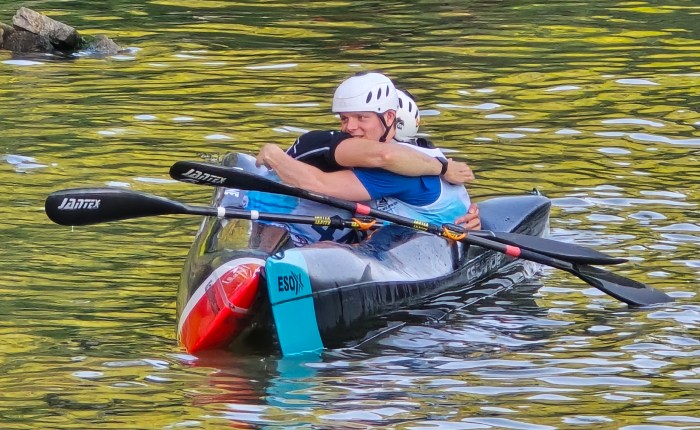
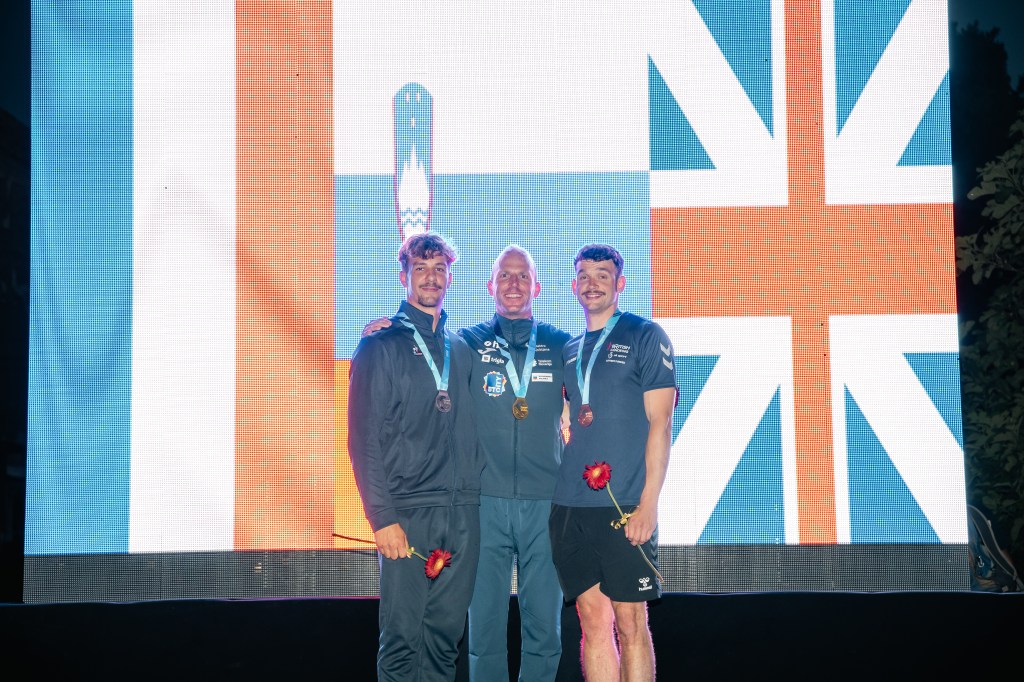
Linus Bolzern (SUI) crosses the line into 3rd. Alex has done it, he’s guaranteed a medal. Doreau (FRA) slips into 2nd by just 0.02 seconds to give Alex the Bronze. It’s the first British senior mens podium in over 12 years. As Jamie gives Alex the obligatory post-race interview he struggles to hold back the tears. By the time Alex reaches the bus he’s a blubbering mess. “Happy tears are good tears” is the message as phones start pinging with congratulation messages, completely overshadowing Alex’s sister’s engagement earlier that day.

The fun didn’t stop there. Kerry and Emma still had their C2 sprint to go. They’d qualified in 2nd place just 0.20 seconds behind the French pair, a gap we knew they could close. We lined the bank screaming at the top of our lungs: “UP, UP, UP, UP”, begging them to rag it as hard as possible across the long flat section at the top of the course.

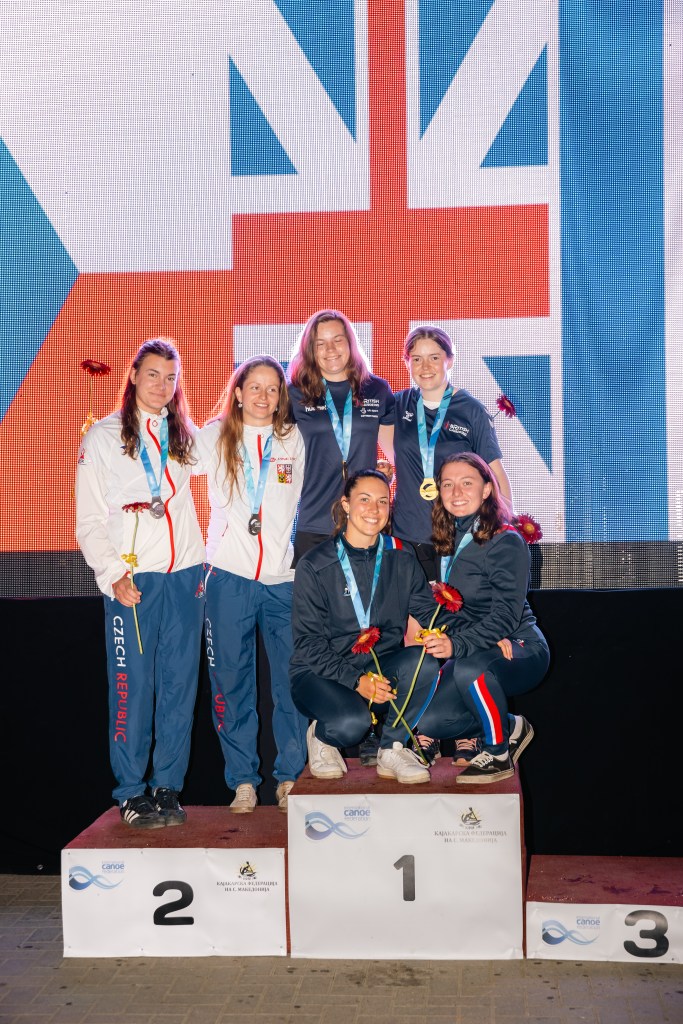
Success. The girls crossed the line a full 1.30 seconds ahead of 2nd. “It’s a gold for Grand Britannia!” As the night grew in we were blinded by the Union Jack (sans saltire) projected behind the podium. Celebrations were short and sweet though, because tomorrow was classic day.

I’ve said it once, I’ll say it again: Classics are my jam.
However, in the baking heat, even I was nervous about what was to come. That morning we’d departed the gulag for the final time and were now counting down the minutes in the inferno that was the quarry which doubled as the classic start. Hiding in the only available shade we chatted shit with Linus and Nejc laughing over the conspicuous ‘toy’ jutting out from the wall. “It is probably for the Italian C1, extra connection to the boat!”.

I doused my t-shirt in the water before getting on in a vain attempt to keep cool. The classic would be roughly 15/16 minutes long and could easily be decided on how quickly everyone caught heat stroke. I did my best to keep my ‘warm up’ to the shade. Before I knew it I was on the start line and then I was away.

As I rounded the first bend I could spy Ljubomir, Mr Macedonia himself in the distance, and I could taste blood. I dug deep telling myself to pick it up every 10 to 20 paddle strokes. I caught him by the Island, a little over half way and then it was just a case of desperately holding onto the speed until the end. As I approached the finish every sinew was screaming, my ears were ringing and I thought my heart was about to burst through my rib cage. Up, up, up.
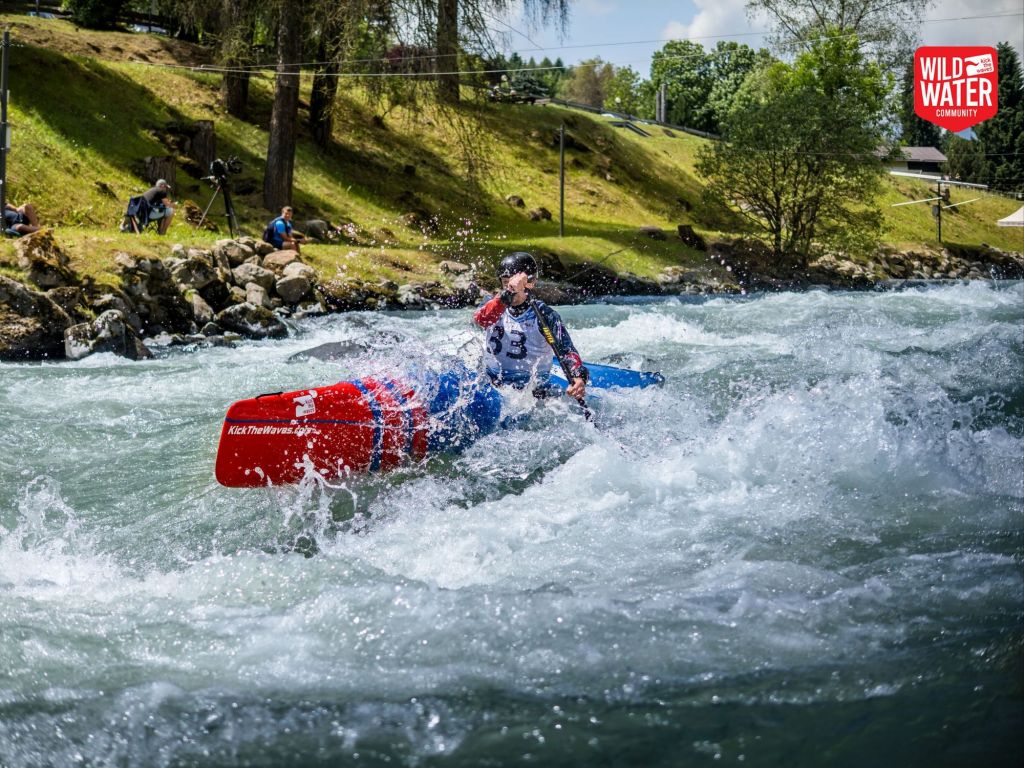
“You looked strong across the line” said Jamie. I didn’t feel strong, I could barely make the eddy at the end, but that’s a good sign. It was hot, unbearably hot and I struggled to string sentences together as Jamie gave me the interview.
“Do you know where you came?”
“No.”
“10th” – My best international result to date.

Alex and Freddie were close behind 12th and 13th respectively while the Crow took 5th in MC1. In the WK1 Emma broke the top 10 to make 9th and Kerry took home a well earned silver medal. But that clearly wasn’t enough as when the Christie sisters went for round 2 in the WC2 they demolished the French and Czech crews to take another gold. This time by over 19 seconds.
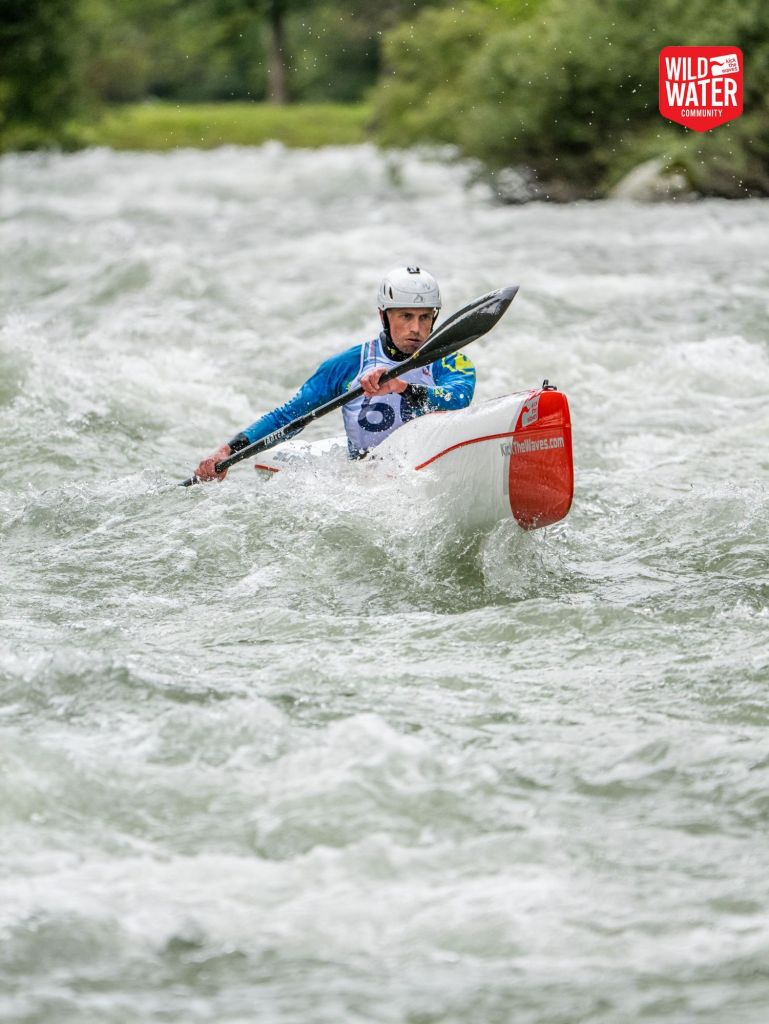
That brought the medal total for the weekend to:
2 bronze, 1 silver and 2 golds. Not too shabby!
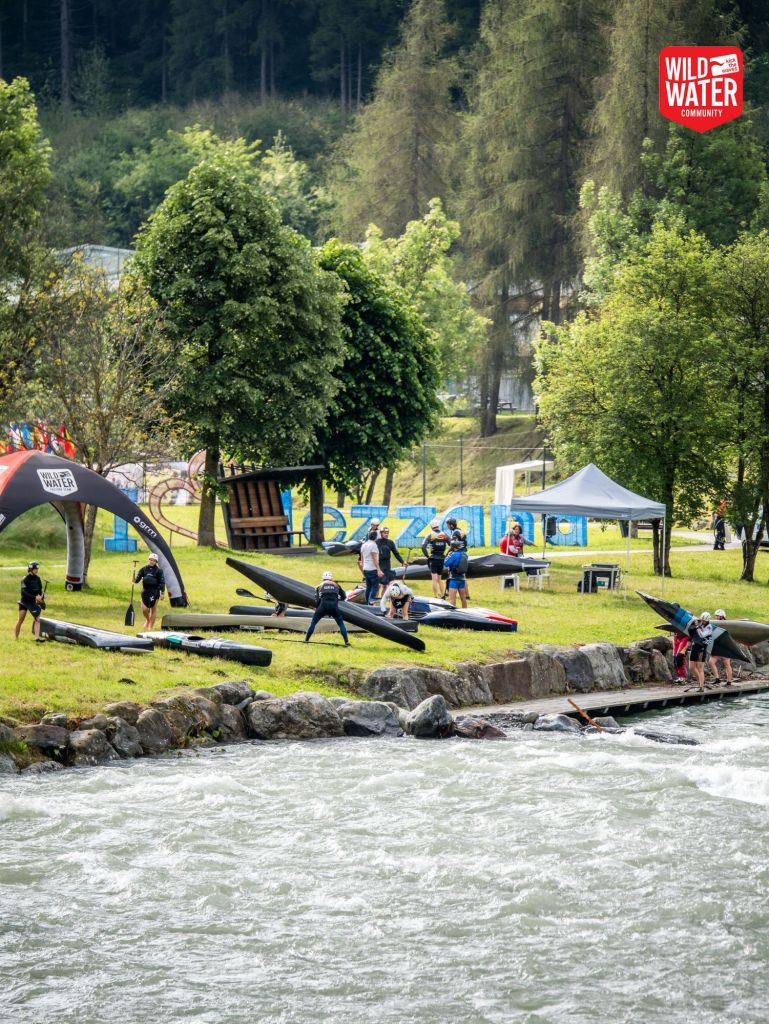
If I’m allowed to be serious for a moment, I’d like to thank the Macedonians, the city of Veles, and the local school for hosting us and a great competition!

Now onto world cups 3&4!

GPX Splits Tool

Away from the river, in my day job, I’m a Navigation Engineer. As with any job, the details of what this entails are obscure and largely unintelligible to the uninitiated. But it is suffice to say that I spend a lot of time playing around with GPS data.

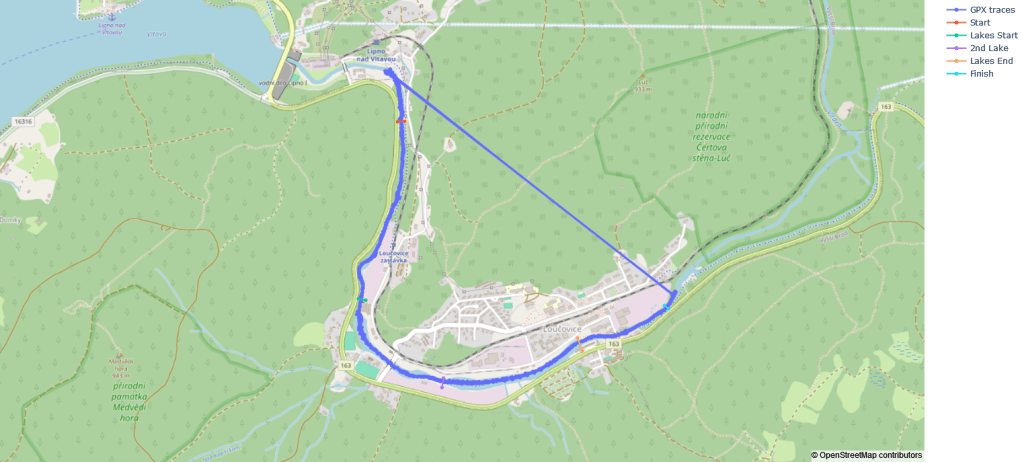
Shortly after Lipno, I decided to put some of these skills to good use and built a little python utility to pull split times out of GPX files. This can be used as a training aid or to compare races and the tool creates some cute little interactive graphs to visualize these times. This tool is freely available on GitHub under an open source MIT license.
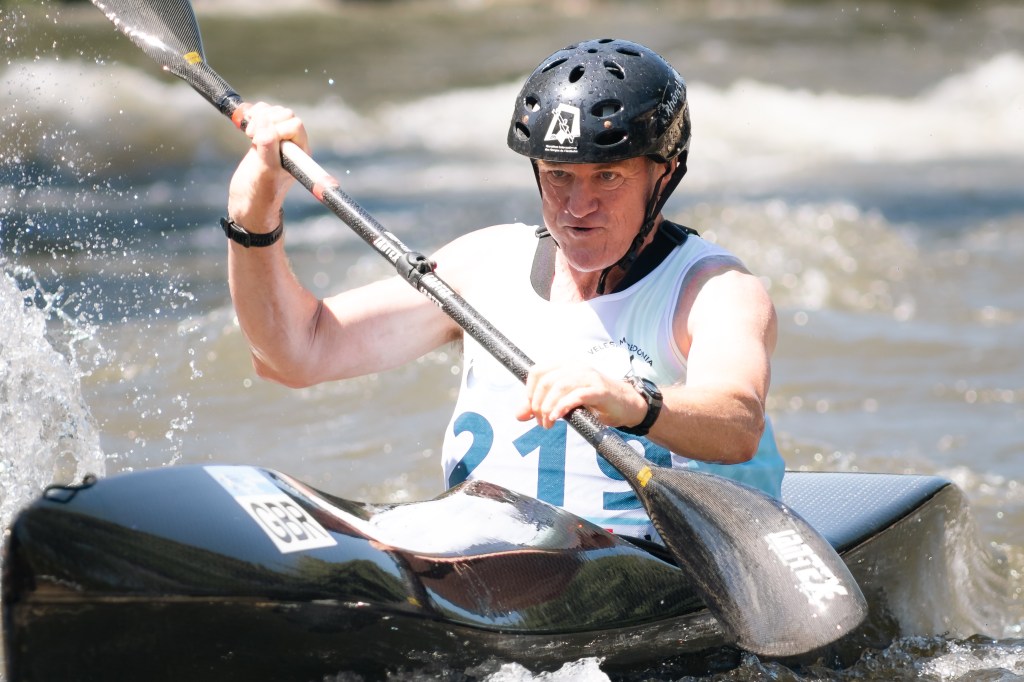
To get everyone up to speed briefly a GPX file is a standard type of file output by most consumer GPS receivers and sports watches. You can also download a GPX file of your STRAVA activities from the STRAVA website. This GPX file contains a list of timestamped positions that the ‘gpxsplits’ tool searches through. It interpolates between these positions checking for an intercept with a ‘virtual beam’ or ‘gate’ that the user can define using a JSON file. Then it logs all of these intercept times and from this calculates the elapsed time between gates and the subsequent split times. (More detailed instructions can be found in the README on the ‘gpxsplits’ github)

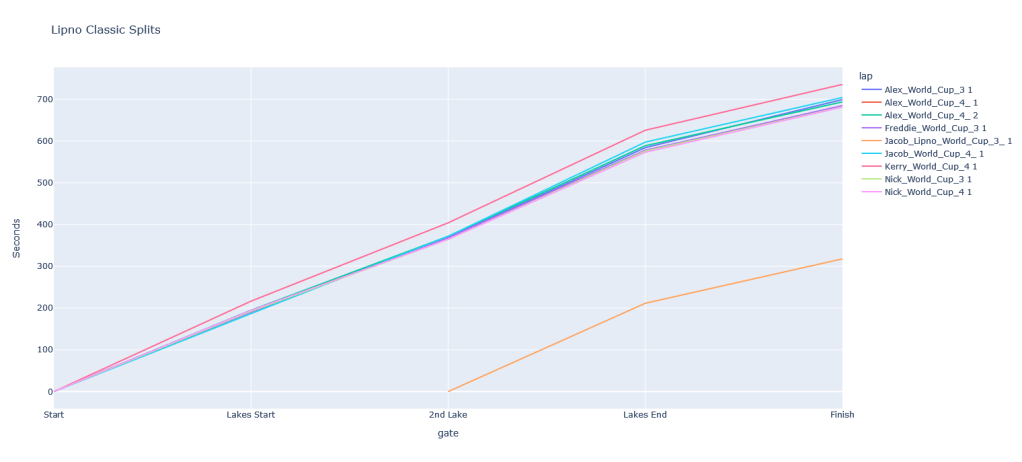
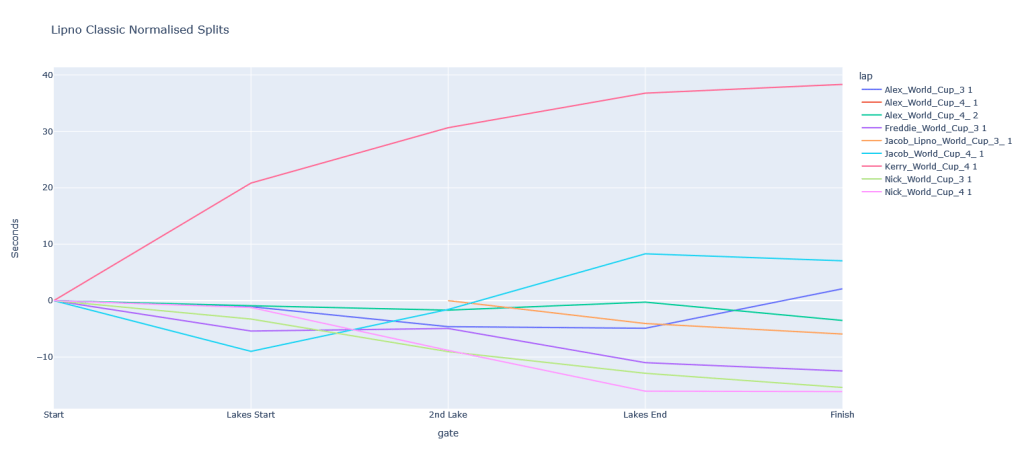
My favorite part about this though is the graphs. These graphs are very useful for visualizing the information and can reveal some interesting insights. The first graph, shown here is simple enough to interpret; simply showing the split time for each gate. However, by normalizing this to the average time, we can better compare each run (see below). Here zero on the y-axis represents the average time taken to complete a section and we then can see by how much each run was up or down on this time though the different sections. Thus a line with a positive gradient indicates the run in this section was slower than the average, while a run with a negative gradient shows a given section of a run was faster than the average.

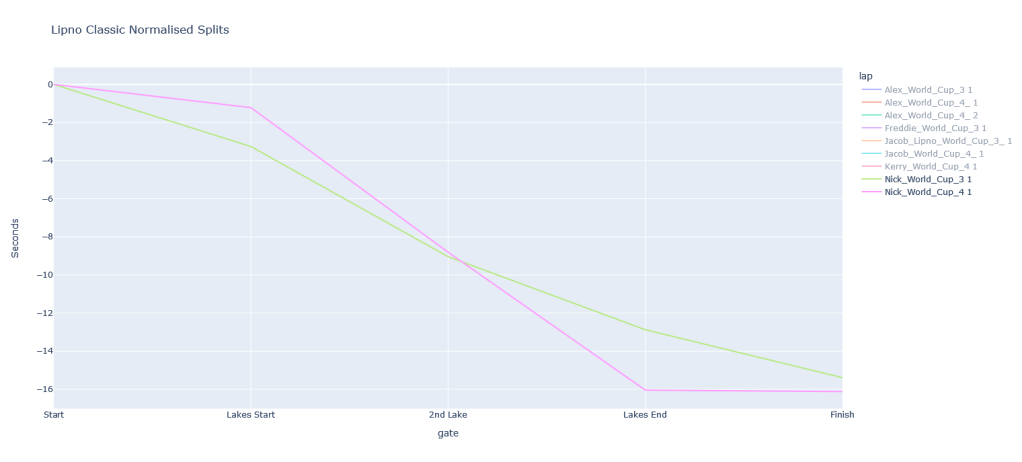
Looking at my two world cup races we can see they were both below the team average (yay me!) but to my surprise the white water sections at the start and end were much faster in my first run. However, on my second run it seems I really pulled my finger out over the lakes, allowing me to knock a few seconds off overall.

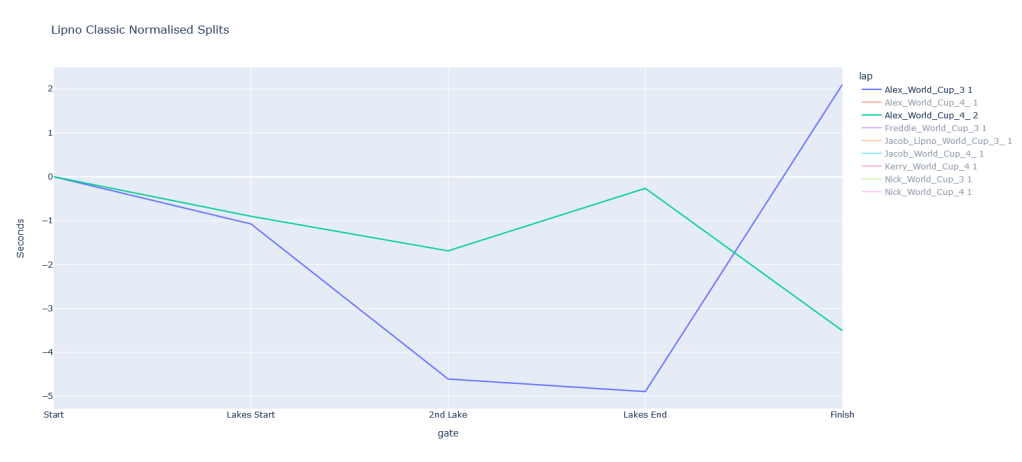
Meanwhile Alex’s traces tell a fun story. On both runs he managed a similar pace over the initial section of white water, but he tried much harder over the first lake in the first run. Unfortunately this led to a swim in the final section of white water. This meant he didn’t get an official time for this run, but we can see from his GPS watch that a lot of time was lost due to this regardless. On his second run he took the lakes at a more manageable pace leaving enough in the tank to handle the final rapid, securing a faster time overall.

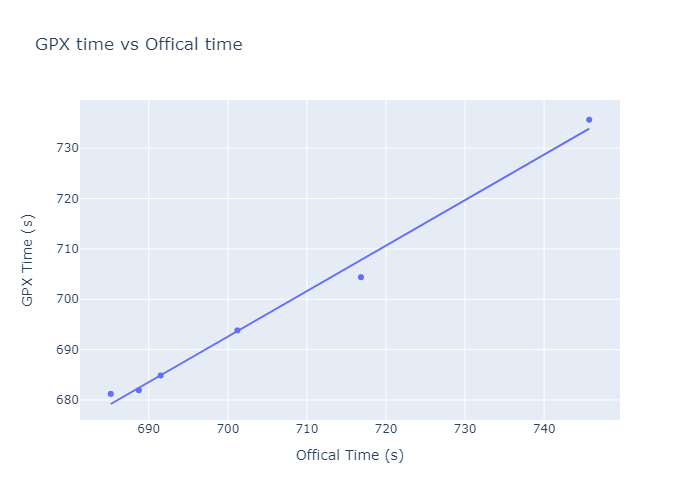
This is all very fascinating but anyone knowledgeable on GPS or GNSS systems are probably asking how accurate these times are. This is quite a difficult question to answer, but it is largely dependent upon the accuracy of the sports watch being used. Sadly most manufacturers are fairly tight-lipped on this information and there is only limited information online about this. Furthermore what information there is, tends to only be concerned with the accuracy of the distance traveled and does not investigate the time component. Fortunately for us we can make a rough estimation of our accuracy by comparing the GPX split times to the official race time.

A quick visual analysis of the above plot confirms a good degree of correlation and importantly the finishing order of all the athletes (in the British team) has been preserved. When examining the numbers we see that the difference between GPX times and the official times has a standard deviation of 2.96s. This is reasonably high, however at least some of the error can be explained by the fact that the mean discrepancy between GPX and official times is -15.28s. This indicates I’ve done a relatively poor job of guesstimating where the start and finish beams were. Given the athletes were probably not traveling at a constant velocity across these 15 seconds, this gate error will have contributed to the standard deviation. Still given most basic GPS receivers are quoted to have a 95% error of around ~10m I am relatively impressed by the 2.96s error. This and the preservation of the finishing order gives me enough confidence that the ‘gpxtool’ can be used as a training aid, but I would hold off using it for official timing purposes.

It should be noted that this is a relatively brief investigation with only a few data points from the British team. If there are any other paddlers who could contribute their GPX files from either the Lipno World or Czech Cup races to improve this investigation that would be greatly appreciated. As would anyone who can give me better estimations for the start and finish beams.

In an ideal world I’d do a proper study where we survey in the beam locations, collect much larger data samples and potentially compare the sports watches to some more advanced techniques (RTK/PPP for you navigation nerds!), but for now this will have to do.

In the meantime I’m looking to develop this tool further. Two key features for improving useability are a UI tool for creating courses and a way to easily download GPX files from STRAVA or Garmin. UI stuff in particular is way outside my area of expertise, so if anyone out there fancies lending a hand please jump in. Everything is available open source on GitHub under an MIT license.

Happy Paddling!