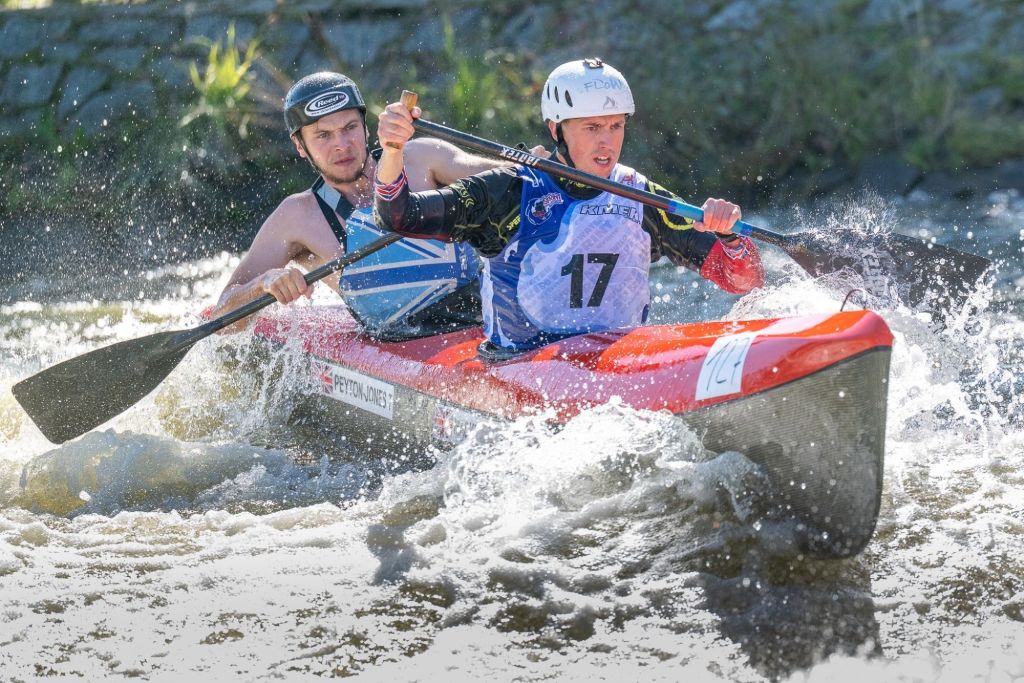
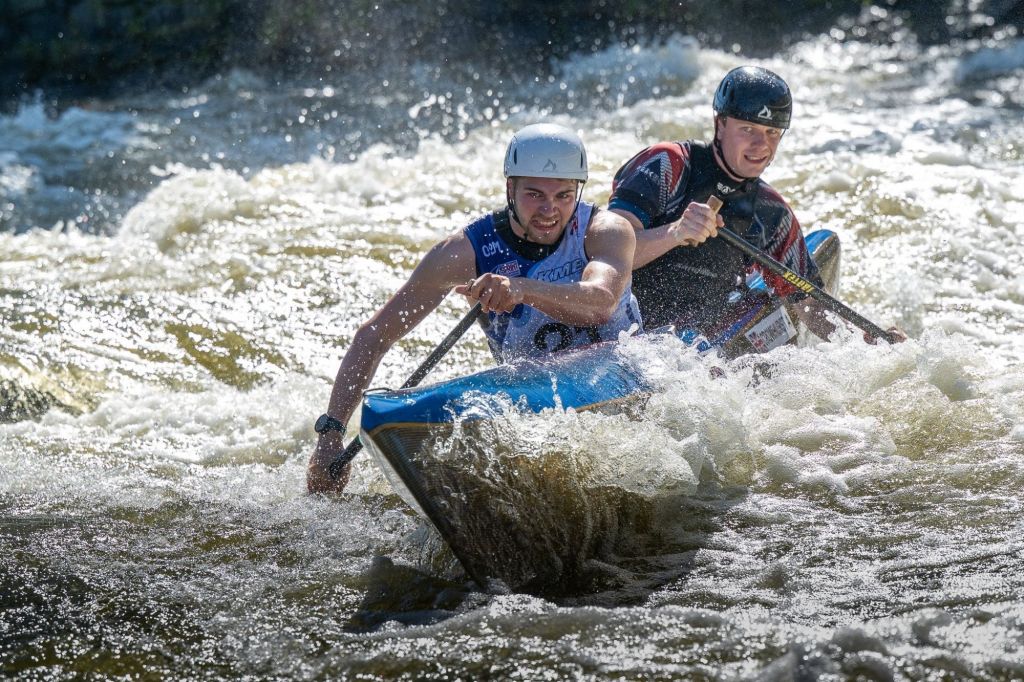
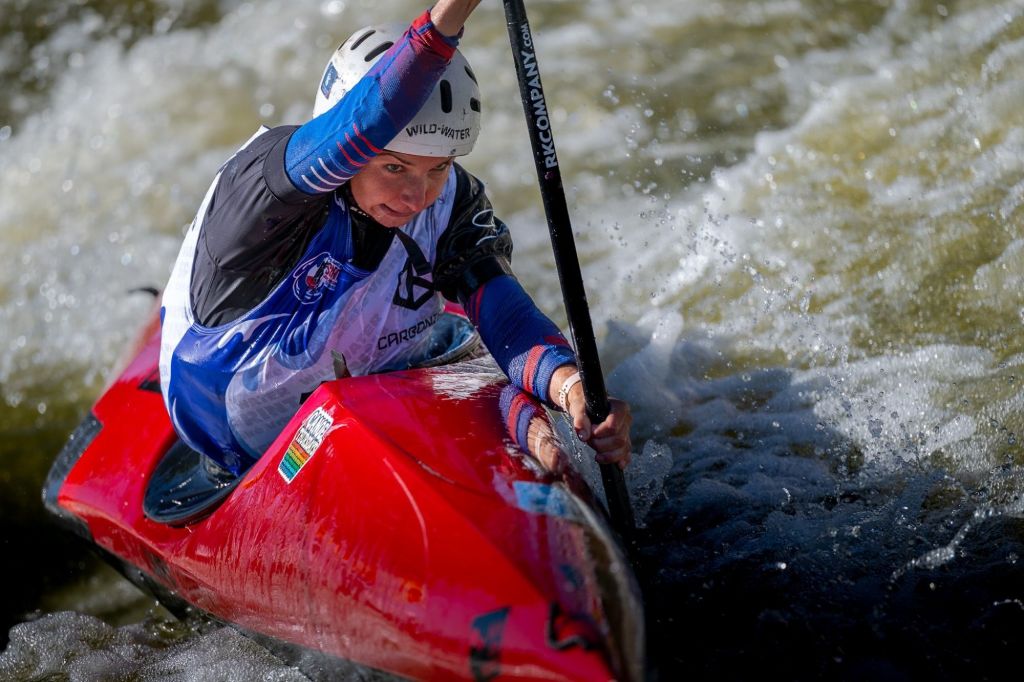
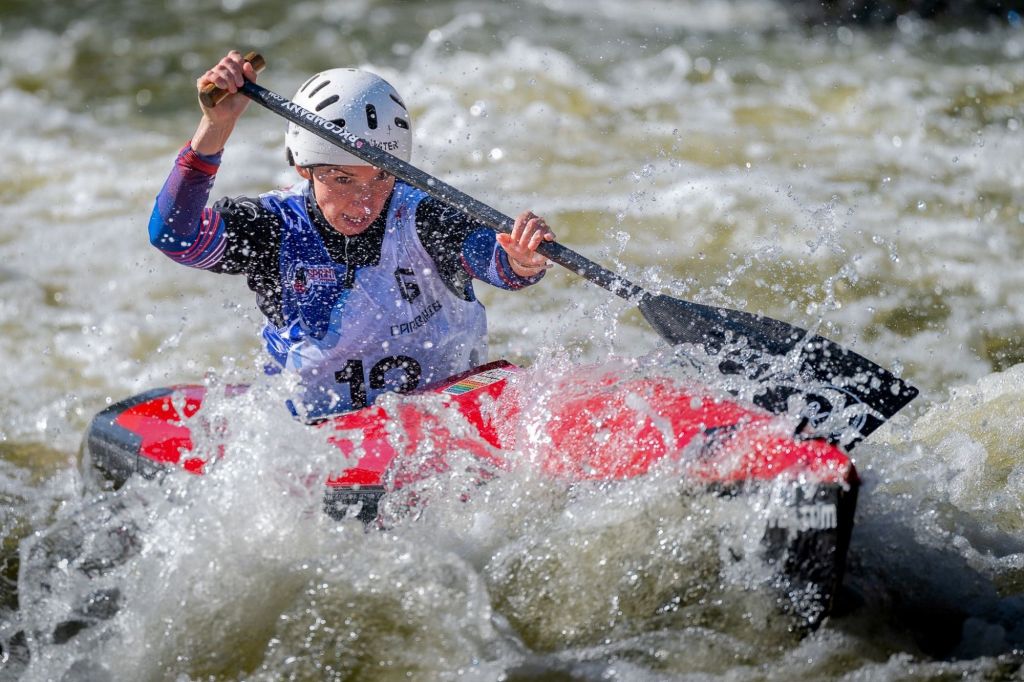
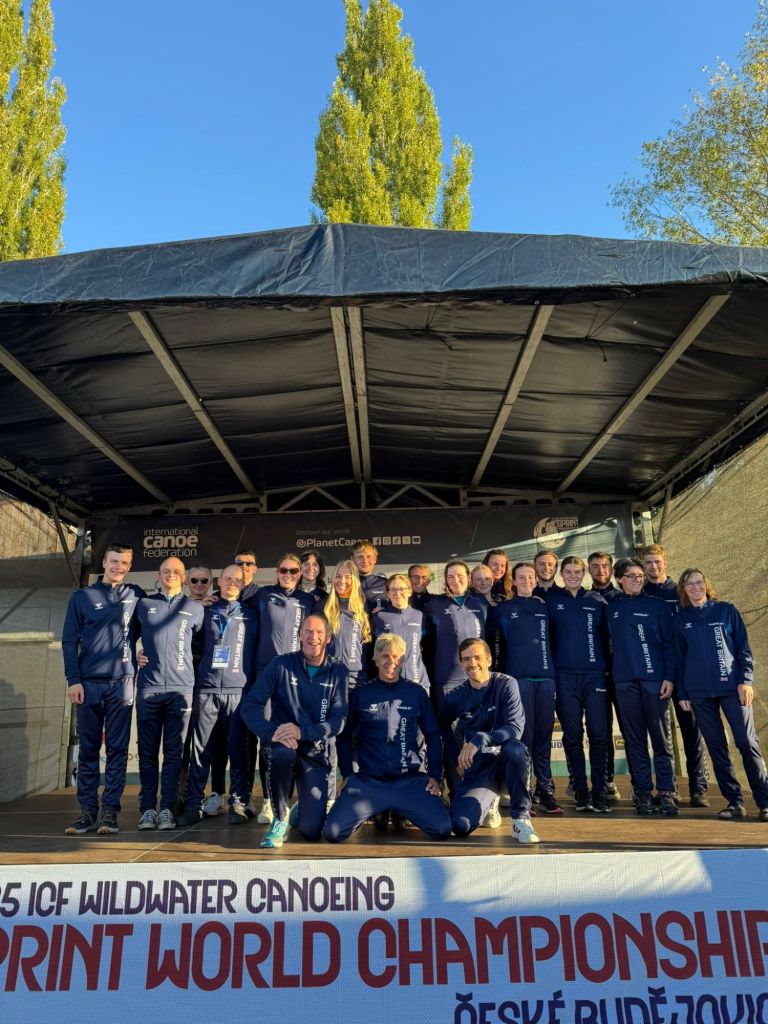
Recently my mind has drifted back to a conversation I had in České Budějovice with Tjaš Kupsch. He was remarking on how incredible it was that the British Team had managed to field a full team across men’s and women’s canoe. Its true, while we might not yet enjoy the levels of success of the French and Czech athletes, the canoe classes (C1 and C2) have been experiencing a remarkable renaissance in the UK. Not long ago wildwater canoe was nearly dead and you could count on one finger the number of paddlers in the UK.
But this renaissance has not been an accident. Instead it is the direct result of a concerted effort from a few key individuals (shout out to Nicky Cresser!). The lessons from this hold the key for not only saving the canoe classes but also growing wildwater in general, and it is something we would be keen to see replicated elsewhere.
The approach to reviving canoe classes has really centred around to main prongs
Ensuring accessibility to equipment
Creating a cultural shift within British River Racing
One of these is harder than the others, but it might not be the one you expect.
Equipment and Accessibility
You can’t race canoe classes without canoes. That much should be obvious, but it is also very difficult to tempt anyone to try something new if it comes with a price tag for a few thousand quid. Therefore lowering the barrier to entry is essential for increasing participation in any discipline.
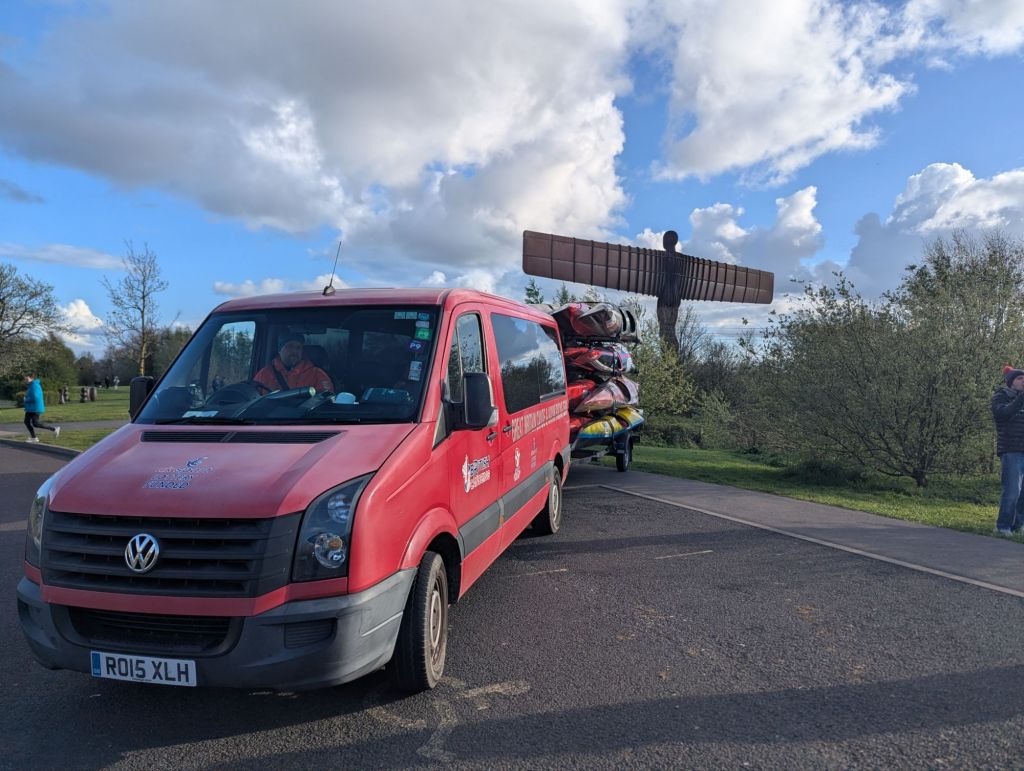
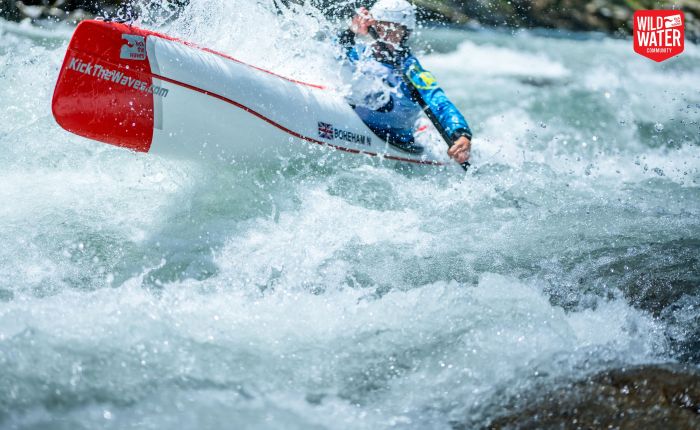
It is here where the British River Racing Committee has stepped up. In the UK wildwater paddling is run by this executive committee, which is a volunteer organisation under paddle UK. Wildwater doesn’t receive a massive amount of funding from Paddle UK but in recent years this committee has been investing in C1s and C2s. Some new, some second hand but importantly they have been creating a fleet of boats that anyone can race. These boats have been to nearly every race in the UK in recent years, usually piggy backing on the minibus or spare roof space. And if they are there then the expectation is that they will be used (although we’ll get into that).
Now we are entering the second phase of the plan. The British River Racing committee is beginning to sell some of these boats. These boats will soon be replaced in the fleet, but selling the boats is now increasing the supply of 2nd hand boats in the UK. Allowing athletes to buy themselves a boat at a more reasonable price.
Eventually this should hit a critical mass. As we get more competent canoe paddlers they will buy new shiny boats, and sell their old boats second hand. I have been reassured though that the British River Racing committee will not stop until there is a C2 in every UK household!
Double or Nothing!
You can lead a horse to water, but you can’t force it to get into a canoe. That is unless your name is Nicky Cresser.
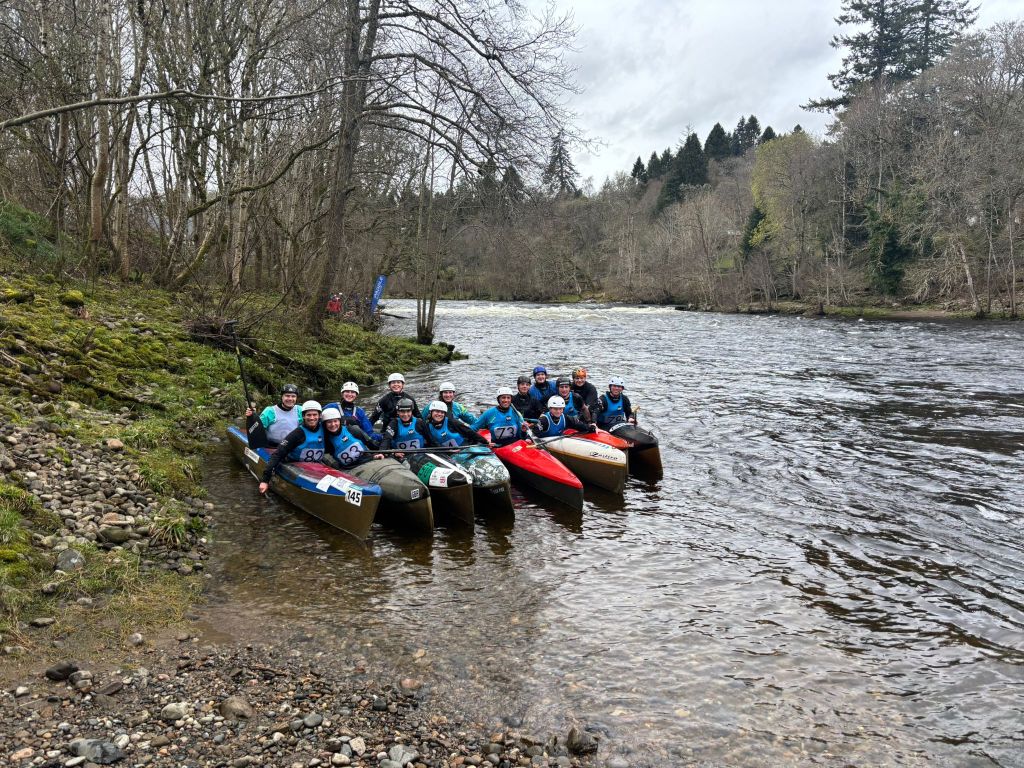
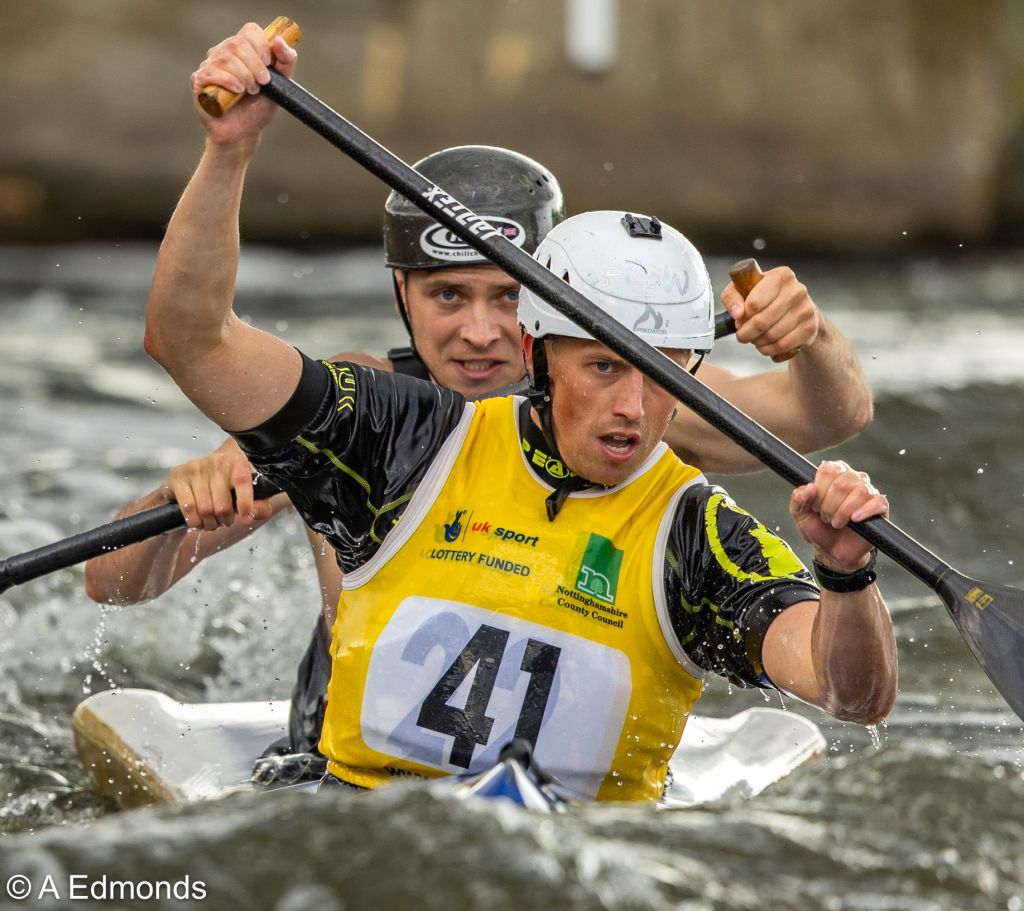
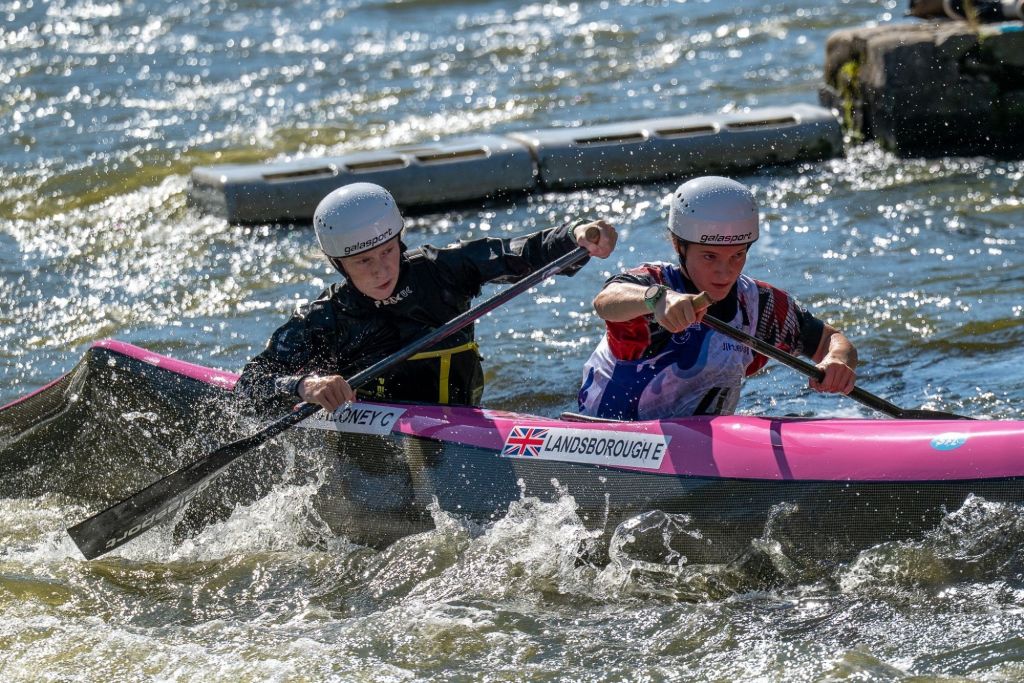
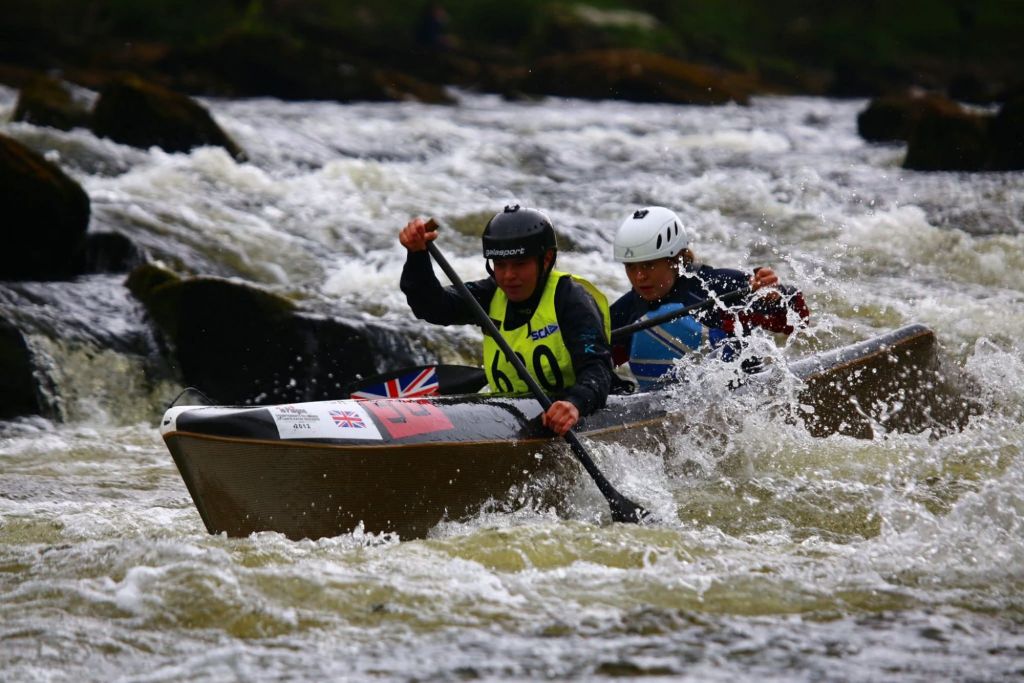
One of the great things about the British River Racing calendar is that it is littered with lots of small easy races on grade 1/2 rivers. The kind of rivers where the water flows upstream when the wind blows a little too hard. These events are great for introducing new people to river racing or getting experienced kayak paddlers into canoes. While it did take a little bit of arm twisting in the beginning it is now the expectation that everyone who enters one of these races doubles up into at least 1 other class. Be that K1+C1, K1+C2 or even C1+C2. The second class may not always be the most elegant of races, but when beginners and juniors see more experienced athletes doubling up and trying different boats with enthusiasm they are more motivated to give it a try themselves. Thus creating the next generation of (hopefully slightly more competent) canoe paddlers.
The ‘Daleks style race’ has become the epitome of this. These races are short sprints held in a free-for-all format. There are no start times, instead the small entry fee gives you as many runs as you can manage, in any and every boat. This usually means K1, C1 and as many C2 parings as you can find. Occasionally there are SUPs or K2 or anything else that floats. Admittedly this makes calculating time at the end a bit of a nightmare. But the times aren’t really the point, the point is fun. Often prizes are given for the most C2 parings or the most different types of craft, not necessarily the fastest. And the prizes are often edible, like homemade cookies!
As doubling up became common at these lower level events, it slowly started to grow at bigger races too. This occasionally involves playing around with the start lists but it’s all for a good cause! Now the expectation is that at anything short of a selection race, everyone will double up (and you better believe we will give you shit if you don’t – although in a very friendly and inclusive way).
Of course getting people into the boats is just the first challenge, but eventually the aim is to build competent and competitive canoe paddlers. This is where ‘Canoe Thursdays’ shine!
The core concept is simple, dedicate a single night of the week to a canoe session. A session where everybody MUST paddle a canoe. Any canoe will do, WWR C1/C2, Sprint high kneeler, Va’a, open boat, as long as it only has one blade your welcome! Each week the session is adjusted to be inclusive of who is on the water. One week it might be skills and drills, another could be short sprints or perhaps threshold efforts. Slowly this weekly session has been building the base and quality British Canoe paddlers.
And it’s not just limited to Thursdays. Canoe Thursday sessions have been popping up on Tuesdays and Sundays around the UK. If you pick a day of the week, we can even hook you up with a sweet sticker!
In Con-canoe-sion
Recently some of the canoe classes have been struggling to be quorate internationally. If we as a community don’t support and encourage these classes then we could loose that forever.
Half the battle is ensuring people have access to boats and equipment which is a role club and governing bodies can assist with. But the second half, the cultural of doubling up encouraging each other into canoes is a job for everyone.
If we build it, they will come.
So should go get in a canoe, because as it turns out, it is a lot of fun!
Canoe Camp
On the 6th/7th of June Nicky Cresser will be running a canoe training camp in Matlock/Nottingham (in the UK). It’ll be suitable from everyone form first time canoeists to those looking to develop their skills. Keep an eye on https://www.wildwater.org.uk/ for more info!
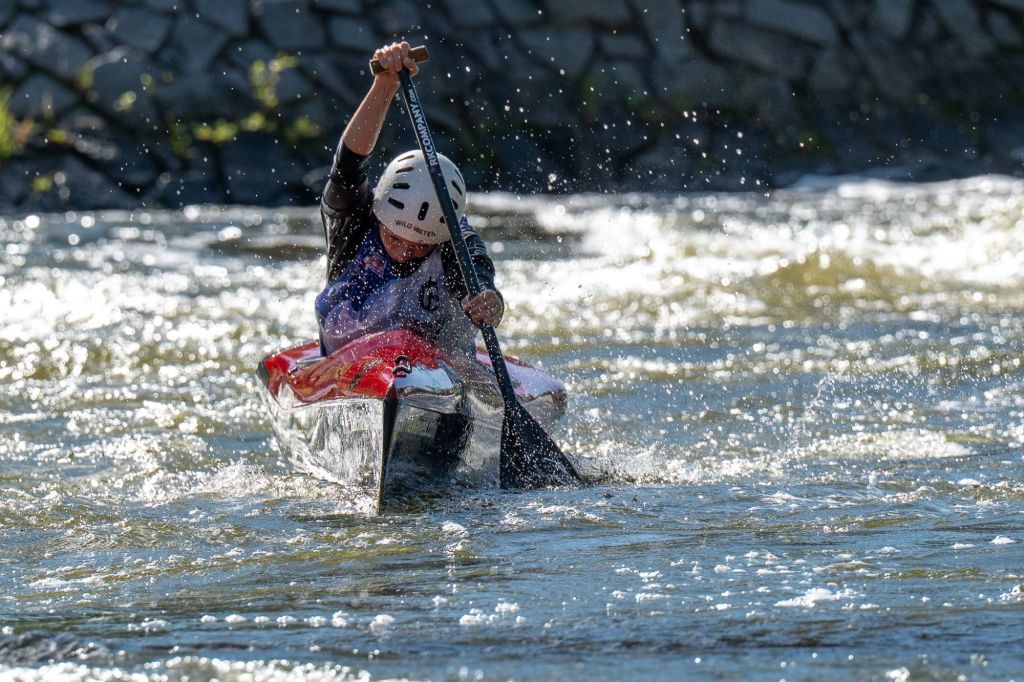
It was always my brother that took to canoeing more than me – I’ve always been more of a kayak kid. I used to tell myself it was because he wanted to be better than me but I was too good in a kayak, but in truth I never really got the hang of only having one blade (particularly on the rough stuff). And yet, despite this, I found myself on the start line of a world championship in a C1.
How did I get here?
Along side canoes, sprint has never been my forte. So at the start of the year I hadn’t really planned on going to a sprint only worlds. But plans change. Suddenly, somehow, I found myself with a deep desire to go to the world champs at České Budějovice.
Motivation
Throughout the 2025 I’d seen a dramatic improvement in my K1 sprint results, often beating some of the other ‘sprint specialist’ Brits throughout the season. And it seemed like there was an outside chance I could make the team for České Budějovice.
Alas it was not to be. Despite all the practice runs, and sprint gains I finished down in 8th, one and a half seconds off the mark. But not all hope was lost; there is always the canoe classes!
Since our success at the World Champs last year I’d become a regular at the infamous Canoe Thursdays sessions. The premise of these sessions is simple: on Thursdays we go canoeing. The session itself is adapted on the fly to accommodate whoever rocks up. From star studded international paddlers to new novices, which is fortunate as when it came to canoe I was definitely in the latter camp.
Canoe Thursdays 🛶
My intention for the year had been to pin down a C2 partner and attempt to retain our bronze in the C2 team sprint, however despite flirting with a few combinations nothing really stuck. As such I found myself increasingly often in a C1. I even entered the odd race, wobbling my way down increasingly larger rapids usually repeating to myself “you’re a big boy, and you can do this.”
By the time selections came around I’d managed to improve my canoe paddling into something that could almost be described as competent. It was enough, and thanks to convincing Pat Marriott to do C2 at the eleventh hour my ticket to the world champs was punched! There was just one issue though, just-about-competent is not really good enough for the world champs, at least for me. Thus I hit play on the training montage swapping most of my kayak sessions for canoe and enlisting the help of the best canoeing coach I know; Viktória Scholczová from the Slovak team.
Viki had been over for our selection race which also doubled up as an ECA cup and eagerly signed up to whip me into shape. It’s hard to believe but over the next couple of months she returned twice to the UK for the sole reason of teaching me the dark art of canoeing.
Her favourite game to play was the ‘switch’ game. Basically every time she yelled switch at me I had to swap the side I was paddling on. As somebody who until then could only paddle on the left, I did not enjoy this game but it did substantially improve my abilities.
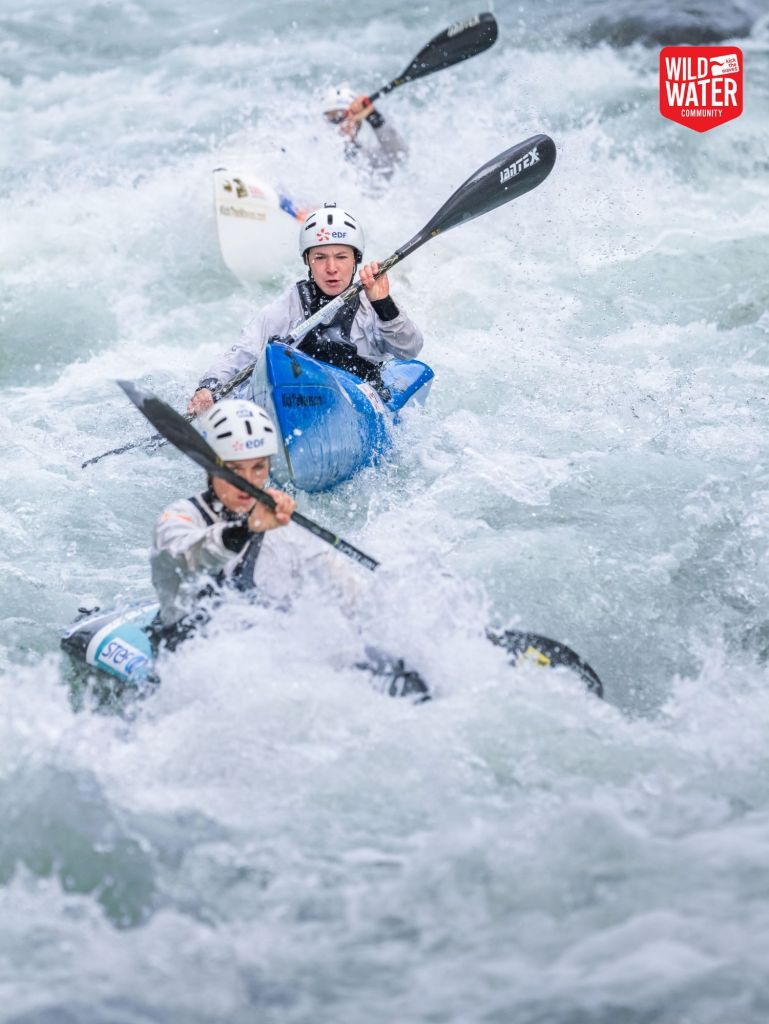
We spent some time on the flat looking at technique, and canoe specific fitness, but the bit that needed the most work was the bumpy stuff. I am fortunate enough to live a mere stone’s throw from the whitewater course in Nottingham, and we spent near every day on the rough. Trying to adjust how the C1 moves in the moving water was a challenge and learning how to live without my other paddle blade was an even bigger one! But, slowly ,the wobbles disappeared, the confidence came and I was able to properly race the boat down the white water. Now I was ready(ish) for worlds!
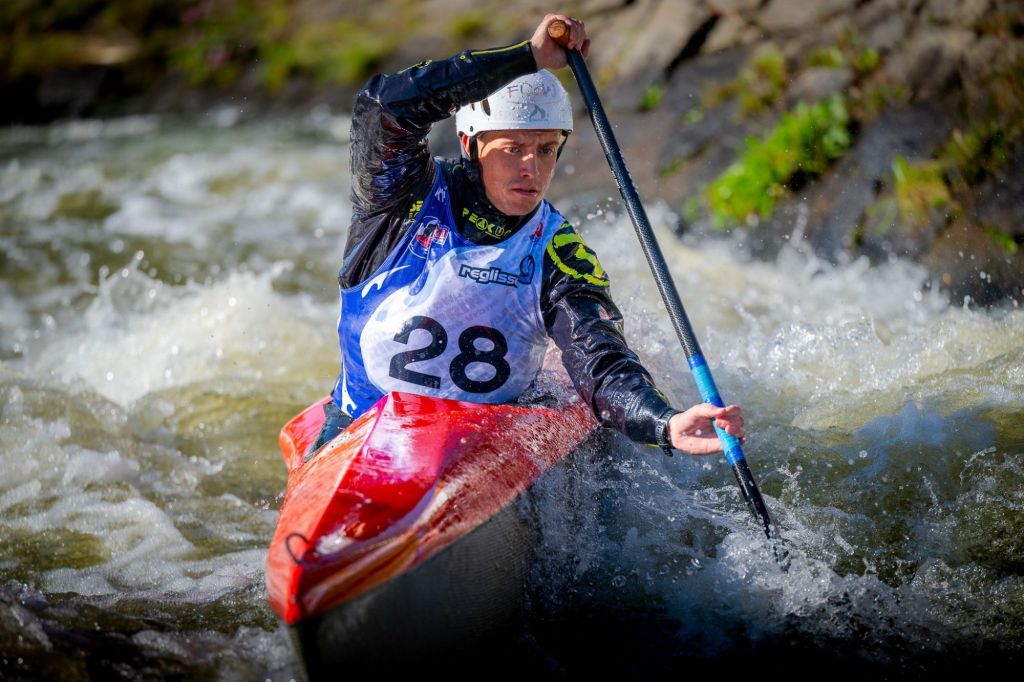
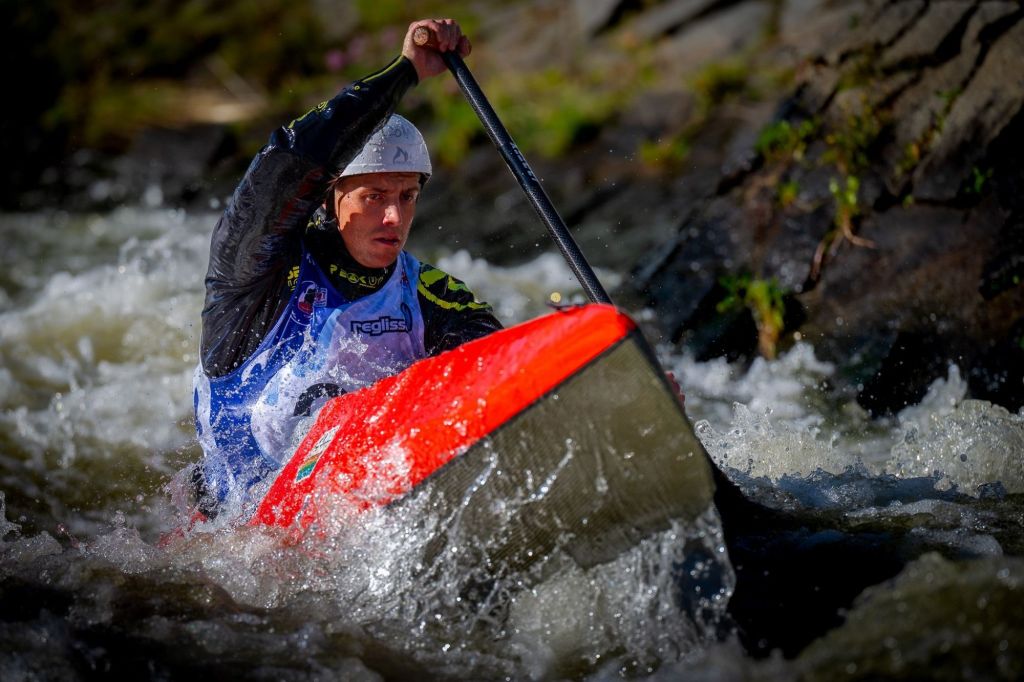
The course at České Budějovice it tight and steep. In some ways that makes it easier than Nottingham, there are no big boils pushing from side to side, but in many other ways it is much much harder. In fact when some of the local slalom paddlers heard where we were heading it was met with raised eyebrows. “I didn’t even realise you could get a river racer down there”. Well you can, or at least some can.
The first few days were a baptism of fire. The racing line seemed obvious enough, but sticking it was another matter. Even the K1s would struggle at times. The tight and steep nature of the course meant that the racing line was constantly riding the eddy lines, slightly off to one side and you’d get buried in a wave coming to a screeching halt. Slightly off to the other side and you’d catch the eddy, spinning out coming to a screeching halt and potentially smacking a wall in the process.
Kerry Christie has been running a swim chart for the British paddlers and I managed to add nearly a swim a day we were in České Budějovice. With the majority of the British ‘Canoe team’ being relatively inexperience we managed to rack up enough swims to rival Adam Peaty. Most of mine happened in the bottom pool just above the finish. apparently I could manage the big bumpy bits but there was something about that last eddy line I just couldn’t master. My only other swims was one team run induced collision with a bollard, and one just above the start line (but we’ll get to that later). None of this particularly impressed Viki though. Her mantra of “No Swimming” would often float through my head as I floated back to the surface. Evidently I needed to spend some more time with in rolling lessons.
In truth I was having a bit of a mare. Pat, who lives in Switzerland had been relying on me to load a C1 onto the trailer for him. A task I failed at. I only realised the mistake once we’d arrived in Czech but fortunately, thanks to our good relationship with the Slovak team (and a few bribes) we were able to borrow Pat a boat. (Not that it mattered in the end…)
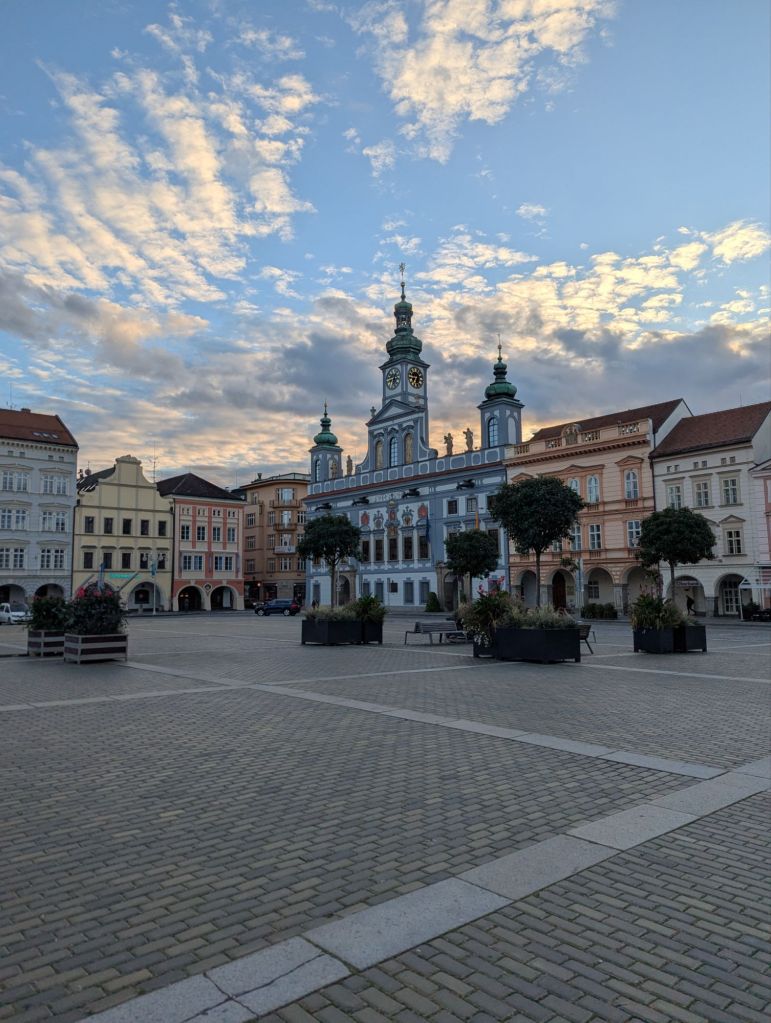
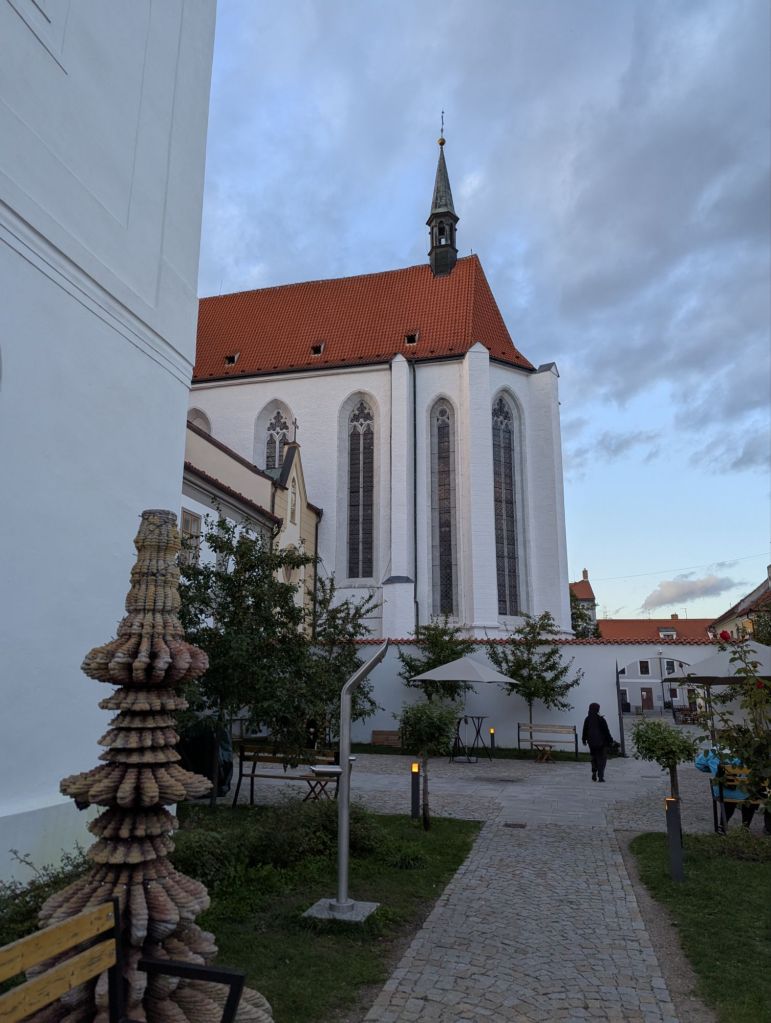
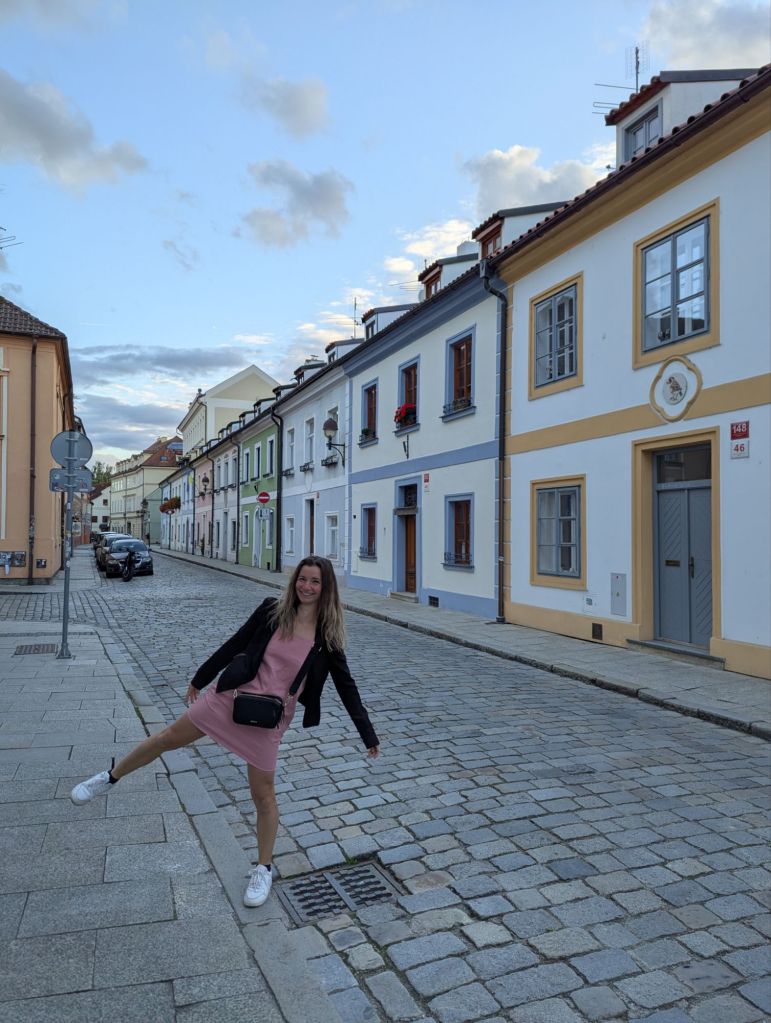
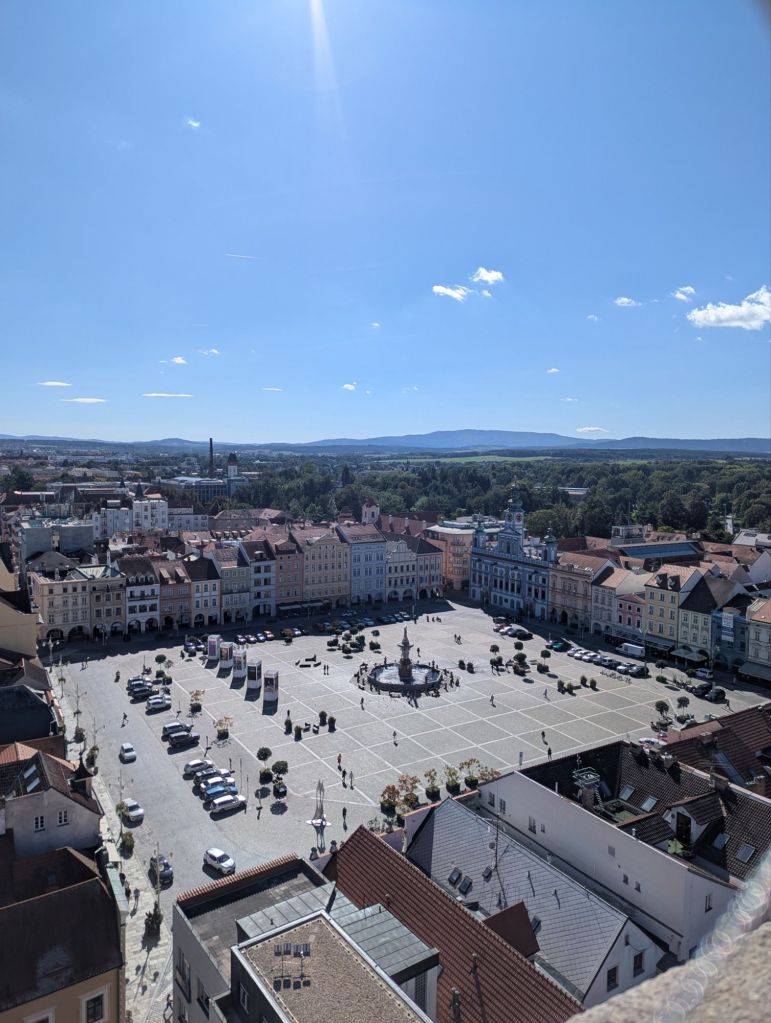
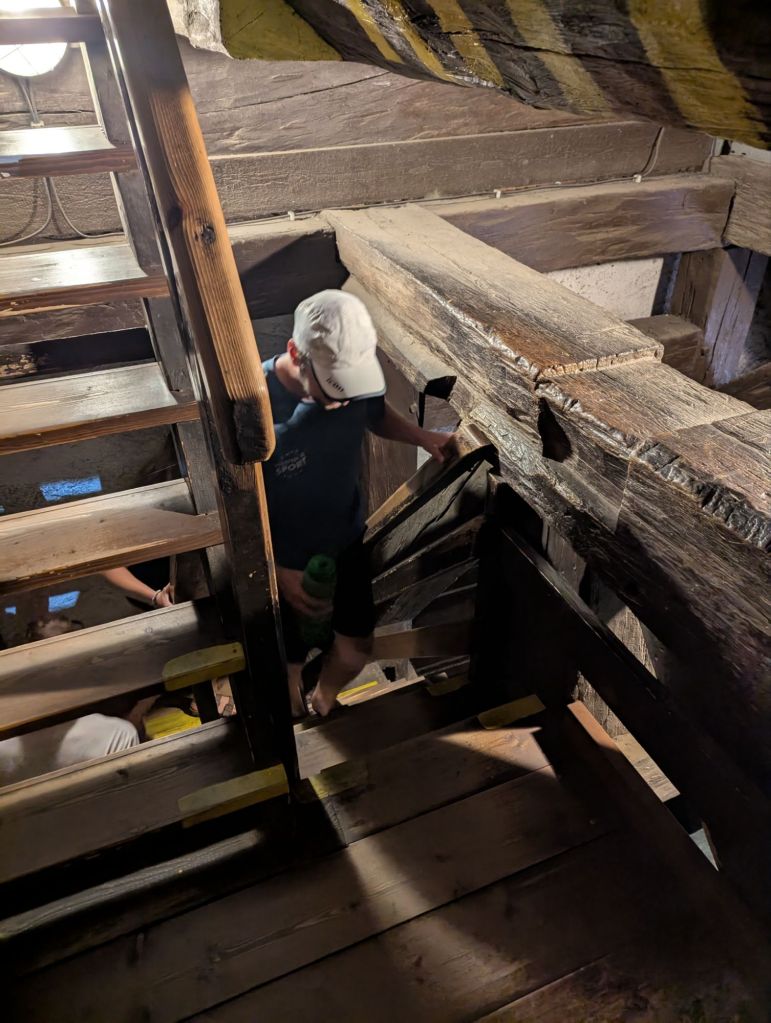
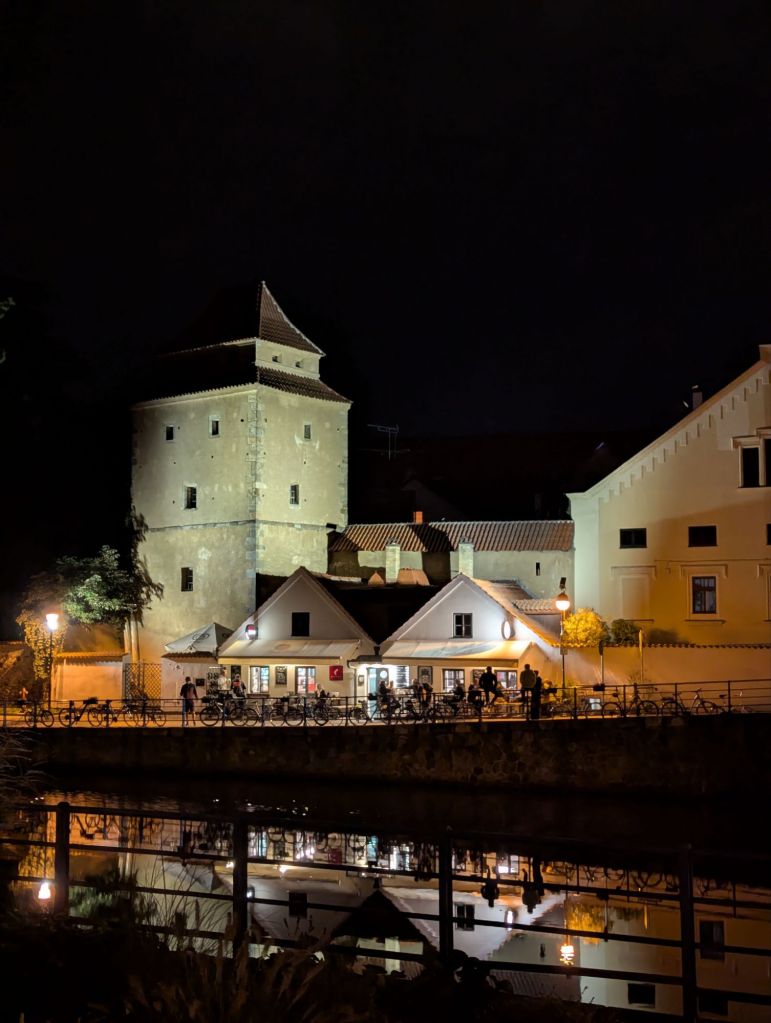
Off the water we were staying just outside the old town of České Budějovice. The old town is a small but beautiful part of the city that we took a lot of joy in exploring on our rest afternoons and evenings. Many a misadventure occurred during our week in the city; A team trip up the rickety ‘Black Tower’; somewhat accidental ‘breaking and entering’ into the Dominican monastery under Viki’s Guidance; and just wondering into a random festival the night before finals (sometime competing really gets in the way of being a tourist!).
We were staying in some remarkably swish apartments (at least for our standards). Sleek and modern our only complaint was the weird frosted glass doors (or sometimes general lack of doors) between the bedrooms. A clear style over substance choice by a designer who’d never considered that flicking on a light in the night would wake up the every occupant in the apartment. We weren’t the only ones to find such premium digs though and we found ourselves sharing the block with the German and the Spanish teams. The latter of whom attempted to burn down the building the night before the racing started by attempting to incinerate some popcorn. What ensured was the most lacklustre and confused building evacuation I’ve ever witnessed and a brief visit from some disgruntled firefighters.
We awoke on the first morning of the competition to our apartment still vaguely smelling like a burnt out cinema but our thoughts quickly turned to the day ahead. The competition was to be held over two days. The heats would be held on the Friday with finals and team races on the Saturday.
Friday morning was dedicated to the K1s and the C1s. The first runs were rough, for nearly everyone. In the Men’s K1 some of the big names missing from the top 5.
My first run went surprisingly smoothly. I kept the boat under control with a reasonable amount of speed although unsurprisingly it was a long way off the mark. I’m immensely proud of the progress that I made over the summer and the week at České Budějovice but it was humbling to see how much further there was to go.
Meanwhile, Pat had an absolute shitter. He somehow missed boat control before getting on the water (which to be fair was poorly signposted). This was only picked up just before he started, which meant a DNS, and consequently no 2nd heat either.
While warming up above the start line, minutes before my start, I lost control on a ferry glide. I collided with one of my fellow competitors, before slowly and inevitably turning turtle. I reached for a roll but somehow, in the confusion, I lost my helmet. I grabbed for the pull tab and popped my deck, fearing if I was underwater for any longer I’d flush across the start line (an instant DNS). What followed was an Olympic level swim.
I may not be a pro-C1 paddler. But I’ve certainly become a pro-c1 swimmer. Before my head had even breached the surface I’d already flipped the boat and launched it into the first available eddy. The only issue was even if if morphed into Michael Phelps I wouldn’t make it to the same eddy before swimming over the start line. I resorted to the other bank, crawling our completely out of breath. Another more competent paddler managed to retrieve my helmet and chuck it to me, but now I had the second stage of my triathlon.
Stranded on the opposite bank to my boat and with the time rapidly ticking down to my start I had to run down the course, over the first bridge I could find and back up to my boat. Then it was a mad scramble to empty the water and strap myself back in.
I made my start. Just. With about 30 seconds to spare.
Already exhausted there was no time to recover before the third stage (the actual race) began. I ploughed on to race what will go down in history as ‘a C1 run’. A largely unremarkable run, but with no major errors or mistakes and finishing upright. Which, to be honest was an upgrade from the start! Unsurprisingly I was miles off the finals, but satisfied with the runs I’d put down and the improvement I’d made over the week.
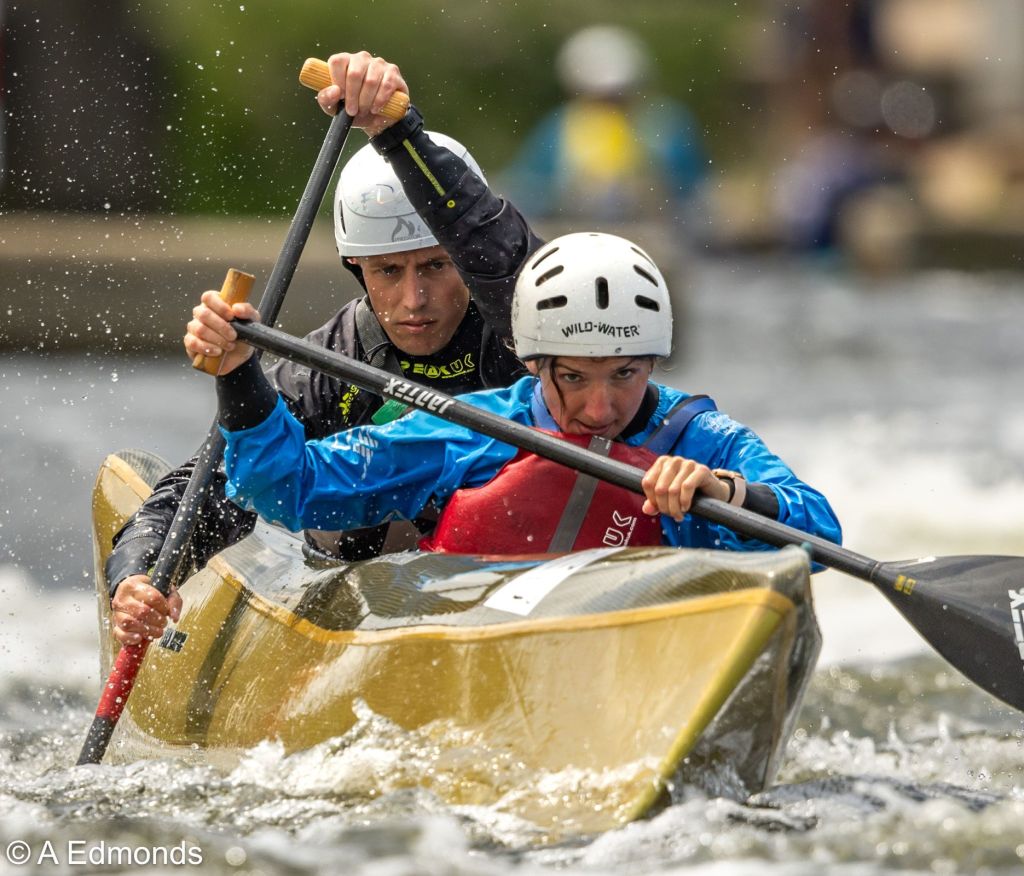
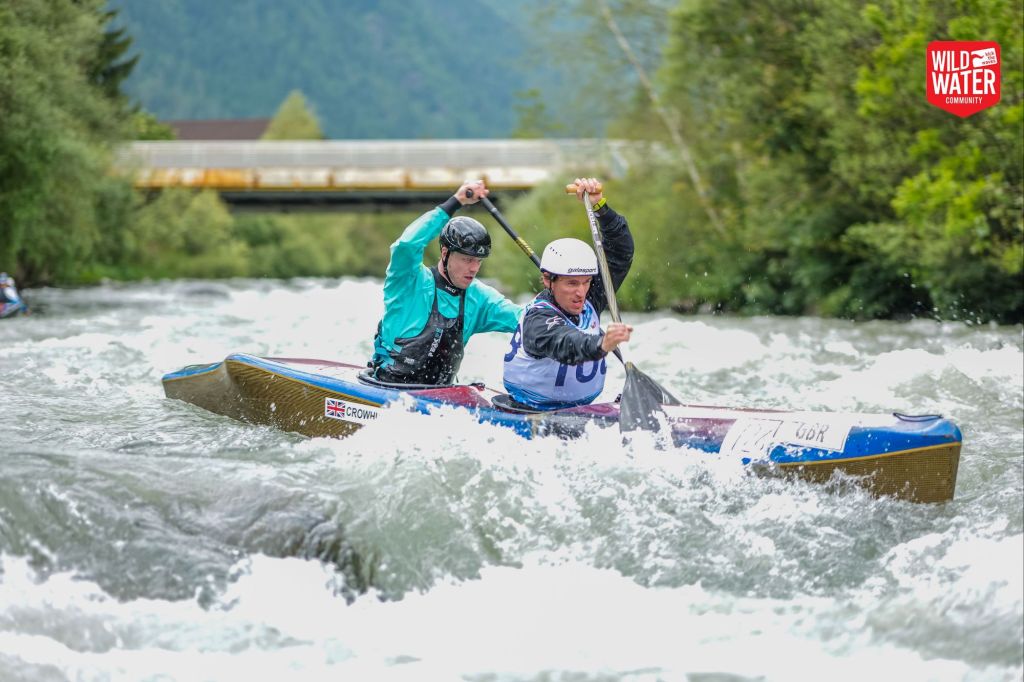
Now it was time to turn our attention to the C2. Our runs were again unremarkable. Although given some of the incidents the other teams had that was a blessing in and of itself. We put in a good effort and even improved from one run to the next. But the French and Czech C2s were in a league of their own and our (albeit far fetched) dreams were dashed against the rocks like some of the less fortunate C2s.
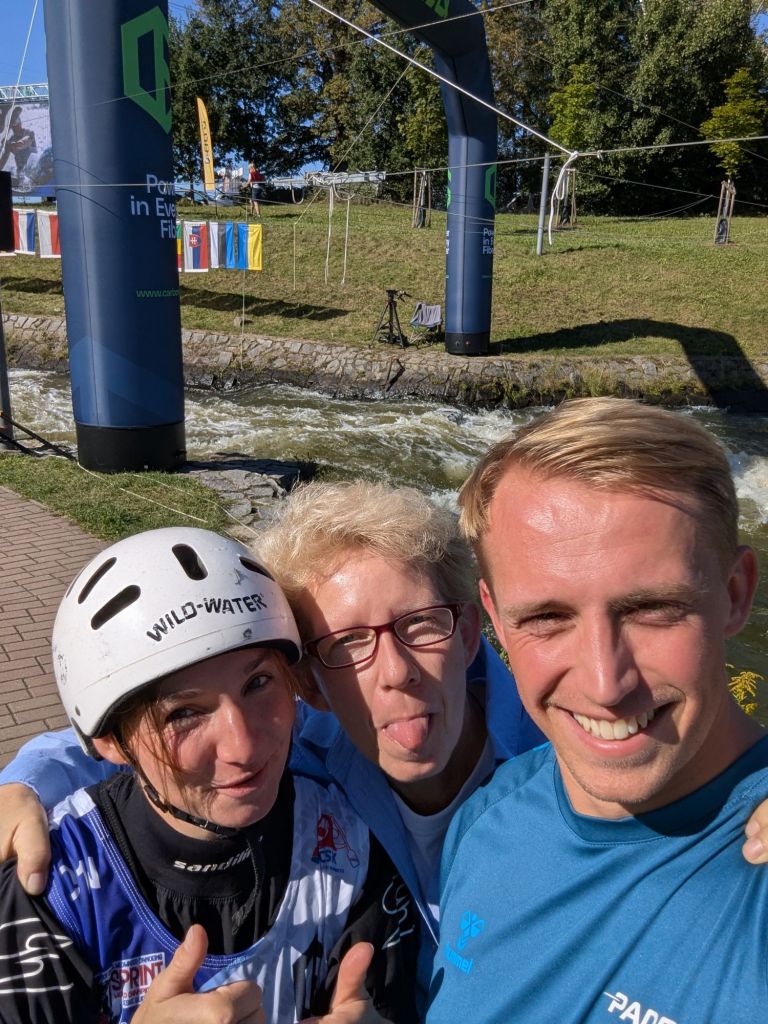
It was a similar story for the whole British team. Close but no cigars (and no finals). The feeling of disappointment was palpable, particularly given all the success from the previous years we’d almost become accustomed to. Fortunately for me, Viki provided a silver lining, making her final in the second heat. That’d give us all something to root for in the morning, before the team race in the afternoon.
The other, questionable, sliver lining was the invite to do the commentary for the live stream. The English language skills of the British team are (fortunately) unparalleled. Although our media training could probably use some improvements. Some of the highlights of our commentary was picked up by planet canoe. Some of the slip ups and swears did have to be dubbed over though. We will see if they ever have us back.
After the disappointment of the heats we all hoped that the finals day would provide some reprieve at the end of a hard week. Unfortunately it was not to be, and more heart break would soon be upon us.
For me this began with Viki’s final. Sometimes it feels harder to watch than to race, because in the the moment there is nothing you can do. I ran down the bank cheering and shouting as loud as I could as Viki powered off from the start. Her top section was strong. She was flying. But, a small mistake at the crux led to a spin. To Viki’s credit she got the the boat turned and kept the power on to the finish but any hopes of a medal had been evaporated. At the finish there was frustration and tears. České Budějovice is a punishing course. Viki was in good company with many of the favourites having spins or major mistakes. We were not the only red eyes in the finishing zone.
The day seemed to fly by with some incredible racing and one of the tightest MK1 finals I think I’ve ever seen but soon it was time for the team races. It was our last shot for glory and in the C2 our one chance at a medal.
The WK1 and MK1 teams, were met with disappointment, but they at least finished something our MC1 team unfortunately failed to do after Regan took a swim. The British WC1 team did technically finish in 3rd but this was 3rd out of three. Unfortunately there need to be at least 4 teams in the race to be quorate so there were no medals. This was extra painful for Viki as had the Slovaks managed to put together a C1 team they almost certainly would have slotted into the medals.
Its always sad to see events not be quorate. One thing that the we as the British team pride ourselves in is out willingness to stand up and race in situations like this. If we as a community to not try to reinforce and grow these categories they will slowly die. I love this sport and it would be an unspeakable shame to loose it. Those who’ve trained hard deserve races and a shot at the medals. We’re doing our part and I hope other nations will step up too.
Finally at the end of the day it was time for the MC2 team. The last race, the last hope and a bronze to defend. As we lined up on the start we tried to channel the memory of Spain. Paddle hard, fast and smooth and clean. That was the dream.
I’d be lying if I said it was a perfect run. We definitely hit some waves and took on too much of the bottom eddy. But it was a respectable run and one we were happy with as we crossed the line. But it would be a bitter sweet feeling. We may have finished just 2 seconds of the Czechs, but the Germans had put in a storming run, knocking the Czechs into 3rd and leaving us in 4th.
It would be a long drive home across the Europe and the team were packed up and ready to leave before there was time to process everything. The sudden departure felt like a shock as I said goodbye to Viki. They were solemn miles of motorways. But there is always next time.
Last year the River Noce was high. And I mean really high. In the UK we don’t get that much steep big water. It’s a different style of paddling from what we are used to but what shocked me most was the sheer power behind the water. Not half way through the classic race and my forearms were so pumped that gipping my paddles was a challenge and pulling them back against the heavy water was near impossible. So, when it was announced that the river Noce would host the 2025 European championships I knew I had to do one thing: Get strong.
This blog has a tendency to get a little sparse over the winter months. That’s not because I’m not paddling, far from it in fact. The UK Wildwater calendar is at its busiest over the wet season, but its also the time of year where I tuck myself away and focus on training for the biggest events of the year.
Winter training in the UK
I’m a paddler at heart. I enjoy being out on the water more than anything else, even through the tough winter months. But paddling isn’t always the best way to get stronger so this winter I beat a retreat to the warm sanctuary of the gym. That’s not to say that I did no paddling (I still paddled nearly once every day), but rather I shifted the focus to lifting up big heavy things in the hope it’d help with the big alpine water. The gym is less fun than paddling but Tamsyn McConchie, my bestest gym buddy, was on hand to keep the fun, motivation and discipline alive.
But winter wasn’t all about getting “swole”. For every one part of fitness, racing requires another 2 parts of skill. From my marathon days, I’ve always been reasonably good on the flat, but (and despite all my plastic boating) translating that onto whitewater has always been a bit of a challenge. The answer to that is simple though, more boat time! And not just more boat time, but maximising the time spent on the rough.
We were fortunate with the rain this year and scored a massive high water day on the Dee, and another on the Dart. Comically on the Dart, the water didn’t come until we’d finished racing. But we hung around and ran laps and laps and laps until the light faded and our bodies couldn’t take another run. It was a very good day!
Over the winter it seemed nearly every weekend was spent paddling a different river, and when we weren’t away I’d be on our local whitewater course at HPP. As spring dawned and we regained some light in the evenings, resistance sessions dropped off the plan to give way to Dalek Mondays – A sessions featuring attainments and sprints down the bottom “Daleks” section of HPP. I could already feel the benefits of the time spent in the gym with an ability to grip the water like never before.
By the time selections rolled around I was feeling reasonably confident. Once again it was the now familiar trip up to Grandtully. The result: A decent enough classic (3rd) but 5th in the sprint – probably my best ever sprint result. Combined they were enough to book my ticket to the European Championships.
On the evening of the 30th of May and elite strike group departed the UK. Said strike group was comprised of Myself, Freddie Brown as well as Kerry and Emma Christie – basically everyone who’d raced the previous year and understood just how challenging the river could be.
When we arrived in Mezzana we were met with a very different river to the one we had left behind the previous year. The high water (or potentially some diggers) had moved around some of the larger rocks on the river bed, changing some of the racing lines, most dramatically on the sprint course.
The other noticeable difference was the river levels which were dramatically lower than the year previous. High water is a relatively rare occurrence, but the extent of the difference came as a surprise, with the Noce being transformed into a rock dodging obstacle course.
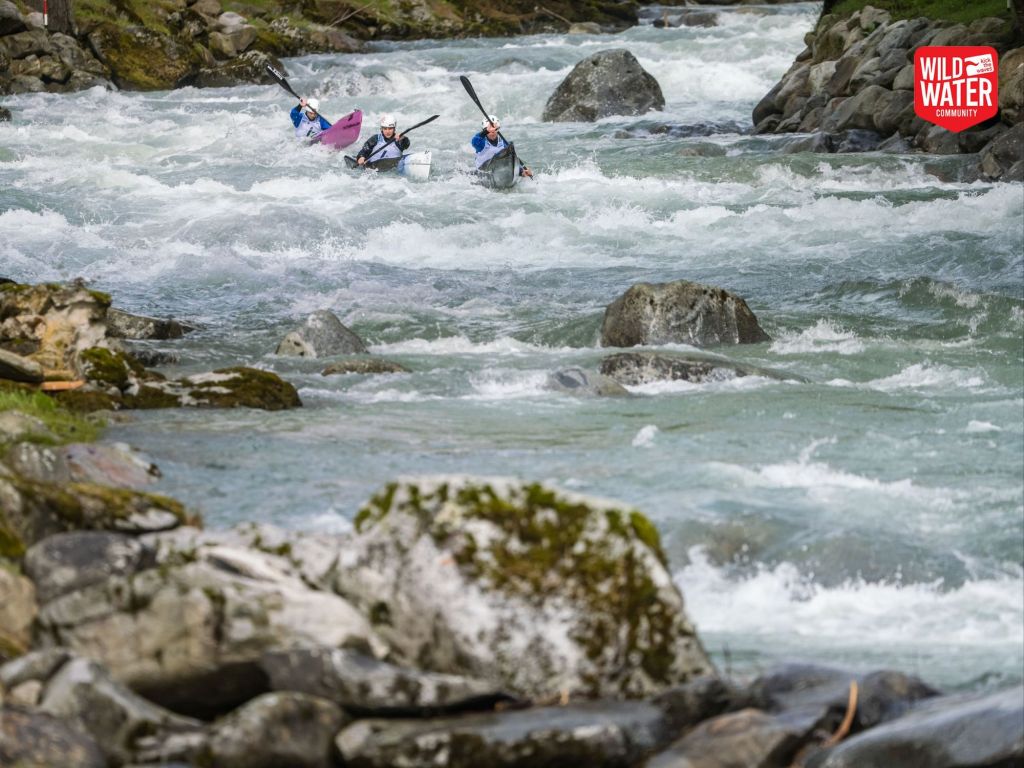
We set about figuring out the lines and adjusting to the fast flowing water. The slightly lower level suited us. The water was still a lot heavier than anything in the UK but it wasn’t too much of leap. That said the level was far from static, often rising and falling over 10cm between laps. Fortunately this changed the character of the river more that it did the lines but after a week of paddling on the Noce we were starting to feel happy with it at any level.
One thing that was harder to adapt to was the altitude. Mezzana sits at nearly 1000m. While that’s not an extreme altitude in and of itself, it is almost 1000m higher than Nottingham, and it really showed whenever we tried to pull hard. Through adrenaline and altitude, I seemed to screech up to my maximum HR on nearly every session, and it took a fair bit of focus to pull it under control.
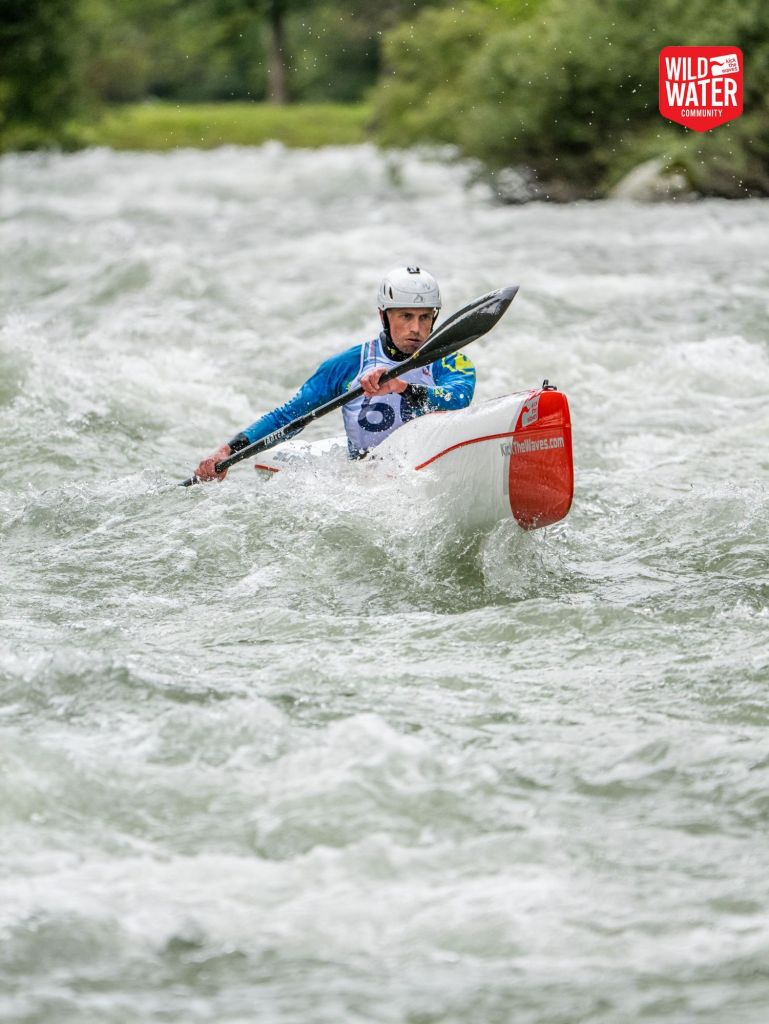
By the time the second half of the team arrived we’d just about got everything figured out – and then the heavens opened and the river began to rise. Once again we found the character of the Noce shifting and changing. There were no major changes to lines, but as waves steepened and stoppers flushed out we could take on a little bit more this or afford to be a little less left of that. But slowly the paddling shifted from the familiar rock gardens to big volume and high power water.
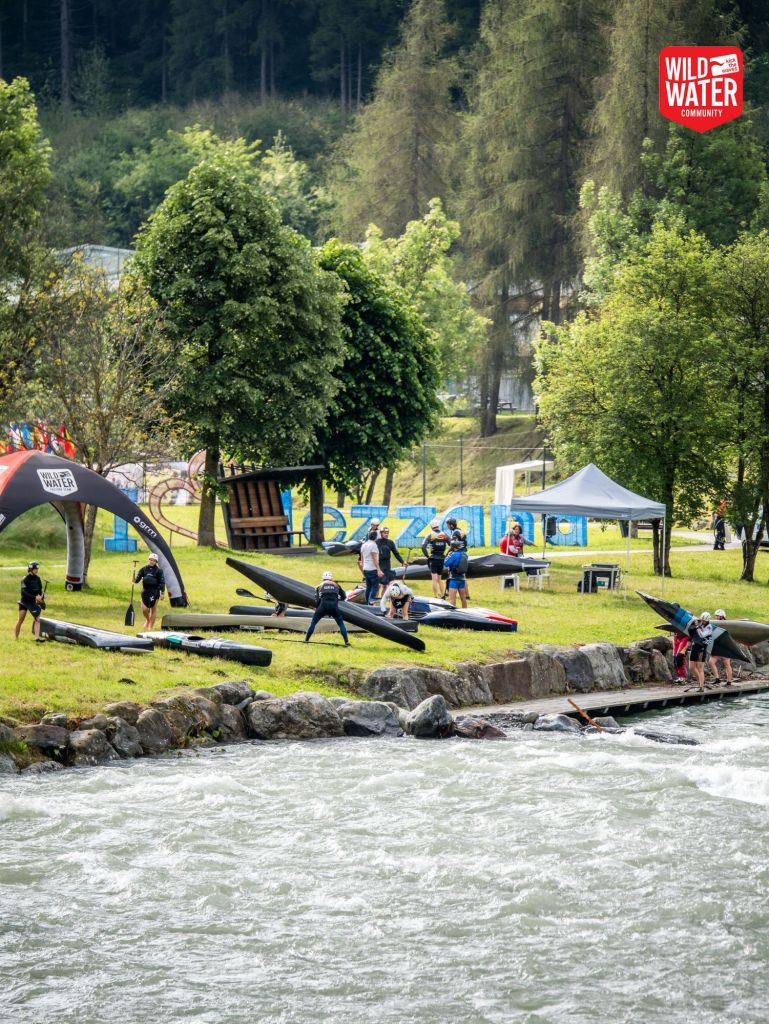
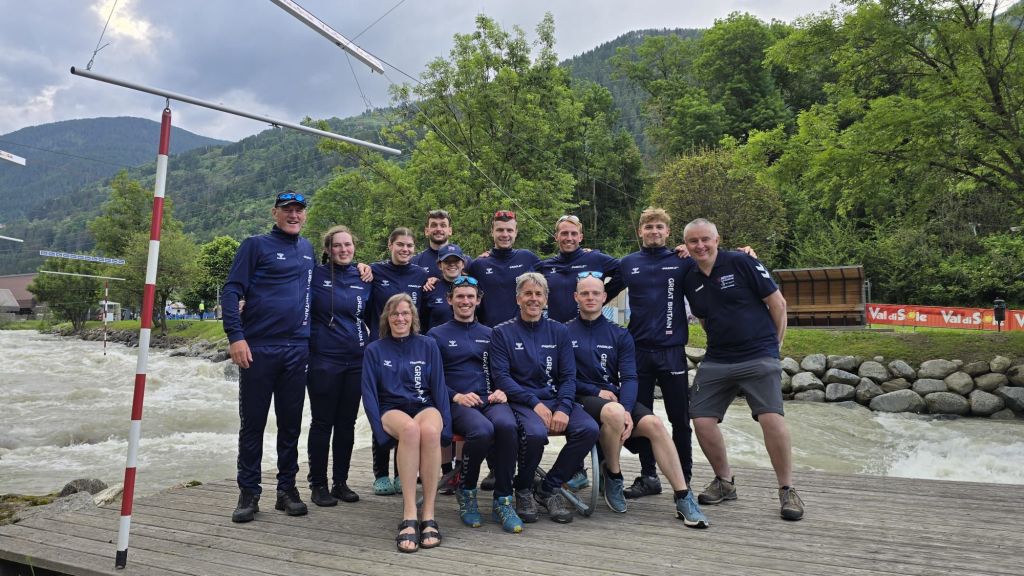
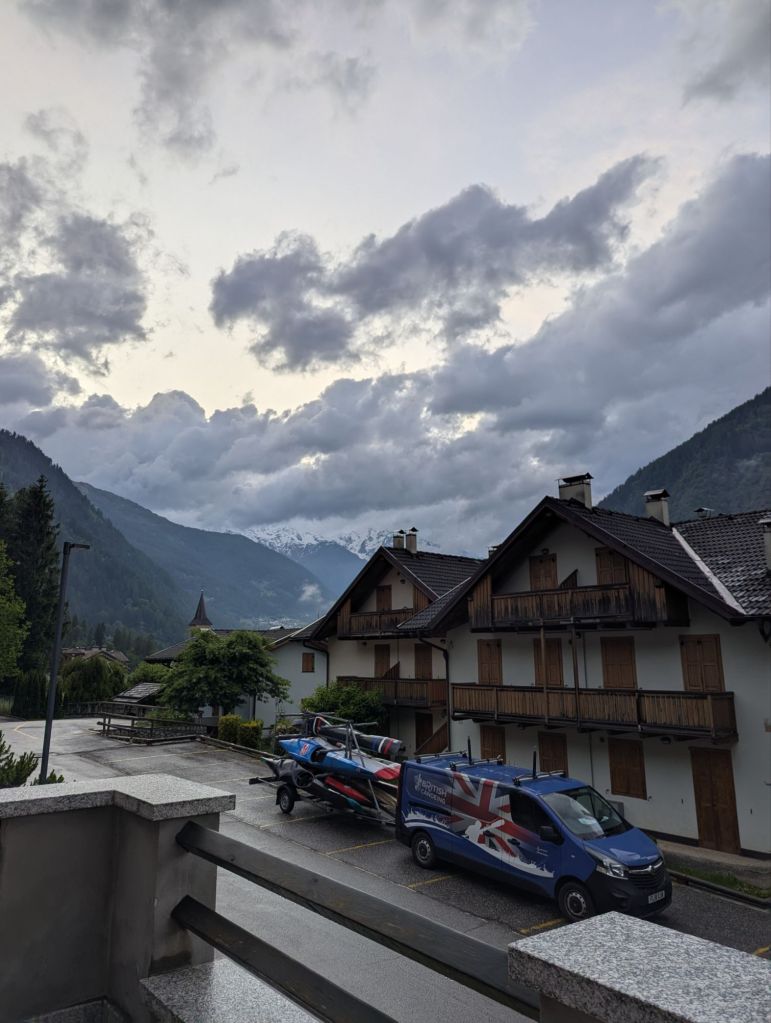
Assorted snaps from team training
By the time classic day arrived the river had risen to 0.85m and we got a familiar message from the race organisers: The water was too high for the sprint course and the classic would now finish at the bridge above it, rather than the bottom of the sprint course. It was a mixed feeling around the British team – the sprint is a brilliant section of water and we all wanted to race it, but given how heavy the classic felt already, we’d probably wouldn’t miss it all that much.
Unfortunately my classic didn’t quite go to plan. It started strong-ish (once I got off the awkward starting raft). It seemed as if all the strength work had paid off, at least it did until I got to about the half way point. All of a sudden the wheels feel off. As I struggled within the waves I made a few surprise line decisions with empty arms carrying me to previously unexplored areas of the river. The result: 31st. Not great, not terrible. Possibly still not strong enough.
Following a strange schedule, Thursday, the second day of the competition would hold both the team sprint and team classic races. This left us with an interesting problem as we normally decide the members for the team run based off of our individual results. We could follow the normal approach for the team classic, but we wouldn’t be doing our individual sprint runs until Friday. After some “discussion” we concluded that the best way to decide the team would be to hold our own little time trial.
The river had dropped slightly following the classic and our contacts on the inside said, we’d likely be back on the sprint course proper for the team racing. So, after a brief lunch break, we returned to the top of the sprint for our time trial. The rules were simple: Best of two runs, fastest 3 paddlers would be in the sprint team.
My first run went a little askew. A raft was out training and nearly pulled out in front of me. Collision narrowly avoided, I brought the run home into 4th, less than half a second behind Alex, but still in 4th place. Safe for now, Alex, Freddie and Huw waited for me to do my second run. Pressure on, but raft no longer a factor, I pulled as hard as I could muster and shaved more than a second off my time. I was now sat in 2nd, just behind Huw and it was Alex and Freddie in the hot seat. Unfortunately for me both Alex and Freddie managed to improve their times, landing me back down in 4th. But the racing was close with less than 0.03s between Alex and myself. Next to nothing on hand timing, but the result is the result and I conceded the place in the team race. Still the race practice was invaluable and we all felt fired up for the races the following day.
The Thursday kicked off with the sprint team race, which can only be described as carnage. With minimal practice on the proper sprint course even the top teams were struggling. The mix of white water and washes always makes team racing difficult, and Mezzana is an extremely difficult course. Across the board there were some ‘creative’ lines as paddlers found themselves carried offline to undesirable locations. Unfortunately both the British women’s and men’s teams suffered spin outs. At one point Alex and Huw found themselves virtually on top of each other, leading to Huw spinning out just before the finish, inevitably leading to a DSQ, as the 3 teammates failed to finish within 15 seconds of each other.
It was a disappointing result but it lit a fire under us for the team classic that afternoon. We picked our running order from the classic times. Freddie would lead, I’d follow and Huw would bring up the rear, hopefully being able to use his burn to close any gaps at the end. The plan worked a charm, off the start I stuck to Freddie like a magnet. Following him down was like a master class in big water boating, and down the bigger bit he acted like my own personal Mosses, parting the waves for me. However after the half way point again I started to faulter, and instead of remaining on Freddie’s wash I started acting like a bungee as I fell off and then had to fight to get back. Everything came to a bit of a head down the gorge where I missed Freddie’s lunge to the right and I ended up stuck on the wrong side down the left. The mistake put several boat lengths between us, meanwhile Huw had gotten lost further back. We had to ease of the gas a little to regroup as we headed down towards the sprint course that made up the final leg of the classic.
The lesson from the morning was clear, leave each other room, but not too much room down this difficult section. At this point I was blowing steam out of my ears as I attempted not to let Freddie pull too far ahead, but we managed it. As we crossed the finish line my forearms were so blown I briefly lost hold of my paddles, but Huw closed the gap on the line and I managed to pull myself back together narrowly avoiding a little dip in the river. We came in 8th place, very respectable and a big improvement over the morning.
Unfortunately my detour down the left hand side of the gorge had put a not insubstantial hole in my race boat. This left a slightly bitter taste in my mouth as I realised I’d be spending a slightly stressful evening doing boat repairs. Last minute boat repairs are part and parcel of a river racing trip. Over the course of the week I was far from the only one with the angle grinder out – Phil and Andrew had to improvise a new skeg one evening after the river claimed the original one from their C2.
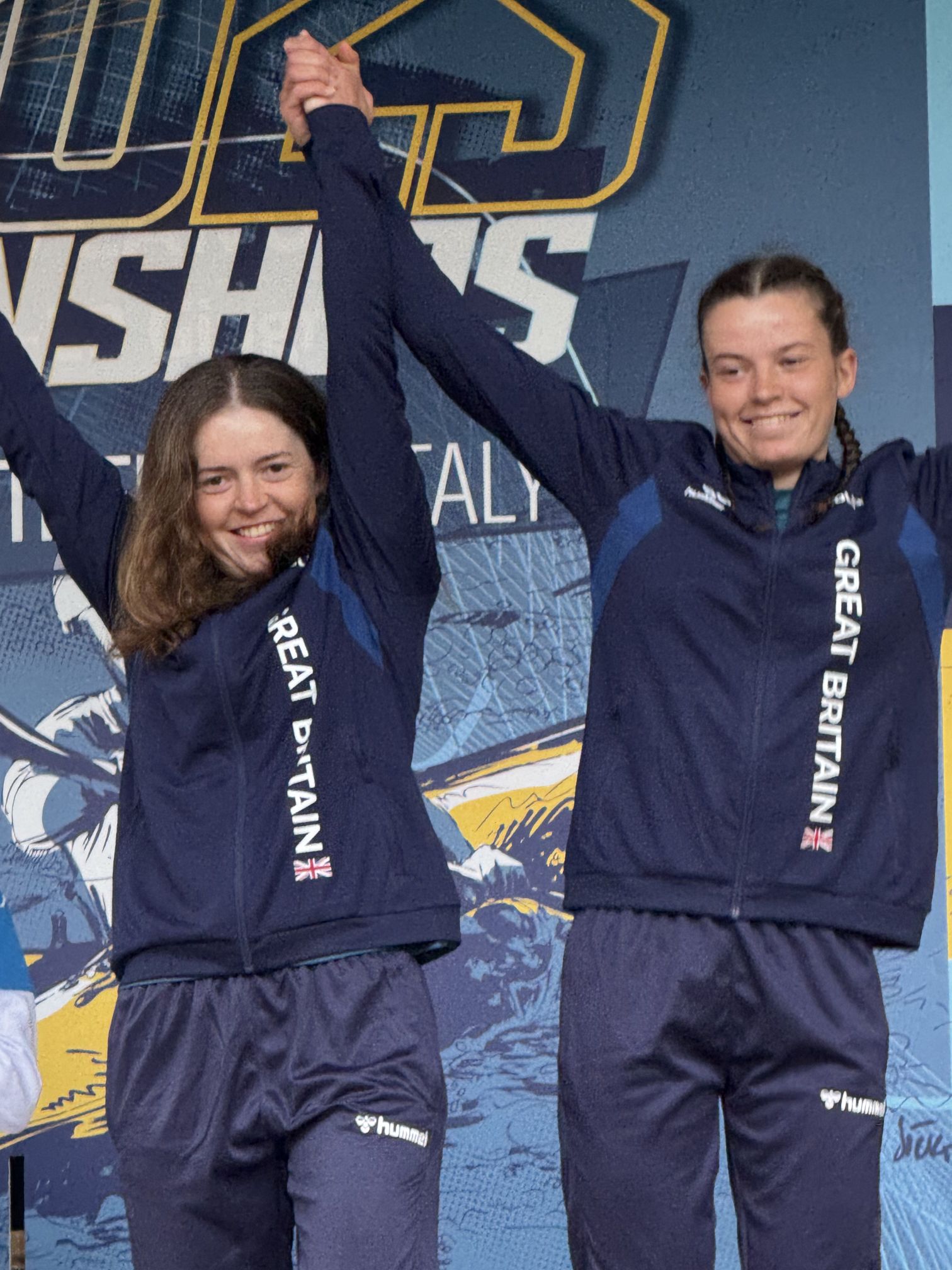
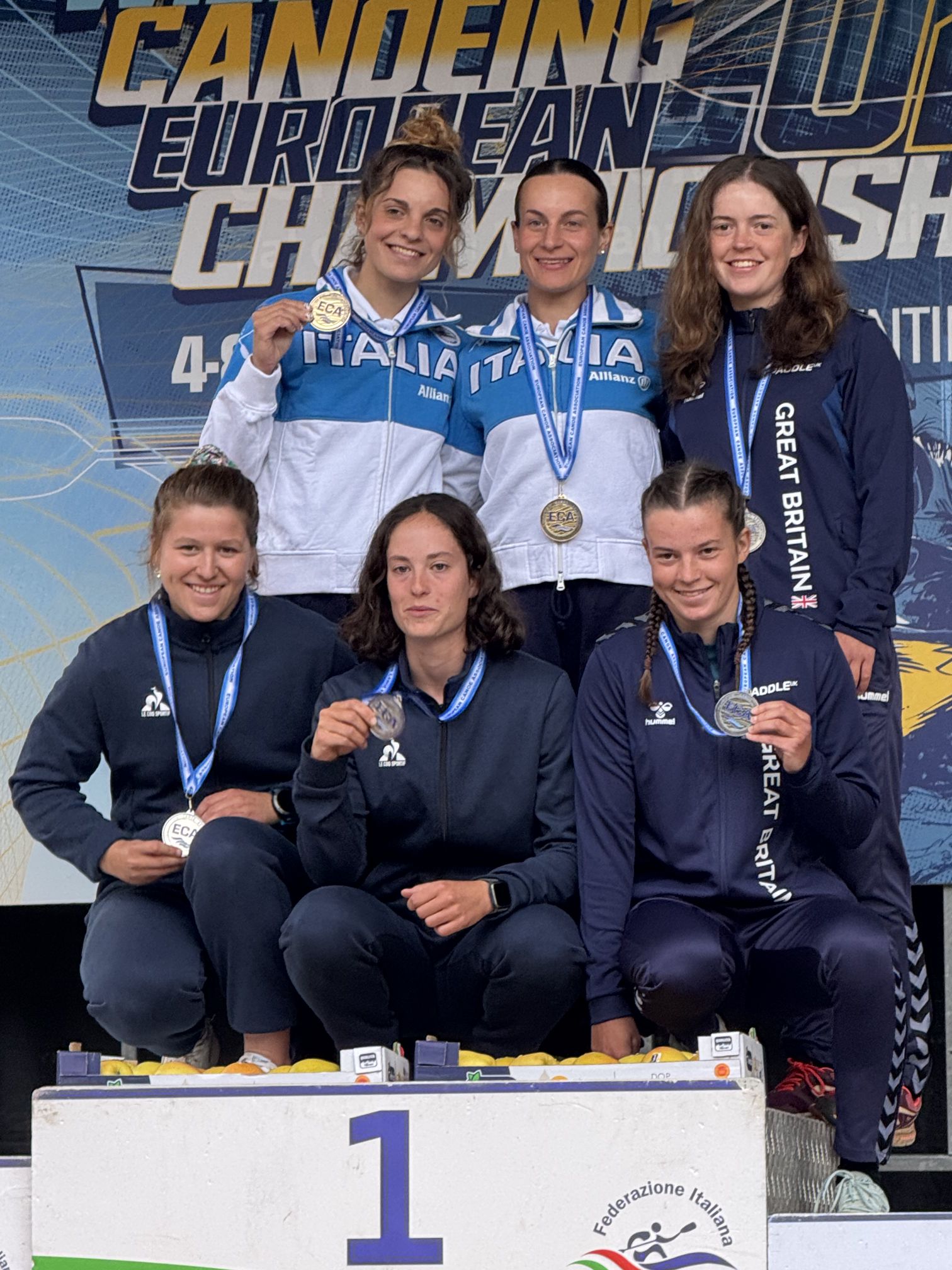
My hole, was in the tail, which is an infamously difficult area repair as the boat geometry gets all funky and you can no longer use square patches. Fortunately I’d spent the trip spectating Freddie, our resident composites experts on all of his repairs and, after a brief consultation, I set about my work. The rest of the team departed for the classic/team prize giving (Kerry and Emma picked up a silver the the WC2) but by the time they returned I had finished one of the cleanest repairs I’ve ever done – although it did turn out to still leak a little so I had to redo it once I got home!
Kerry and Emma collect their C2 classic bronze
I’m not sure if I slept much that night before the sprint heats but it didn’t matter because the mood down at the sprint course was electric. The Mezzana Sprint course is difficult. But that difficulty brings an air of possibility. Mistakes are costly, but anyone could make one, and that means opportunities for all.
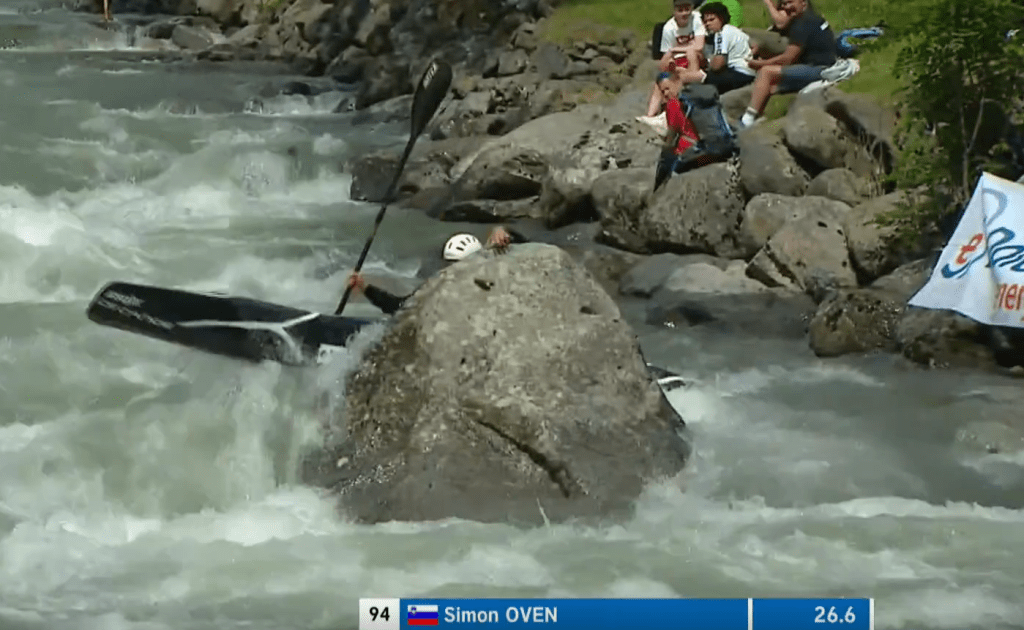
Simon Oven of Slovenia, and winner of the MK1 classic, demonstrated this best during his first sprint run. One small mistake dramatically pinned him up against ‘Freddie’s Rock’ to an audible gasp from the onlooking crowd. Fortunately, he managed to work his way off and rectified the mistake in his 2nd run
Somehow, amongst the chaos of the sprint course I managed to put down two pretty solid runs of 1’00.41 and 1’01.30. Still a way off the finals but it did land me with another 31st place (there must be something special about that position) but 3rd Brit, quite the achievement for a classic specialist.
The big dogs above must have been very impressed, as after my 2nd run I was invited to do commentary for the remainder of the runs. With Jamie Christie as my partner in auditory crime, we attempted to spice up the live stream with all our insider knowledge on which waves contained the hardest rocks. Of course we promptly gave the commentators curse to nearly anyone we complemented. Our friend Jan Sindelar, was maybe the hardest done by the curse. Jamie had been praising his clean paddling style just before he got dumped into a hole. Although Luca Barone came a close second with my compliments on his sprinting pushing him into every rock on the course. We may have also called Tjaš Til Kupsch ‘the smallest of the Slovenians’, a comment he called me up on while towering over me at the after party. Strangely they didn’t ask us to do commentary for the finals…
The rest of the British team posted some strong times but not quite strong enough to make the finals, with both Freddie and Huw missing it by the skin of their teeth. Only the C2s ended up qualifying for the last day of the competition, a slightly disappointing end to an otherwise fantastic trip.
Except for it wasn’t the end. Just because the racing stops, doesn’t mean the fun does! The 1993 world championship course has become the stuff of legend. Starting further down the Noce than the current course, it is bigger steeper and even less forgiving. We’d run it a couple of years back much to the envy of some of the other teams, and with no racing for everyone except the C2s we began eyeing it up again.
Over a couple of end of competition beers messages were sent out to rally the troops, most notable to Sasha from Czechia who’d dubbed us the crazy Brits when she spotted us paddling the section last time – high praise from the crazy Czech!
The next morning, after a little bit of miscommunication, we gathered at the start of the 93′ Classic course. The river was looking higher than the last time we’d paddled it putting a few people off. But we still had a tough little troop of myself, Jamie Christie, Freya Pryce and Sasha soon-to-be-Biscuit. As we’d been waiting for Sasha to arrive I’d found a massive hole in the bottom of my practice boat and was desperately duct-taping it to try and plug the leak, but as we put on it seemed like it may just hold.
The 93′ Classic starts innocuously enough. A few fun rapids but nothing too much to write home about. Then you come to a weir. Its’s an awkward drop but there is a clean-ish line to be found on the left. After the weir the bimbley rapids continue for a short while, lulling you into a false sense of security. But then by a bridge the river just drops away. The gradient increases, the waves tower above your head, and it doesn’t stop. No flat bits to recollect yourself, no pauses to catch your breath, just rapid after rapid after rapid.
Jamie led the group down with Freya and Sasha following in tow, while I formed the rear guard. That was until Jamie over cooked it on one of the turns and span out, leaving Freya, a relatively green paddler to find her own way down one of the steepest sections. Fortunately Sasha managed to find a sneaky overtake amongst the waves and holes to come to the rescue. Jamie, made it back out into the flow behind me, and we kept this order skirting past holes big enough to clean my arm pits all the way to the get out.
The mood at the end was ecstatic, with grins stretched across everyone’s faces. Sasha proclaimed it was the best river she’d ever paddled, and it was even better than… – well I won’t say. It had been difficult but we’d all survived in one piece and a new found respect for the paddlers of old.
We returned to the sprint course to cheer on our C2s and then it was time to pack our bags. It was hard not too feel a little sad as we prepared to depart. 2 weeks had flown by and I didn’t feel ready to leave the mountains behind. We started saying our fond farewells at prize giving, comparing stories of lines gone wrong, catching flack for some of my commentating and boasting of our run down the 93′ classic course. There were some beers, a band and some dancing. Then a long walk home, before the long drive back to the UK.
At some point someone said some kind-ish words to me: “It is so good to see you all trying so hard. You’re still not very good, but you are improving and improving. You always come from so far a way, with so much enthusiasm and it is an inspiration to all of the other small nations.”
I think he meant the bit about being us being shit in a good way? But overall the sentiment seemed positive. Mezzana is perhaps my favourite place to race, and while it’s not currently on the calendar for next year, I’m crossing my fingers that there may be a last minute addition. Maybe even on the 93′ course…
Away from the river, in my day job, I’m a Navigation Engineer. As with any job, the details of what this entails are obscure and largely unintelligible to the uninitiated. But it is suffice to say that I spend a lot of time playing around with GPS data.
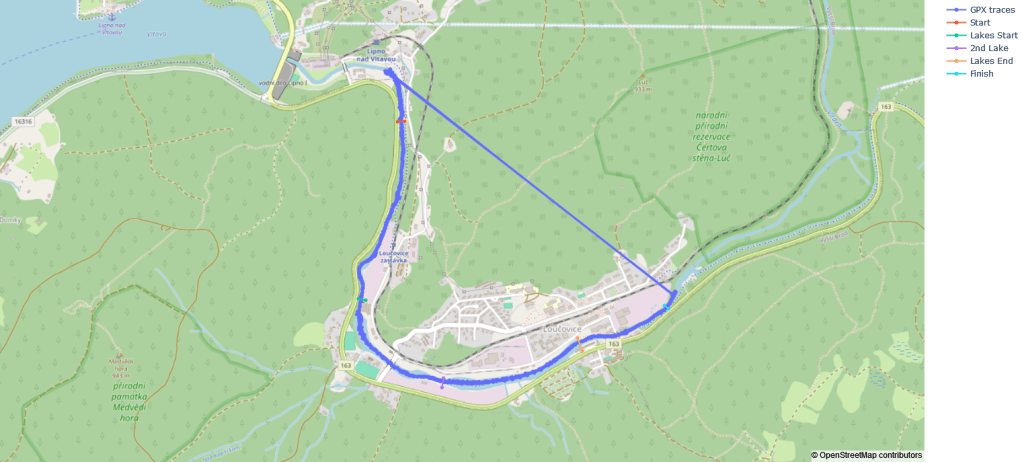
Shortly after Lipno, I decided to put some of these skills to good use and built a little python utility to pull split times out of GPX files. This can be used as a training aid or to compare races and the tool creates some cute little interactive graphs to visualize these times. This tool is freely available on GitHub under an open source MIT license.
To get everyone up to speed briefly a GPX file is a standard type of file output by most consumer GPS receivers and sports watches. You can also download a GPX file of your STRAVA activities from the STRAVA website. This GPX file contains a list of timestamped positions that the ‘gpxsplits’ tool searches through. It interpolates between these positions checking for an intercept with a ‘virtual beam’ or ‘gate’ that the user can define using a JSON file. Then it logs all of these intercept times and from this calculates the elapsed time between gates and the subsequent split times. (More detailed instructions can be found in the README on the ‘gpxsplits’ github)
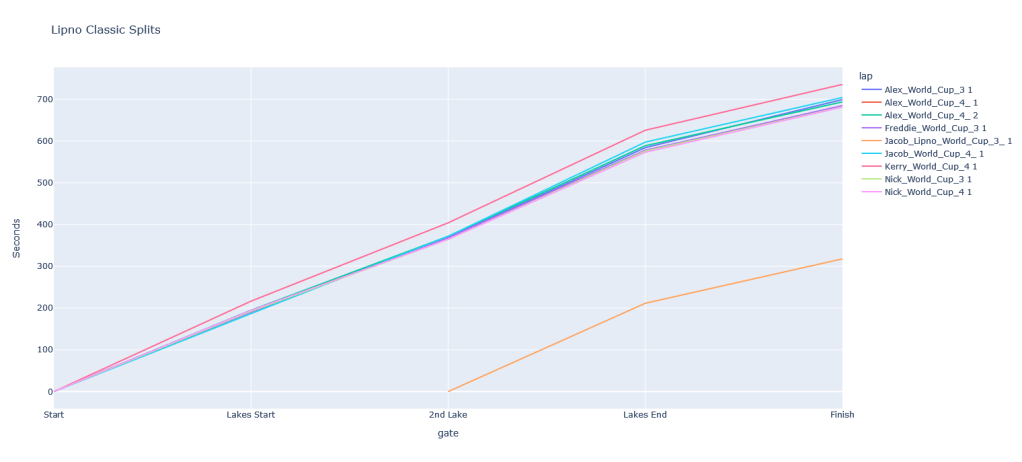
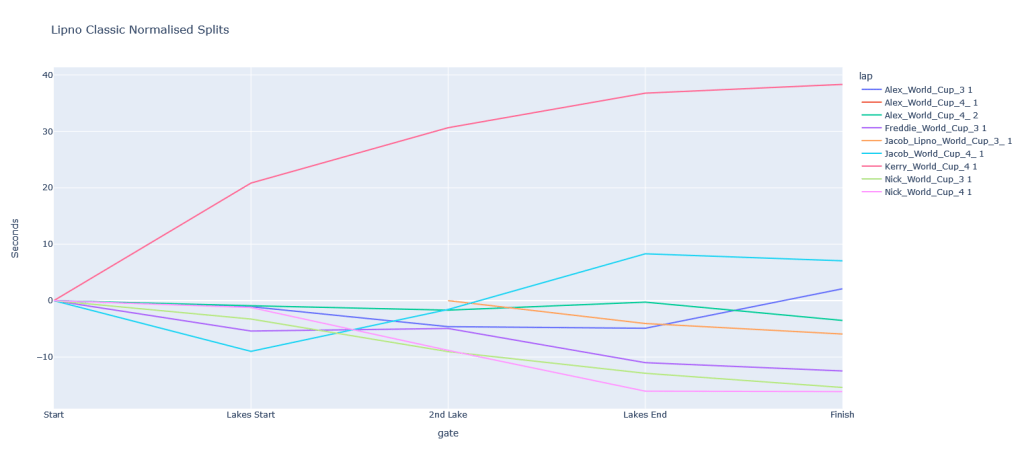
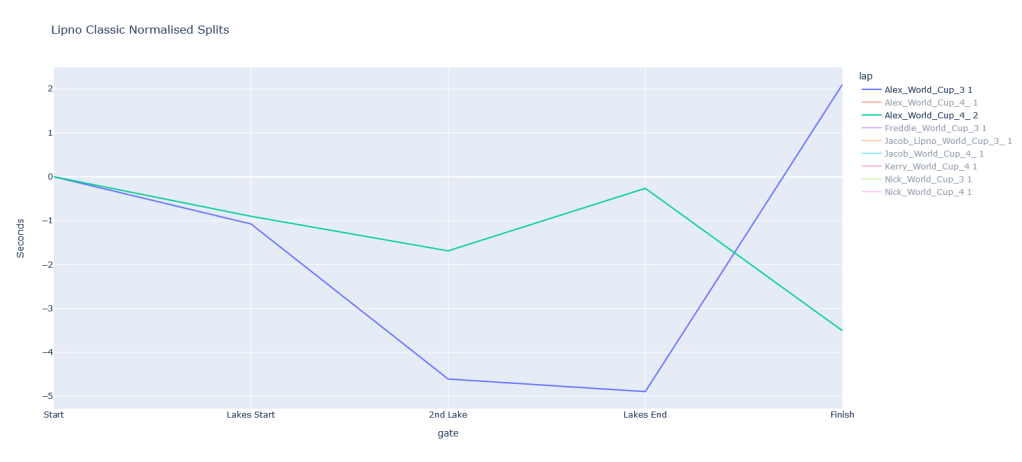
My favorite part about this though is the graphs. These graphs are very useful for visualizing the information and can reveal some interesting insights. The first graph, shown here is simple enough to interpret; simply showing the split time for each gate. However, by normalizing this to the average time, we can better compare each run (see below). Here zero on the y-axis represents the average time taken to complete a section and we then can see by how much each run was up or down on this time though the different sections. Thus a line with a positive gradient indicates the run in this section was slower than the average, while a run with a negative gradient shows a given section of a run was faster than the average.
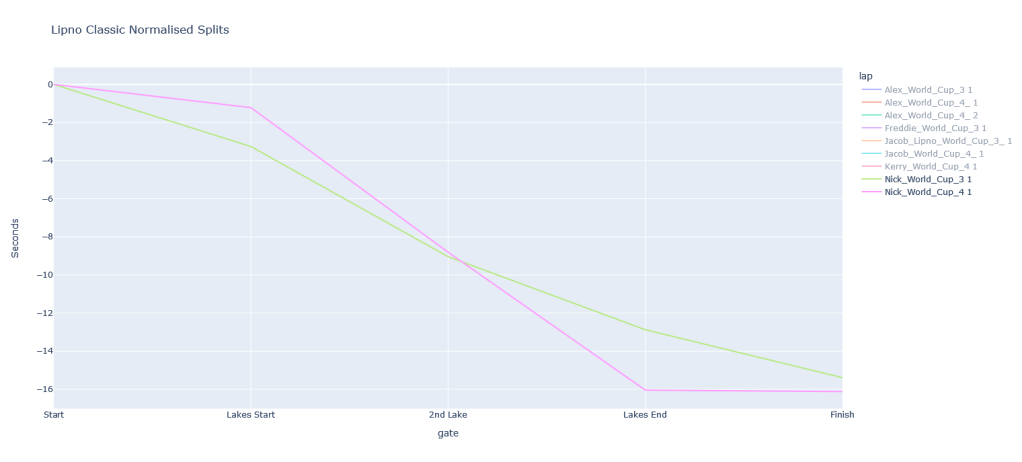
Looking at my two world cup races we can see they were both below the team average (yay me!) but to my surprise the white water sections at the start and end were much faster in my first run. However, on my second run it seems I really pulled my finger out over the lakes, allowing me to knock a few seconds off overall.
Meanwhile Alex’s traces tell a fun story. On both runs he managed a similar pace over the initial section of white water, but he tried much harder over the first lake in the first run. Unfortunately this led to a swim in the final section of white water. This meant he didn’t get an official time for this run, but we can see from his GPS watch that a lot of time was lost due to this regardless. On his second run he took the lakes at a more manageable pace leaving enough in the tank to handle the final rapid, securing a faster time overall.
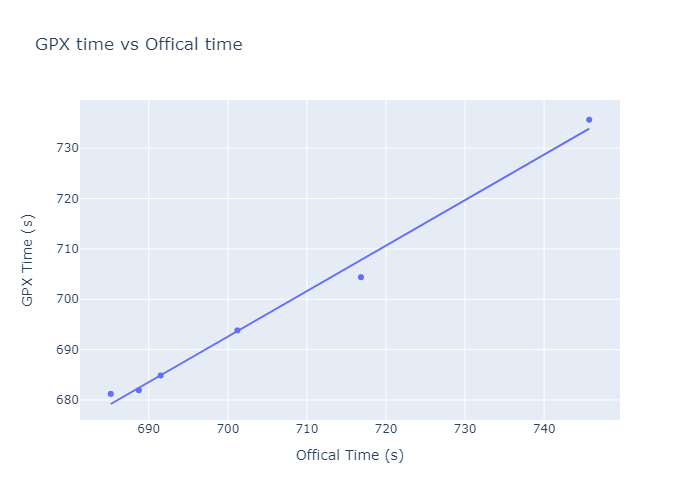
This is all very fascinating but anyone knowledgeable on GPS or GNSS systems are probably asking how accurate these times are. This is quite a difficult question to answer, but it is largely dependent upon the accuracy of the sports watch being used. Sadly most manufacturers are fairly tight-lipped on this information and there is only limited information online about this. Furthermore what information there is, tends to only be concerned with the accuracy of the distance traveled and does not investigate the time component. Fortunately for us we can make a rough estimation of our accuracy by comparing the GPX split times to the official race time.
A quick visual analysis of the above plot confirms a good degree of correlation and importantly the finishing order of all the athletes (in the British team) has been preserved. When examining the numbers we see that the difference between GPX times and the official times has a standard deviation of 2.96s. This is reasonably high, however at least some of the error can be explained by the fact that the mean discrepancy between GPX and official times is -15.28s. This indicates I’ve done a relatively poor job of guesstimating where the start and finish beams were. Given the athletes were probably not traveling at a constant velocity across these 15 seconds, this gate error will have contributed to the standard deviation. Still given most basic GPS receivers are quoted to have a 95% error of around ~10m I am relatively impressed by the 2.96s error. This and the preservation of the finishing order gives me enough confidence that the ‘gpxtool’ can be used as a training aid, but I would hold off using it for official timing purposes.
It should be noted that this is a relatively brief investigation with only a few data points from the British team. If there are any other paddlers who could contribute their GPX files from either the Lipno World or Czech Cup races to improve this investigation that would be greatly appreciated. As would anyone who can give me better estimations for the start and finish beams.
In an ideal world I’d do a proper study where we survey in the beam locations, collect much larger data samples and potentially compare the sports watches to some more advanced techniques (RTK/PPP for you navigation nerds!), but for now this will have to do.
In the meantime I’m looking to develop this tool further. Two key features for improving useability are a UI tool for creating courses and a way to easily download GPX files from STRAVA or Garmin. UI stuff in particular is way outside my area of expertise, so if anyone out there fancies lending a hand please jump in. Everything is available open source on GitHub under an MIT license.






 River Stench