British Wildwater Selections 2023 (2/3)

British Wildwater Selections 2023 (2/3)

“But do you know what you did well?”

“Yeah, I pulled hard and took smart lines”, I replied.

“And how is that different from what you did yesterday?”

The past weekend saw part 2 of the British Wildwater Selection Series. This event would be finalising the team for the Senior Sprint Worlds Championships in Augsburg along with the Junior/U23 teams and contribute towards the selections for the World Cup Series. Oh, and the Sprints were also this year’s British Sprint championships.

Having secured a place on the Senior European Championships team last weekend (YAY!) at least some of the pressure had been lifted and I was relieved that this event was happening at my local spot Nottingham and not another 6 hour drive away. The event followed the same pattern as before, with sprints on Saturday (this time in the evening) and Classic early-ish on the Sunday.

You’d imagine that racing on my home ground (or water) would confer a sizable advantage, however thanks to a small access ‘predicament’ we’d only managed to get on the white water course in wildwater boats a couple of times in the last year. This meant, with additional course configuration changes, everyone found themselves on an equal footing. As such I spent the entire hour of our allotted practice time squeezing in as many practice runs as I could, trying to get to grips with the complex boils and eddy lines that define the Holme Pierrepont course.
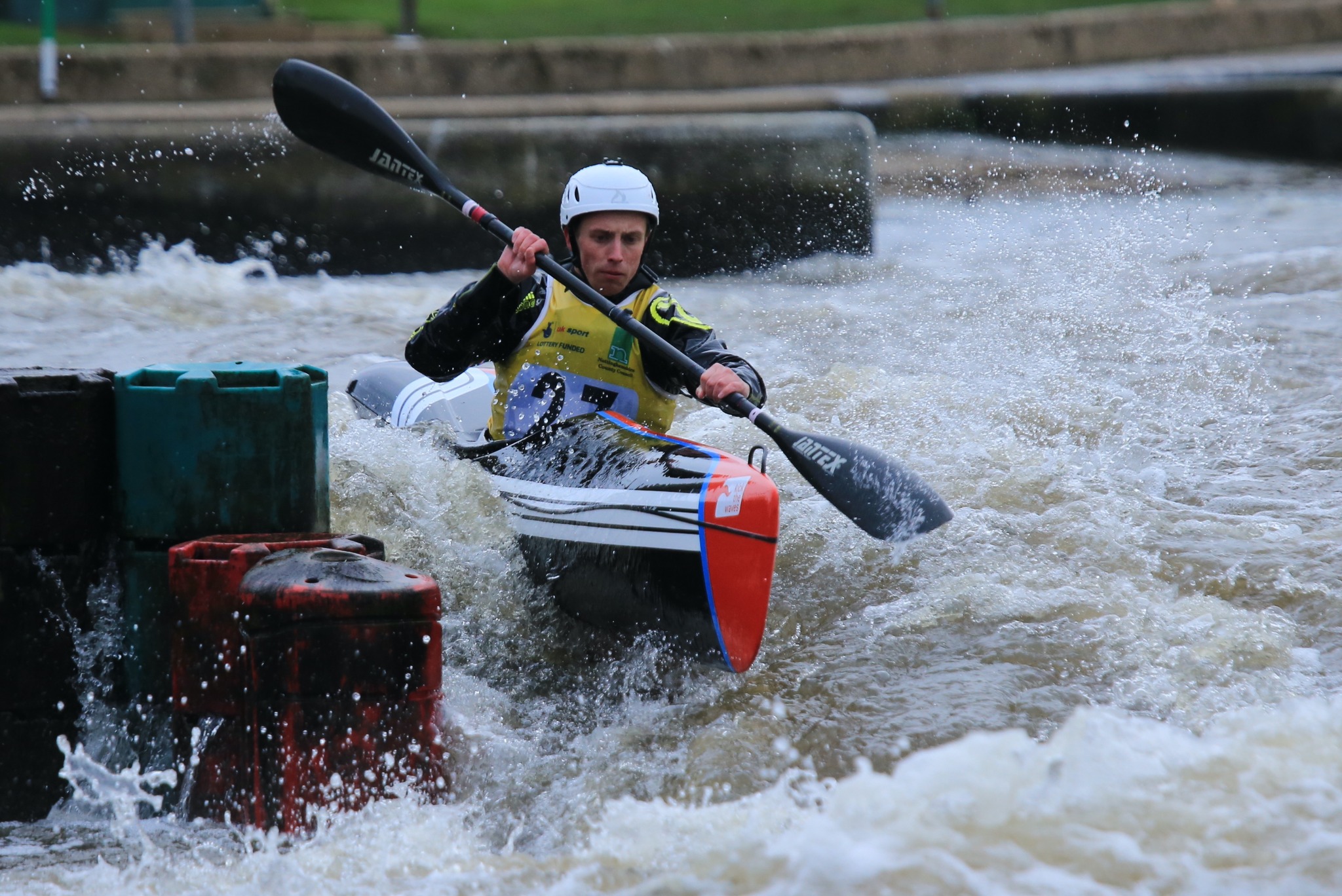
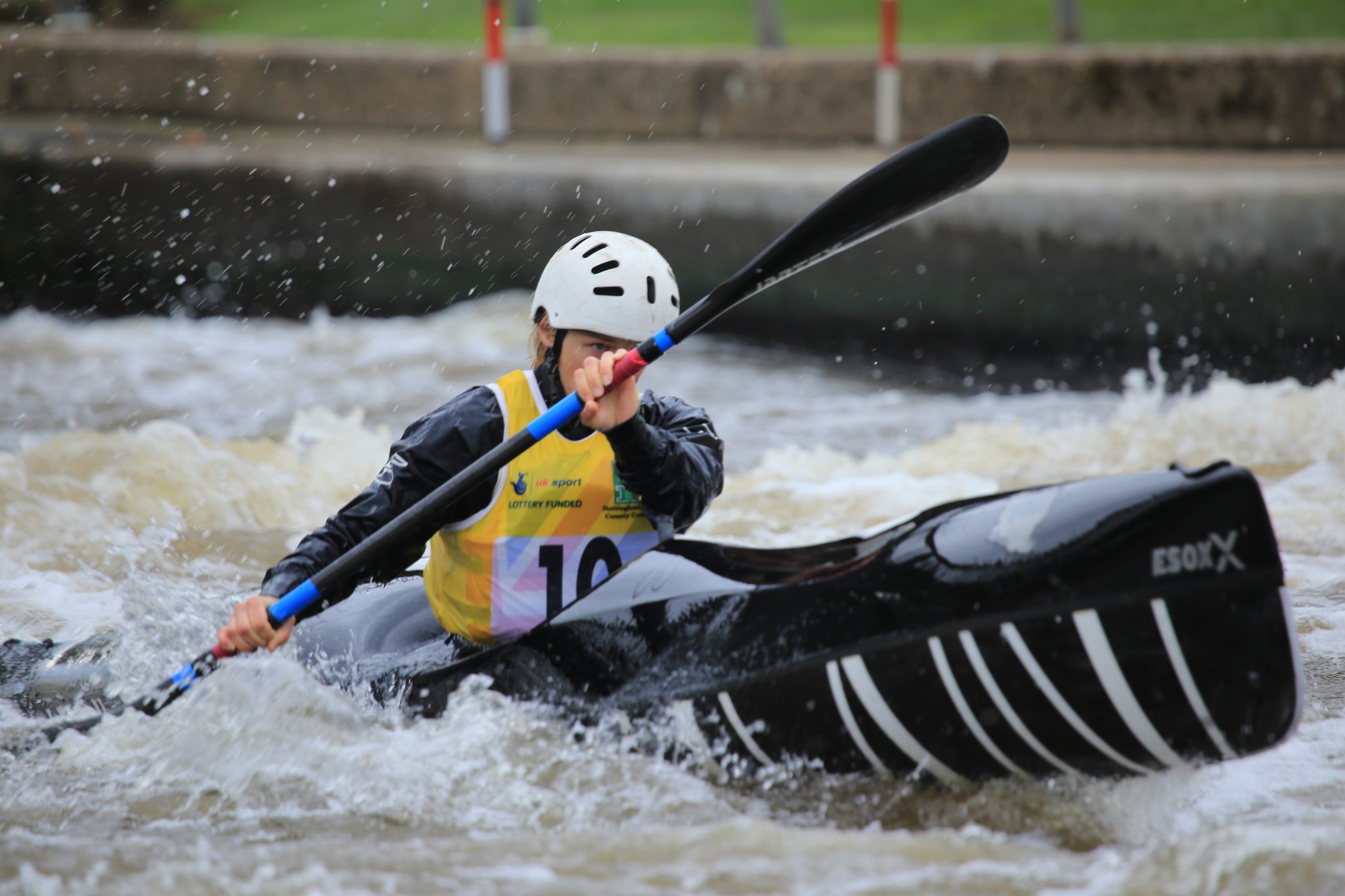
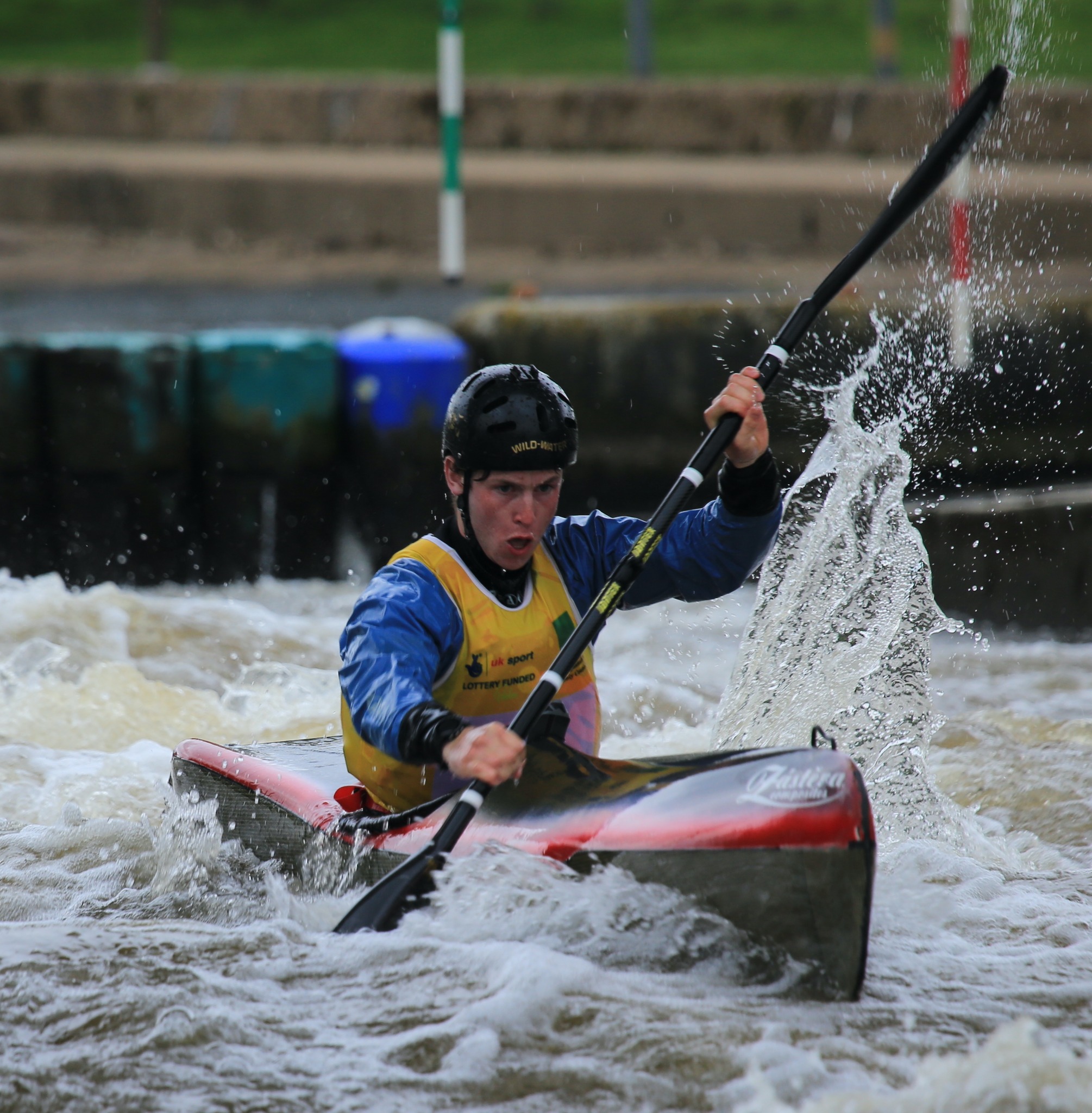
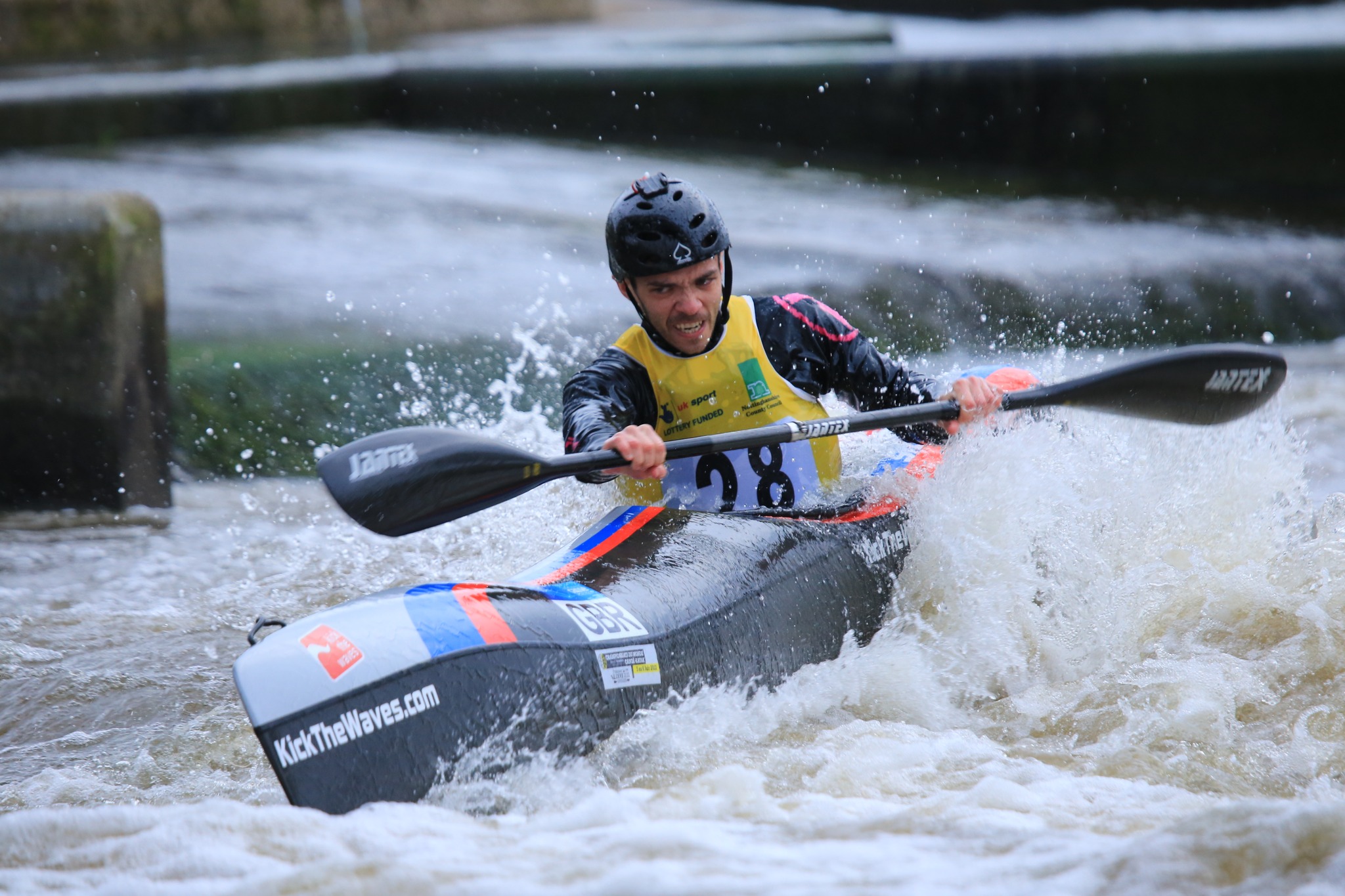
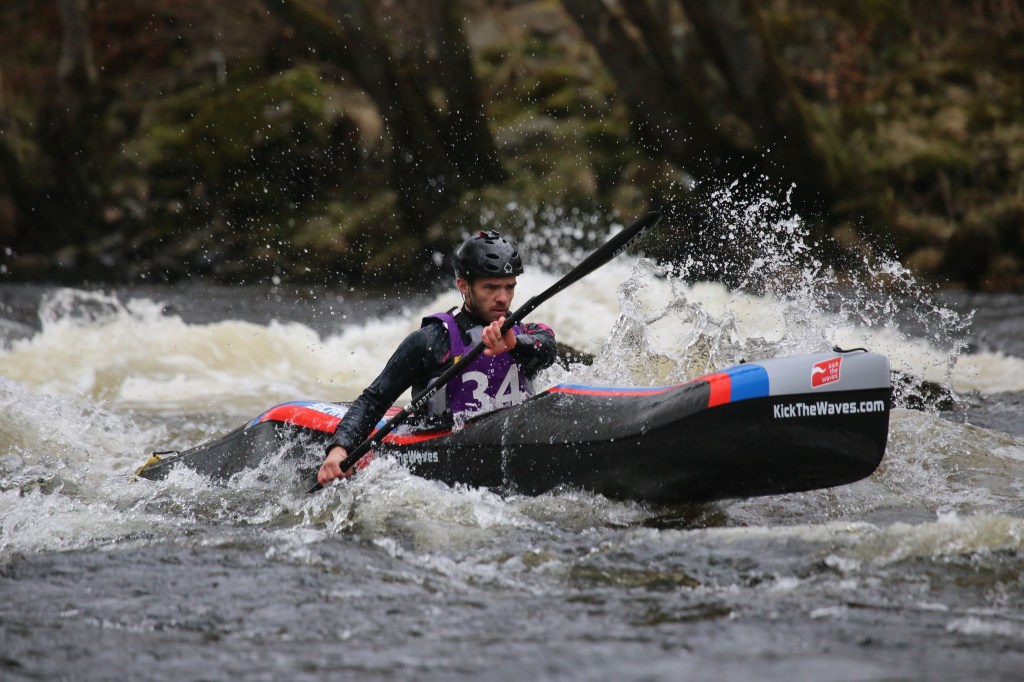
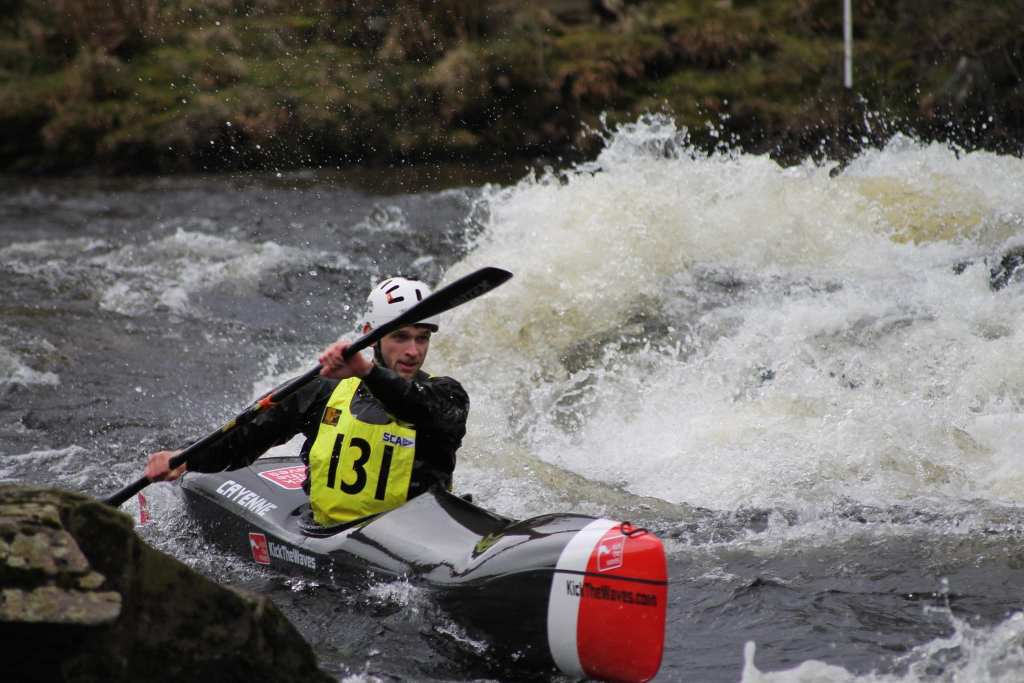
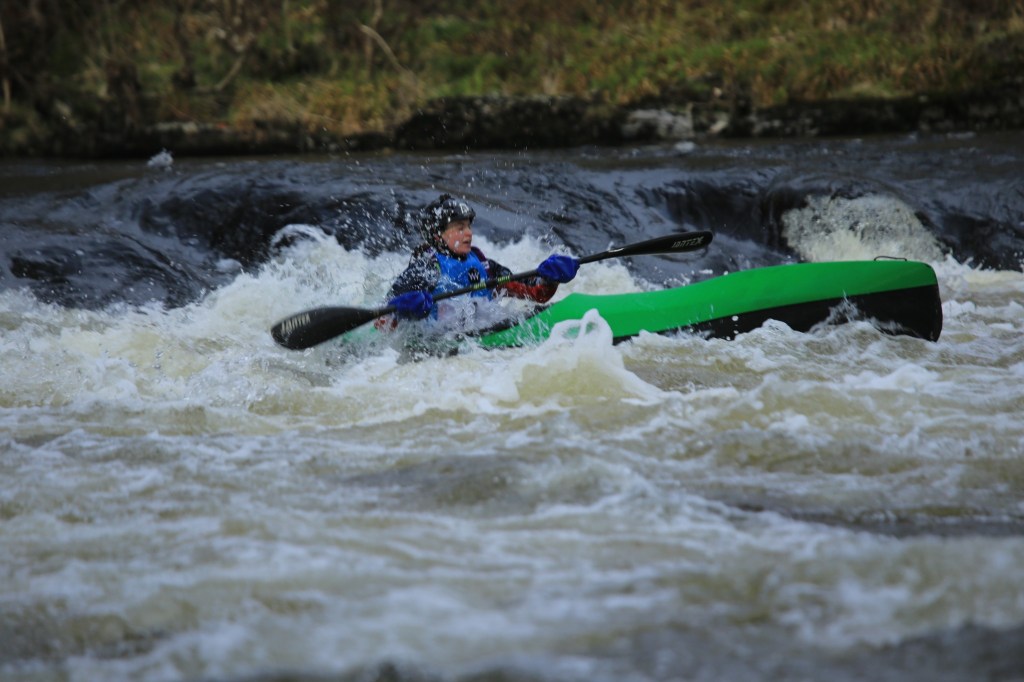
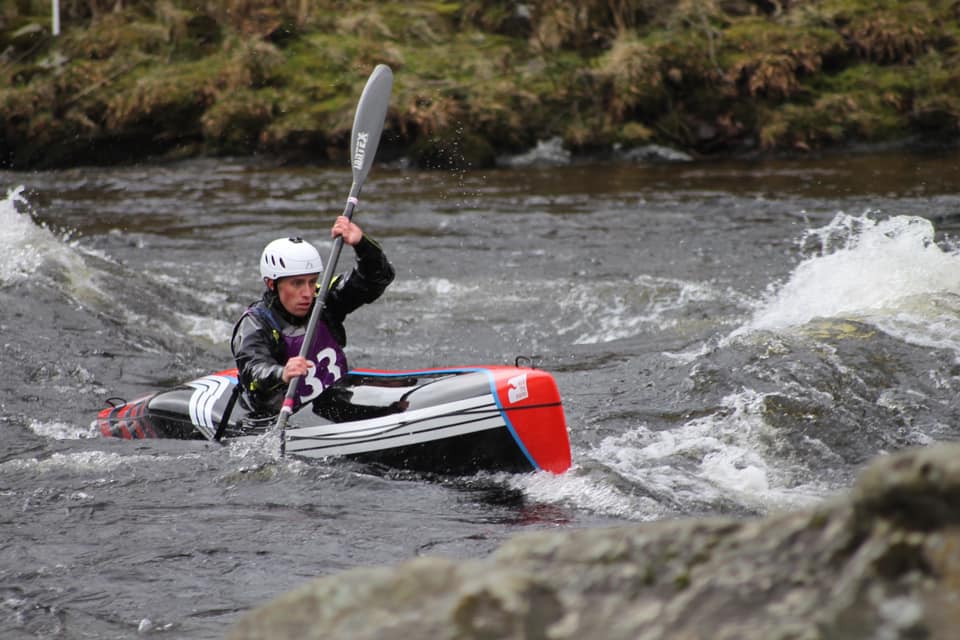
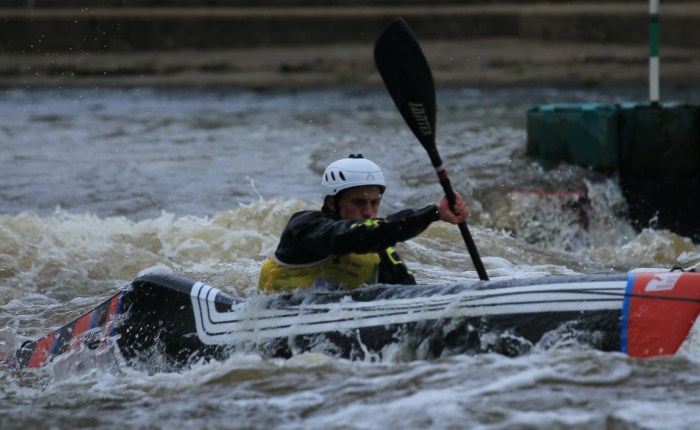
Some nice photos from the weekend + my “slightly too close to the groyne face”

Between these practice runs, warm ups and the race runs I manage to rack up an impressive 10km of paddling/walking back up on the Saturday afternoon. Some people would argue that this was maybe not the best sprint preparation. Those people would probably say that you should rest between practice and racing. Those people are probably right, but this was all part of my gamble to get as much time on the course before the Sunday’s Classic (my main target) and because I figured there was a greater danger of haemorrhaging time with a bad line, than there was time to gain from being able to pull slightly harder.

Did this plan pay off? In short, no but also possibly yes? My first sprint run was very clean, however I managed to guff the start which cost me vital seconds. My second run had a much better start but I had to scrub off some speed to avoid piling into a groyne, which screwed up the next bit of the line and also cost me vital seconds. Somehow both runs ended up being roughly the same time. I did manage to slightly improve my position when compared to the previous weekend, and it was a good learning experience, but one that has probably cost the selection for the World Champs this year.

Okay, disappointing. But did the plan pay off for the main target, Sunday’s classic? Well this is where the ‘proverbial’ boat gets lodged across the entrance to the white water course.
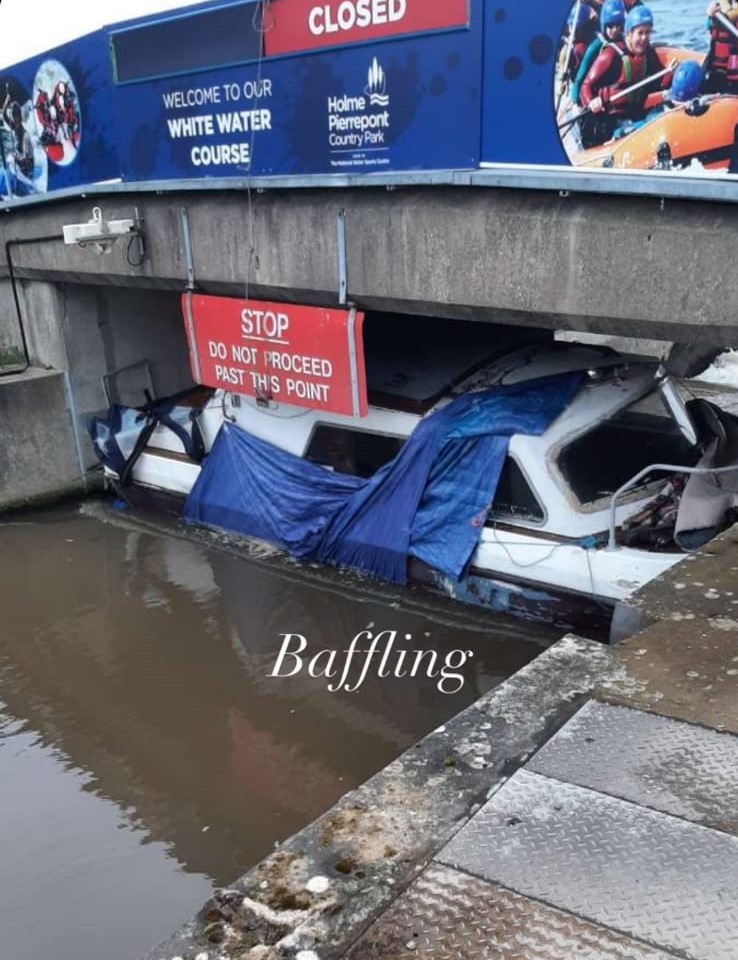
Somthing somthing, shit creek

This was somewhat suboptimal.  With an entire flock of fire engines descending on the scene and few other options, the decision was made that we would be racing on the flat. While this will probably go down as the worst classic course in wildwater history, after my disappointing sprints and a 2nd place the previous weekend I felt like I had a point to prove.

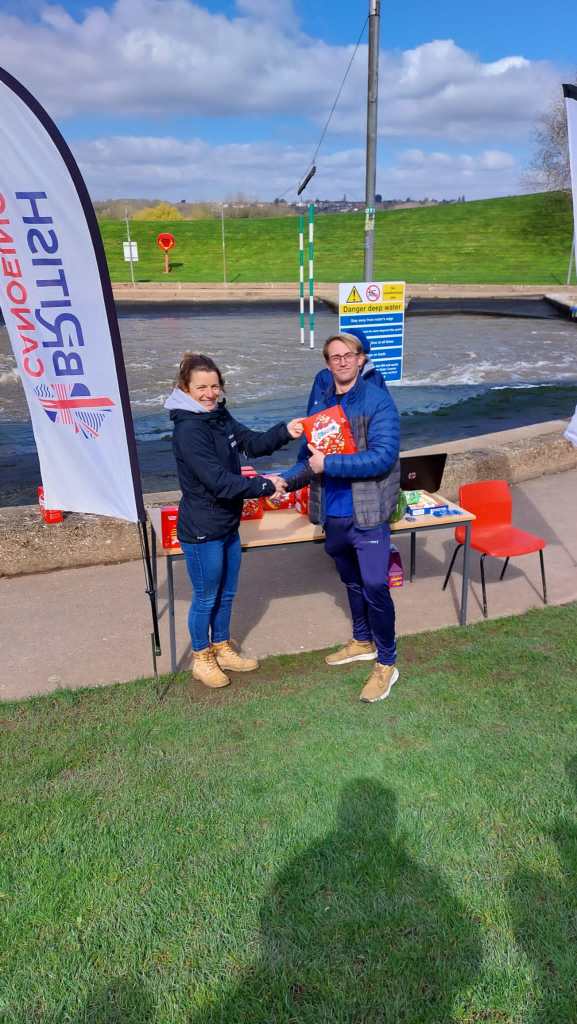
There is arguably one positive of not having anything substantial at the end of the Classic: there is no need to worry about leaving anything in the tank for trivial tasks like controlling the boat. You just pull as hard as you can, safe in the knowledge that if you can see when you cross the finish line you’ve done a bad job. I’m happy to say that I did a very good job and once my vision returned I was rewarded with a 1st place, an Easter Egg and 25 points towards my World Cup bid. A strong finish to a good weekend, but with lots of lessons to learn. (Thanks to Orange for the debrief.)
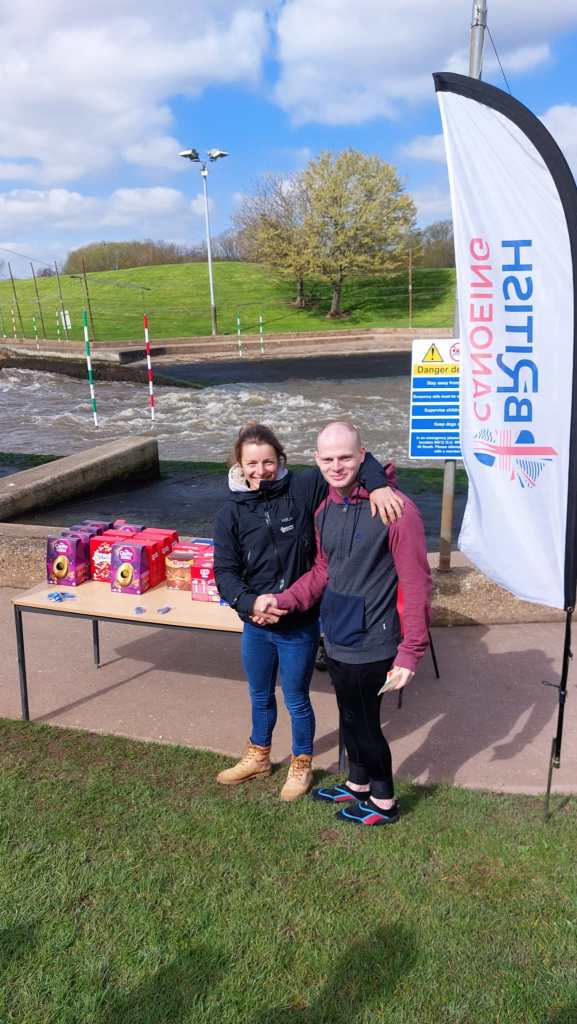
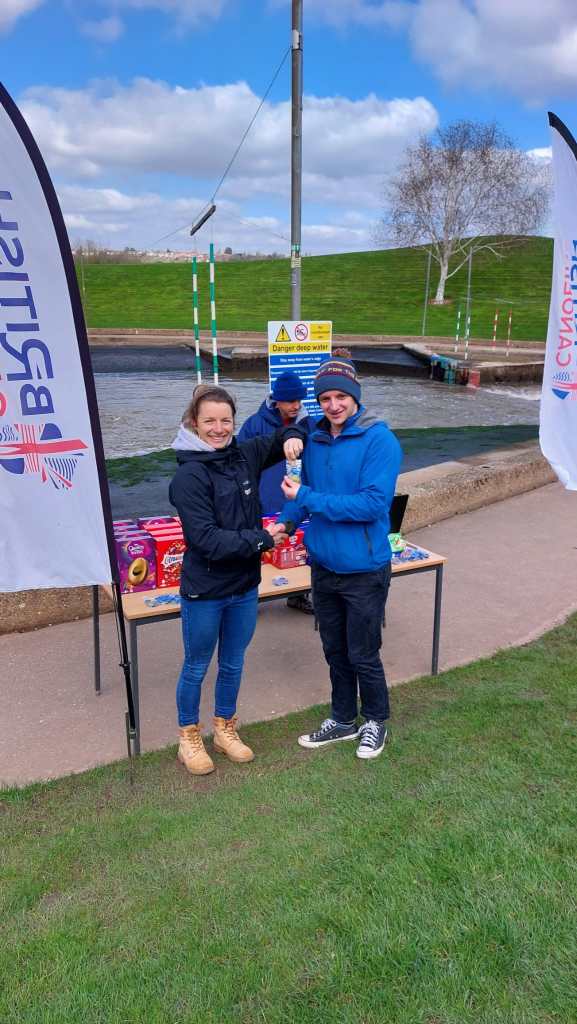
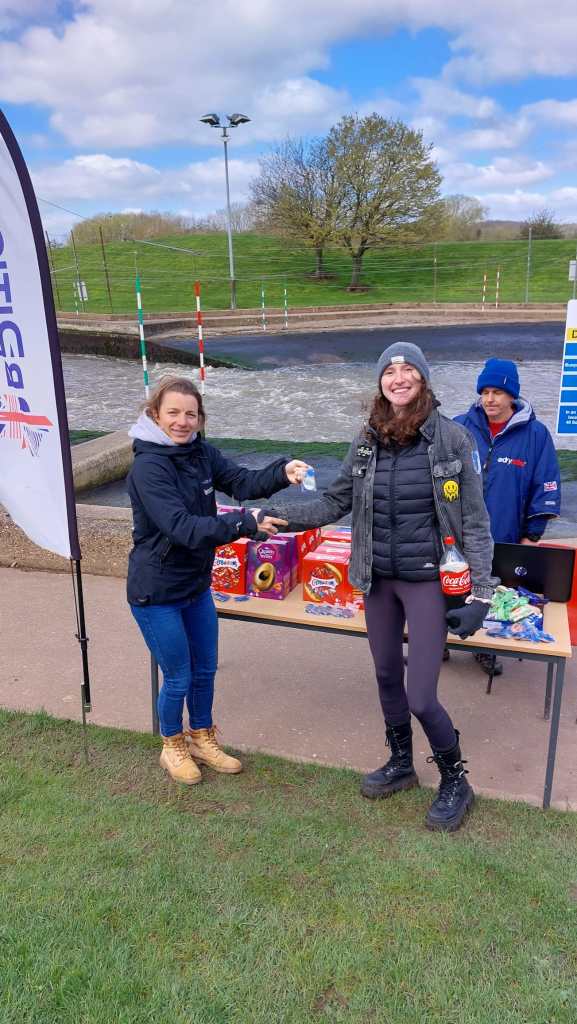
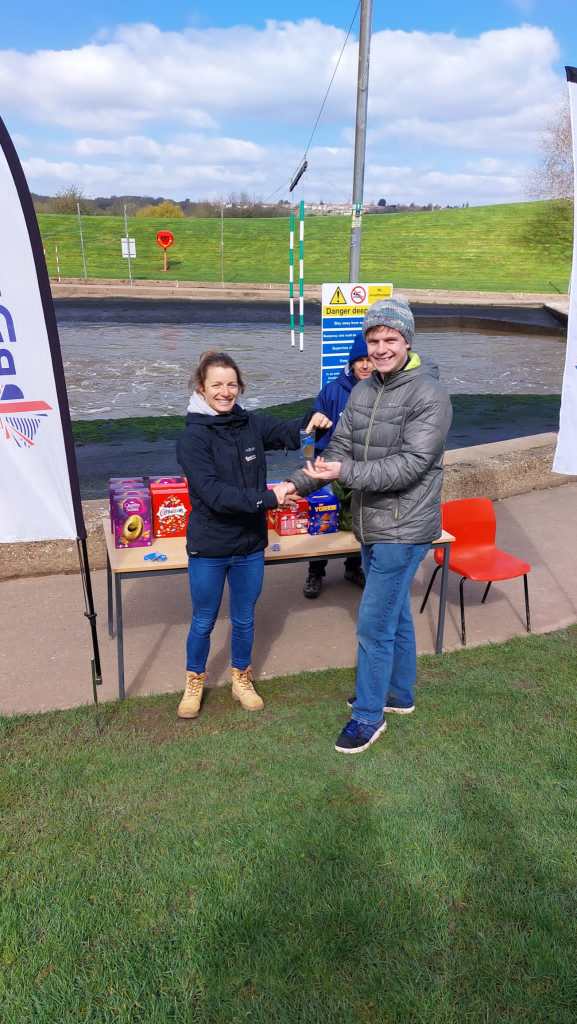
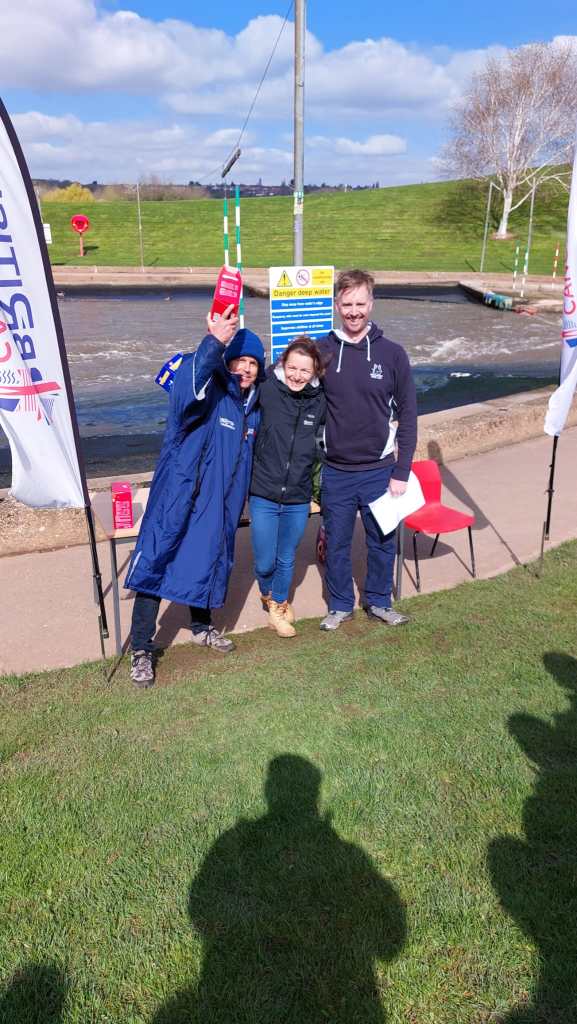
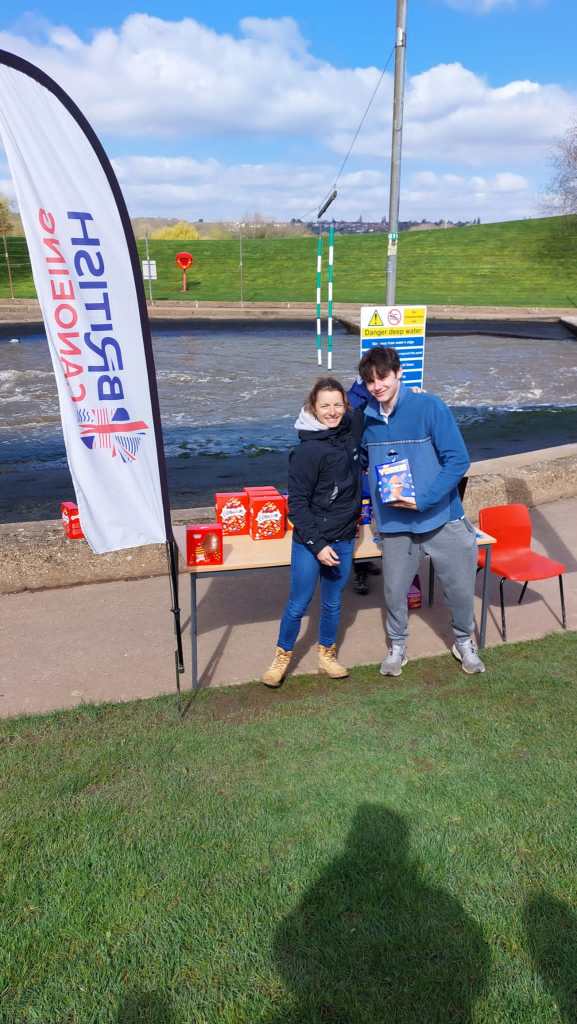
A selection of atheletes and Easter eggs

While I haven’t done the maths, I’m reasonably confident I’ve missed the selection for Worlds. On reflection I’m in two minds about this. I have a somewhat complex history with Augsburg, a course which was largely responsible for this blog’s hiatus. It would have been a great story to return after everything and enact my revenge, but I’m not a great sprinter and I prefer classic racing. With limited annual leave and money I’d still probably choose Euros and World cups over a purely sprint event. Still, it’s always nice to have the choice.

It’s a slightly weird world in which you compete against your friends to see who gets to go on a ‘holiday’. What often gets left out of these posts are the pre-race board games, chaotic cooking of saturday night dinners and the pungent ‘naughty kids on a sleepover’ vibes that we exude anytime we go anywhere. I’m very excited for Euros. I have never been to North Macedonia before and it looks like we’re going to have a cracking team for it. 

Shortly before that we’ll be having the third and final selection race to decide World Cups. With a 1st and a 2nd, I wouldn’t say my selection for in the bag, but it’s definitely bag adjacent. That said it’s not over till its over and racing on the Tryweren can be spicy! (If by spicy you mean, full of rocks!)

Full results at https://www.wildwater.org.uk/

Photos thanks to the Singletons
British Wildwater Selections 2023 (1/3)

British Wildwater Selections 2023 (1/3)

Like all good things (and small intestines) this year’s wildwater selections comes in three parts. The first of which was just held this weekend up at Grandtully.

Scenically situated along the river Tay, the Grandtully slalom site is just a little bit too far from almost everywhere in the UK. Nevertheless it is here that the frigid Scottish waters tumble down the valley to form a rare thing in the UK: a whitewater river with barely any rocks! (The exception being the one rather large rock). And it is here that the first third of the 2023 British Wildwater selection races took place.

The startline and Jacob in his camouflage whopper

The selection policy is (almost) simple. There are three selection events, each with a sprint and a longer distance classic race. There are 3 international events, but not all with a classic. For each race you are awarded points for your position, 1st gets 25, 2nd gets 19, and third gets 14 with points declining exponentially-ish as you go on. All the points get added up and the best 4 paddlers for each category (MK1, WK1, MC1, …) are selected. However not all selection races count towards all the international races, and for the world cups 6 people can go. With this in mind I believe the best tactic for selections is to just try as hard as you can in everything and then work out which trips you can afford to go on later. 

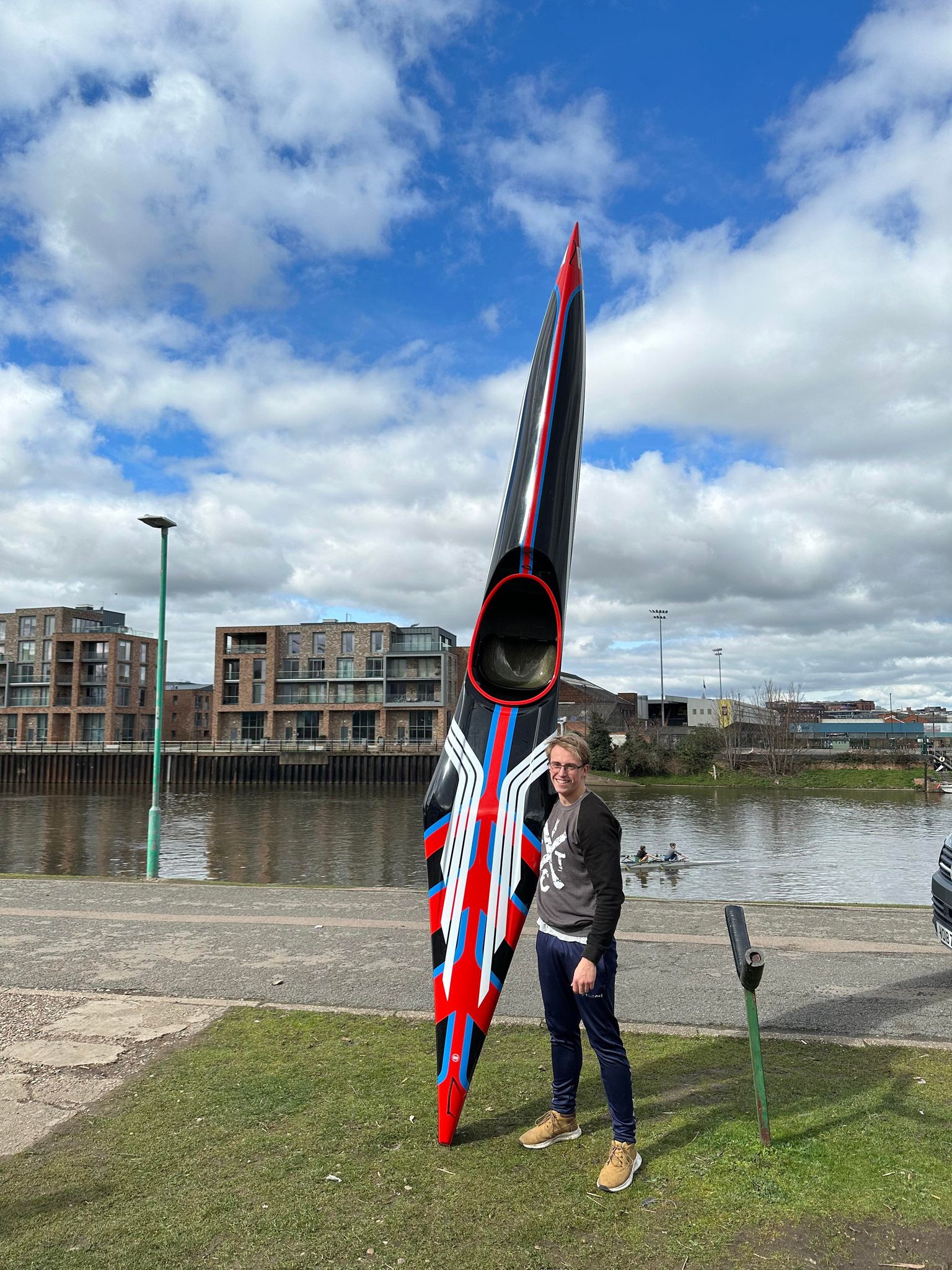
The weekend at Tully followed a familiar format, sprints on Saturday (best of 2 runs) and the Classic on Sunday. I traveled up the Tully Thursday evening to get in some sneaky practice on the Friday, letting Scotland put the ‘remote’ into ‘remote working’. I’d brought with me the new boat, which looks very dashing and is significantly less leaky than my old one. Jealous eyes declared it the ‘spiderman boat’ or ‘naff captain america’. Either way you’ll now hear me shouting ‘Avengers Assemble!’ whenever our team run formation starts falling apart.

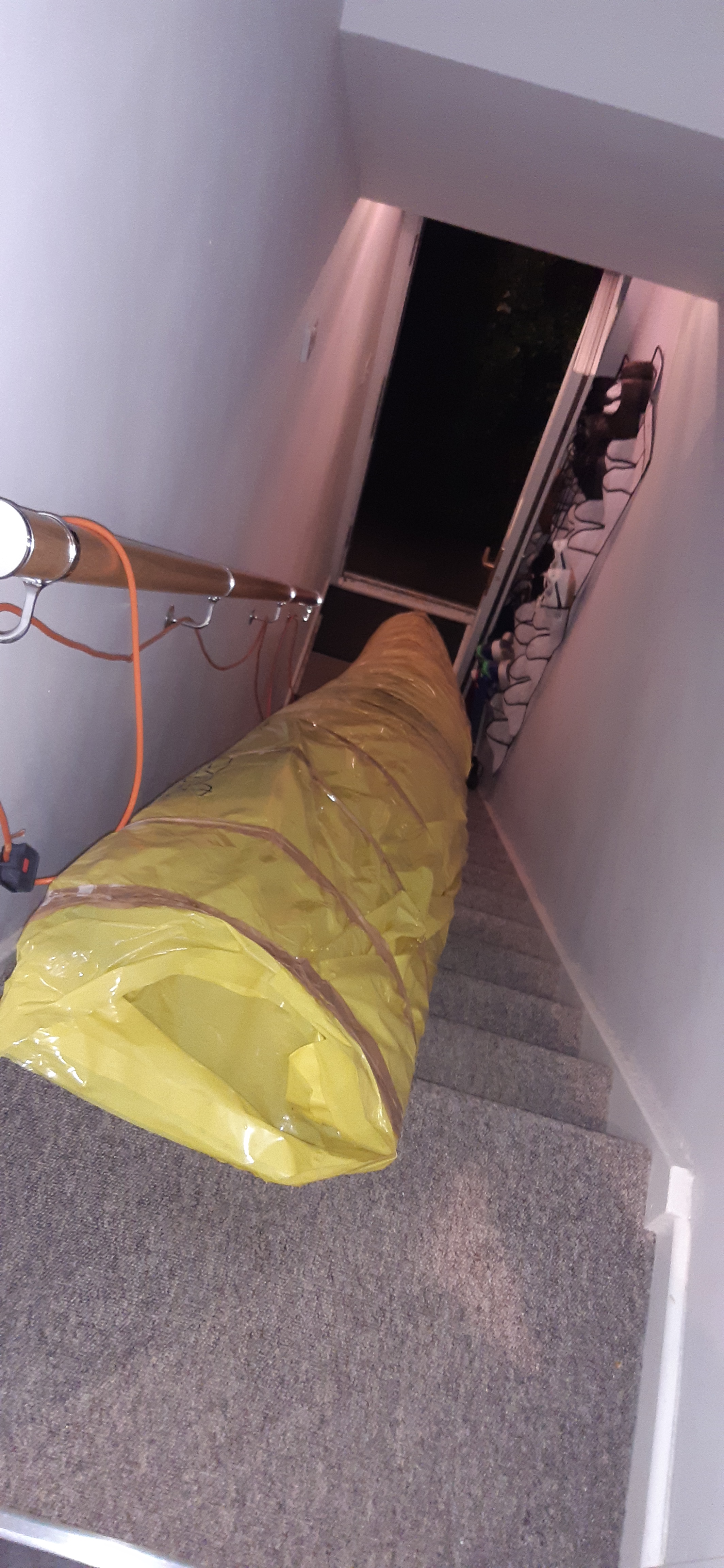
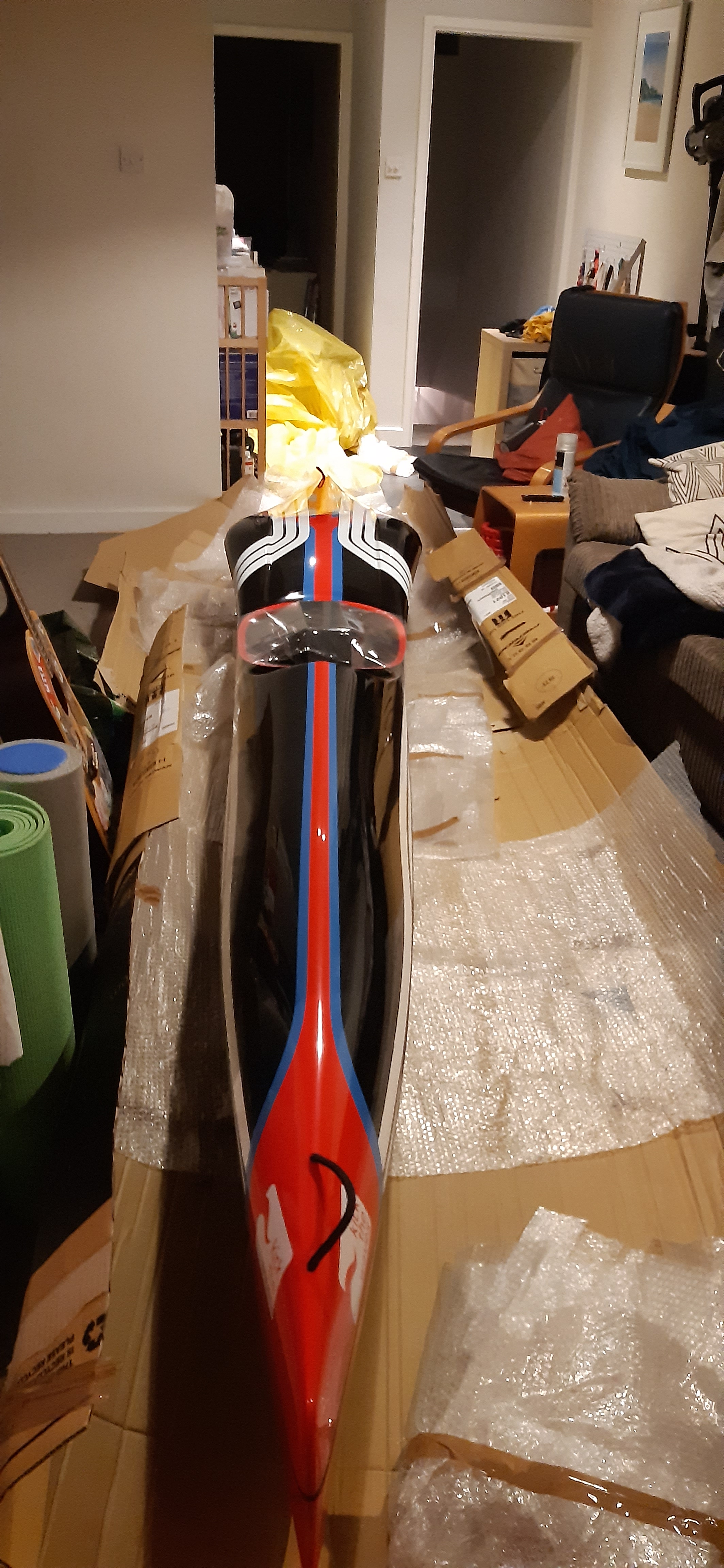
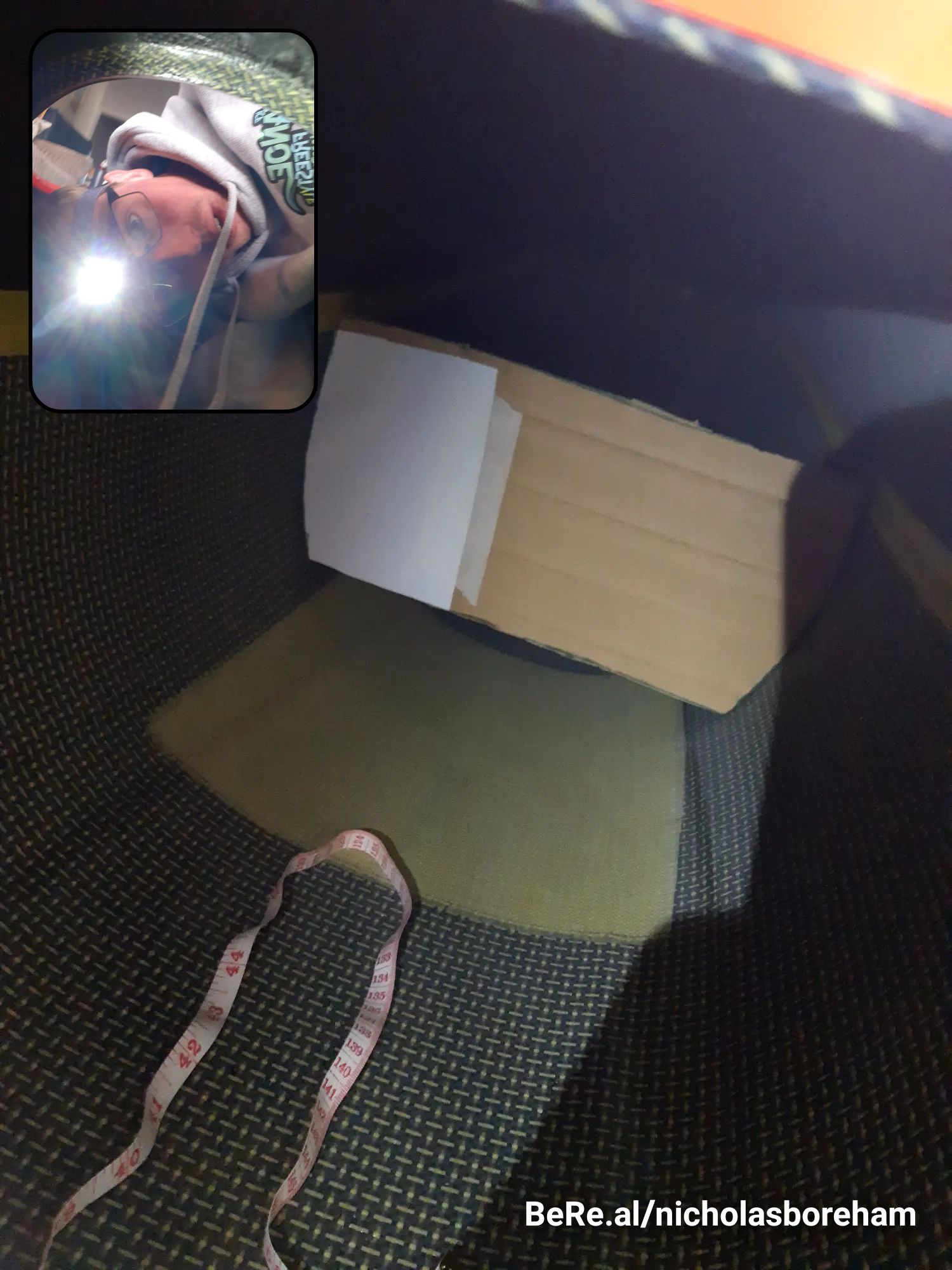
Unfortunately my beautiful Sicario had only arrived in the UK two weeks prior, thanks to a shipping headache created by the  “B-that-must-not-be-named”. This led to a fairly manic week of trying to outfit the boat while it dominated my small flat. Fortunately, my panic prevailed and I more or less managed to fit the footrest and knee foam in time for at least a couple of sessions on the flat before I departed for Scotland. 

Above, the new boat takes over my flat. (Cardboard was used for templating the footest and was not the final product!)

However, this did mean that the Friday in Scotland was the first day I actually paddled the boat on ‘the rough’. Coincidentally this was also when I discovered that I hadn’t quite gotten everything to how I wanted it. Thus, despite some Friday fiddling, I found myself duct-taping additional foam hip pads into the boat with less than 20 minutes before my first sprint run. This is definitely not the best race prep I’ve ever done, yet it somehow wasn’t the worst or most chaotic pre-race I’ve had.

Unfortunately even with my last minute additions, my sprint results were a little disappointing. This wasn’t all too surprising given I was (or am) still getting used to the handling of the new boat and while I managed to mostly put the boat where I wanted it, I was struggling to find the power throughout the run. Still while it stung to be so far off the pace, I’m sure this will come with some time. Plus, Sunday was the classic, and classics are my jam.

We awoke Sunday fueled with a lovingly cooked family meal and fearful of forecasts of snow and sub-zero temperatures. Daylight savings had cruelly robbed us of an hour of precious sleep, but being as knackered as we were we’d mostly passed out around 9pm anyway. As we loaded kit into cars the weather was not nearly as frightful as forecast, but Scotland by and large had not received the notification that it was now officially Spring. This led to some debate on the shuttle as to what to wear for the race and emboldened by anything above 20C I opted for a shorty kag. Mostly, hoping that the threat of hypothermia would encourage me to get to the finish just that little bit quicker.

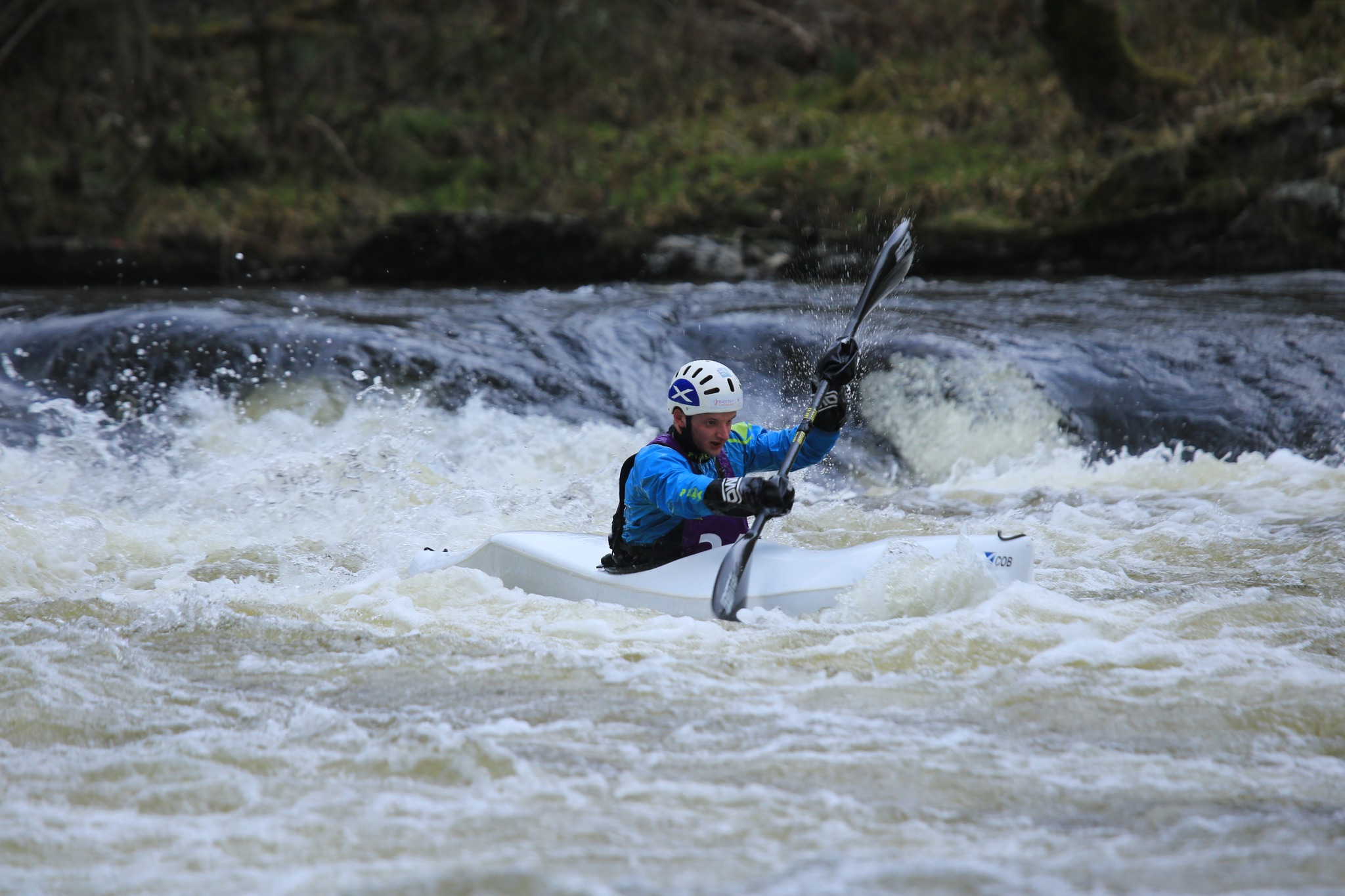
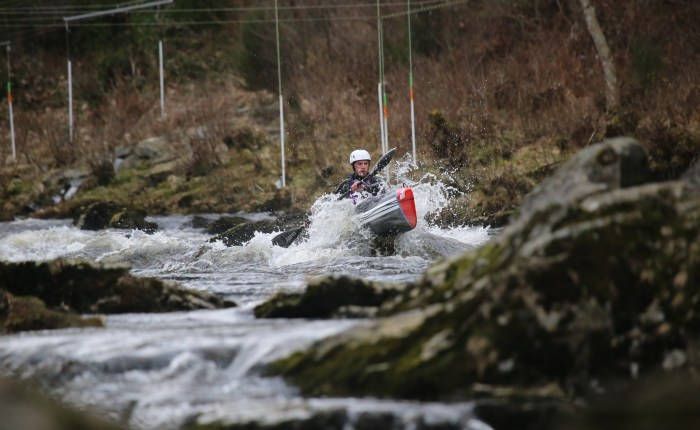
Phtotos from the weekends’ racing

I like classic racing. The longer distance just gives me a bit of time to settle into the race and I can focus on just getting the boat running well. That said I definitely spent the first few minutes of this race cursing Alex as his prophesied tail wind manifested itself as biting head wind, freezing hands and sucking all the speed from the boat. But once I’d dropped further into the rapids I  found my ‘happy’ place and began to feel comfortably at home in the new boat. This all seemed to pay off and having navigated the main Tully rapid with an appropriate amount of “face melt” I crossed the line to claim a 2nd place and the 19 points it brings.  Hopefully this should be enough to get me to Euros…

Arguably more important than my position was that with a time of 14:31.69 I’d beaten Kerry. This has become a bit of a running joke amongst the senior men but having beaten all the boys at the last couple of events she’s actually a real threat (and a lovely training partner). Honestly, I’m not quite comfortable with my 10s margin on a 14 minute race!

Selections part 2 of 3 comes this weekend at Nottingham’s own HPP, which will be the decider for the Senior, U23 and Junior worlds. Tune in to the next blog post for a slightly delayed recap of events! 

Photos by the lovely Dave Singleton

Full Results on https://www.wildwater.org.uk/

B*tches be B*tchen

B*tches be B*tchen

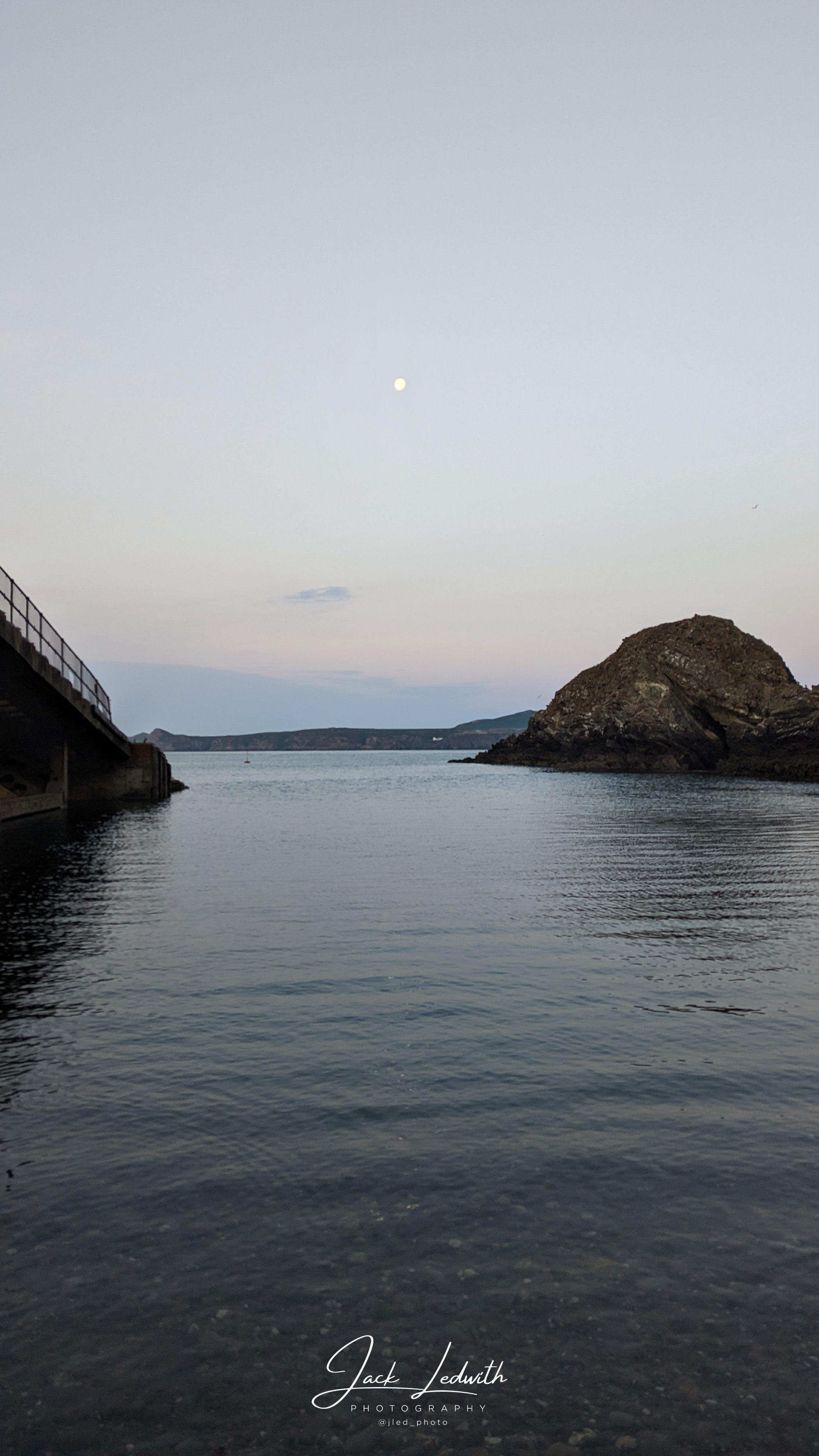
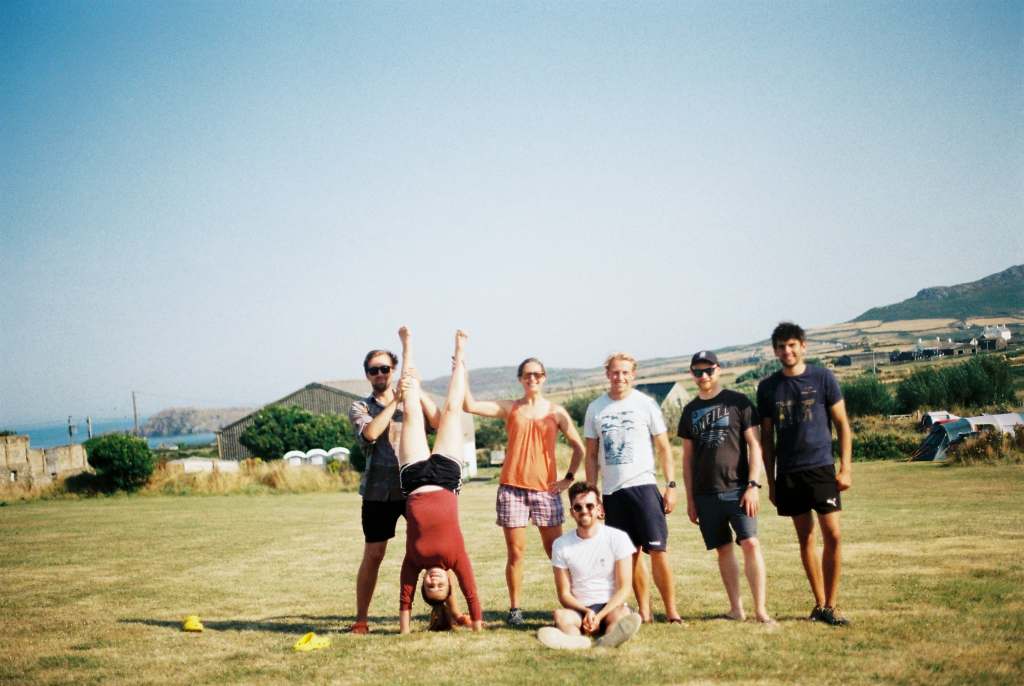
It was 5am when we crawled out of our tents. We’d arrived at 11:30 the night before and did not have nearly enough sleep. Regardless, we clambered down below the lifeboat station with our boats. As we put on our decks the sky had begun to glow but the sun had not yet seen fit to emerge above the horizon.

I have a little bucket list for canoeing, and for as long as the list has existed the Bitches has been near the top. For those not in the know, the Bitches is a tidal rapid that forms between the most south west tip of Wales and Ramsey Island. Named by old-timey sailors who swore like old-timey sailors, the Bitches is a formidable stretch of water and has been the ruin of many craft over the years. But, for plucky kayaks the waves formed on this rapid offer some of the best surfing in the UK. 

Tidal rapids are something special. They seemingly spawn from nowhere as the moon and sun literally align to haul oceans over otherwise unavailing rocks, and where once sat quiet and calm water emerges a beast foaming at the mouth.

That metaphor may be a slight hyperbole, but fortunately like their werewolf brethren, tidal rapids follow the lunar cycle making them pleasantly predictable (unlike the rest of the UK’s rain fed rivers). Unfortunately today’s ‘pleasant prediction’ was that the bitches would be running around 6am-ish. Thus we found ourselves taking our first paddle strokes somewhat unsure as to whether we were the early birds or the worms.

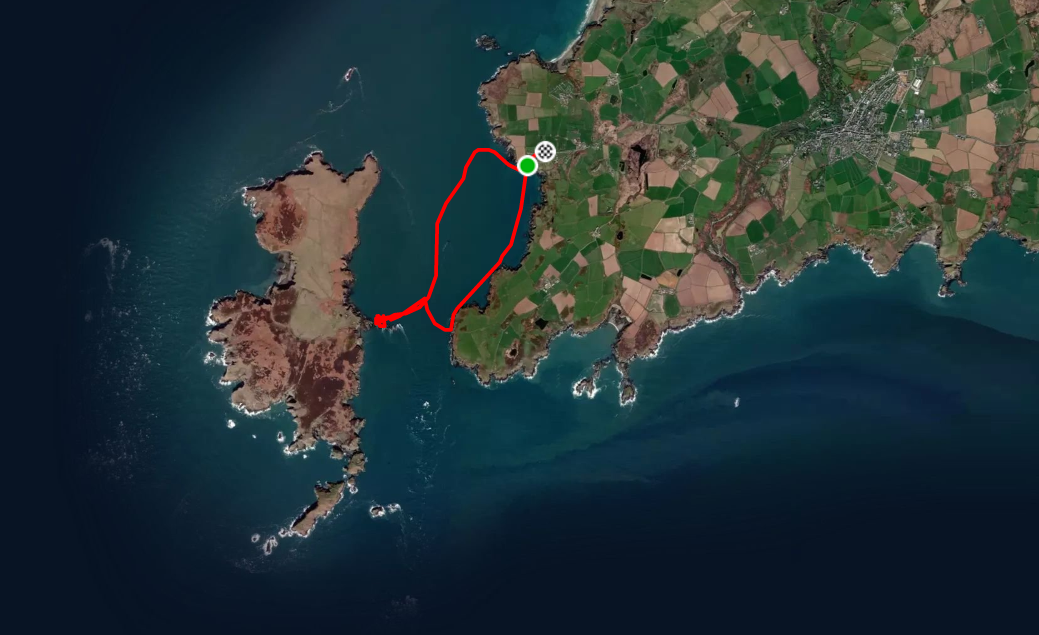
From the get on its roughly a 3km paddle up the coast and across the Channel to the Bitches. This is best done while the water is still fairly slack and it can still be a bit of a slog, particularly in short boats. The paddle adds a small level of jeopardy as it’s impossible to know the form of the feature until you get there. This elevates the Bitches a mere park and play into a propper adventure.

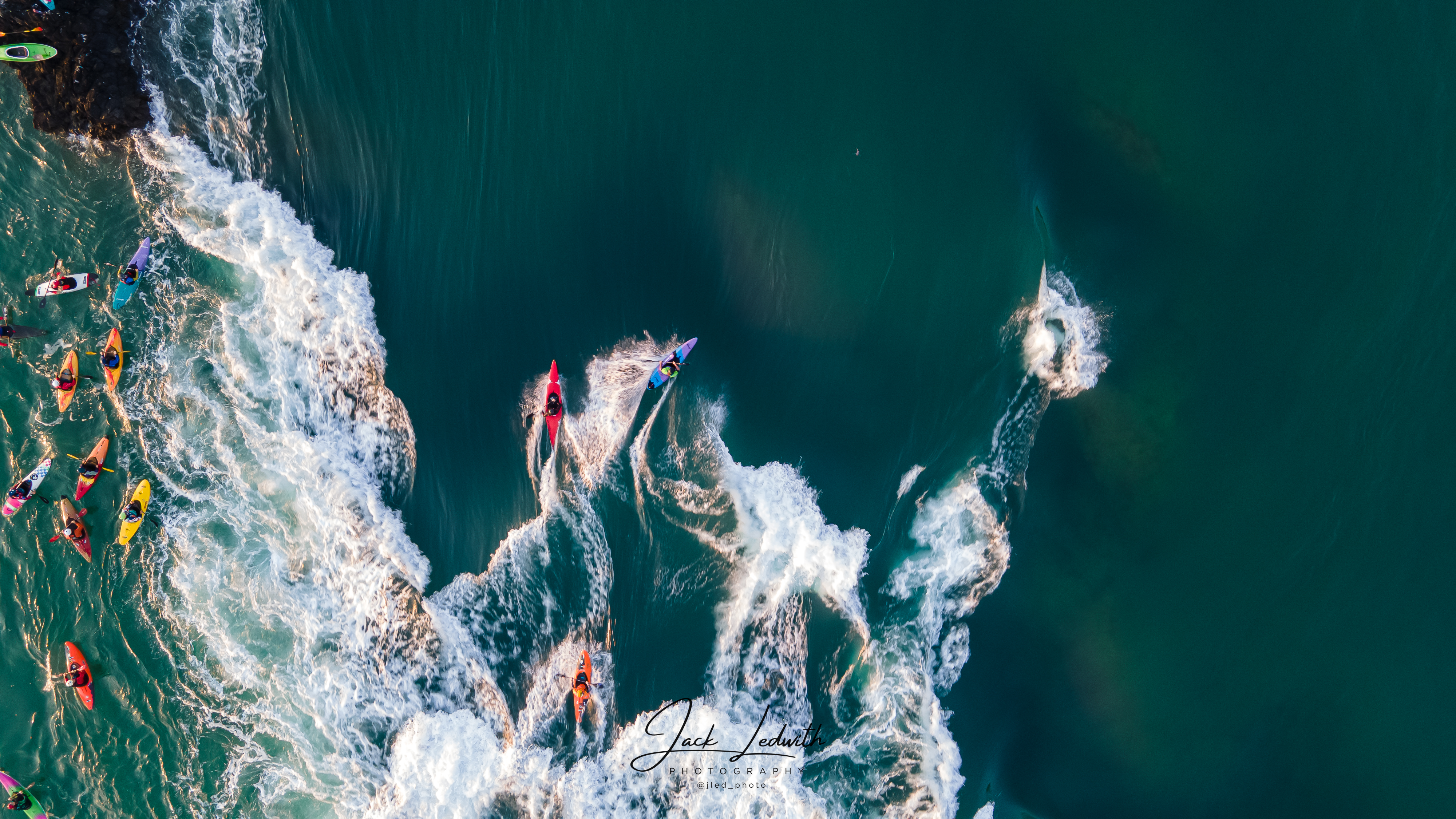
We passed snoozing seals and hugged the coast, eddy hopping up the sea as the tide started to move like a great lumbering freight train beginning to depart the station. Across the channel we could begin to see the white caps around the black needle like rocks that form the Bitches, and so we left the comfort of the mainland and departed into the nearly 1 kilometer ferry.

And it really is a ferry glide. As soon as you pull out into the channel it becomes apparent how fast the water is already moving. It is here that you may start to understand just how exposed you are, floating in a tiny boat in an ambivalent ocean. But stomach that feeling for now, keep paddling and eventually you’ll find yourself in the large swirling eddies below the rapids. It will all be worth it.

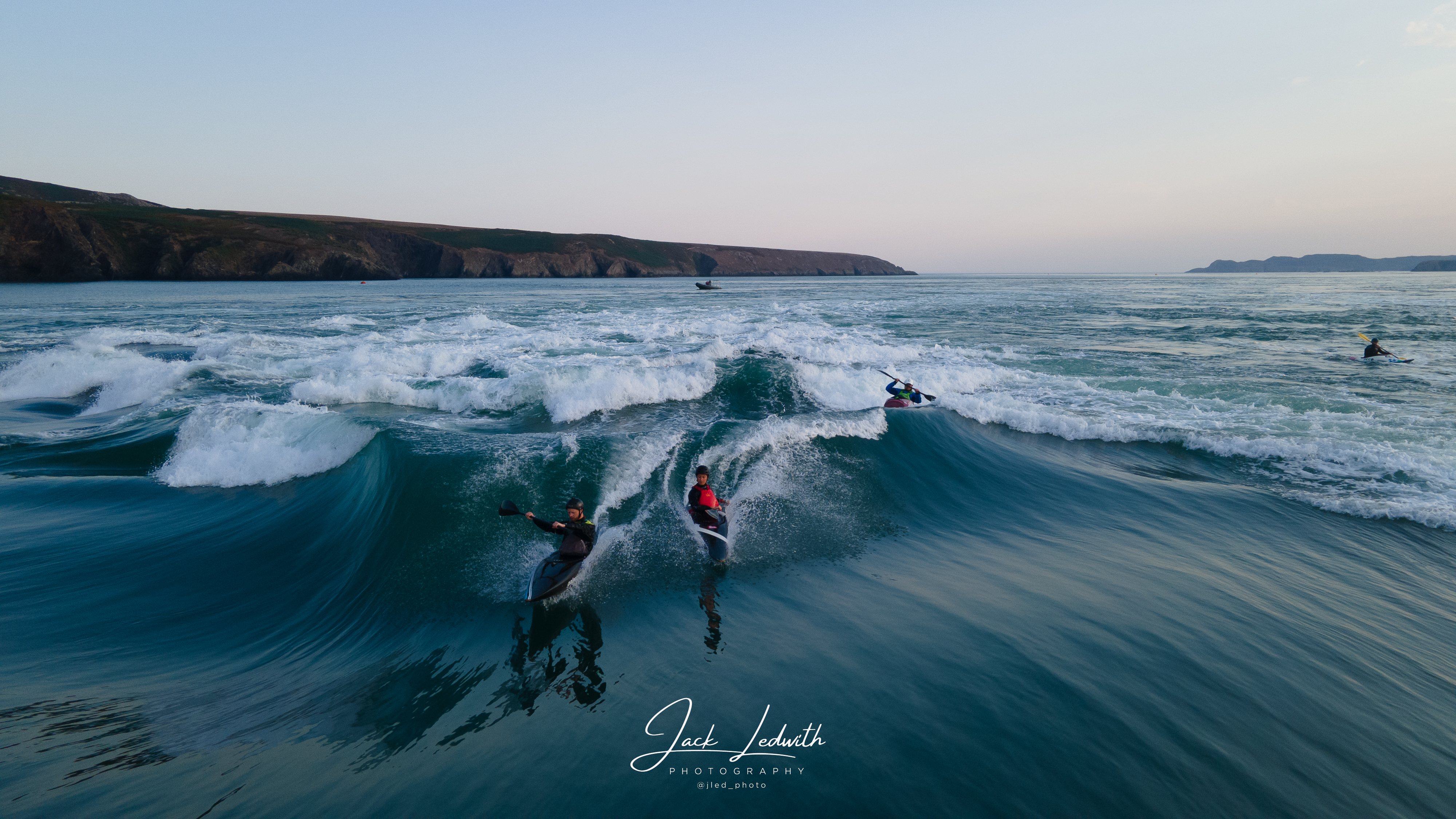
I don’t really know what to say about the surfing. You know, it’s kind of the main event, the reason you’d go. If a bunch of white water paddlers are willing to subject themselves to well in excess of 10 paddle strokes to get anywhere it’s got to be pretty bloody good. And do you know what? The Bitches is really bloody good.

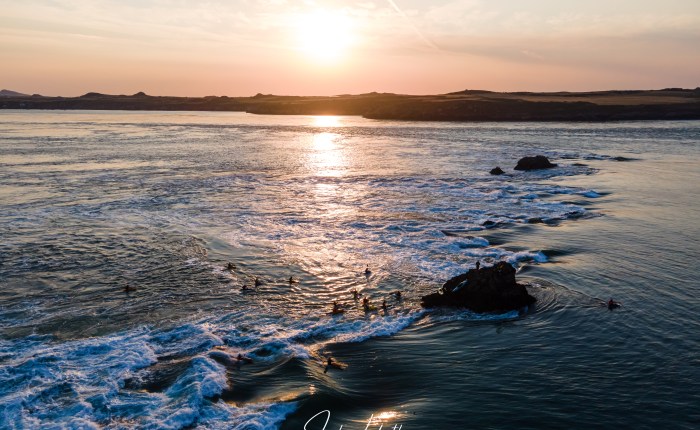
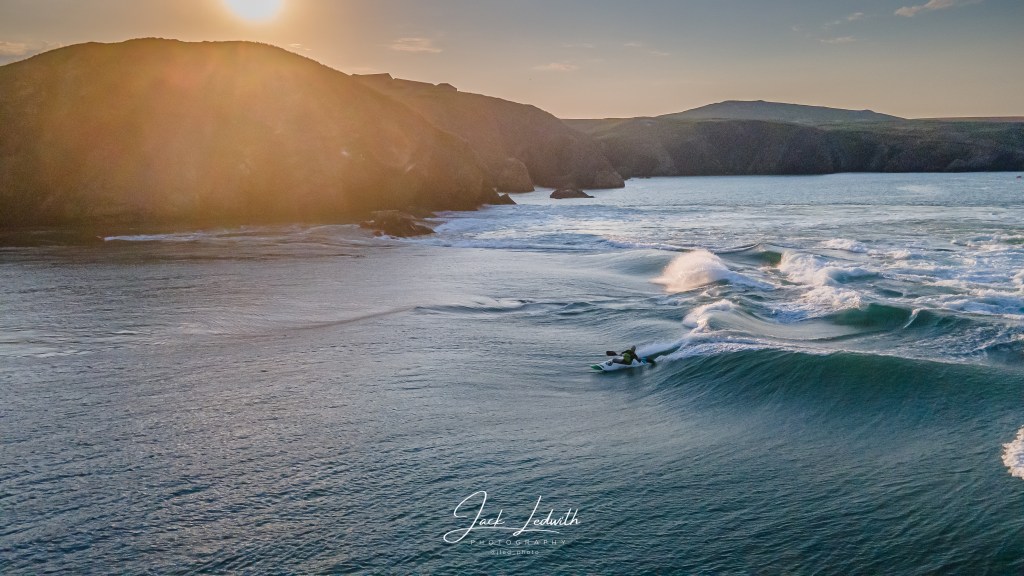
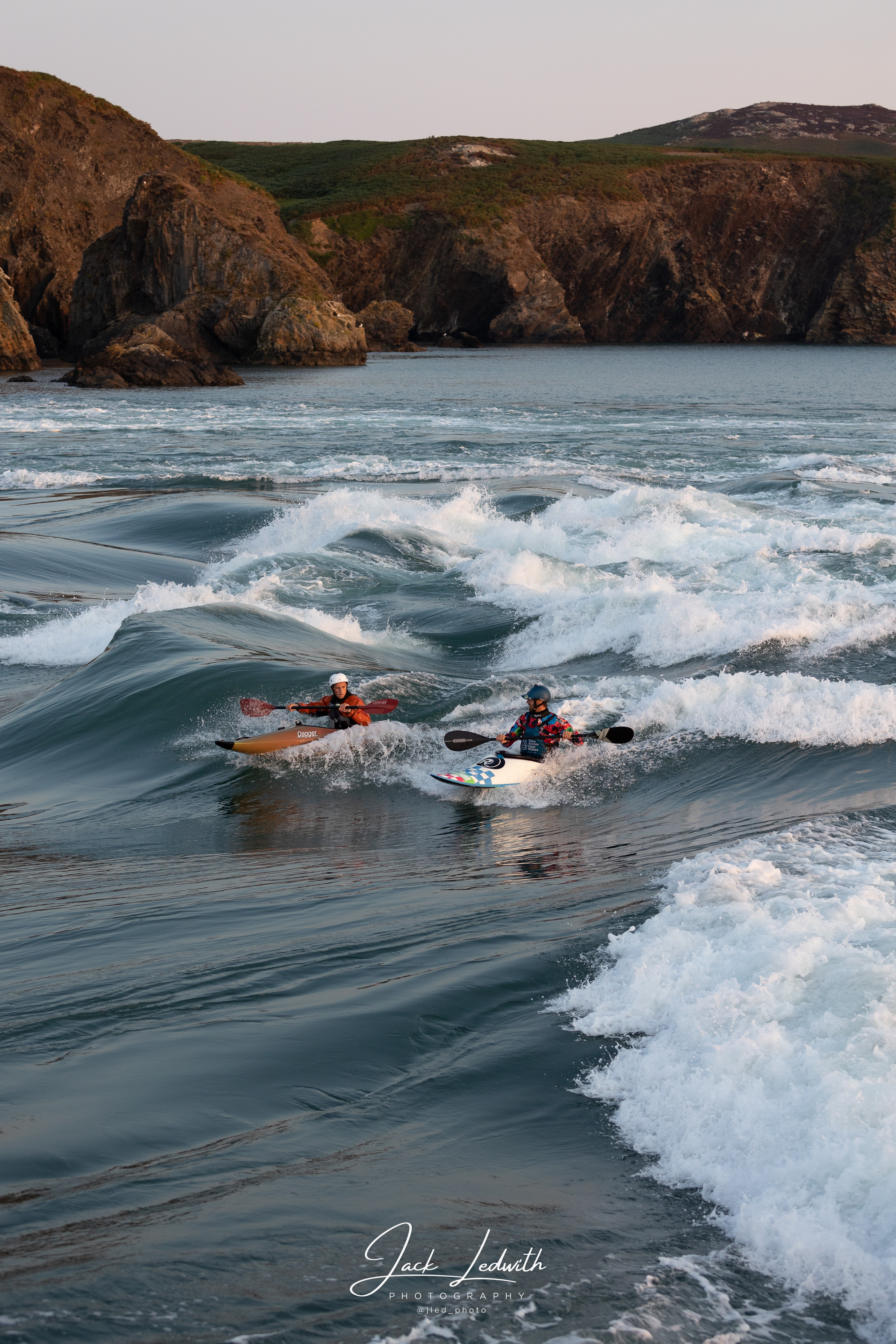
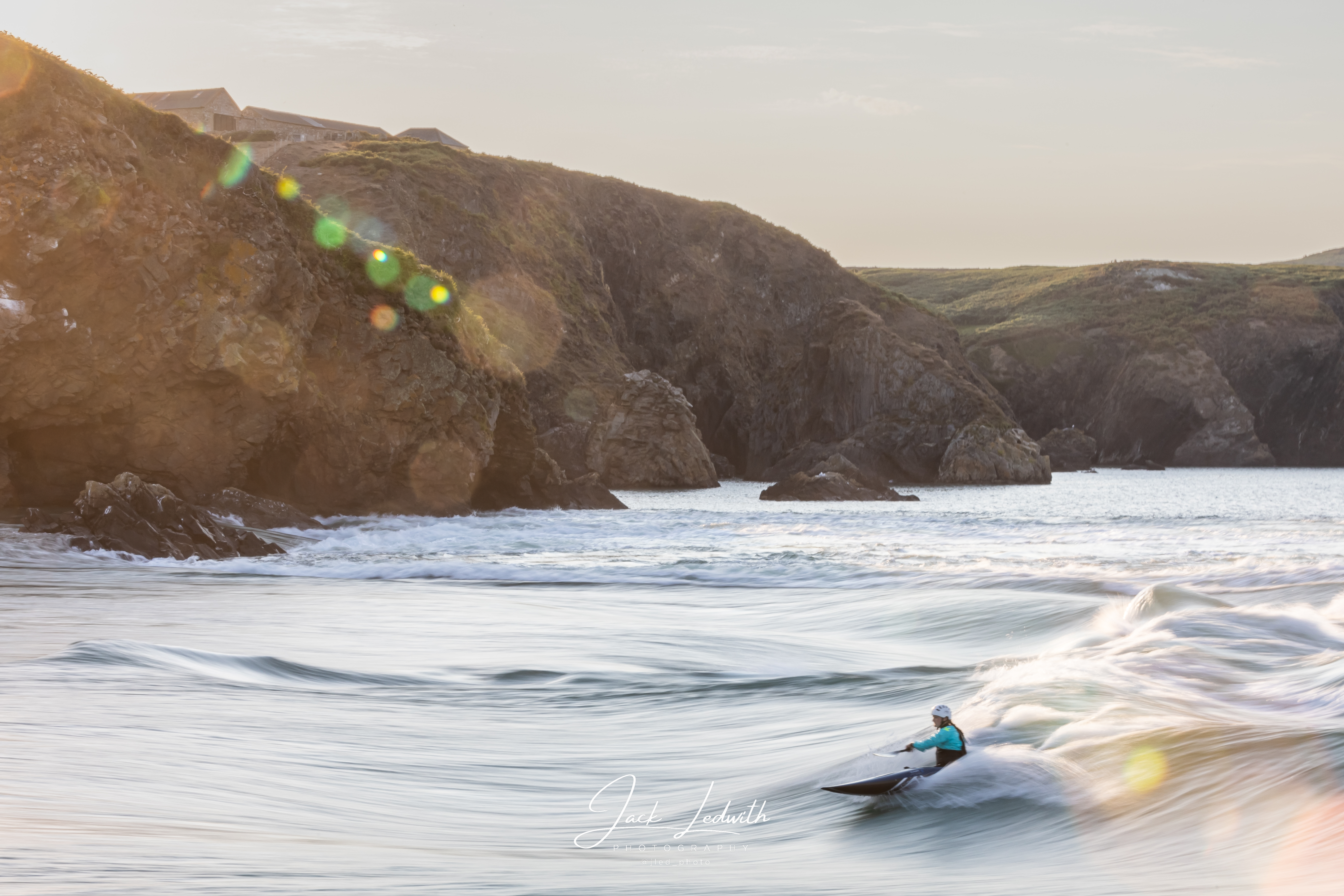
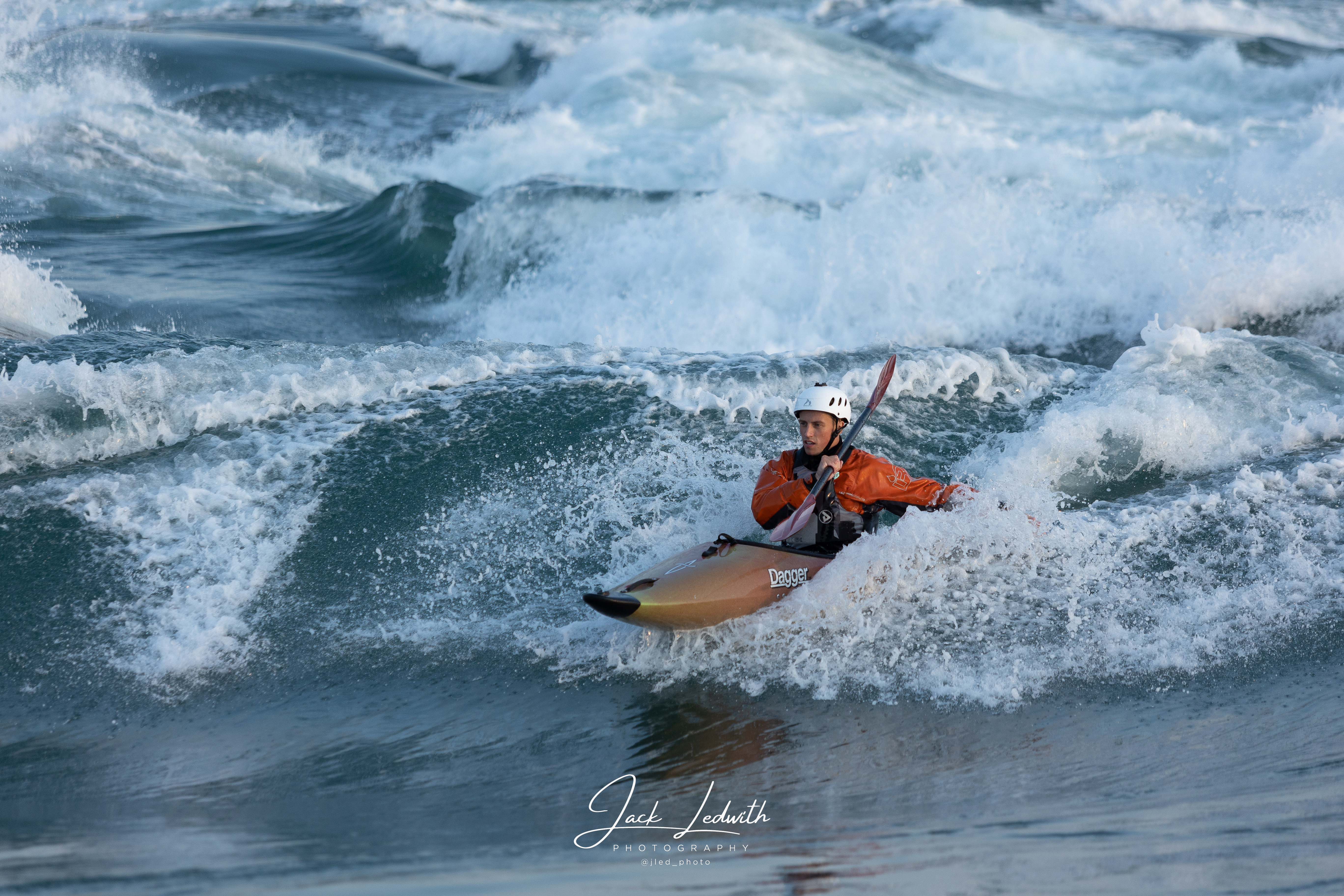
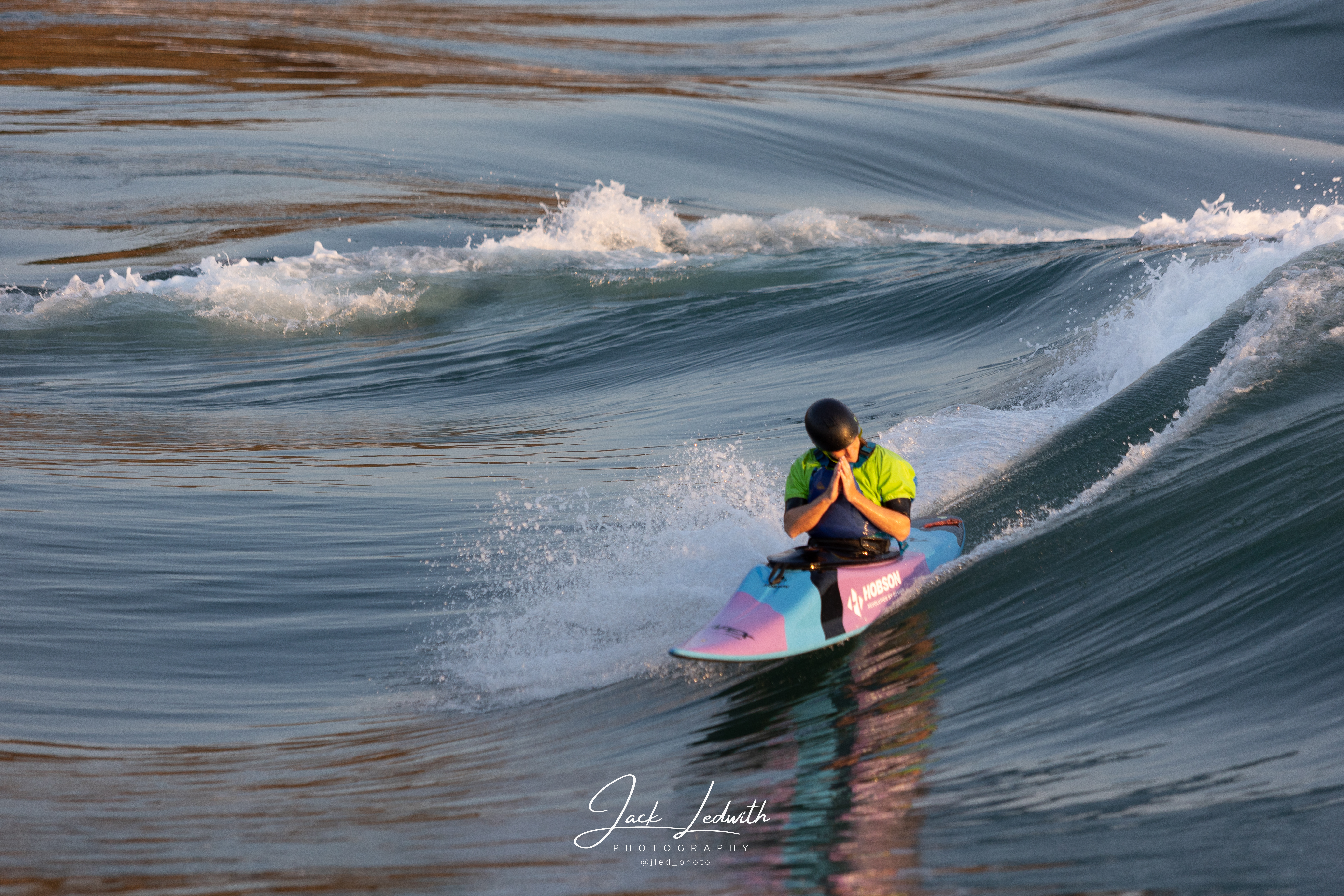
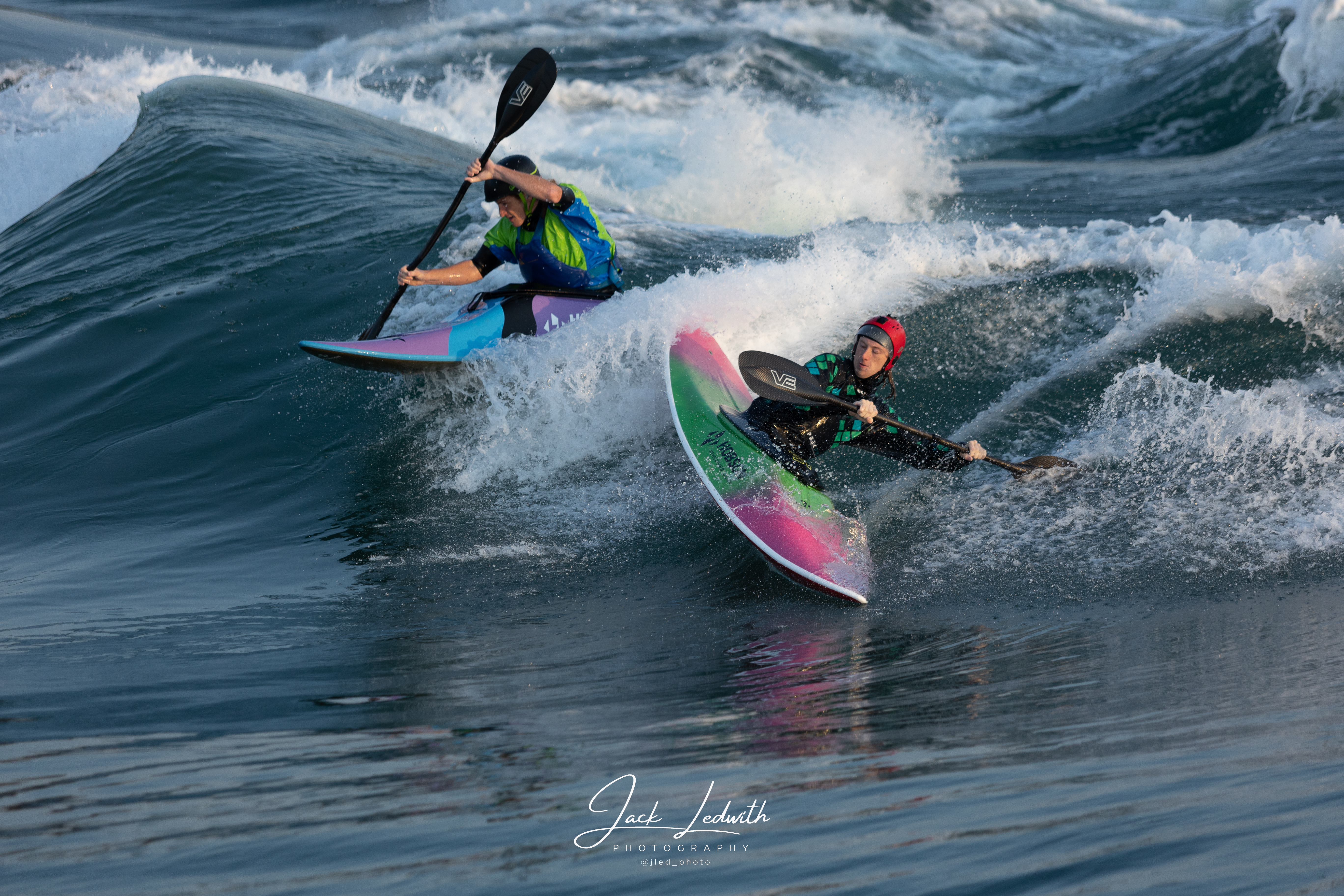
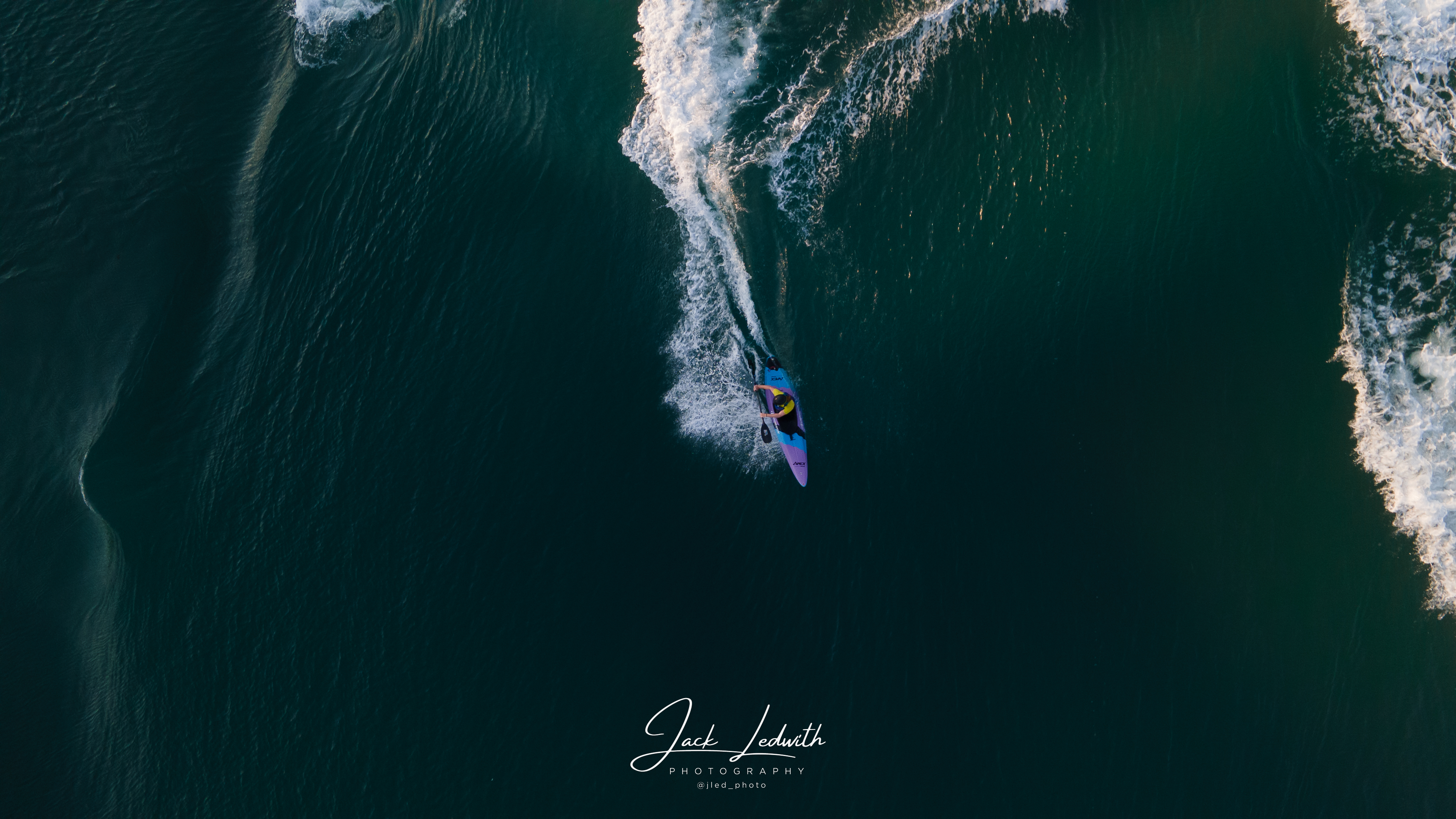
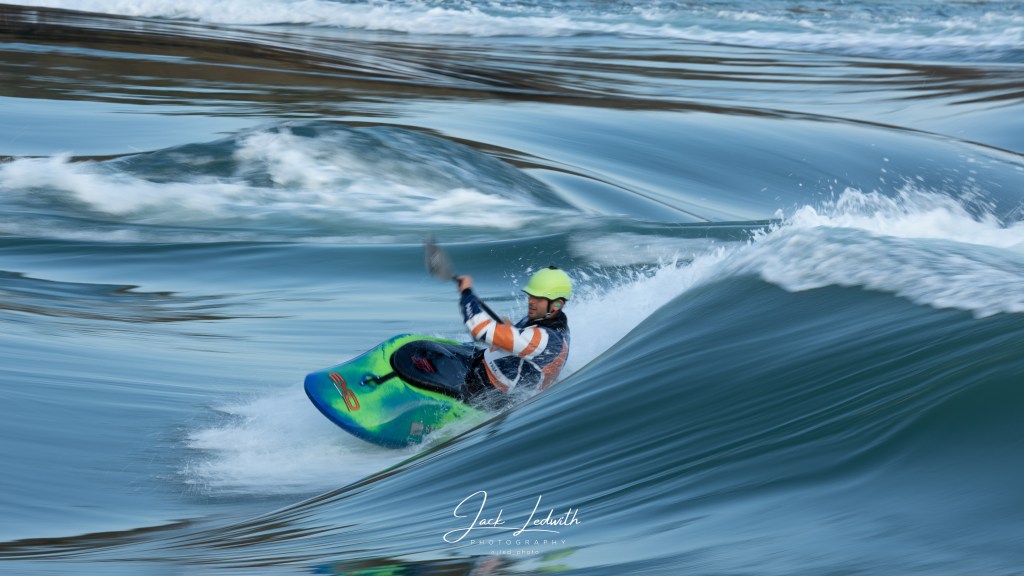
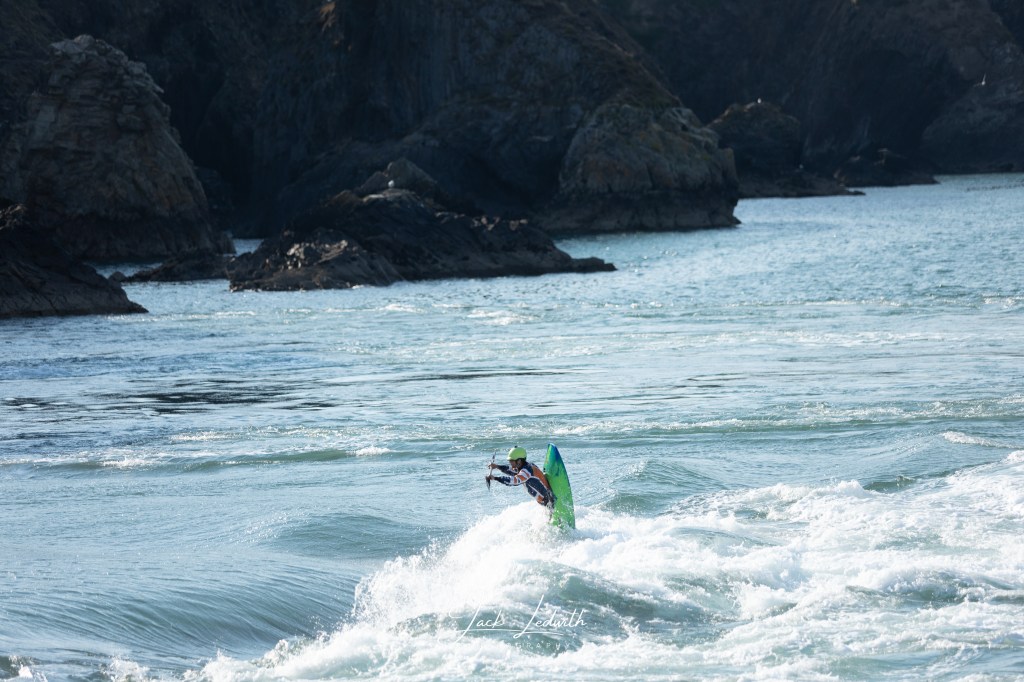
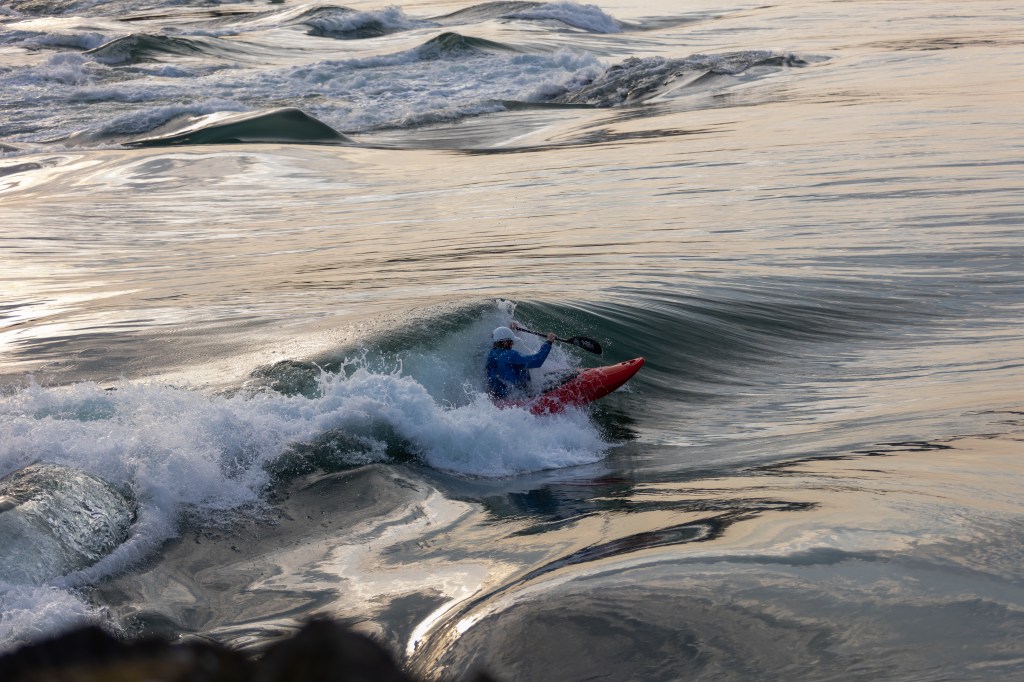
I think Jack’s photos speak louder than any words I could muster. We had hours of gorgeous soul surfing on beautiful glassy waves.

It really is the land of the long boats and I had a great time ripping around in my RPM, hoping over the central shoulder, to crash down in the curler on the far side. Some slightly more competent freestyle paddlers (looking at you Harry & Jack) were even able to pull off some blunts in their long-boats and the slalom boats could tear up even harder than my old plastic with their added speed. But, above all else I was probably most jealous of the surf kayaks.

Curious and reclusive beasts not often spotted in the UK, this was truly their natural habitat. Their flat bottoms, and knife sharp edges seemed to offer an unparalleled amount of fun on the fast green wave, even if it does take an unparalleled amount of concentration to avoid being power flipped into oblivion.

But fear not there are spots for short stumpy boats too, and portaging over one of the rocky outcrops means you’ll always be able to make the wave even if your boat or your biceps are not fast enough to ferry onto the main wave. There are also other features and waves to be found along ridges of rocks. These include, but are not limited to a curling wave that had a tendency to randomly swallow people and one that Harry Price described as ‘interesting’. So, make your own decisions on that one.

The main wave was by far the friendliest although, off the back of it the sea could be a little ‘‘munchy’. I definitely scored one or two mystery moves, and another member of our group actually suffered a deck implosion, so maybe remember those air bags. This was probably the first time most of us had ever had to use an x-rescue in anger. But not me, I was too busy eating sandwiches on a rock.

I’m also reliably told that a little bit of swell makes everything a little spicier and complicates the eddy access, as everything surges up and down several feet. It also increases the likelihood and size of the ‘way-home-whirlpools’, but more on that later.

Once everyone is knackered and the fun is over and done with, your paddle is not over and done with. While the paddle out is a sedate slog, the paddle back is certainly spicier. The route back to St. David’s lifeboat Station looks simple, but by now the tide is pumping even faster than before and will do everything in its power to flush you out into the Irish Sea or drag you towards some inconspicuous looking white caps. 

It was just as we were considering these two fates that a certain Mr Teapot mentioned the way home ‘way-home-whirlpools’. “Way-home-whirlpools?”, I answered. “I hate whirlpools” replied jack”. And just like that all three of us were headed round in a big circle as a ‘way-home-whirlpool’ opened beneath us, threatening to suck us all in. These delightful features can form as you pull out of the relative calm behind the bitches into the main current and are certainly something to keep an eye out for. I have long been a believer that swans make the best sprint coaches, but they come second only to large whirlpool spouts that are already grasping at your tail.

Having survived our little ordeal, our attention was drawn back to the whitecaps. In actual fact these are far from inconspicuous and once in the current they barrel up faster than anticipated. As you rapidly draw closer you might make out a suspicious horizon line in the middle of the sea. This is Horse Rock, a series of underwater stacks in the middle of the current that form far less friendly whirlpools big enough to sink actual boats, let alone kayaks. Going through this is not recommended. 

Thus there are 2 options. Option 1, a mad ferry above horse rock where you’ll be convinced you’re about to be flushed into it regardless. Or option 2, a mad ferry below the whirlpools where you’ll be convinced you’re about to be flushed out to sea. Personally, having now flirted with both options, I’m an option 2 man. I think the lifeboat will do a much better job of rescuing me if I’ve not been pre-drowned by Horse Rock. Plus, I’ve been meaning to visit Ireland some time regardless.

With only a few brief moments of panic we made it back to the lifeboat station, and clambered back up the steep steps. With the early start we were off the water by 8:30am. Just in time to grab Breakfast in St. Davids and spend the day doing whatever it is normal people do at the beach. Later we bag the evening tide and then a slightly more sociable 7am session the following morning.

With all the hazards and a veritable sea of consequence the Bitches is a highly recommended trip, but only for seasoned paddlers. There are local boat tours of the rapids and wildlife if you want to see the spectacle. If you pick a good tide, you may even see some paddlers out for a play. Or perhaps myself as I will definitely be back.

Thanks to everyone who made this trip.

The best Biteches!

Side Note: If traveling down from the north be sure to swing by Gloucester Services for what can only be described as an enlightening experience.