One Christmas, back when I was a kid, my parents got me a long fishing pole rod thing. Not for fishing (of course!) but because I was into making terrible films and the thought was I could put a GoPro on the end of it to get a ‘crane’ shot – This was long before the whine drones filled the sky.
Said ‘crane’ shot – It still looks good
Eager to test out my new ‘toy’ we took the canoes out onto the canal and, in the tropical waters of the Twixmas period, the camera fell off into the water. Some would think that’d be the end of it. But with my dad being the kind of dad he is, I soon found myself diving over the side of the canoe to retrieve the silvery smudge at the bottom of the deepest part of the canal.
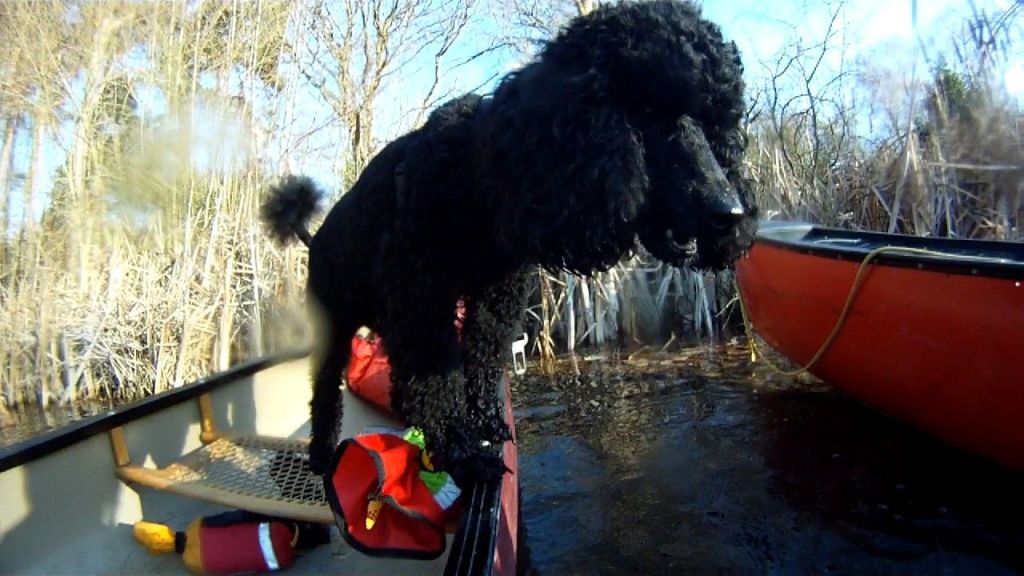
The water was cold but as I dived in, head first, the camera came within not quite grasping distance of my fingers. It was here that I realised my mistake: I was still wearing a buoyancy aid. Cruelly remembering its purpose, the BA hauled me back up to the surface. Coughing and spluttering I was dragged back in the canoe. Scout, our dog, was going mental. He’d been sharing the boat with Dad and myself and this was clearly the most exciting thing he’d ever seen. He leaped and bounded all over the boat unable to sit still while I sat shivering in the bottom of the canoe.
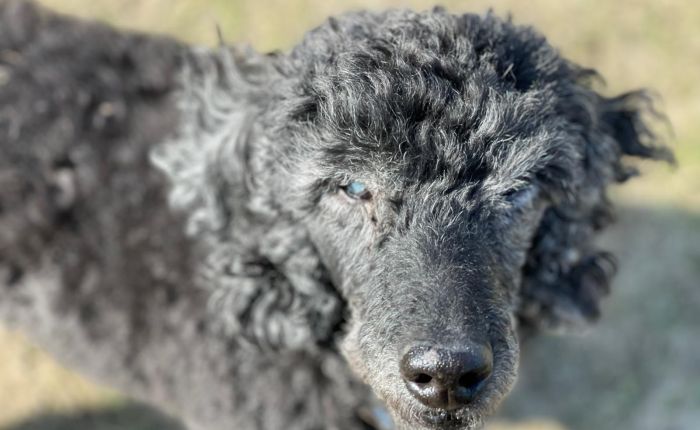
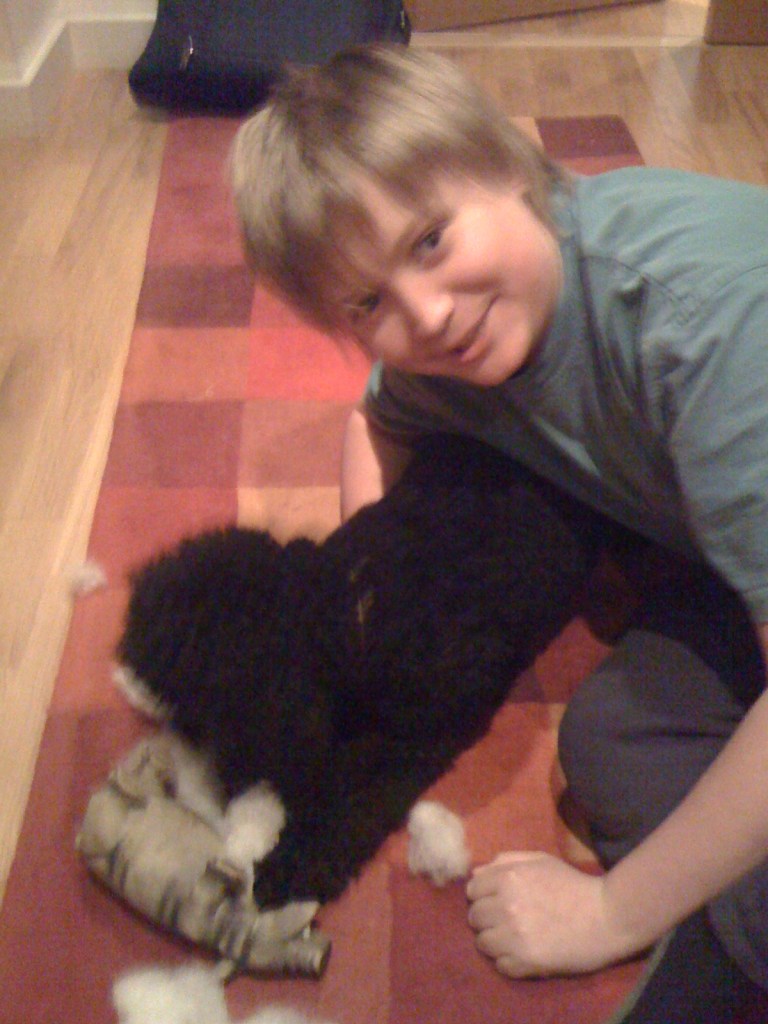
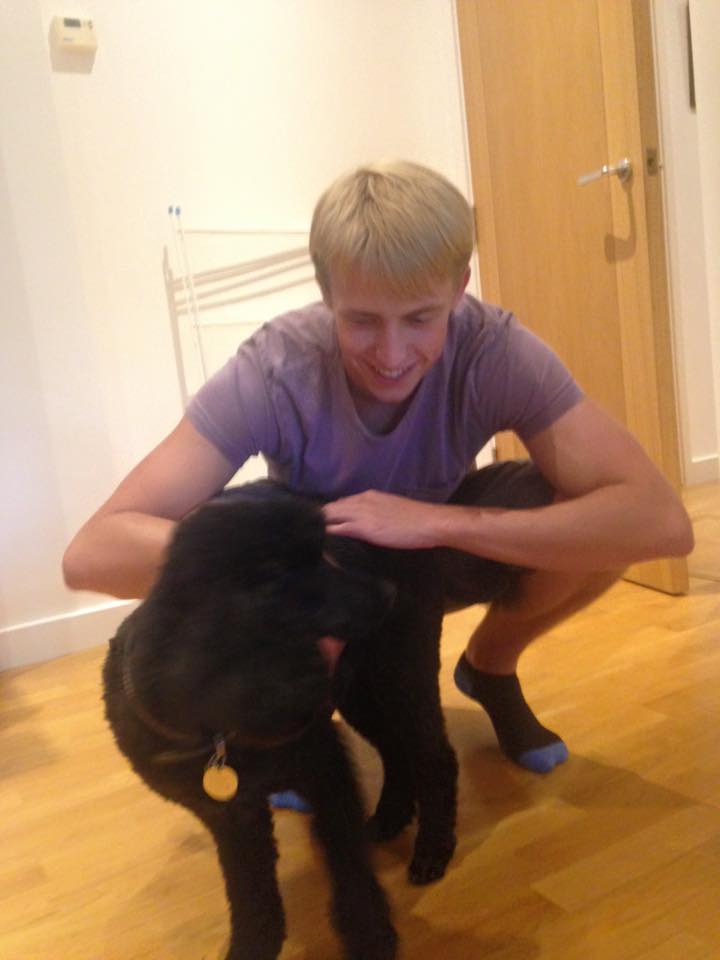
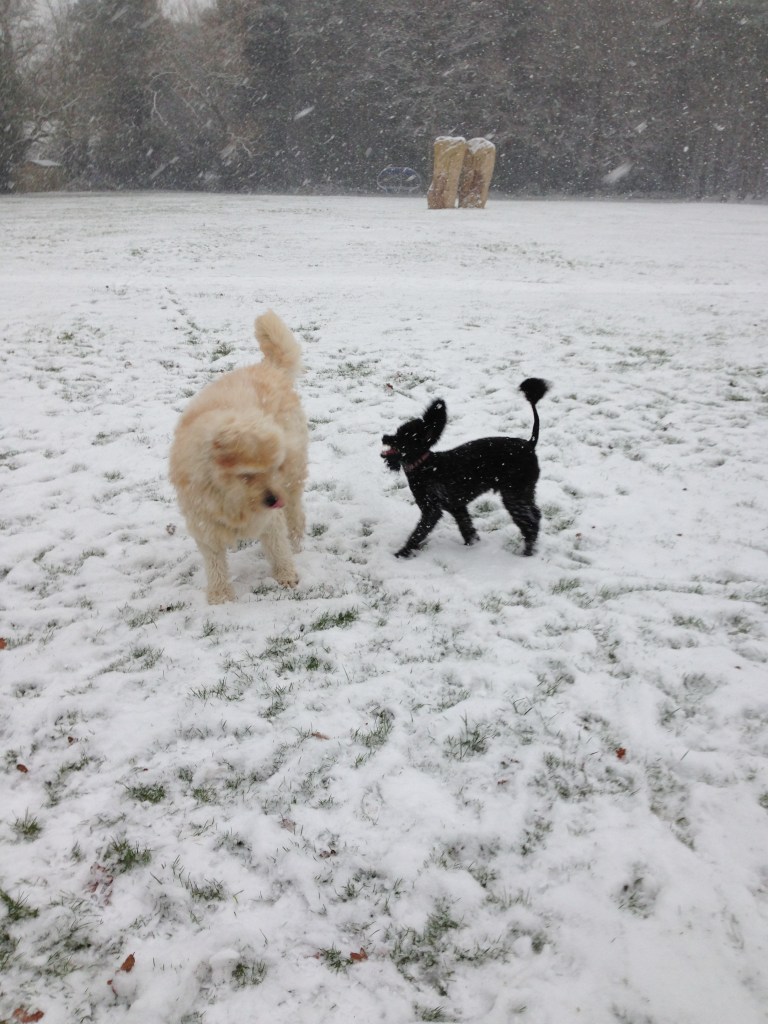
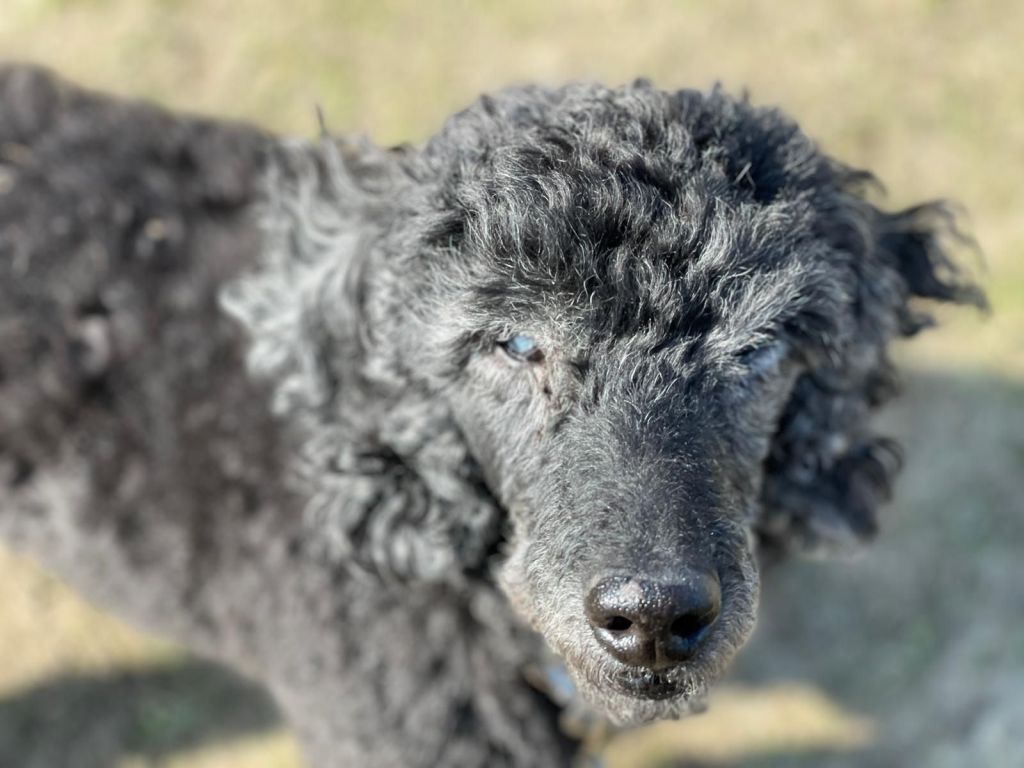
About two weeks back now Scout had to be put down. He’d had a good innings, a month shy of 15 years, which is not bad for a little Poodle. However I’d be lying if I said it didn’t come as a bit of a shock. These words have taken a little bit of time to come together, so please excuse this departure from this blog’s regular schedule for this extended epitaph. (Scout loved canoeing so that’s how I’m justifying it.)
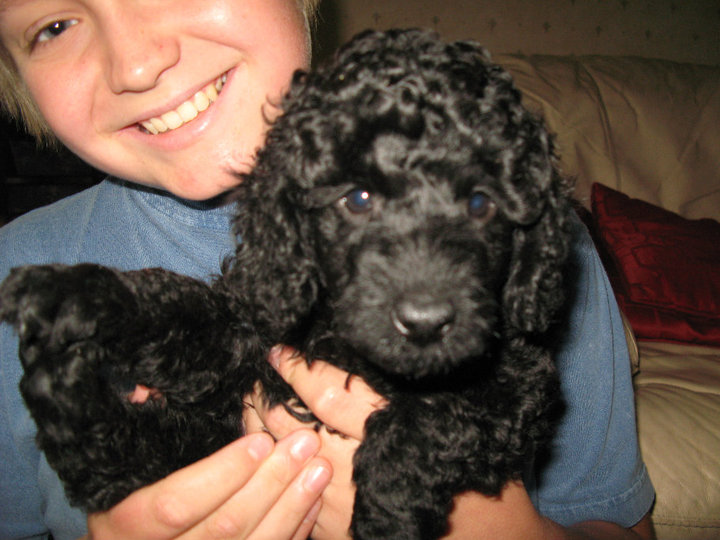
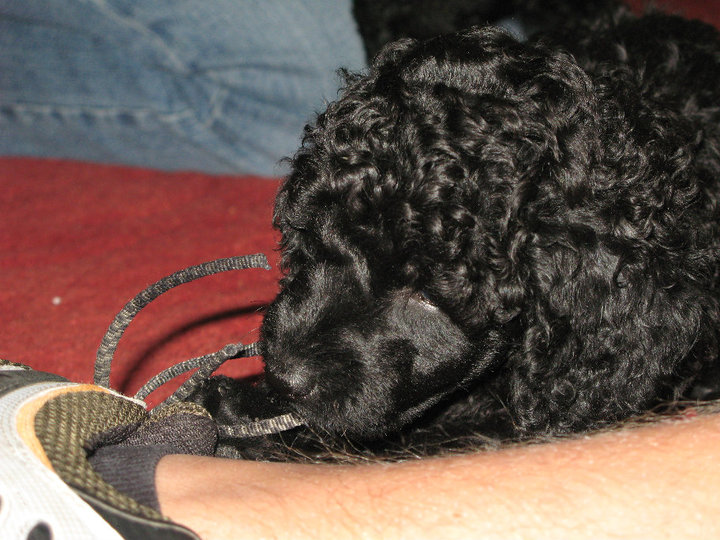
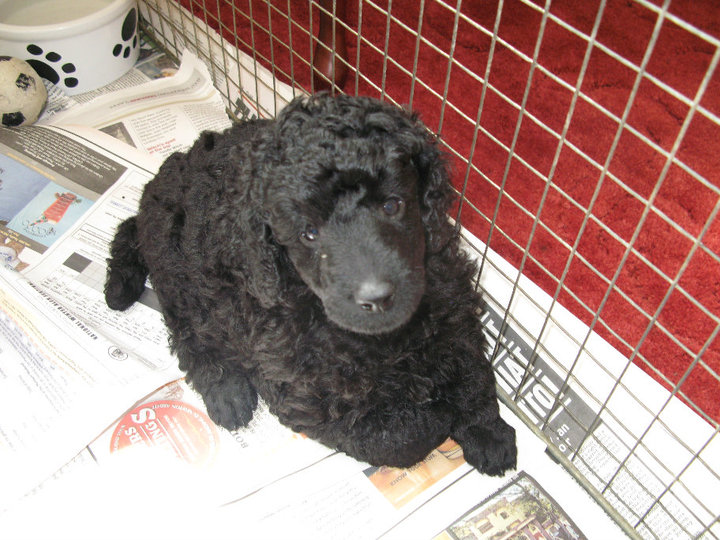
After years of pestering from my brother, my parents finally relented and we brought home a little black ball of fluff, cradled inside an A4 paper box. He soon grew, chewing anything and everything in his path, including at one point a wall. We named our little ball of fluff Scout, although I’d often refer to him affectionately as ‘trouble’. Both names were very fitting.
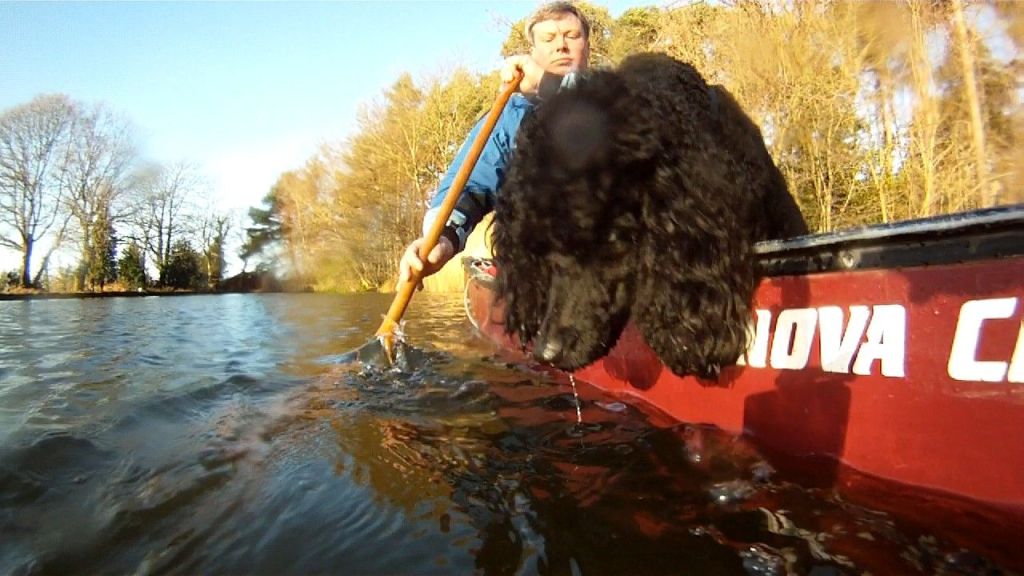
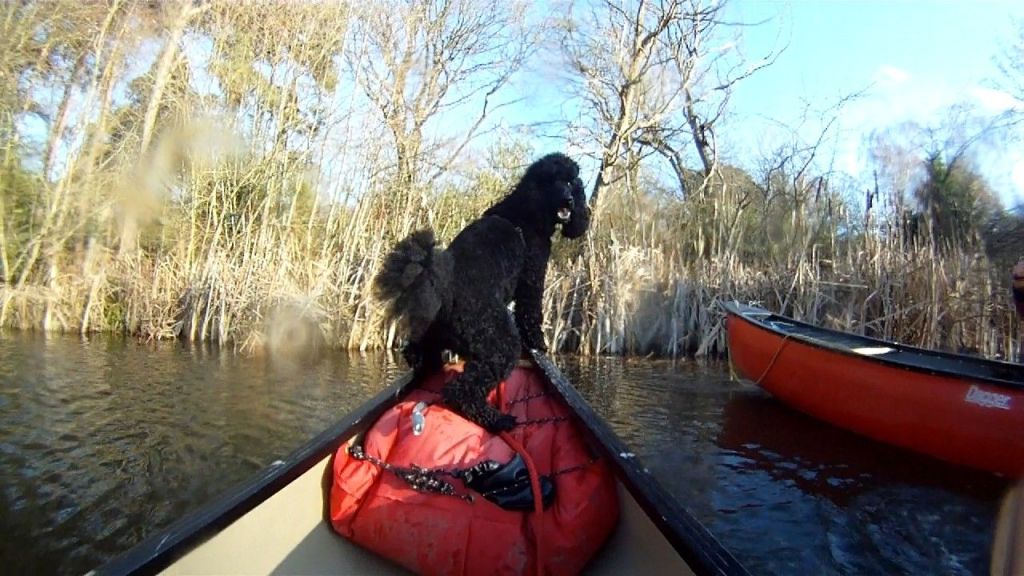
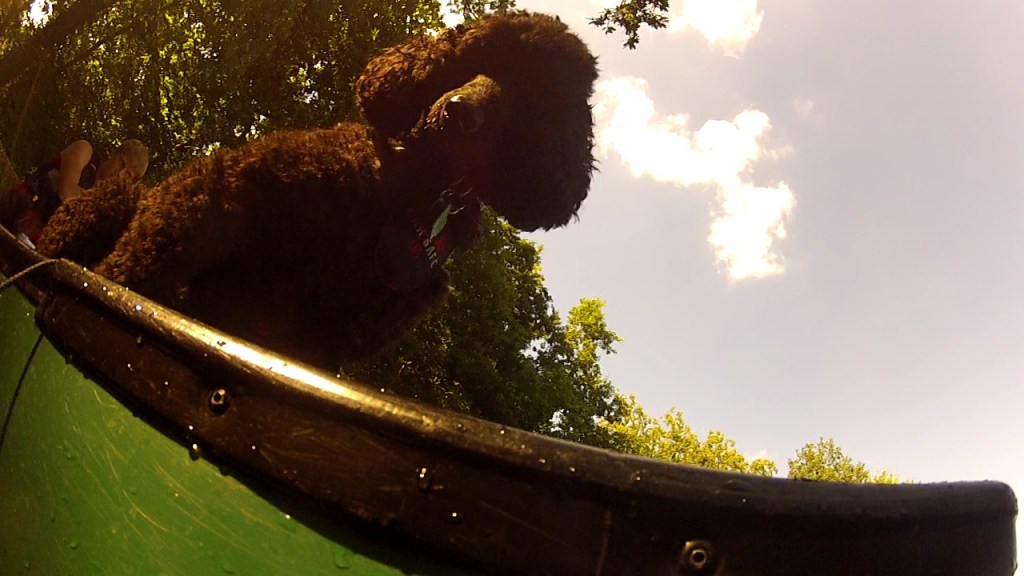
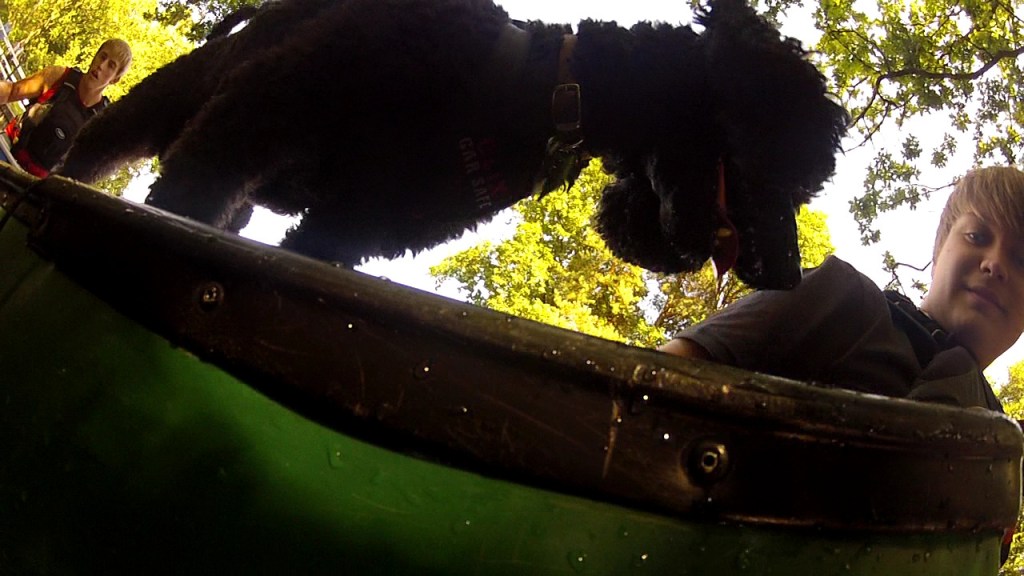
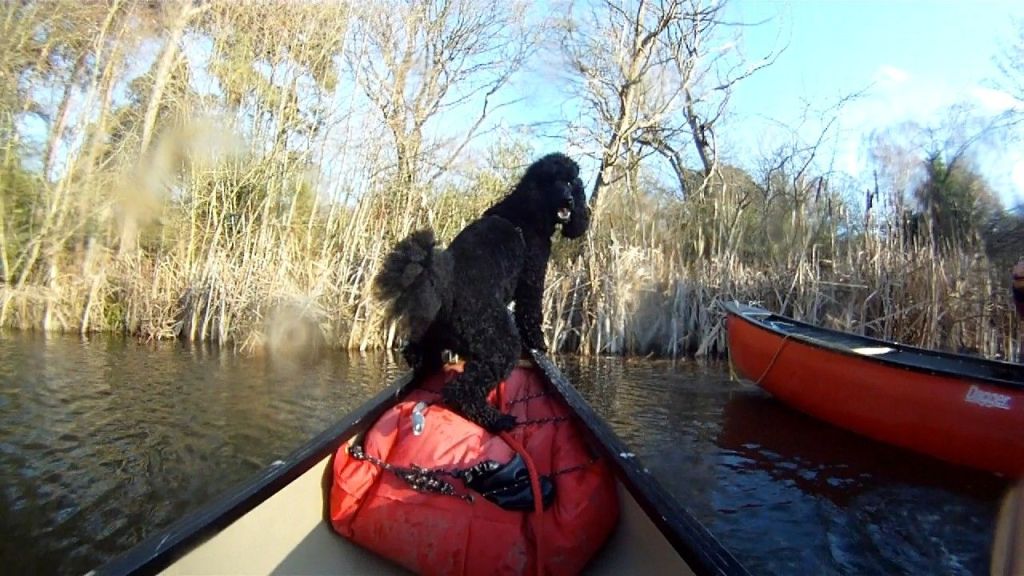
Scout became a regular occurrence down the canoe club (BCCC) often accompanying my dad in an open canoe. He could frequently be spotted with two paws up on the bow of the boat doing his best impersonation of Kate Winslet in Titanic.
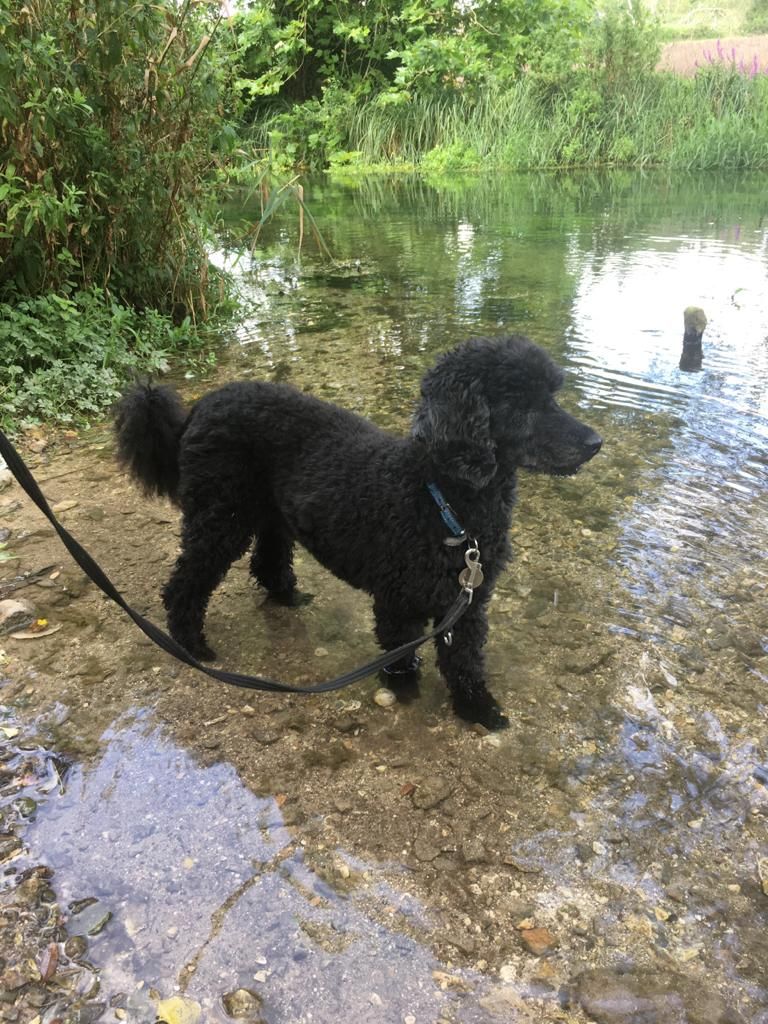
Scout’s other favourite games included nabbing at the water while you tried to paddle, or even better jumping between different boats! He was never a graceful swimmer – looking more like my grandma trying to keep her hair dry – but this never seemed to deter him or reduce the regularity that he (and any unwilling participants) would end up in the drink!
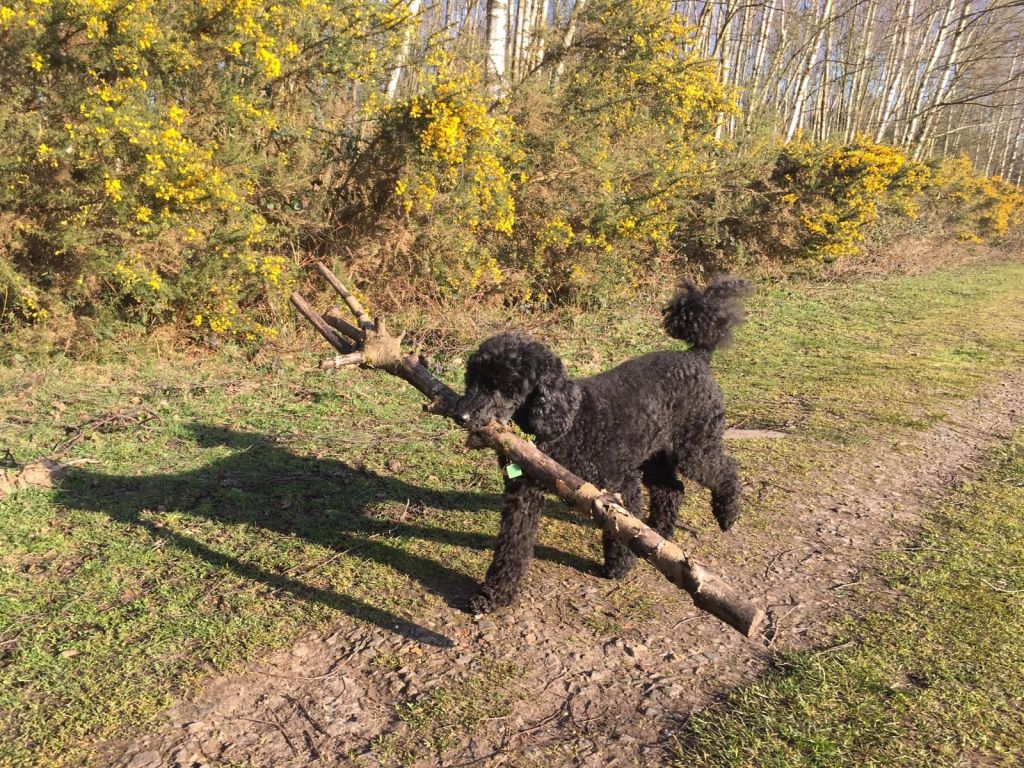
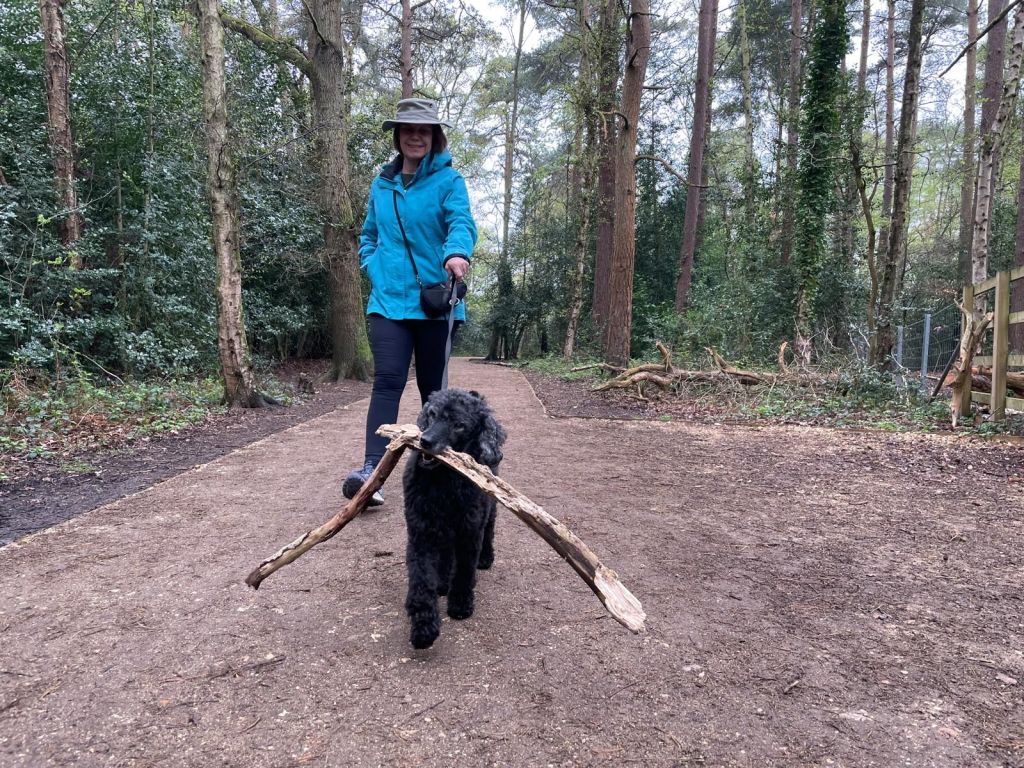
Like any dog Scout loved walks, comically big sticks, escaping the garden (such an apt name), barking at people on the street and just barking at anyone who came to the front door.
Trouble, did not enjoy going for a run. The one time I tried it, Scout gave up about half way round and decided to walk with a more sedated family.
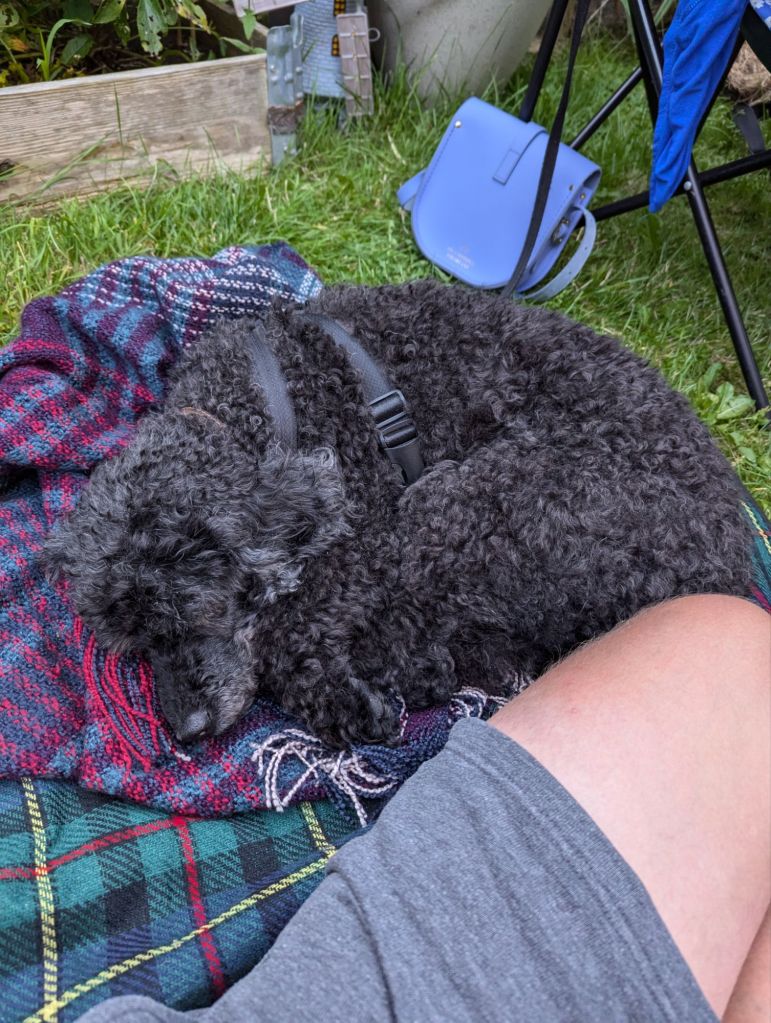
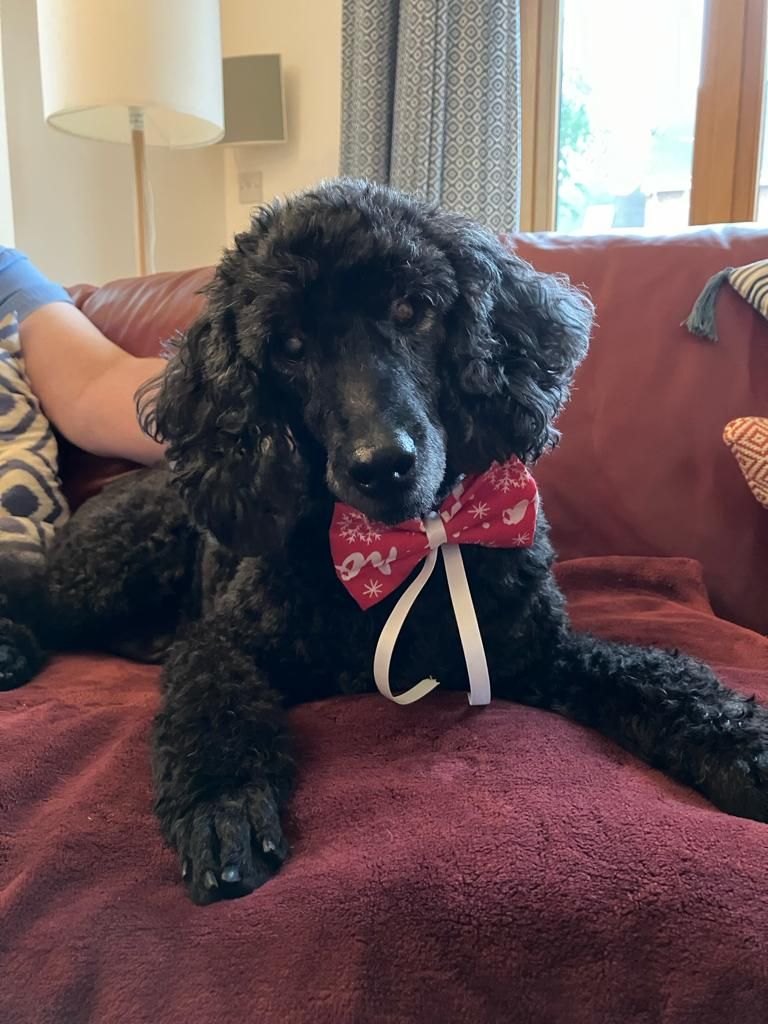
For Scout digging up the dead pigeons the foxes would stash in the garden was considered a delicacy and the sign of a particularly good day. Afternoons and evenings were spent snoozing on the sofa, while demanding eternal belly rubs (He’d paw and grumble at you if you dared stop). Eventually he’d fall asleep occasionally twitching his little paws and ‘harrumphing’ at whatever he was chasing in his dreams, you know, classic dog stuff.
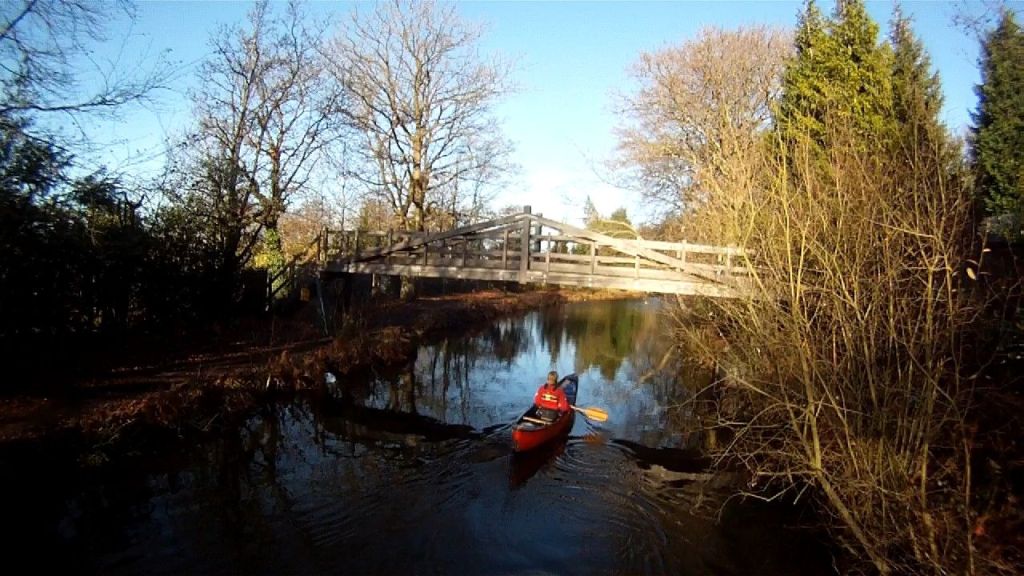
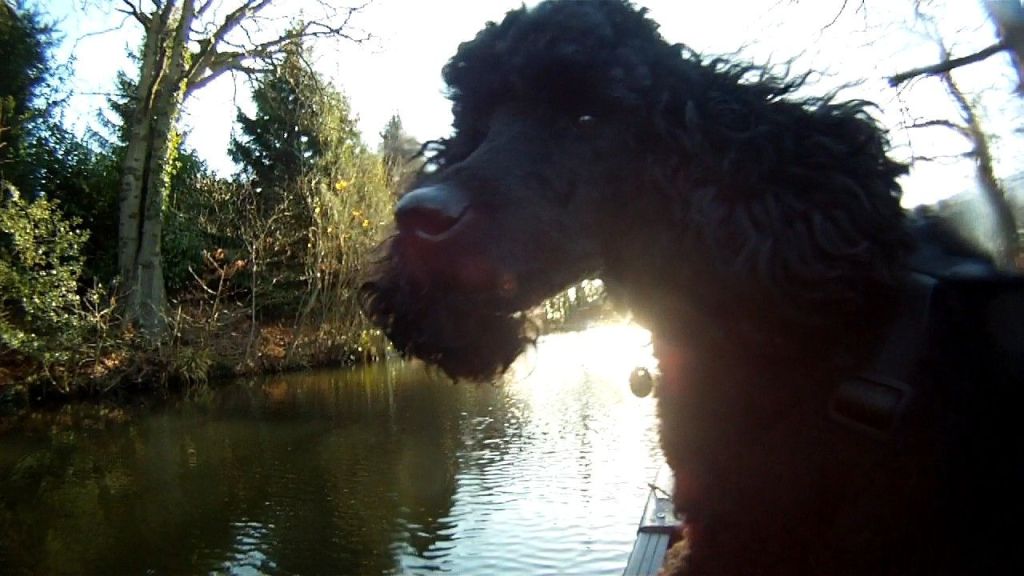
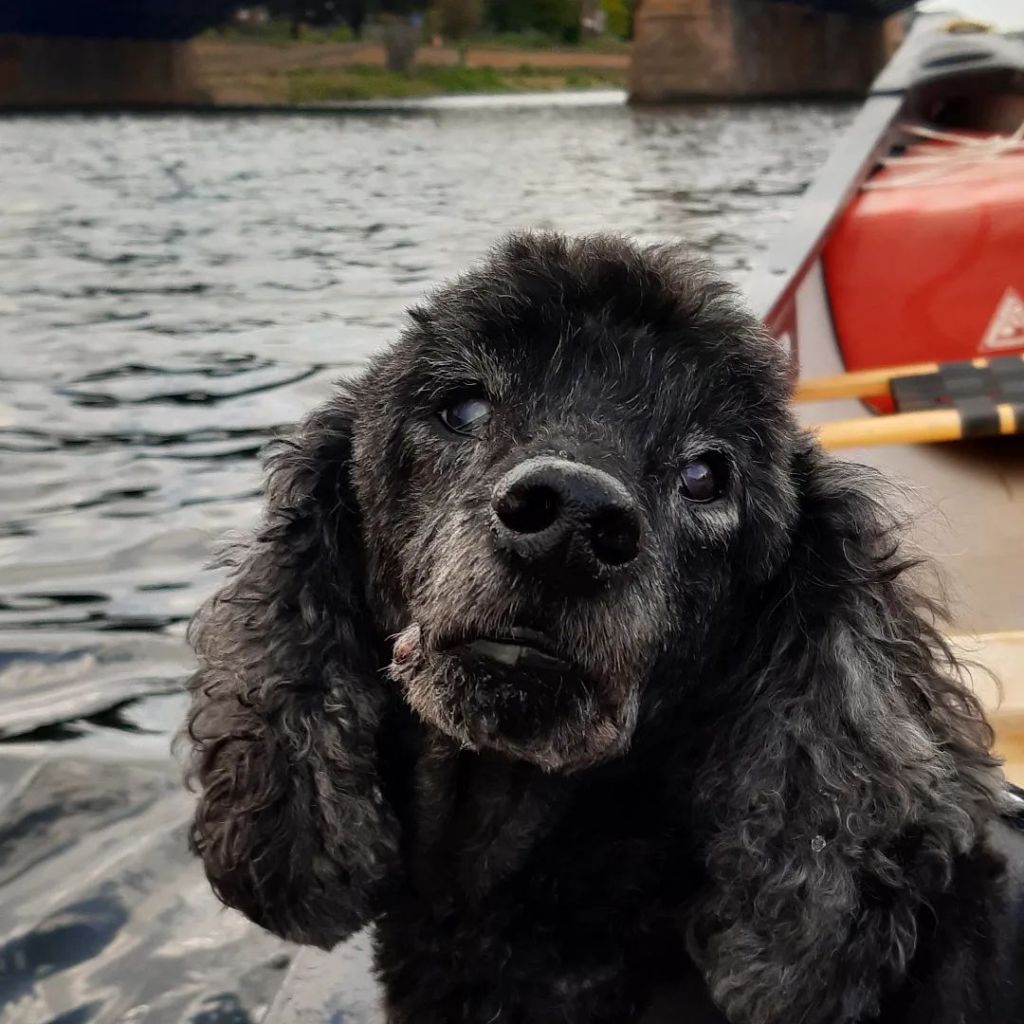
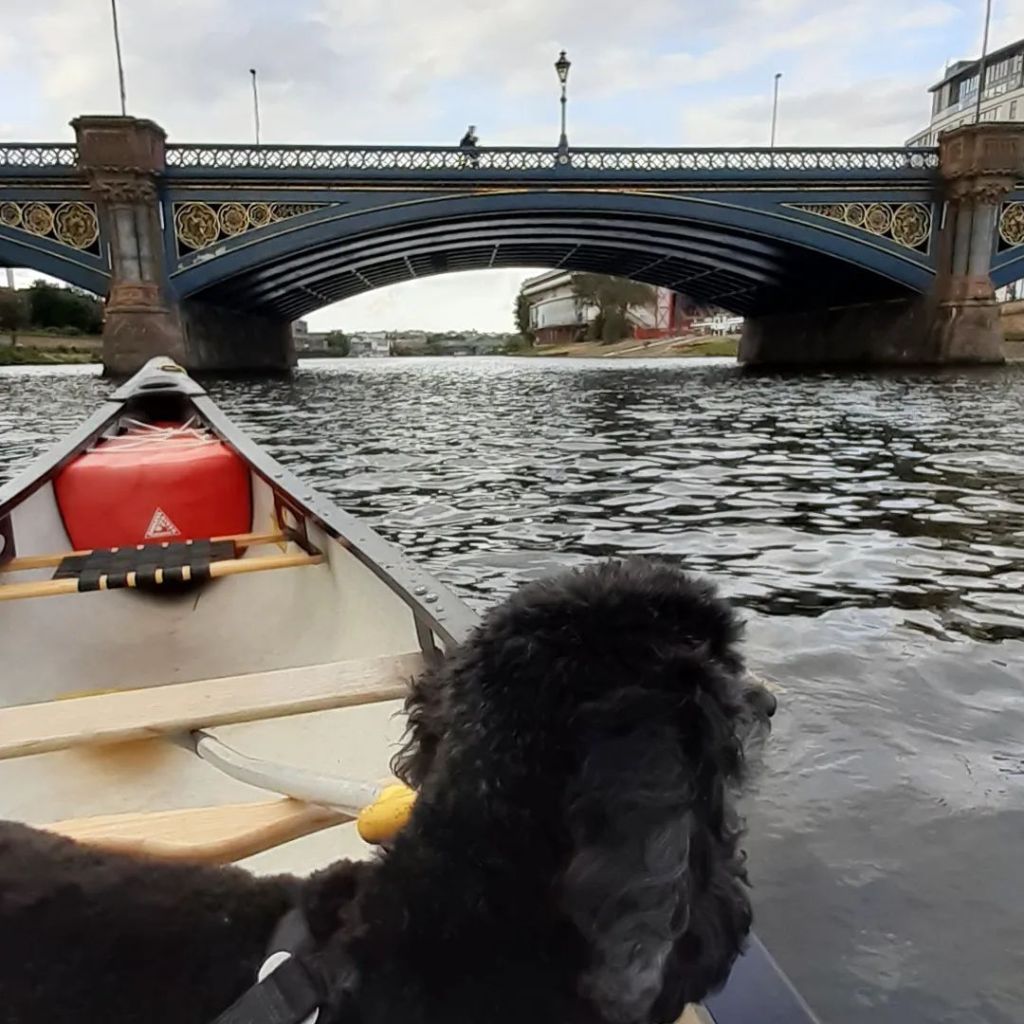
The last time I took Scout out he’d been staying with me briefly up in Nottingham. I took an open canoe out from the NKC and we (or rather I) battled a pretty disgusting headwind up the river to nearly the suspension bridge. A pathetic number of miles compared to my usual outings, but that wasn’t really the point. Scout was just excited to be out in a canoe with me again. Bounding about as if he was a pup again, pulling his usual tricks. At one point I thought he was even going to try a transfer into McIntyre’s K1. Thankfully I remembered to grab a few photos of his greying face looking fucking majestic.
“It’s weird how music peaked when I was most emotionally vulnerable”. I got the sad news while I was up in Manchester – visiting friends and, ironically, seeing a band called Pup (hence the title). The quote which can be attributed to my good friend Andy was made while we were discussing the band’s latest album in relation to their first two. Weirdly their new album “Who Will Look After The Dogs?” seems to be hitting hard all of a sudden.
I got that camera back in the end. I took off the BA and plunged into the cold winter waters again. I was bloody freezing. But, as we paddled home, Scout kept me company.
Scout, and all his trouble, will be sorely missed.
So far on this blog I have exclusively written about white water paddling. While this is a part of kayaking that I love, it is not the only area I have dabbled in. In truth while I have had a shot at almost every discipline in paddle sport I have probably spent the vast majority of my time flat water racing. Or to be even more precise marathon racing. While long races are not quite as conducive to silly adventures as trekking around the back end of Wales, it is fair to say that after 10 years or so I have built up a small repertoire of flat water stories. The following story is one of the more infamous incidents. Like all good paddling stories it involves a helicopter or two, except these ones belonged to the police.
The Haslar race series is a set of inter-club marathon races across the UK. Split into regions, each club hosts one race a year with varying courses for Divisions 1 to 9. This particular race we found ourselves in Oxford. Once upon a time Oxford had one of the best courses mixing the width of the mighty Thames, an array of winding back channels and a portage across a field that would occasionally feature cows as one additional hazard.
Unfortunately we are no longer allowed to race this course. Thanks Jason & James.
The briefing was fairly clear: Downstream, portage the rollers, turn around the buoy then back up the back channels, GO UNDER A CABEL, portage, turn, finish. Simple, easy, impossible to go wrong. Yet even to this day Jason & James extoll the similarities of cables and the hazard tape they paddled through. This small directional derailment snow balled out of control as the rest of the field, who Jason and James had been leading, blindly followed the navigationally inept pair.
As the back channel that they were charging down narrowed, stuttered and became increasingly impassable most sane people would probably come to the conclusion that they had gone the wrong way and therefore should turn around and head back. Most marathon racers are not sane people. They are very determined people. Therefore despite the increasing realisation that they were no longer racing down the correct course they continued to race over a small weir and through bushes and trees. The racing didn’t stop until they came across one surprising obstacle: the Oxford to London high speed rail link.
Repots vary on the reasons why, however what they all agree on is having travelled so far in the wrong direction it was physical impossible to turn around and go back. Thus the only logical response was to cross the tracks and continue onwards, and this is how over 30 boats ended up crossing the rails with only one near miss.
For the other, less navigationally challenged, racers everything had continued uneventfully. That is until the race closed in on the centre of Oxford. It was at this point that the not so soft hum of rotor blades appeared above the city seemingly tracking the paddlers as they raced along the river. Suddenly there was an explosion of boats on the banks as out from the centre of the city rushed the lost division and jumped back onto the water, naturally, still racing.
Having portaged the train tracks and narrowly avoided a collision they had cooperated to raise boats and bodies over a barbed wire fence ejecting the lost division into the centre of Oxford. It was here that the racing resumed but, unfortunately, nobody knew where the river was. One can only imagine the bemused bafflement on the face of the poor locals as a horde of kayakers clad in lycra and carrying their boats descended into the centre of the city, regularly stopping to ask for directions to the river.
Inevitably, having raced the entirety of their scenic detour when Jason, James and the rest of the lost division crossed the finish everyone was disqualified. The police were also remarkably understanding about the whole fiasco and no charges were filed, however we are no longer allowed to race through the Oxford backchannels.
When you get on for the Spean gorge it is usually considered good manners to go ask the shop owner if you can use their car park. We did not do this, but that was because we didn’t find ourselves on the Spean. Instead we were sat in the adjacent tea shop. Despite an optimistic sprinkling of rain the rivers had not risen and Scotland was looking bone dry. The Spean was so low that it was revealing an indecent amount of bedrock. At these levels the guide book helpfully recommended ‘reassessing the sport we were attempting’. Undeterred by this we decided we would head back to our new favourite river; The Etive! …Once we had a delicious mid-morning cream tea.
A quick inspection of Triple Step confirmed our initial expectations. The Etive was low. Dog low. Triple step was going but we were sceptical about the rest of the river which had a remarkable ‘cheese grater effect’ on the boats the day before. This didn’t deter a determined Bristol University who we wished the best of luck as they disappeared off down the river.
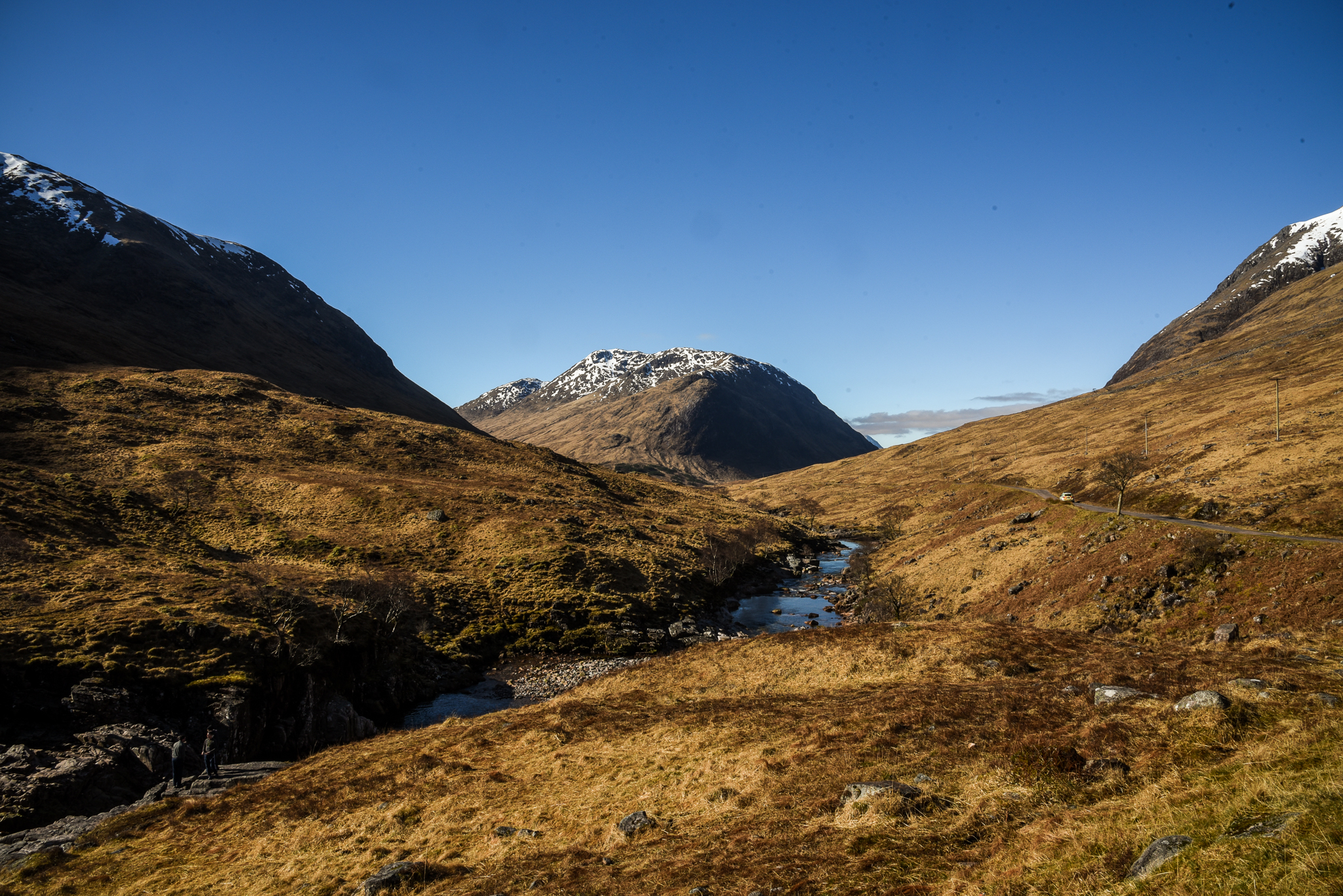
The Scottish mountains are old, older than the furthest reaches of comprehension. They do not expend their energies on the frivolities of spires and sharp peaks as their younger brethren do. Instead they simply rise out of the ocean and sit there obstinate, old and awe-inspiring. They are indifferent to your fleeting existence and this is all too clear as one stands in their shadow.
Our last trip to Scotland did not go to plan and was probably best described by the term ‘compound cluster-fuck’. This year we were keen to reduce the expletives used to describe our trip.
We arrived in much the same way as we had before; at night. In the darkness the mountains were shrouded by cloud illuminated only by our headlights and the ominous glow of the fuel light reminding us of the regrettable decision to not stop off in Glasgow. Despite this when the sun rose in the morning we were greeted by a sight I never believed I would see – Blue sky in Scotland. Looking out across the Loch we weighed up our options and decided with such beautiful weather the Etive would probably be the only river running.
Most of the time when I go kayaking nothing happens. Lines are clean, fun is had and at worst someone might take an embarrassing roll. Even if the river is not that challenging, or the levels are a bit off it is just like Ratty said: “there is nothing – absolutely nothing – half so much worth doing as simply messing about in boats”. And while it is these days that motivate me and drive my love for kayaking there is one thing that they never give, a good story.
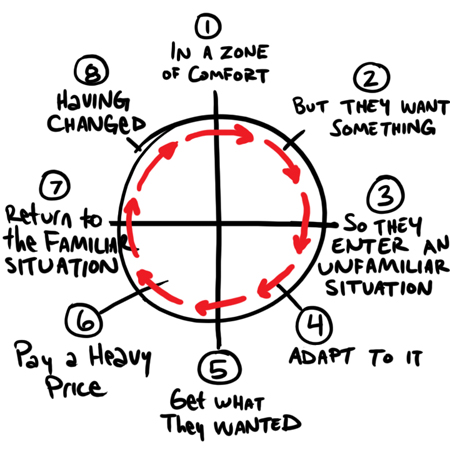
A good story often follows the path of the hero’s journey, a narrative arc that is common among almost every story from fairy tales to Star Wars. The issue with a good days paddling is that it tends to go exactly to plan. There is no call to action, no challenges (bar the ones we sought out), nothing to overcome and nothing really to learn (at least in that seemingly deep existential sense that makes for a good story). In contrast those not-so-good days where events deviate from their intended course have a nasty habit of following this ‘Hero’s Journey’ to the letter. We are presented with problems we had not anticipated or desired and have to overcome them for reasons more interesting than our own personal enjoyment. Consequently we are left with a good story that is enthralling for paddlers and non-paddlers alike.
It is with this context that you can now fully understand my meaning when I say that last years trip to Scotland gave us a lot of stories.
Day 1: Enter an unfamiliar situation
If I were a superstitious man I would have said that an attempt by a lorry to run us off the road before we even reached the boarder was the first sign that this trip was not going to go smoothly. But, I am not a superstitious man.
Eight hours later and we were the last to arrive at the hostel, a lovely little place with its own bar and two friendly owners. Everyone was enjoying amenities and settling in for an early night. Well everyone except for Matt ‘Big Deal’ Brook, who had taken up residence in the hostel’s toilet after succumbing to a devastating bout of Trent belly somewhere around Yorkshire.
When the morning rolled around Matt still hadn’t left the safety of the bathroom, but somehow mustered enough strength to head over to the Universities Creek Race with one Tom Clare while the rest of us had a causal morning preparing and breakfasting ourselves for a run of the Loy.
Tom and Matt’s adventure to the creek race was short lived when they arrived to find the Etive flushing through more water than the bunkhouse loo. Not fancying the chunky levels and risk of involuntary mid race jet propulsion, Matt made a hasty retreat to the bunkhouse and Clare joined us for our run of the Loy.
This was probably the highlight of the trip. Bar the usual beatering and the spontanious disintegration of Snape’s new dry suit everything went smoothly and was generally enjoyably to the point where there is not much to report on. Unfortunately this bliss was short lived. Next up Polldubh
Polldubh is a waterfall, probably the highest I had run at the time and much like everything in Scotland at this point was on sizeable level. Despite this there was evidently a line and we were going to paddle it. In retrospect the execution of some of these ‘line’ was quite questionable but for my part I’m proud that my entry into the falls was spot on however what I did next can only be described as a Poll-durp. In retrospect, looking at the photos the boof stroke should have gone in on the left, compensating for the sizable deflection off the boil on the lip. But hindsight is rarely of use as one pencils off a drop destined for Atlantis.
Poll-durping off Polldubh
Dry suits are great. However it was at this point that I discovered mine wasn’t as dry as previously anticipated. This slight leak through a newly discovered hole somewhere around my bottom was further indication that something wasn’t quite right as I still couldn’t find the surface, tucking ready to roll once I finally arrived. The thing about a Deck implosion is that the bow of the boat will fill up with more water than the back causing it to sink deep. Therefore no matter how long you tuck forwards for, you will never find the surface. It took me quite a long time to realize that this is what happened.
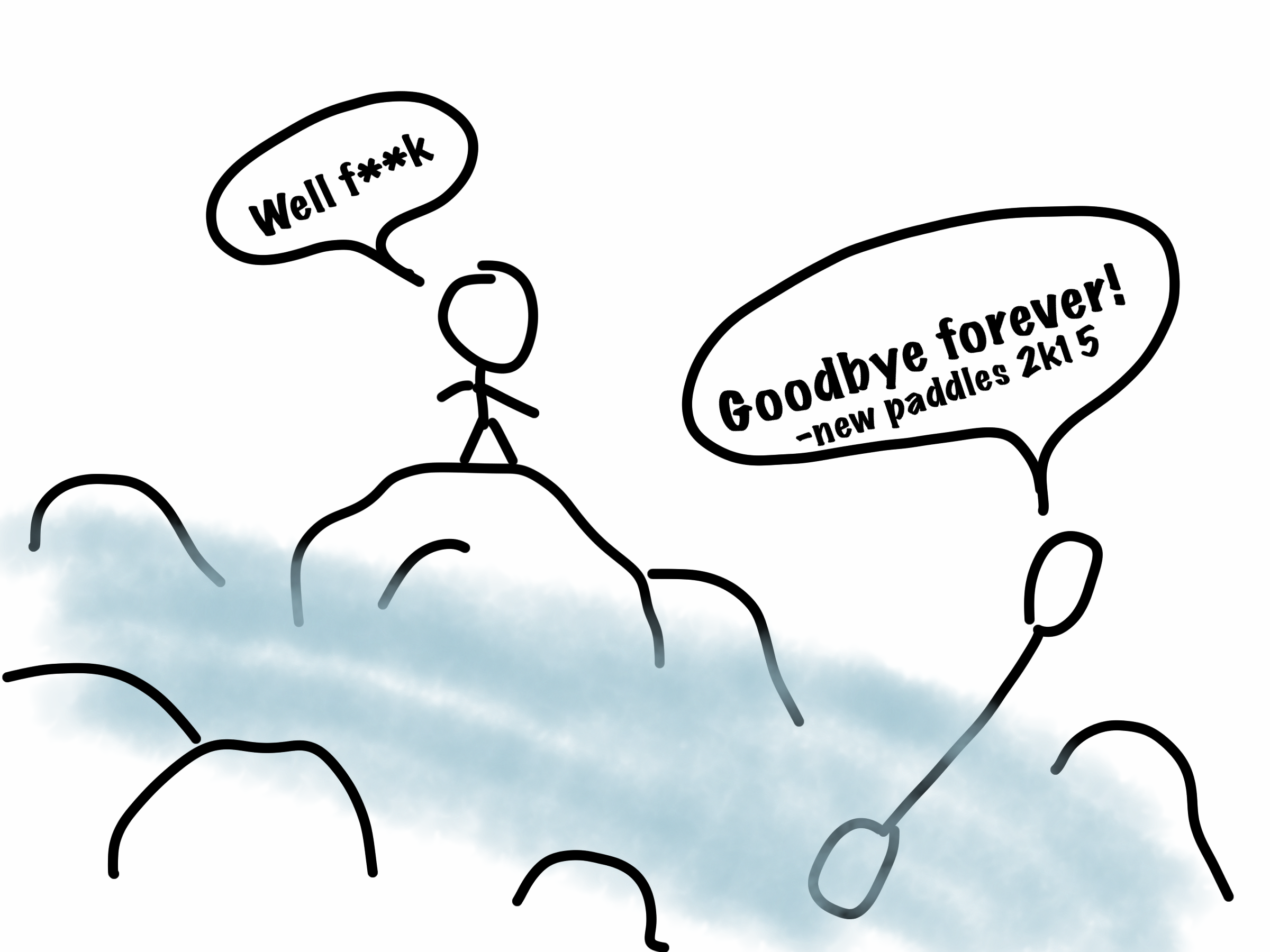
Lesson 1: Don’t be too lazy to set up safety. Its sods law, and we decided that we didn’t really need a line if we had another boat at the bottom of the falls. This is a decision that I thoroughly regretted as I separated from my boat and began a long swim down a gorge. Lesson 2: Practice your throwline skills. There was one opportunity for a bag during my swim and I watched wistfully as the bag flew through the sky trailing rope in a fruitless direction. Eventually I got myself to the side, and we found my boat perhaps a mile later pined on a shale Island. Unfortunately the gopro that had been mounted to the bow was never seen again.
Mistakes are made on rivers. The important thing is that we learn from them, and so instead of going for a round two or dashing off to another river we spent the rest of afternoon practicing safety and rescue techniques. This was a smart decision as we soon had some more ‘practice’ tomorrow.
Day 2: What they wanted?
You may have heard the Zet kayaks are indestructible. For the most part this is apparently true. Tom’s raptor has suffered all manner of abuse and still refuses to die. Ant’s raptor did not share such dogged determination. The Spean gorge is a classic piece of Scottish grade 3/4 it is therefore of little surprise that Ant managed to put a sizable crack in his boat on the shingle grade 2 run in. The day was already off to a sketchy start.
(I should also say that the kind guys over at Zet sent Ant a new shell to replace the cracked allowing Matt to break it in Madagascar.)
With damp and cold duct tape struggling to keep Ant’s boat water tight and Matt, today braving his boat, dashing off the river and up into the bushes every 200m we made a sorry sight as we got into the full swing of the gorge. Once again the paddling was fantastic and it was easy to understand why this section is an absolute classic however just as we were coming to the end of the gorge disaster struck. Portia hurt her back and swam in agonizing pain.
Thanks to the previous days practice Ant’s line was spot on target and he had Portia out of the water in mere moments. All kit was collected, bar one throwline which was never seen again and everyone was out of their boats and we were assessing our situation.
It is possible to ‘walk’ out of the Spean gorge, but it is not easy, we needed help. A quick scramble up to the side and a call to mountain rescue and everything was set in motion. A friendly police officer arrived at the top of the gorge to oversee the situation and mountain rescue descended in to help carry Portia out of the gorge.
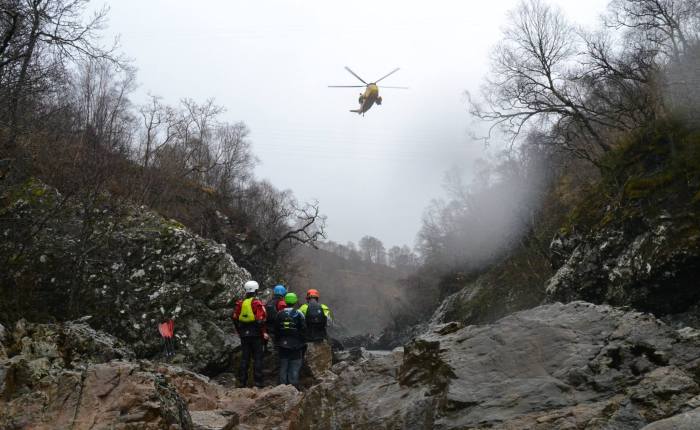
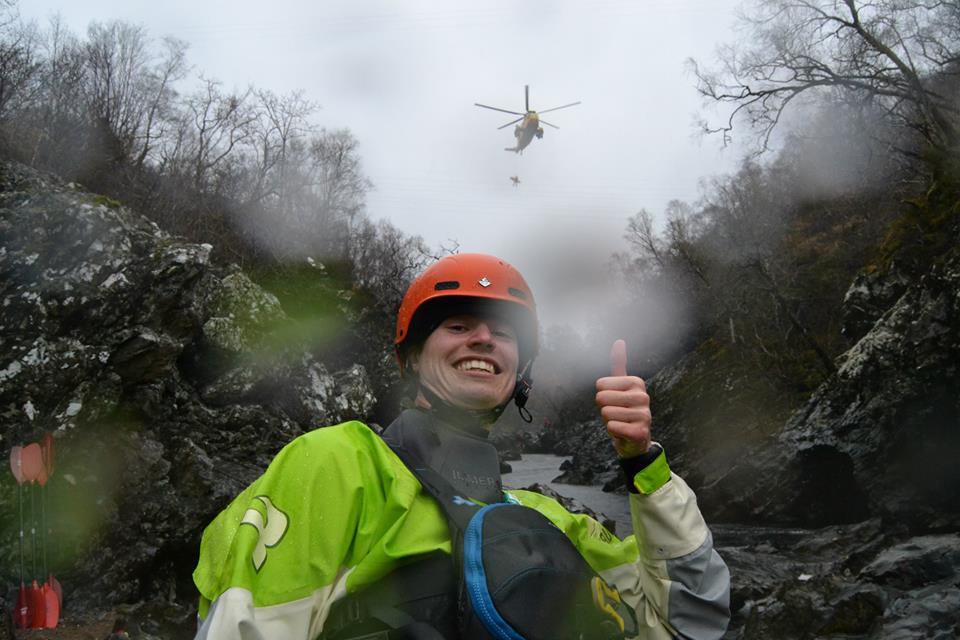
With everything under hand and rescue under way a faint beating sound started to grow louder. Before we knew it, hovering above our head, a yellow Sea King helicopter, the RAF search and rescue chopper had appeared. With 3 days of service left before the operation was privatized they had been on a ‘training’ mission one valley over and had picked up the radio chatter and kindly flew over to see if they could assist. This is how Portia got a free helicopter ride back to Fort William hospital and how Snape got what has to be the best profile pic I have ever seen.
Best profile pic EVER!!!
After two rough days we were all a bit put out and returned to the hostel to drink beer and chocolate milk.
Day 3: Pay a heavy price
The next day was our final day paddling the land of the brave, so we did what anyone would do and head to the Etive. Because what is a trip to Scotland without paddling the Etive?
We rocked, weather as grim as it had always been, and found a sizable ‘but not stupid’ flow passing through triple step. Learning from past mistakes we set up our safety and Matt cleanly demonstrated the line. This would be the only clean line through the whole affair with successive attempts by Tom, Matt and I all involving involuntary inversion, usually after the first drop. Snape decided to take this a step further and attempted some ‘play boating’ in the hole formed by the second drop. This was a bad idea, but not bad enough to stop him from trying again on a second run. The beatering continued as Veasy converted his raptor into a yellow submarine by plugging the third drop which Sophie preferred to treat as a water slide without her boat. ‘Enjoyable’ was not one of the terms used to describe her visit to the green room or the later return visit to Fort William A&E after head butting a rock. Sophie was fine but the repercussions of concussions are not enviable.
After this collage of carnage we decided to head over to right angle. Matt, Tom, Snape and I would paddle and everyone else got off. Floating down a flat-ish section of the Etive, eating my river cake, I was unprepared for what followed.
Nottingham’s ‘team IR’ on the Etive
The first post I ever made on here was about the ‘describe and run’ technique of running grade 4. This technique can be both a blessing and a curse, with the curse part coming into full swing as we approached ski jump. Like a muppet I missed the important eddy just above the feature, a trick I hadn’t pulled for years’. This left a surprised and resigned me heading over the left hand side of the slide like drop. Ski jump is a river wide slide-y drop into a hole with a weakness on river right side. The important thing to note here is that the ‘boof-left principle’ doesn’t apply here, something I felt I had firmly and scientifically proven as I was dragged back into the hole. This lead to a swim, a re-circulation, a brief adventure to the bottom of the Etive and a few minutes to catch my breath. In these few minutes my boat enjoyed several more goes in the hole before it chose to eddy out next to me and the others who had now successfully styled the right side (in every sense) of ski jump.
This should probably have been the end of the affair, there is a large section of flat between ‘Ski Jump’ and ‘Crack of Doom’ however in an incredible turn of events we failed to get the boat out of the river before it disappeared over the horizon. A large thud later and we watched it from the side recirculate just out of reach in a frustratingly close eddy with +1 dent before it plucked up enough courage to continue its solo decent of the river. The chase was on and a mad dash on foot along the bracken banks of the Etive began, jumping over fences and slipping in mud like some kind of macabre cartoon. Sadly the boat was too fast and we had to continue the chase by car.
“Lime green Mamba, usual bumps and scratches”
We caught up with my now slightly shorter Mamba somewhere bellow right angle where it had finally pinned on some rocks near the side of the river. With a bit of persuasion we unpinned it from its resting place and lugged it back up to the road, inspecting the damage. I had all but given up hope of finding my paddles when they daintily floated past and we resumed the kit chase down and I was reunited with them in an eddy just below the confluence with the Allt A’Chaorainn.
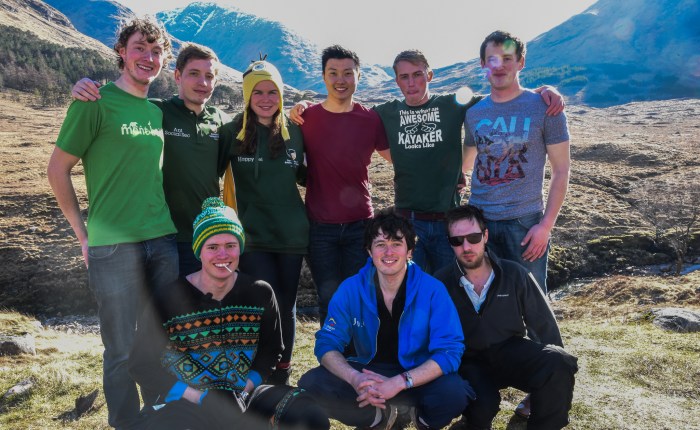
In total the final tally for 3 days in Scotland was:
1 x throwline
2 x drysuits
1 x gopro
2 x boats
1 x back
100 Acres of forest for loo roll
Having Changed?
Some trips go well, some trips go not so well. Some trips end up like THE Scotland trip. It is important that we take the mistakes made on these trips and learn from them, but it is also important that we embrace the stories of times where things didn’t go entirely to plan. They are humbling, they remind us that we are not invincible and most of all they make great tales to tell down the pub.
I pen this post from Scotland, where we have bravely returned. In contrast to last year I have just had one of my best days ever paddling back on the Etive. Scores have been settled, and I now look forward to telling some (hopefully not so eventful) stories in the near future
I was always intending to do a few posts on shoulder injuries, having been unfortunate enough to build a veritable wealth of experience over the years. I had even started penning an article beginning with a tongue-and-cheek account of how a friend of mine, Tom Clare, had recently found himself standing on a rock in the middle of the Aberglaslyn gorge having just suffered an injury himself. Unfortunately karma didn’t find this story amusing enough.
Tom having fun on the Aberglaslyn gorge
Usually the first thing you notice when you dislocate a shoulder kayaking is that you can’t breath and are upside down. Then you might start to notice that your shoulder feels a little weird. The act of dislocating itself is rarely painful of its own accord; rather, it is the bits that follow which are exceedingly unpleasant, something that I was very aware of and already planning for as I popped my deck and swam out of my boat on the Tawe this Friday.
Screwing up a boof I had fallen sideways into a high brace, leading to the inevitable. This however was unimportant as the more immediate issue was that I was quickly floating into the next slide with only one arm. Now I’m not an expert at swimming down rocky slides but my experience of going to a water park with a broken arm when I was 10 has taught me that it is unlikely to be a comfortable experience. Fortunately I had my friends on hand to haul me into an eddy before I could confirm my hypothesis.
Sat in the eddy with the water comfortably supporting my arm there were now two options: 1) Traipse to the hospital and ask politely for a professional to relocate the my shoulder or 2) Attempt to put it in ourselves. At the thought of a long walk across rough ground to the road and then an even longer drive I chose option 2. There are multiple techniques of relocating shoulders which I’ll let you Google in your own time but the key for most of them is to relax all the muscles in your shoulder and push your shoulder blades together while the arm is manipulated, until the shoulder pops back in. It is a fairly simple concept but far more difficult in practice, particularly while sat in an eddy. The matter is further complicated by the fact that there is only so long you can comfortably sit in an eddy in mid-January and with a chill beginning to build it was decided to move me out of the river and to call an ambulance to take me to the hospital.
The task of moving someone with a dislocated shoulder is not an easy one unless you are willing to subject your cripple to crippling amounts of pain. Having suffered an unfortunate incident in the Alps not too long ago where we banked on speed over caution, I decided I didn’t want to face such an ordeal again (Hint: Rally style driving is not comfortable or fun for those with dislocated shoulders, especially round roundabouts).
First off Snape prepared a comfortable foil blanket bed in a flat-ish area of grass and then we skilfully removed my BA to allow me to lie down in the closest thing to a comfortable position. Moving then entailed Dom and Veasy supporting my otherwise flailing arm while Snape helped me up and across the uneven ground towards my shiny nest. Once in the nest I was stuffed with a chocolate bar, wrapped in yet more foil blankets before being thrown in the oven. Having beaten off the threat of hypothermia and with the ambulance en route we decided that we should press on with the epic trek to the road. This was approximately 200m. Despite this fact it took us approximately 30 minutes to complete this monstrous traverse, braving bracken, twigs and at least 3 puddles that stood in our path. All the while my limp limb remained admirably supported by a tag-team of my comrades.
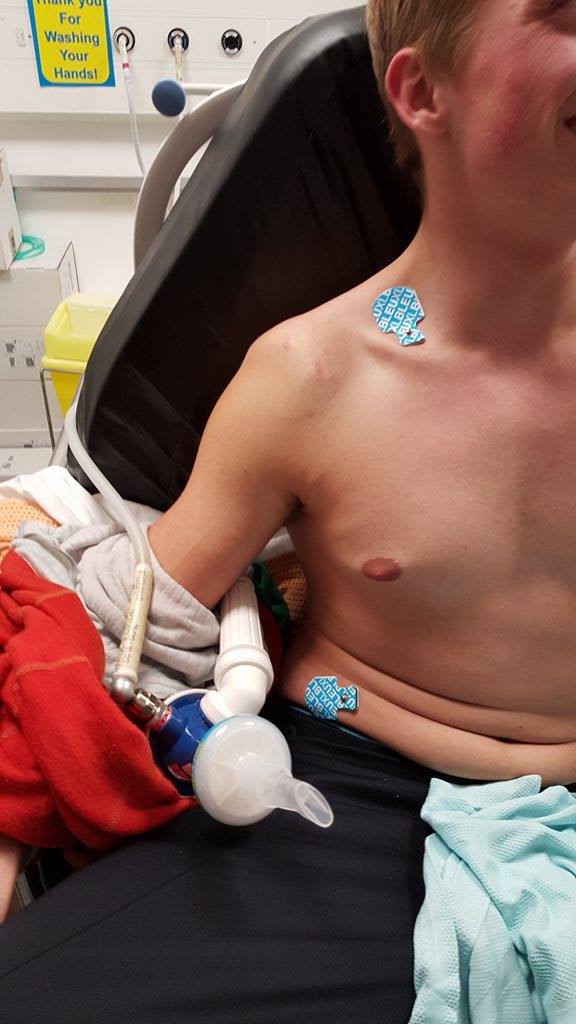
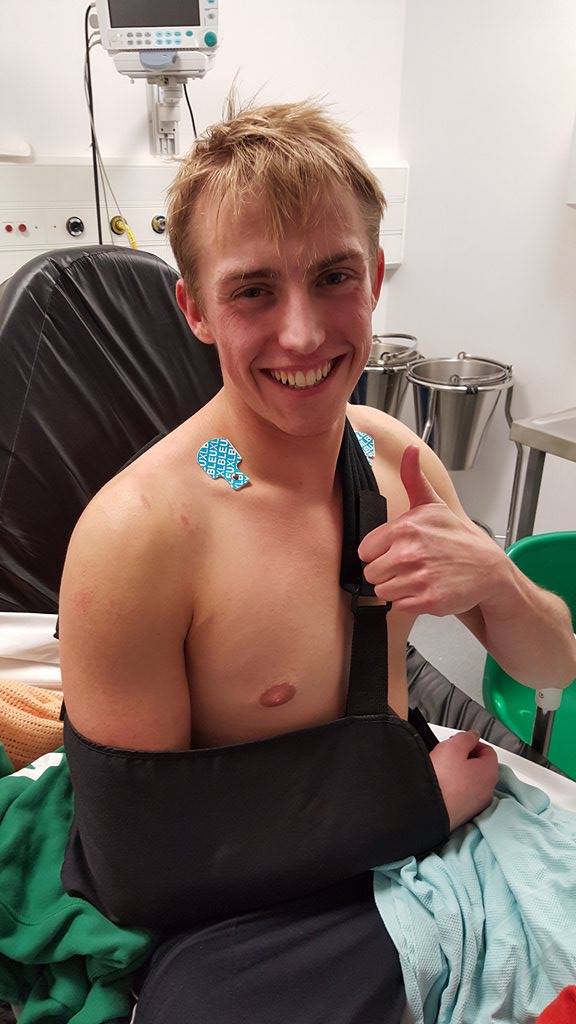
Fortunately by the time we had made it the few hundred meters to the road the ambulance had arrived although they didn’t seem all to impressed with the grimacing damp and muddy mess that was now struggling to clamber into the back of their vehicle. Once I was in, sat down and we had gone through the awkward process of removing my drysuit, I was attached to an ECG to make sure I wasn’t dead. Having confirmed this the ambulance crew precoded to ask me which shoulder I had dislocated and if it hurt; at this time I sat there grimacing while my right arm hung in a peculiar position. Once this vital paperwork was complete we enjoyed a sedate drive through the Welsh countryside to Swansea A&E. Unfortunately there were no blue lights.
Now you may be wondering if all this faff is involved with an ambulance, why bother? Yes, you could indeed drive yourself and arrive sooner. But there is one thing you don’t have in your car (unless you make your own whipped cream), a copious supply of gas and air. Nitrous oxide, commonly know as laughing gas, will make the journey a lot more tolerable for the invalid in question, and give them a good chance to work on their Darth Vader impression.
By the time everyone caught up with me in the fracture clinic I had more or less perfected my dark lord imitation, however my growing allegiance to the dark side of the Force had not inspired contact from any of the hospital staff. I could now talk about how the NHS is being underfunded, the immense pressure being placed on junior doctors and how the whole system is being set up to fail so it can be sold off. Unfortunately this is of little condolence while lying in a hospital bed and instead I amended and read a document entitled ‘Why I have to wait’ to my captive audience. With arm now attached purely by my increasingly sarcastic sense of humour, search parties were sent out to find nurses, food and beer (although not necessary in that order). The result of this was only bad news. First, there was a Subway on site but I couldn’t eat until I was discharged. Overshadowing this though was the small issue that according to the system I was still in the back of an ambulance! Worst of all, there was no beer!
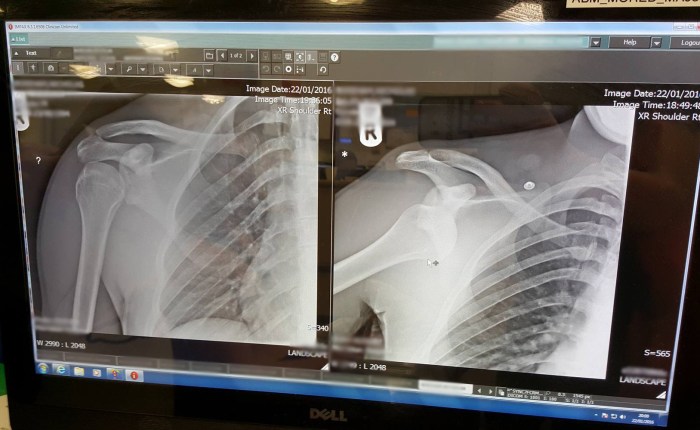
Owing to Tom’s investigatory skills, I was ‘moved’ into a bed despite having been in one for 2 hours and then bumped up the priority list so I could be removed from said bed. Once you have been seen in a hospital the process of seeing to a dislocated shoulder can be less than 45 minutes. 1st an x-ray is taken to prove your shoulder is dislocated, then everyone agrees that it is dislocated, the shoulder is relocated and then a final x-ray is taken so the doctors can admire their good work. The doctor working on my shoulder this fateful Friday was a young junior doctor and it was her first relocation.
Something is not quite right with that shoulder…
Now I have been reliably informed that I took a small liking to this doctor, a fact I can neither confirm or deny. I was glad to finally be seen to and have my shoulder popped back in. Although Tom put it as: “Stopped being a whiny sarcastic bitch” and “chirped up a remarkable amount”, all I remember is getting a good laugh when I stated that ‘a chocolate bar’ had been my only pain medication!
Learning medicine seems like a daunting task far beyond me and, from living with a medic for a year, quite stressful. Luckily for the junior doctor that day, both the nurse and I were experts in the procedure of relocating shoulders which consists mostly of massaging, laughing gas and a healthy bit of tugging to achieve the relieving moment where everything finally clicks back to how it should be. The moment where your shoulder is relocated after several hours is perhaps one of the greatest feelings in human existence (that said it’s probably not worth the hassle of injuring yourself in the first place). I’d like to thank all of the NHS staff and volunteers who helped me and more impressively managed to put up with me being a “whiny sarcastic bitch”. I swear it was the gas…
Shoulder now relocated and everything is okay with the world.
After almost 4 hours in the hospital we had my final set of x-rays, took a couple of pictures, managed to grab a subway just before it closed and headed home. We did however miss the uni club’s pool session that we were all supposed to be attending and the trip to Ocean following it (sorry).
Again thanks to all the staff, volunteers and my friends who all did a great job helping a stupid muppet.
Written by Nick Boreham, kindly edited & corrected by Matt Brook.
We are just now entering the coldest months of the year in the UK. The period where the weather refuses to recognise that the winter solstice should mark the turning point back to the warmth of summer, instead choosing to abruptly dump a pile of snow mid April. At this time of year you should wrap up warm and maybe even break out the pogies, though one should never complain about the temperature!
Those who have complained about the chilly temperatures to me have all met the same fate. They have all had to endure this story of mine, a story that I’m sure some of my paddling comrades could now recite off by heart.
It was the back end of 2010, we were off to paddle the river Wye, and by some miracle I had just received a pair of dry trousers to complement my questionable semi-dry cag. I was very excited at the time to possess the power to wade into the water without catching hypothermia like a bad Aquaman. Unfortunately this was not a power I would get an opportunity to test.
It should be expected for it to be a tad cold on the water when running the shuttle with a fine layer of snow on the ground. When you are measuring this fine layer in feet you may want to consider going skiing instead. Without any skis we experimented with snow boating but after briefly lodging myself and boat in the branches of a tree we thought we may have more luck on the river.
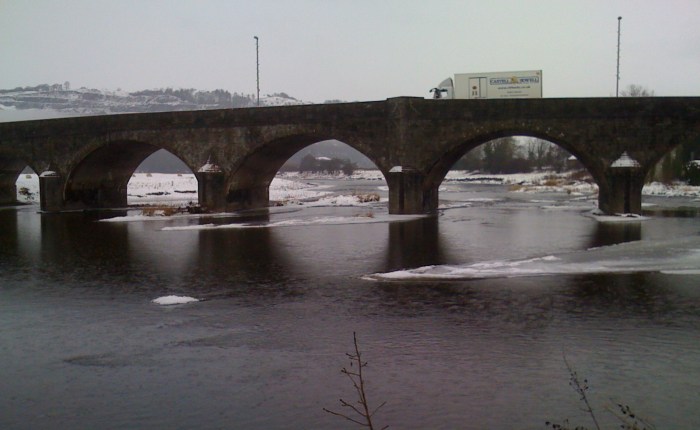
A river in winter is a truly beautiful place to be. Water freezes around rocks leaving icy Saturn-like rings when the levels drop. However, should you ever witness this spectacle you may want to bear in mind that it will have been cold enough for the river to freeze in other places such as eddies, banks or even across its entire width. Something we would discover as we rounded the second meander. The water was still and the ice thick but it only stretched less than 20-30m. We rammed the heaviest boat in our flotilla, an open canoe, up onto the ice with one Brian Biffin pushing the boat from behind to check the ice. The rest of us followed in our kayaks, bum shuffling across the ice like deformed penguins.
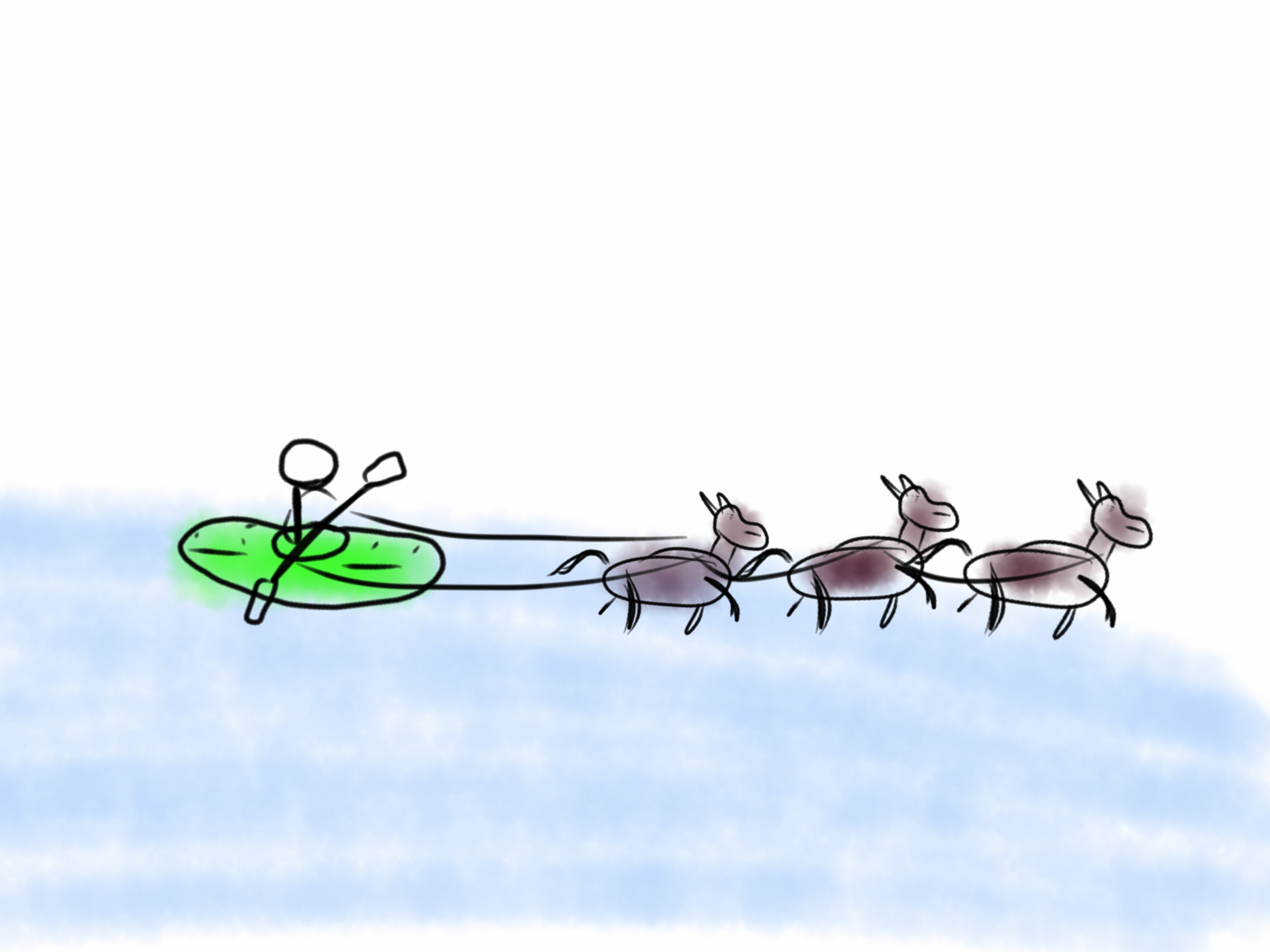
Future expeditions should consider taking a pack of huskies.
This alone would have made a good anecdote. “Hey do you remember the time that river froze?”- Person 1. “Yeah I told you we should have brought huskies” – Person 2. Unfortunately once you have to go through this process 3 times the deformed penguin impersonation grows cold. Yet even this would have been fine but our 4th encounter with the ice was a different affair. The river, having gained water from some small tributaries, now possessed a flow. As the 4th ice blockade came into view it became clear that the newly acquired flow had decided that the best course of action was to travel under the ice. We firmly disagreed with this decision.
Driving our boats onto the ice sheet at the edge of the river we egressed on the left bank before the we entered an icy ‘V’ that led straight to the blockade’s sub-glacial Narnia. Inspecting on foot, the ice lead on out of sight. The day was drawing on and now less than a few km down from where we started we were beginning to lose light. We had to get off the river. The road however was on river right.
This time on our great crossing of the river we had no desire to take chances dealing with the additional flow under the ice. Trailing a throw line Brian once again set off in his canoe chartering a route across the Arctic wasteland that the Wye had become. With this line we then set up a guide for us to pull ourselves across in our kayaks, one at a time to avoid simultaneously drowning should fate decide to make our day any worse. This was quite a long haul, but eventually we all made it to the the other side of the river and celebrated our success… at least until we realised that the road in question was now up what the Welsh would call a mountain.
Now Welsh mountains are not that large on the mountain scale but they are still large enough on the: “There is no way I’m carrying my boat up that, let alone an open canoe” scale. Especially when they are covered with a good foot of snow. However on this occasion, with darkness closing faster than a door in the face of a Jehovah’s Witness, we had no other option. Kayaks are designed predominately for going down rivers but tend to keep the desire when confronted with a hill. This desire is so strong that they are capable of rebelling and forcing their accompanying human along for the ride in order to fulfil it. Battling on against these insurrections night had fallen by the time everyone had made it up to the road. We set up camp in a survival shelter, Brian making a brew on his stove while a friendly farmer gave the drivers a lift to our cars. Quest complete we retired to our bunkhouse for a hearty dinner and much-needed booze.
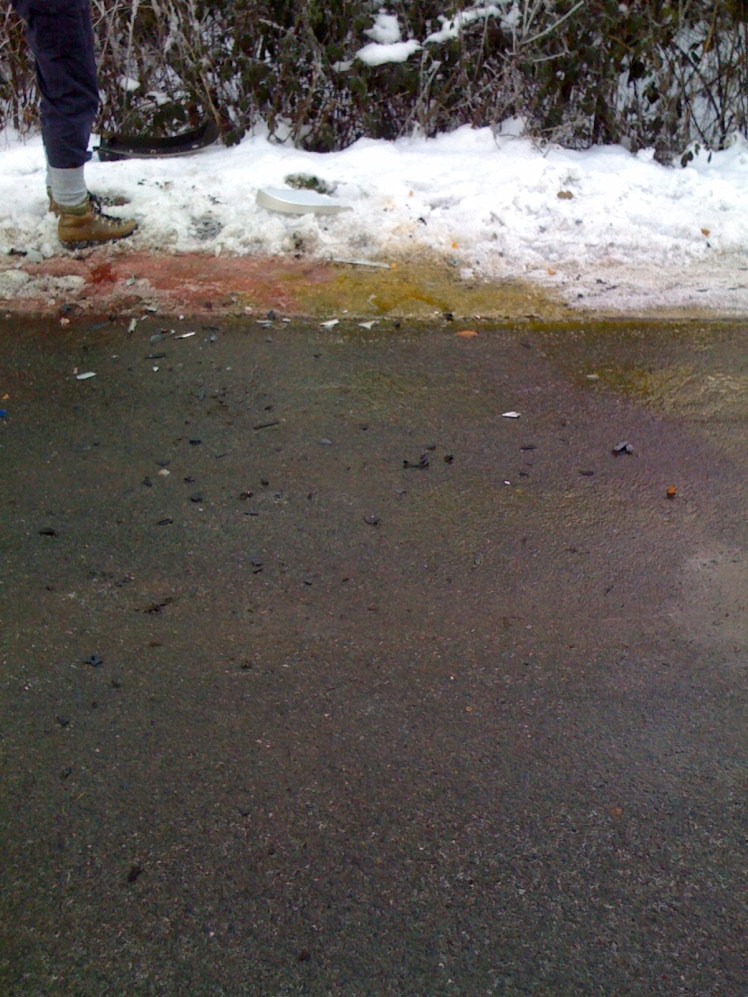
The next day we returned to the river and hiked along it’s snow covered banks to see what we would have encountered had we ventured on. The ice continued for miles, more unbroken than not. According to locals, temperatures had dropped below -10°C before our arrival. It seemed our trip had been foolhardy from the beginning. Climbing into our car, defeated but intact, we acknowledged our silly decision before sliding down sheet ice into the bull bars of a Toyota 4×4. As red and yellow radiator fluid pooled on the road below the two vehicles my Dad turned to me and said “Wye did we bother?”.
Who knew radiator fluid came in such pretty colours?
2012. That was the instruction as we dropped into the second half of the Château Q gorge. As my dad quickly discovered this was not ‘that far’ right.
The rough description of grade IV is that you need to know the line. This could be due to the line being fairly complex, or because of an ‘interesting’ consequence, or usually a bit of both. The more exciting way of paddling IV however is to not know the line but to be given a brief outline of it as you sit in an unstable eddy a couple of feet above a blind horizon line.
I recently had the pleasure of loosing my Upper Dart virginity in the presence of one Jack Grace (also an Upper virgin) and a good friend of ours ‘expedition paddler: Matt Brook’.
Matt is one of those people who is always a joy to paddle with. Whether your just bimbling down grade II or nervously peering over the horizon line of Euthanasia there is always a joke to be shared and a laugh to be had. This was exemplified on a flat section just below Dartmeet as we flared off the only rock we could find. Okay Matt flared. I completely misjudged the angle and did something more akin to a pin trending towards a generally capsized style manoeuvre (which I still maintain was entirely intentional).
After a quick hand from Jack to exit my moderately damper-than-desired inverted rock embrace, and having consumed my daily dose of beaterbix, we continued down the river.
A standard time for a lap of the Upper Dart is usually reckoned to be between 2-3 hours depending upon the group size and ability. We smashed out our run in about 1 hour and 25 minutes, hunting out all the best boofs, flairs and fun lines thanks to our ‘describe and run’ technique. One particular favourite moment of mine was when we slipped through a small channel between islands emerging just above a suitably sized hole. While I may not have fully accomplished the task of ‘moving across and riding the curler’, opting more for a snorkelling technique through the hole (again entirely intentional), the joy to be found in this style of paddling is rapidly figuring out your cryptic instructions as the river is revealed to you. If you are lucky you might just achieve this with enough time to execute your finished puzzle.
Through the island, across the pillow, into the hole
Obviously this type of paddling is not for everyone. It requires that everyone is competent enough to figure out the lines on the fly and that everyone is capable of getting themselves out of trouble when they don’t. Oh, and you need at least one person to know the river well enough to not send you into some sort of monster hole/syphon/shark. But I would definitely rate it as one of the top ways of paddling new rivers simply because it is exciting, fast and fun.
(Side note: ‘Laps’ of the Upper Dart have been know to take 8+ hours and may result in 2-3 helicopters and the incineration of a first aid kit, however this is a story for another time.)
To my surprise I found myself welcoming in this new year less than a mile away from where I started paddling over 10 years ago. At this party I surrounded by 1 part familiar faces, 2 parts people that I had met but couldn’t remember and 7 parts complete strangers. This, coincidentally, was roughly the recipe for the strange vodka, martini and rum ‘cocktail’ that I found myself to be drinking. It was here quite tired (after 3 days on the dart) and moderately tipsy that I found myself being introduced to the 7 parts complete strangers as “Nick: The guy who’s house always has a distinct river stench”.
While this is not a great way to be introduced to anyone (thanks Anna) is undeniable my small student house in Nottingham does have a permeating rivery aroma to it. Most of this can be attributed to the thermals, kags and BAs that constantly drape the radiators in the vague hope of drying despite our stubbornness to turn on the heating. The rest could be attributed to personal hygiene (but totally isn’t). Some might say that this is to be expected for a house of kayakers, that this is the norm. The sad truth however is that out of the four residents I am the only paddler. But I always do my best to make up for the others by paddling at least once or twice most days.
Now one would think that after such regular paddling for many a year I should have some good stories to tell. Crazy and wacky adventures. Tales of such courage and heart that they could be the stuff of legends! I don’t. But I have gotten pretty good at embellishing the minor melodramas I have experienced which is lucky as otherwise the 7 parts complete strangers would probably know me as ‘River Stench’ rather than ‘that guy who tried to drown himself attempting to recover a go pro’.
I hope you enjoy these accounts of my misadventures and remember to remove your buoyancy aid before attempting to dive to the bottom of a lake.
p.s. Big thanks to my housemates who were all really chill when they discovered I had replaced our sofas with yet more kayaks.








 River Stench