Away from the river, in my day job, I’m a Navigation Engineer. As with any job, the details of what this entails are obscure and largely unintelligible to the uninitiated. But it is suffice to say that I spend a lot of time playing around with GPS data.
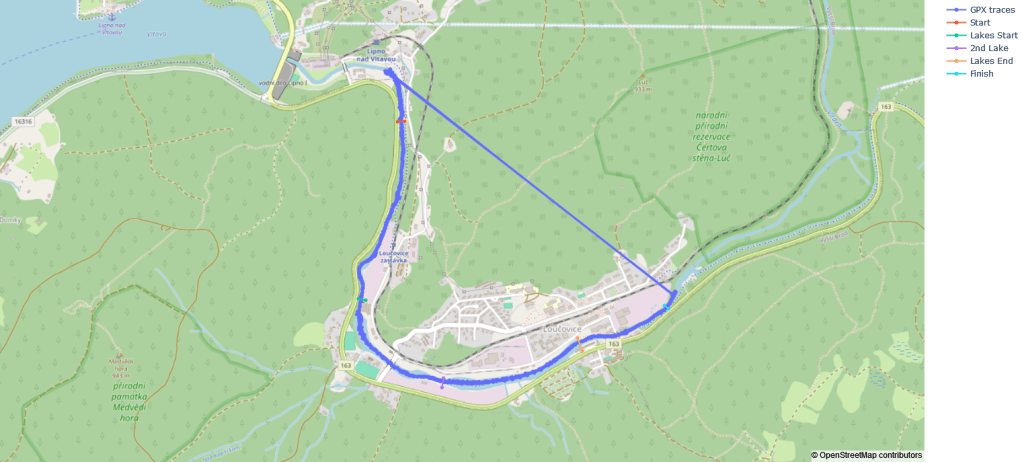
Shortly after Lipno, I decided to put some of these skills to good use and built a little python utility to pull split times out of GPX files. This can be used as a training aid or to compare races and the tool creates some cute little interactive graphs to visualize these times. This tool is freely available on GitHub under an open source MIT license.
To get everyone up to speed briefly a GPX file is a standard type of file output by most consumer GPS receivers and sports watches. You can also download a GPX file of your STRAVA activities from the STRAVA website. This GPX file contains a list of timestamped positions that the ‘gpxsplits’ tool searches through. It interpolates between these positions checking for an intercept with a ‘virtual beam’ or ‘gate’ that the user can define using a JSON file. Then it logs all of these intercept times and from this calculates the elapsed time between gates and the subsequent split times. (More detailed instructions can be found in the README on the ‘gpxsplits’ github)
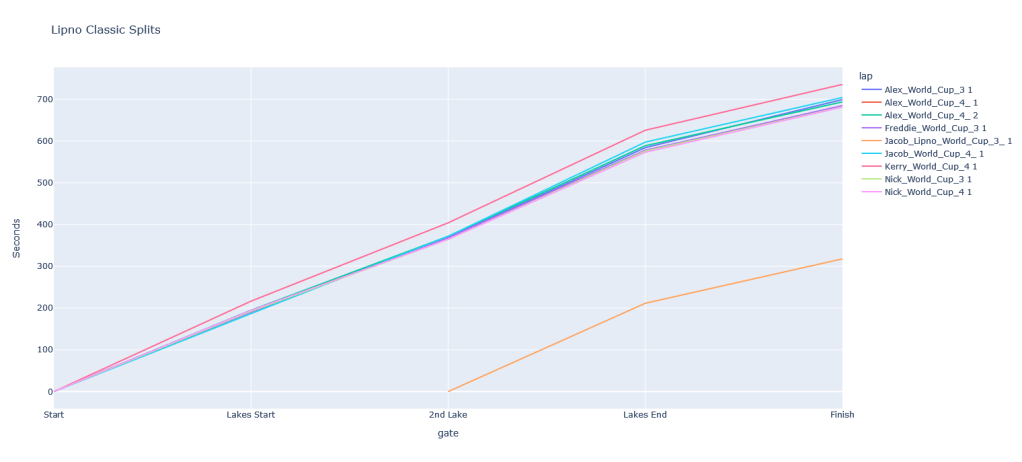
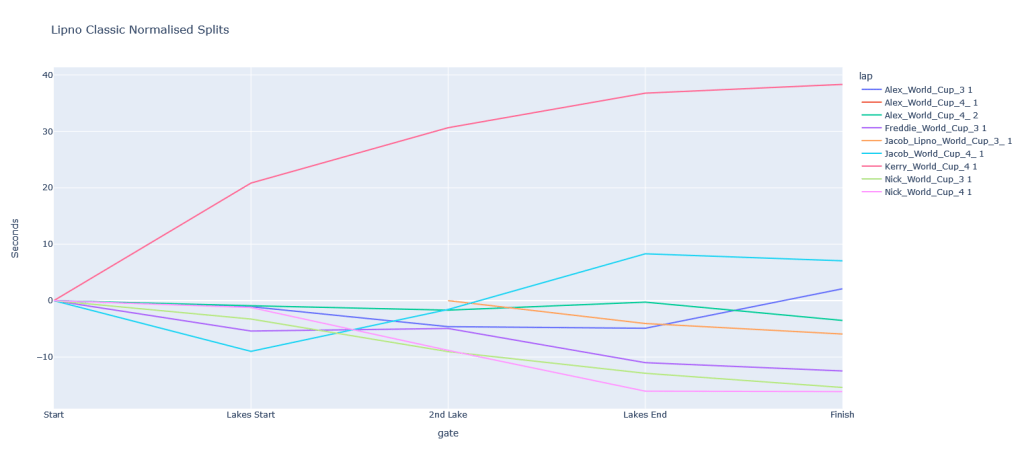
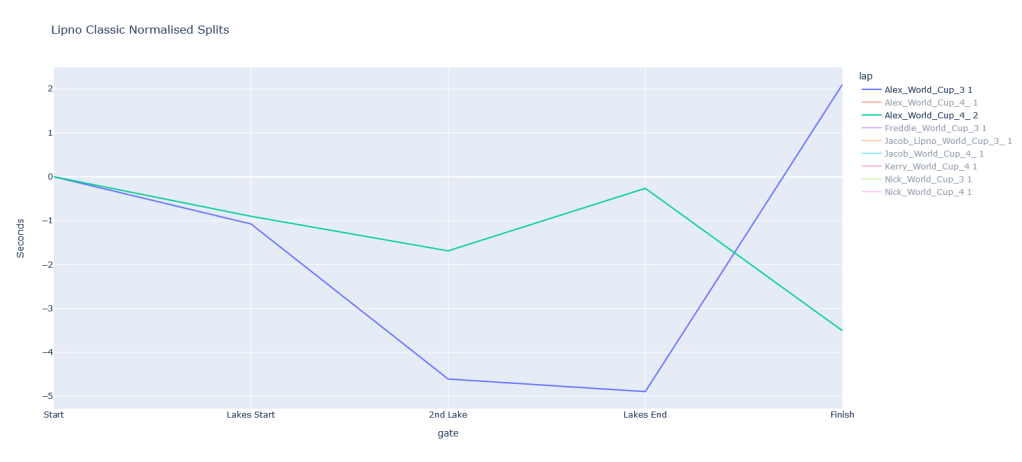
My favorite part about this though is the graphs. These graphs are very useful for visualizing the information and can reveal some interesting insights. The first graph, shown here is simple enough to interpret; simply showing the split time for each gate. However, by normalizing this to the average time, we can better compare each run (see below). Here zero on the y-axis represents the average time taken to complete a section and we then can see by how much each run was up or down on this time though the different sections. Thus a line with a positive gradient indicates the run in this section was slower than the average, while a run with a negative gradient shows a given section of a run was faster than the average.
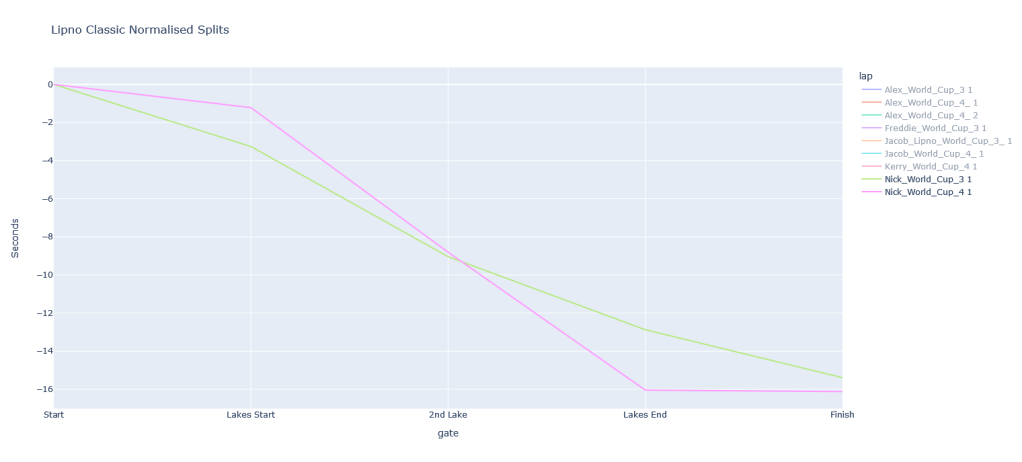
Looking at my two world cup races we can see they were both below the team average (yay me!) but to my surprise the white water sections at the start and end were much faster in my first run. However, on my second run it seems I really pulled my finger out over the lakes, allowing me to knock a few seconds off overall.
Meanwhile Alex’s traces tell a fun story. On both runs he managed a similar pace over the initial section of white water, but he tried much harder over the first lake in the first run. Unfortunately this led to a swim in the final section of white water. This meant he didn’t get an official time for this run, but we can see from his GPS watch that a lot of time was lost due to this regardless. On his second run he took the lakes at a more manageable pace leaving enough in the tank to handle the final rapid, securing a faster time overall.
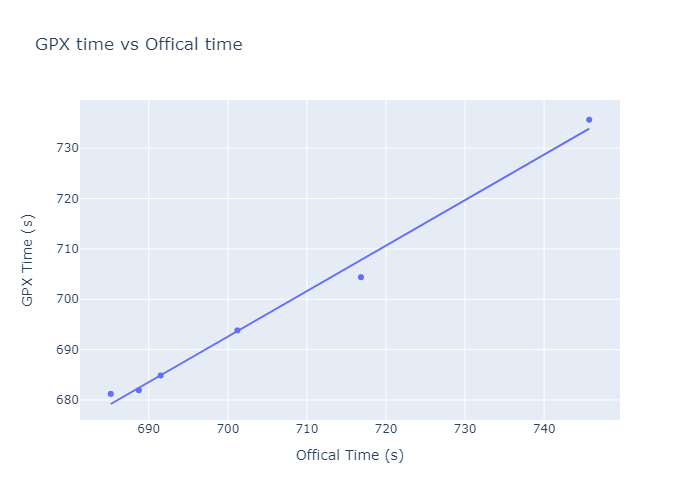
This is all very fascinating but anyone knowledgeable on GPS or GNSS systems are probably asking how accurate these times are. This is quite a difficult question to answer, but it is largely dependent upon the accuracy of the sports watch being used. Sadly most manufacturers are fairly tight-lipped on this information and there is only limited information online about this. Furthermore what information there is, tends to only be concerned with the accuracy of the distance traveled and does not investigate the time component. Fortunately for us we can make a rough estimation of our accuracy by comparing the GPX split times to the official race time.
A quick visual analysis of the above plot confirms a good degree of correlation and importantly the finishing order of all the athletes (in the British team) has been preserved. When examining the numbers we see that the difference between GPX times and the official times has a standard deviation of 2.96s. This is reasonably high, however at least some of the error can be explained by the fact that the mean discrepancy between GPX and official times is -15.28s. This indicates I’ve done a relatively poor job of guesstimating where the start and finish beams were. Given the athletes were probably not traveling at a constant velocity across these 15 seconds, this gate error will have contributed to the standard deviation. Still given most basic GPS receivers are quoted to have a 95% error of around ~10m I am relatively impressed by the 2.96s error. This and the preservation of the finishing order gives me enough confidence that the ‘gpxtool’ can be used as a training aid, but I would hold off using it for official timing purposes.
It should be noted that this is a relatively brief investigation with only a few data points from the British team. If there are any other paddlers who could contribute their GPX files from either the Lipno World or Czech Cup races to improve this investigation that would be greatly appreciated. As would anyone who can give me better estimations for the start and finish beams.
In an ideal world I’d do a proper study where we survey in the beam locations, collect much larger data samples and potentially compare the sports watches to some more advanced techniques (RTK/PPP for you navigation nerds!), but for now this will have to do.
In the meantime I’m looking to develop this tool further. Two key features for improving useability are a UI tool for creating courses and a way to easily download GPX files from STRAVA or Garmin. UI stuff in particular is way outside my area of expertise, so if anyone out there fancies lending a hand please jump in. Everything is available open source on GitHub under an MIT license.
This year the season’s end took place in Czech with the final world cup events at Lipno and České Budějovice.
The race course at Lipno is infamous. This is partially thanks to the 1992 World Champs where 30 cumecs of water were dumped down a course that normally handles less than half of that. But, even with a sensible amount of water the course is big and steep. However there is another reason for its infamy. The river Vltava is easily the stinkiest river in Europe!
At Lipno the river releases out the bottom of a dam bringing with it the remnants of whatever has sat decaying at the bottom of the reservoir for the past eternity. The smell this releases is not too dissimilar to the smell released by standing in knee deep canal mud. Except, where the canal mud smell dissipates within a second or two, in Lipno there is no escape and the stomach wrenching smell saturates the valley encroaching on your every breath until you can no longer remember a reality without it. Needless to say, Riverstench felt right at home!
The last article I wrote on the previous world cups centered around the difficulty of learning a new course within a short timespan. Lipno took this to the extreme. Releases out of the Lipno dam only occur at paddleable levels one weekend every year. This not only makes learning the course hard, but it also ensures it’s very busy. Over this one weekend the river played host to not only the Wildwater world cups, but also the Czech slalom Championships, the devil’s extreme race and rafting world cups (which we had sadly neglected to enter).
There were 2 hours of water on Thursday and 4 hours of water Friday before the racing on Saturday and Sunday. Fortunately with Lipno being quite large, all of the rapids were quite distinctive meaning it only took a few laps to get to grips with the rough lines. Although again the headcams were invaluable for cleaning these up a bit.
One quirk of the course is that before the finish there are two long flat lakes you have to rag it over before the final and biggest rapid of the river pops up to sucker punch you just before the finish. This caught out Alex the previous time he’d raced here in 2018, leading to a lovely swim across the line. Getting the balance right between pulling hard across the lakes, but not so hard that you piss it in at the end was clearly going to be a challenge.
But for the Serbian team this would come with an extra complication. They’d been unable to make the Thursday and Friday practice sessions and in the morning of the 1st race the final rapid had been closed off for the rafting world cups. This meant they’d have to run the final rapid, blind for the first time in the race!
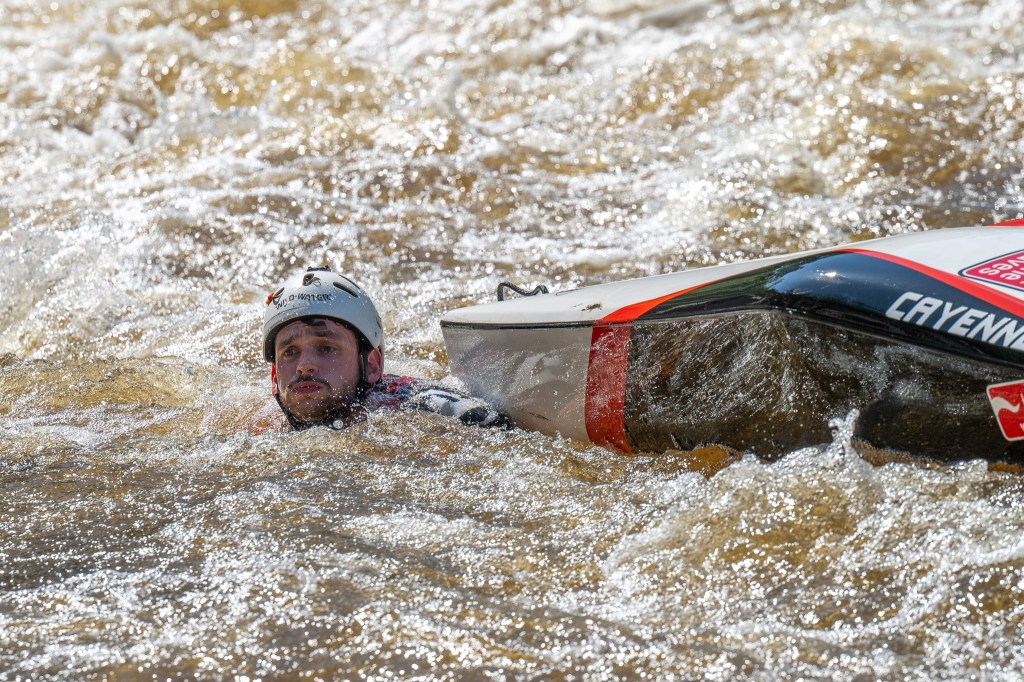
Fortunately one of the Serbs came up with a cunning plan. He’d ease up over the lakes, allowing Alex who started 30 seconds behind him to catch up. Then Alex could show him down the final rapid, avoiding catastrophe. Unfortunately the Serb hadn’t planned on Alex pissing it in again, which led to one of the team’s favorite photos in recent history.
Alex wasn’t the only one to have issues though, with Rob also making a similar mistake. For my part I also made a mess of the bottom, going right through the meat of everything, losing a lot of time, but fortunately not losing my boat.
Up until this point Czech had been an intolerably hot 30⁰C but after the first day of racing the clouds gathered so thick that the sun seemed to set early. The wind started picking up, threatening the marquees and attempting to steal our drying thermals. Then the torrential rain came. Over 2 cm within 2 hours transformed the campsite into a myriad of small lakes and rivers. We watched on from the van trying to make backup plans for when we’d discover that all our tents had been drowned.
Miraculously everything mostly survived, although any hope of dry canoeing kit was gone. Some of the french girls were even kind enough to come check on us. By the sounds of things they’d had an even tougher time than us as they were “completely soaked” and “had no clothes left”! But Alex sent them away as he was “already warm and dry”, curled up inside his sleeping bag.
The format of the world cups was a tad odd with Lipno hosting 2 classic races back to back on the same course and Ceske Budejovice hosting 2 sprints back to back on the same course. So having done it all on Saturday at Lipno, on Sunday we’d do it all again!
This presented a good opportunity to take the mistakes from the first race and apply the lessons from them to the second. In a rare moment for forethought I’d filmed my first race run which I then went over with Nicky later that evening. It turned out to be time well spent as, despite lower levels I managed to shave a few seconds off my time. Alex too made good use of the 2nd day, finally finishing a race run at Lipno.
After 2 solid days of racing the Czechs had organized a little party to celebrate the end of world cups 3 & 4. If there is one thing that the Czechs do better than paddling it is partying and the highlight of this party was definitely the alpine luge. An alpine luge is basically a metal half pipe that winds down the mountain. You navigate this sat upon a glorified kitchen tray on wheels with a single lever that operates the brakes. This was almost too much fun, particularly after a couple of beers, but what really transformed the experience was the speed trap at the end. Surprisingly if you allow a bunch of athletes to record their top speed things instantly turn into a competition.
With this being my primary motivation I decided that the break was likely redundant. My reasoning for this being that nobody would design such a contraption where my safety was wholly dependent upon my own competence and even if they did, they’d probably be reluctant to allow me on it after a few pints. What I had failed to account for is that I was not in Disneyland. A fact that became all too apparent as I hit the top lip of a banked corner and continued on down the pipe sans sledge. You’ll be relieved to know I survived the ordeal, despite leaving some skidmarks of my ego down the track.
The following morning we departed a grey and drizzly Lipno to arrive in an equally grey and drizzly České Budějovice. Earlier in the trip we’d been cunningly abbreviating this to simply ‘České’. This caused some confusion from the Czechs who later informed us that ‘České’ more or less translates to ‘town’ or ‘city’ in the context of a place name and what we were saying was more or less gibberish. Still, České has a Decathlon. And the Decathlon had new, but more importantly dry shoes and towels we could buy having failed to dry nearly everything.
České Budějovice, to use its proper name, was to host the next 2 world cup races. Both would be sprints, and both would be on the artificial white water course just outside of town. While the water outside of Budějovice was a lot less smelly it is renowned for being rougher on the belly. The Czechs had kindly warned us about this by lobbing bog rolls at our heads during the opening ceremony. Little did they know we train on the Trent, and thanks to the lackluster performance of British water companies are well used to swallowing sewage. Still we followed a near religious regiment of hand washing and stomach washing with copious amounts of coke, to a moderate success.
The white water course itself was like a compressed version of our local white water course. A little steeper, a little tighter and a little swirly-er. As someone who tends to lean more towards the Classics, I’d never spent too much time focusing on trying to tighten up a sprint run. But, having the two Sprint World Cups presented the opportunity to target this neglected area of my skill set. Unfortunately highlighted some deficiencies in my repertoire and after a few frustrating practices Nicky, our coach, settled on new mantra to rectify these issues. “Long, strong, straight”, which I think was mostly in relation to my paddling.
Sadly my race runs over the next two days were a little disappointing. A marked improvement from how I was paddling upon arrival to České Budějovice but a few small mistakes (and one large spin out) meant they didn’t quite live up to their full potential. Still over the two days the rest of the team put in some strong performances with Freddie winning the Czech cup race and Phil putting down one of his best ever sprint runs.
To close things off there was of course more partying, this time featuring a mosh pit and the local Czech ska-punk band. The a rainy 6am departure, for a rainy 23 hour journey home, to a rainy Nottingham. 10/10 would do again.
Overall the world cups provided a lovely close out to the 2023 season. Lipno is now one of my favorite paddling destinations and I hope we will be returning there soon. Meanwhile the lessons I learned at České Budějovice will hopefully form solid foundation my 2024. Now all that’s left to do is enjoy all of the regional and National races in the UK over the winter!
The road from Augsburg to Mezzana is stunning. Or, at least the bits I could hold my eyes open for were. After a weeks excitement I couldn’t help nodding off in the van, but as always the majesty of the mountains transfixed my attention as we crossed the Brenner Pass.
I’d been lucky enough to paddle Mezzana just a couple of weeks earlier on my grand plastic Fantastic tour of Italy and Austria. Then I’d rocked up completely oblivious as to our destination only to be greeted with a large sign advertising the event we were now competing in. While I’d only managed a couple of laps on that flying visit it was almost comforting returning to a river I was acquainted with. Even more comforting to see the level had risen to cover a few more rocks!
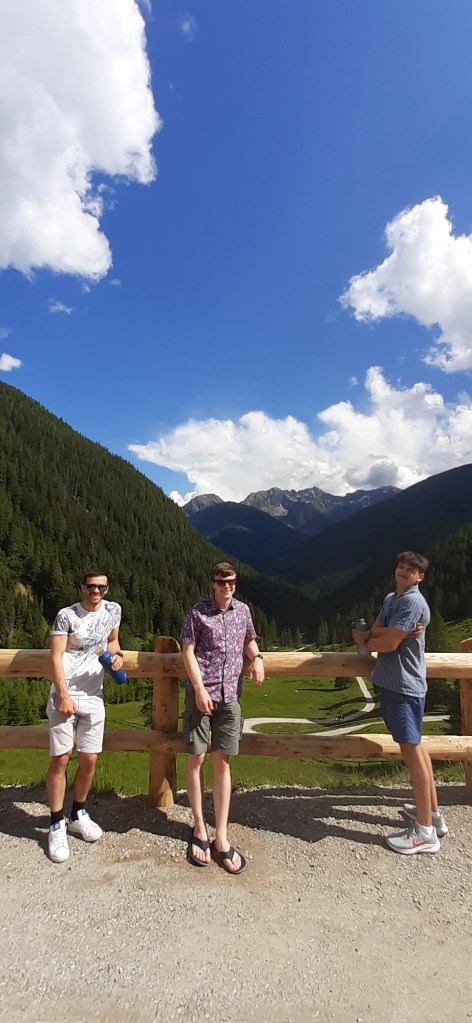
Mountains with the boys!
The scheduled called for racing to start on Thursday with the classic. We’d arrived late Sunday evening after the long drive giving us just a meager 3 days to learn the long, continuous course.
Racing is hard. That shouldn’t really come as a surprise, but not many people realise that thinking is harder. But, what is really difficult is doing both at the same time. They seem to pull from the same limited pool of human effort. The harder you pull in the race, the less thinking juice is available. And, as tiredness sets in, concentration begins to lapse. Lapses in concentration lead to mistakes. Mistakes cost time and cruelly require more effort to fix. This combination can easily snowball into a catastrophic race run, and therefore we practice.
We try to learn every rock, every wave, every little flow ladder the river has to offer. The aim is to know the river like the back of your hand. So, come race day, you can be all pull and no think. But, in practice this is quite hard.
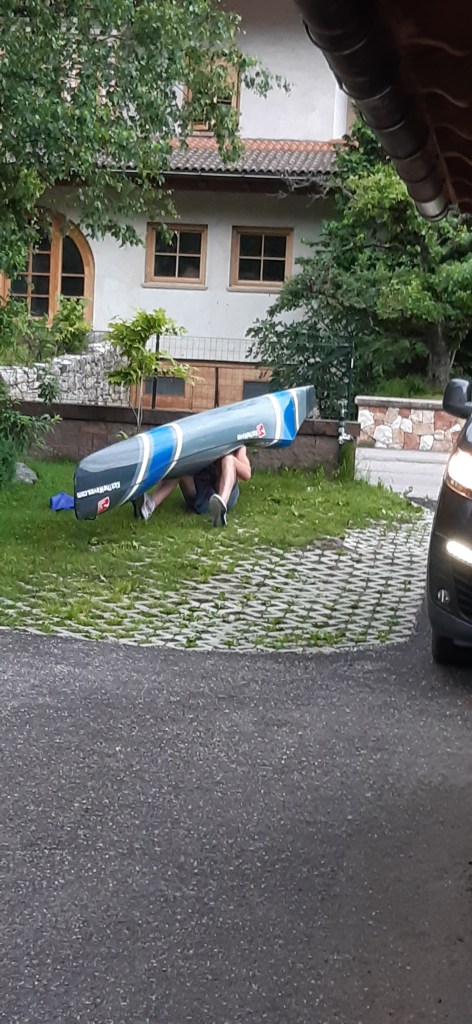
This image doesn’t fit neatly into the story but I’ll be damned if I don’t post it
On Monday we did 4 four classic runs. Two in the morning, two in the afternoon. (I did the first two in the whopper to probe out all the rocks). On tuseday we did 3, two in the morning, one in the afternoon. Finally on Wednesday we just did one in the morning, resting up in the afternoon before race day.
A grand total of 8 laps. But is that really enough to learn a continuous 17minute course? No. And if you think otherwise you’re a cocky little dickhead.
The first 2-3 runs generally get you acquainted with the river. Another few runs and you’ll probably have worked our roughly where the racing lines are. Then You’ll need at least a couple more laps to glue everything together and we’ve not even thought about optimising the line yet. Is it quicker to sneak the other side of that rock, do you need to be a half-foot further over to avoid those waves? Needless to say commiting a whole classic course to memory is no easy task.
Mezzana went loosely like this for me:
Run 1 – Oh my god where the hell am I?
Run 2 – Yep I still don’t recognise it
Run 3 – Ah, I recognise this bit and I did not want to be here
Run 4 – Okay, yeah I want to be there next time
Run 5 – What the hell there’s a rock here too!
Run 6 – Yep, nice, got this bit dialed. But do we go left now, or slightly less left
Run 7 – Finally, I think I’ve got it all stuck together, I just need to avoid that rock at the start.
Run 8 – Fucks sake, how do I keep hitting this rock?
Fortunately we’ve got a secret weapon: head cams [INSERT YOUR BRAND HERE (pretty, pretty please sponsor me)] Head cams are an invaluable tool for helping to learn both classics and sprints. Paddling is hard work, and watching back head cam footage is an easy way to squeeze in extra laps without destroying your body.
In between groaning and lying on the floor, evenings on the British team are often spent reviewing the days footage. We debate lines, identify and fix mistakes and crucially revise the river until it becomes a part of our souls. It’s kinda like F1 drivers practicing on the sim but with a much lower budget!
We had a little bit of fun learning the lines at Mezzana (alpine rivers have a very different characteristics to our brown British rivers), but by the time classic day arrived I was feeling pretty confident with the lines.
Unfortunately though it wasn’t my race. While I put the boat exactly where I wanted it (bar a smallish mistake at the end). The fast flowing alpine water was very heavy on my forearms which began to cramp up by about the half way mark. This combined with the dreggs of an illness and the need for near constant stroke timing through the continuous waves meant I struggled to really put the hammer down. Still I’ve had worse races and this was an excellent chance to get some alpine style water under my belt.
A nice pick me up, came in the form of a raft race that afternoon. We’d noticed it in the schedule on the drive over and had thought it’d be a good lark. When Jamie, out team leader, asked at the briefing about entering there was some umming and ahing from the organisers until they concluded, yes. Yes we could enter.
What we hadn’t realised is that the raft race wasn’t just a mere jolly and was actually part of the rafting world cup. It also wasn’t just the one race, with a raft classic and sprint on the first day of racing. Followed by raft slalom and raft cross in the days after. A lot of bang for our buck of €15 (and we even got bonus stash).
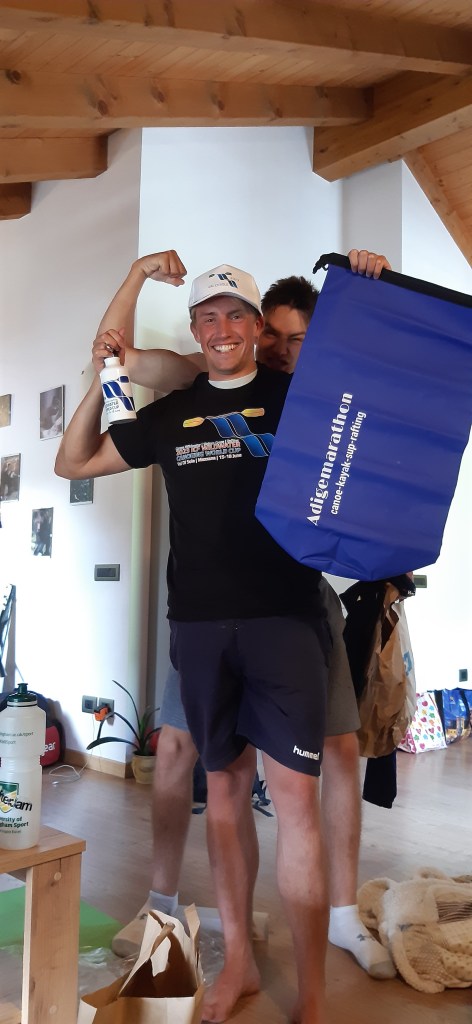
We love some stash!
They didn’t even ask how competent we were, which was probably a good thing. Somehow I was the most experienced rafter in our boat, thanks to having actually been in a raft before. Nevermind that was probably 8 years back. Making up the rest of our Men’s ‘British’ boat was Andrew (who paddles C1, which is kinda like a raft), Leon (who’s been in C2s before) and a totally unexperienced American who we’d press ganged into racing. A second British boat was entered into the Mixed category consisting of all three Christies and horary Christie, Rob.
We didn’t exactly fancy ourselves as ringers (not since we discovered it was a world cup), but somehow we didn’t end up finishing last! So the British rafting team better watch their backs!
Doing the raft races the day before sprint heats probably wasn’t the best race prep, but nobody in our team was really targeting the sprint (and the rafting was a lot of fun). However, Andrew still made it through to the Finals in C1 and C2 with Jamie (despite a little dip) and the Christie Girls also qualified their C2 for a final (no dips required).
Maybe one day I’ll make a final too, but I’ve got a lot to improve on the sprint. My heat 1 line was dairly on point, but my technique often seems to fall apart in the heat of the moment. Jamie provided me with some much needed advice for the 2nd run, to avoid upping the rate too high and just focus on connecting with each paddle stroke and pulling hard. This seemed to work wonders but unfortunately my line in the second run took me through a lot of the chop. Still I was only a second slower when compared to the first run, which was a better margin than most of the field. However, I was still a long way off the final. So we’ll just call that another learning experience.
Obviously, the main event for us that day was the raft slalom! It was about as chaotic as you’d expect. There was a lot of ‘constructive’ shouting aboard our raft and between the two run we did manag to get all of the gates! Unfortunately we didn’t manage all of them in a single run, but once again we weren’t last.
Without a team race at the World cups and with no finals for myself this was sadly the last of my racing for the event. But we wouldn’t let that be the last of our paddling. Throught the week Jamie had been remincing of the 1993 World Championships he’d raced in. That race had been held on a different section of river, somewhere bellow Mezzana, and we all (or well mostly) thought it’d be fun to go check this part of the river on finals morning.
This was part of the section I’d paddled previously paddled in a plastic boat. I was again, back in a plastic boat, but now it was a much more lively wavehopper. This turned out to be quite a good decision as the river had dropped a tad, and definitely would have been a bit better with a little more water. But bouncing off rocks was a lot of fun in the wavehopper (although slight less fun for everyone in composite boats) and there were definitely clean lines through everything (bar maybe a big weir drop) but learning them properly would be a lot of work and quite a bit of trial and error. A bit like Treignac really.
Still this was a great section of river and somthing I’d love to paddle again. It was so much fun that (thanks to a small miscommunication) I sailed right past the get out (which I’d previously camped at) and right round the corner! I survived the experience, but Leon who followed me was less than impressed.
We finished off the morning with a couple of farewell classic laps before hanging around to watch the sprint finals and have a couple of well earned beers.
There was also a ‘small’ party which was a nice chance to let loose and get a little better acquainted with the other teams. Although that’s all I’m allowed to say on that…
The only thing left to do on Sunday for Rob, Leon and myself was a leisurely sight seeing drive over to Verona airport. Our underpowered little hire car strained itself to drag us over stunning mountain passes and we had a lovely little dip lake Garda. Inevitably, the flight was delayed into the early hours and I had to sleep on the airport floor before getting into work late on Monday.
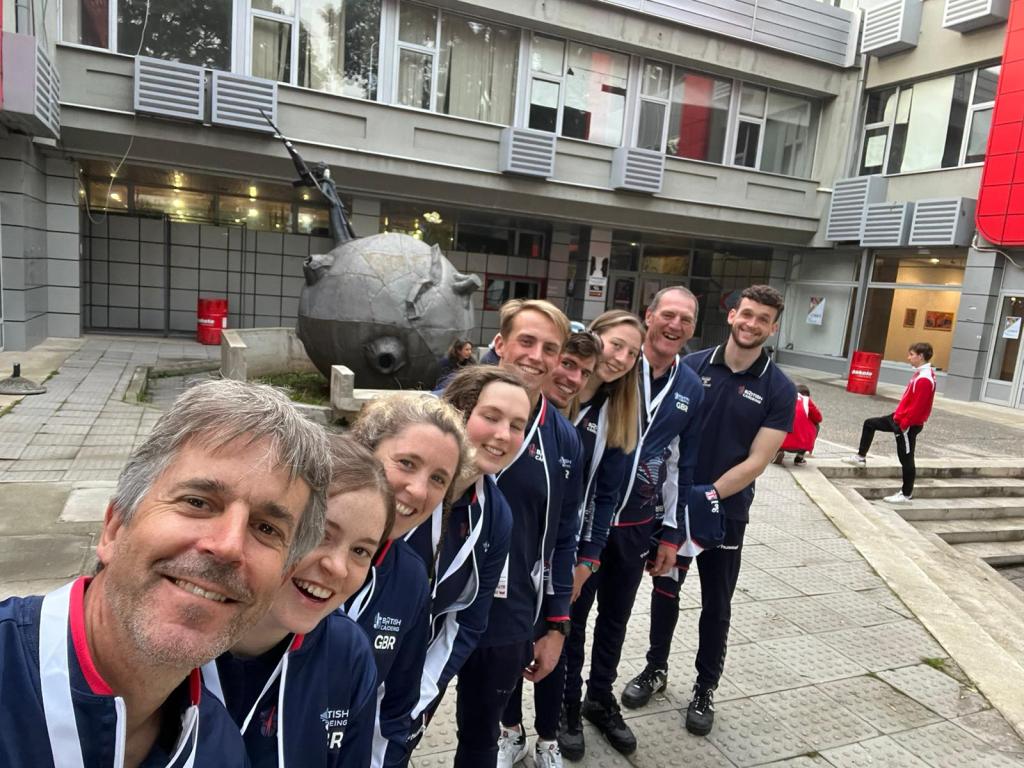
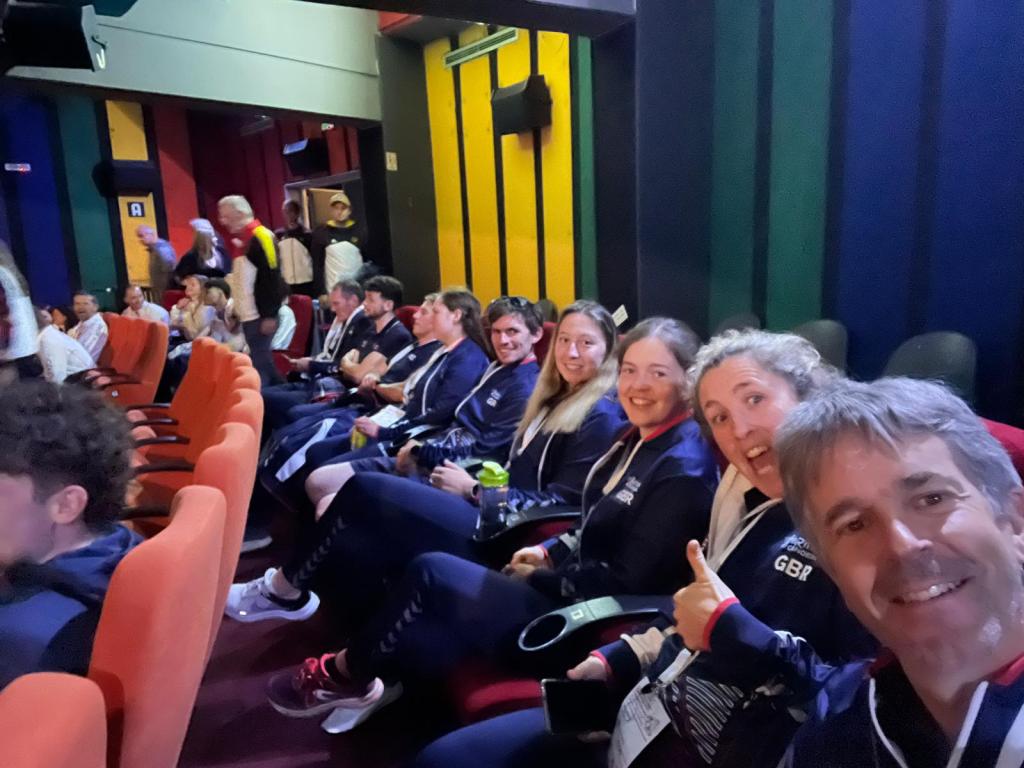
Opening ceremonies are weird affaires. There are usually lots of long speeches in which remarkably little is said. If I were to reinvent the whole concept I’d get everyone playing embarrassing team building games like hide the sausage which probably would be far more effective at breaking ice and creating a sense of community than nodding off to another rehash of the same speach. That being said Macedonian opening ceremony excelled in two aspects. One; the speeches never overstayed their welcome and two; we had seats from which to endure them.
One part of opening ceremonies that I do enjoy are the cultural demonstrations. A dance performance by the local Skopje dance club gave off some fabulous Eurovison vibes (which had just aired a day or two previously) heightened by the random addition of the Aussies.
Finally there was a brief reception with drinks and sweet treats which gave us a nice opportunity to catch up with some of the Slovakians we’d lent an angle grinder to at Treignac the previous year. And you know what they say about folks who share angle grinders…
Then it was bus back to the flat for an earlyish bed, before the racing started tomorrow.
Competition
Classic day arrived and with it came the characteristic Macedonian weather we had expected but we’re now thoroughly unprepared for.
As always the conversation on the Bus to the event turned to what we were going to wear? Shorty or deck, long sleved/short sleeved/skins? What did I even pack? Following it’s standard pattern the debate was inconclusive, but I chose to stick with my shorty, not wanting to mess with a good thing.
In the starting order I found myself in a Macedonian sandwich. I’m not certain I’d enjoy this sandwich in every situation but I back myself in the classic and this gave me a good target to chase down and put me well enough from anyone who could try and catch me.
I’d developed a solid race plan through the practices that it was now time to impliment: keep it controlled through the sprint course and then pick it up until you roll into your grave at the finish.
Unfortunately races rarely go to plan, but for every mistake there is a lesson to be learnt. And the lesson for this race is that hot glue doesn’t work in hot countries. Back at the start of march, while it snowed outside and I was outfitting my boat in my flat, attaching my thigh foam with hot glue seemed like a great idea. That way, if I’d cocked it up, I could just heat it up and redo it. What I hadn’t anticipated is that the hot North Macedonian climate would heat it up for me. So, as I picked up my boat to go warm up, my knee foam fell out. With only 30minutes until my start there was no time to perform a proper fix so I just jammed the foam back in and splashed some water on the whole thing to try and cool it down in the hope it might help the glue to set again.
Mercifully they knee foam held for the race (only to comically fall out again as we strapped the boats to the roof of the shuttle) and everything else (bar a stich in my lat, screaming forearms andba recurring cough) went to plan and I managed a respectable 26th place and got the fastest Brit.
All in all the team put in a very good performances with the girls narrowly missing out on medals in K1 and the C2.
Day 2 of racing brought the classic team event, but this came ith a little extra spice.
In order for an event to be quorate there needs to be entries from at least 5 countries. Despite an ample amount of men’s C1 paddlers, only 3 countries had brought enough of them to make a full team (there are 4 international events in Europe this year which is a lot of holiday for unprofessional atheltes like us). Consequently the request had come through for some other countries to enter scratch teams and we were volunteered as tribute.
The gig came with a crate of beer courtesy of Czechs and Germans (assumeably as an advance thank you for their medals) and the only requirement was that at least 2 boats broke the starting beam. This was a requirement that the Italians took full advantage of. Their K1 man, who did not seem all to thrilled half a paddle, boldly declared he would do “one canoe” and only “one canoe”. Off the start he did one stroke, a full canoe, before sensibly evacualting the river via the starting raft.
We however were not feeling sensible. Spured on by a very successful practice, which involved surviving the 10m from the get on to the starting raft, we decided all 3 of us (with no prior C1 experience between us) would cross the start beam. This seemed to come as a bit of a surprise to the poor french man who’s boat I was borrowing. I’d say he looked moderarely alarmed, scurrying down the side as we wobbled our way down the course.
Rudely, our C1 classic team had been scheduled just 20minutes kr so before our K1 team and so there was no way we’d be able to complete the C1 team, even if we wanted to! Thus having succefully stayed upright through the first and second drops and navigating around the island we all scrapped intonthe 1st eddy that offered any reasonable chance of escape, much to the relief of our french friend. But as the onlookeres helped pull us from the boats we were met with a new sense of unfounded confidence. If we could make it this far, we could probably make it to the end of the sprint!
Our K1 classic team race proceeded with comparatively little drama. There may have been just a little bit of contact at the bottom of the sprint course between me and Phil that almost lead to a big spin out but it was well recovered and we pushed on well as a team through to the finish. We managed a very respectable 7th between us, which achieved our goal of being ‘the best of the rest’. The girls put in an even better race finishing 4th, just outside of the medals.
However the biggest event of the day was the Masters races! This was a great opportunity for us atheltes to watch our coaches demonstrate all the advice they’d been giving us, and to their credit they delivered. Jamie took home the bronze in his age category, Billy got silver in his and Mags beat out her other competitor to claim gold!
The sprints on the following day came and went with none of the K1s making it through to saturdays final. But nobody really cares about the K1 finals (right?). Everyone knows finals is for team racing!
Sprint teams always deliver on the drama with 3 boats screaming down the course nose to tail, desperately trying to not impede each other. While there was definitely one racing line for one boat, the course at Skopje offered multiple options for cramming 3 boats down it at the same time and there were many variations of lefts and rights and splitting islands on display.
Unfortunately the girls run went a little belly up, with Kerry fighting to avoid Katie’s head as it bobbed down in front of her. Us boys however focused on not repeating the same mistakes from the classic team, amd for this we were pretty successful. All clattering through the narrow gap after the finish with a pretty decent time.
However, now it was time for the main event. The MC1 team. Spurred on by our recent successes we fueled with a false sense of confidence. The Italian team definitely weren’t going to finish with Mr ‘One Canoe’ so, if we could make it to the finish we could be in with a chance of a medal! That is assuming one of the other competent teams had massive cock up (but anything is possible in team racing…)
As it happens, they didn’t have a massive cock up, but it was irrelevant anyway as, inevitably, we were the ones to cock up. It is said that pride comes before the fall, and if pride forgets he is missing half a paddle, he may discover that right hand side support stokes are ineffective at best.
After a particularly rousing start that saw nearly as many forward strokes as supports, I fell victim to the eddy lines and waves down the s-bend. Deciding I looked lonely, bobbing boatless down the couse, Phil took a tumble in the final stopper to add to the safety teams struggles. Alex meanwhile was the only one of us to make it down to the finish before promptly pissing it in next to boat control.
With safety deciding I wasn’t worth saving I did my best squirt boater impression as I swam through the swirly gap. I popped up coughing and spluttering only for boat control to shout to me “7C, you are needed for boat control, but you have no boat!”. At least we still had our beers!
Once again it fell to the masters were the ones to take home all the medals with Mags and Billy bagging some extra silver to smuggle back on the 3 day drive back home.
I must admit, I’m not sure I would ever have visited North Macedonia were it not for this years European Championships. Unlike its neighbour Greece, North Macedonia doesn’t reside within the popular coniousness of holiday destinations (at least for us Brits). There are some reasons for this as it turns out, but when I mentioned where I was heading to my friends and family I was usually met with raised eyebrows and the guilty admission/question; “and were exactly is that?”.
I must admit, had you asked me last year I would have been unable to answer.
But that is one of the fantastic things about kayaking, it takes you to far flung and hidden destinations you never would have thought to visit.
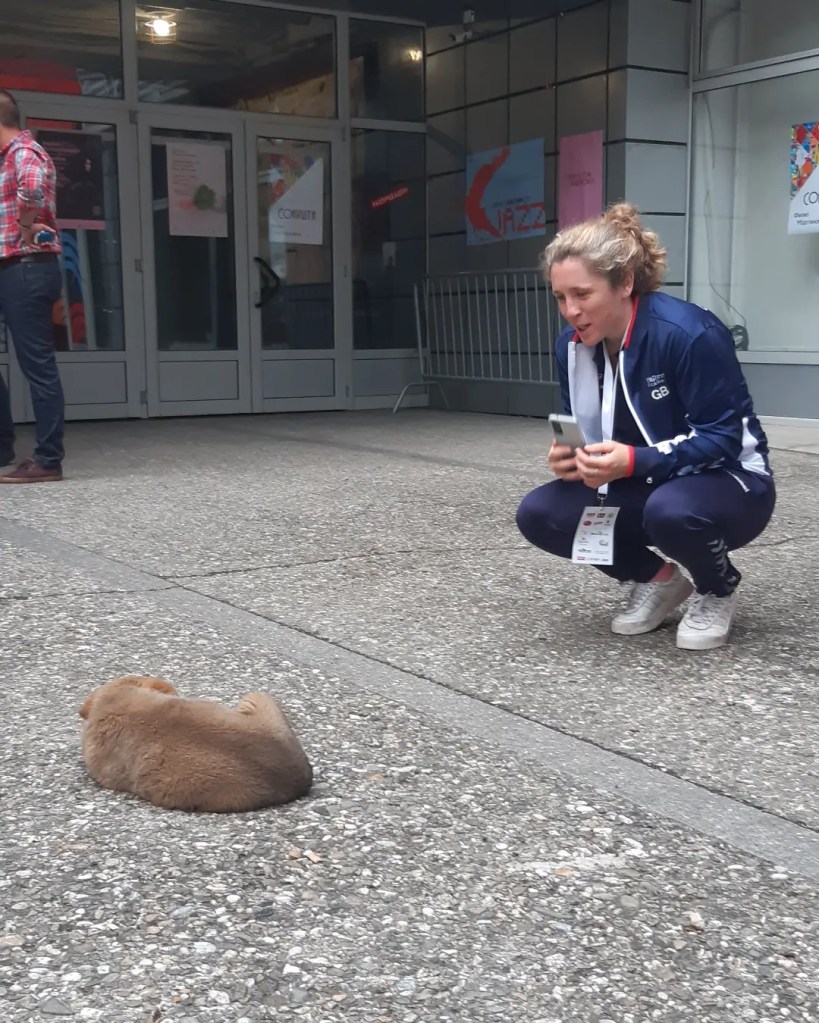
Those who I spoke to that did know North Macedonia sung praises of their food and wine, but also tales of stray dogs communist blocks and the helpful tip not to drink the tap water. As we touched down in the airport encased in mountains all I really knew is that we should be in for an adventure, and Macedonia did not disappointed.
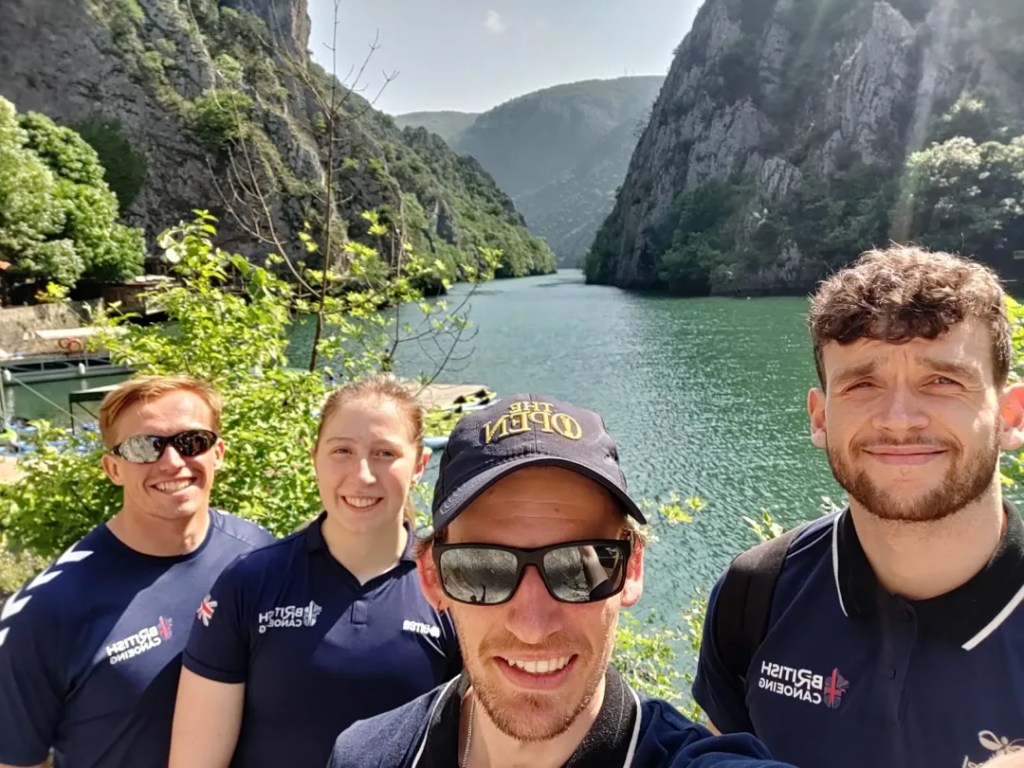
We were of course here for the 2023 Wildwater European Championships, held in Canyon Matka, just outside of the capital Skopje. We were fortunate to fly out to this which even with an extremely tight transfer in Warsaw involving drowning lieters of water to get through security again) was far preferable to the 3 day drive. Unfortunately, we still needed to get our boats out and so our voluntary support staff (made up of Billy, Williey and Peter) undertook the heroic treck across Europe with the Minibus and trailer. Prior to leaving a special appeal had to be made to British Canoeing to take a more discrete Bus as the three ex-RAF lads didn’t fancy driving through Serbia with a bus that had Union Jack plastered across its sides. Luckily, while their journey was not without incident they arrived safe and sound to collect us from the airport.
Here was our first taste of Macedonian driving, which I can only describe as ‘assertive’. After a week we were still unsure as to what exactly the rules were, if they existed at all. Yet, while spicy, the driving wasn’t aggressive. The cars were some how less banged up than their parisian counterparts and there seemed to the genral consensus that if a pedestrian was ballsy enough to step out into the road you should probably stop for them.
We toured past restaurants, coffee shops, street begggars and, what was quite frankly a staggering number of chandelier shops before arriving at our apartment. Upon arrival we realised somthing appeared to have been lost in translation and the 4 bedroom appartement we had booked, turned out to be more like 4 beds. But with the addition of a few mattresses on the floor we were able to settle down for the evening.
Practice
Canyon Matka, where the competition was being held, is Skopje’s number 1 tourist arraction according to various online sources of variable reputations. And we were lucky enough to be headed there every day for the whole week.
After a what felt like a particularly long winter of paddling in the UK we were all excited for some medetrain warmth, arriving only to find some overly familiar damp and dreary weather. An old man I’d later meet exploring Skopje’s old bazaar attributed the unseasonable weather to Putin’s cloud seeding to support his war in Ukraine, although the veracity of this statement is hard to ascertain. Inevitably back home for the first time this year the sun was shining and delivering temperatures of 20⁰C. Still Macedonia’s 15⁰C was not bitter enough to break out the winter kags, and I was just pleased to be paddling in the double digits.
The course in the Matka Canyon is roughly some 500m bellow a dam that controls the flow, giving an ample area for warming up.
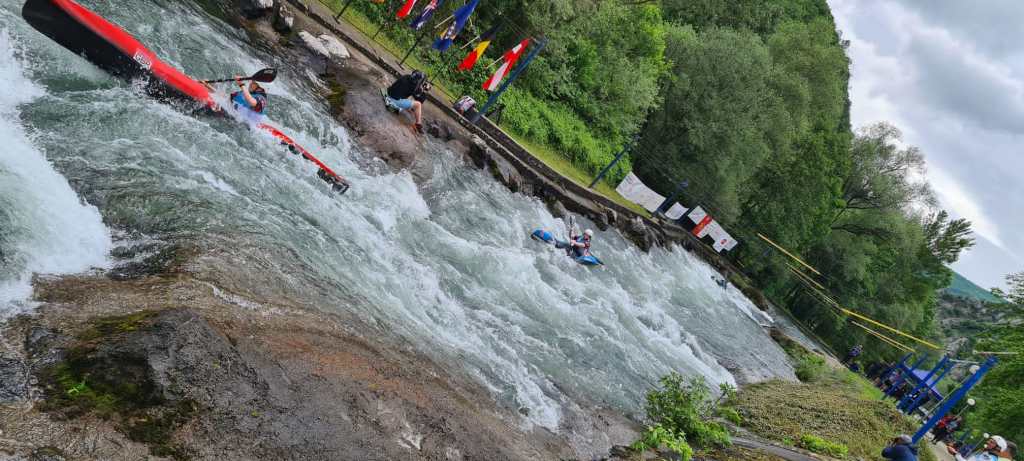
The couse starts with a small drop into a wave train that leads to the 2nd feature, a small stopper. From here the water flattens out before being split by an island, then its 30m of flatish water before the course drops into an S-bend. Theres a pillow on the right before a series of diagonal waves try to force you left into the final stopper. Finally there is a mad and painful dash around a slight bend to the finish where you slot through a small and swirley gap. The classic coruse continues for another few kilometers below mostly consiting of small wave trains and flow ladders, an island that could be taken either side and a few last corner cuts to the finish.
There wasn’t anything difficult on the course, but that also means that there is little room for error as every 100th of a second matters in the race. Quick to learn difficult to master.
The crux of the course was the the S-bend to last stopper section. This took some work and even some of the bigger names could be caught being forced left into he meat of the last stopper or spinning out into the eddy on the left.
Swimming here was ill advised as Katie managed to find some sharp objects in the bottom pool. Not that this advice was well headed by paddlers of assorted competences.
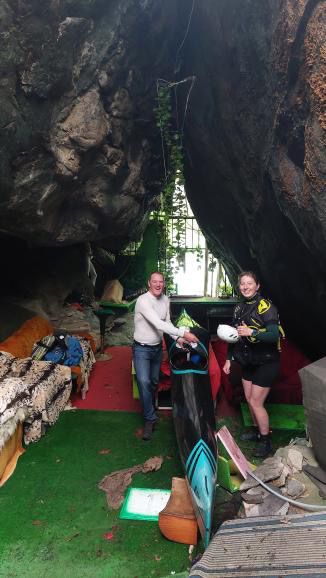
Katie’s fun didn’t stop there as on the second day her seat dislodged on the first drop. This led to a frantic fixing frenzy between the morning and afternoon practice sessions. This would have been a difficult task in the rainy damp weather, but fortunately she managed to find a friendly Macedonian man who let her and Billy into a cave below race control so they could fix the boat in the dry.
The cave had previously been residence to an old artist who had decided to decorate his abode ‘a la serial killer’, with mannequins dressed in a unique and “slightly sexual” manner. Despite the disconcerting decorations the cave provided the required shelter and the seat was (re-)secured in time for the afternoon.
The boat fixing cave
Katie returned, boat fixed in time for lunch and carrying a request from the “Australians” that they’d like to do an afternoon’s classic run with us. This request was met with slightly raised eyebrows given that we were at the European Championships. “Are you sure you don’t mean the Austrians?” But alas we were wrong to question her, as there were indeed a couple of Aussies (alongside the Austrians) at the European Championships! They were competing as forerunners ahead of a 3 month or so tour of Europe and were more than happy to give them some shuttles.
The shuttle was needed. Apparently the Albanian Muslim enclave that was located at the classic get out doesn’t take lightly to indecency. The message quickly propagated through the team leaders, that any paddlers exposing themselves at the get out were potentially in danger of being beaten up or forced to marry any woman who’d been unfortunately enough to see us. Apparently even our towel wrapped British modesty was too much and we’d need to be bussed away before we got changed. Goodness only knows how the French/Czechs managed with their tendency disrobe as the slightly opertunity. Fortunately nothing ended up coming of this, although half naked men Hunting for wives became the running joke if the trip.
Touristing
After two and a half days of practice we had an afternoon off. The dam wouldn’t be releasing water and we needed to rest up before racing commenced tomorrow. This presented two options; either longe around the flat doom scrolling as I had for the last few days or go “Touristing” around skopje with Peter and Willie. Uncertainty whether I’d ever visit North Macedonia again I chose the latter.
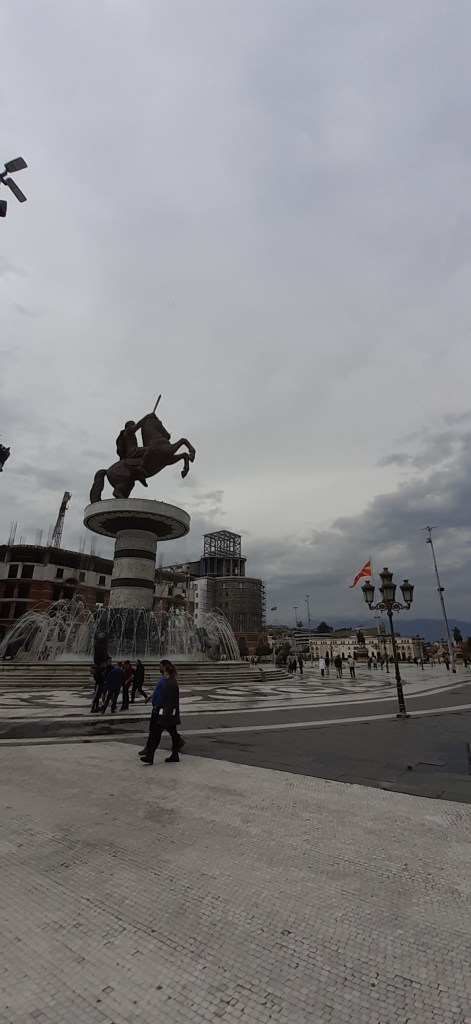
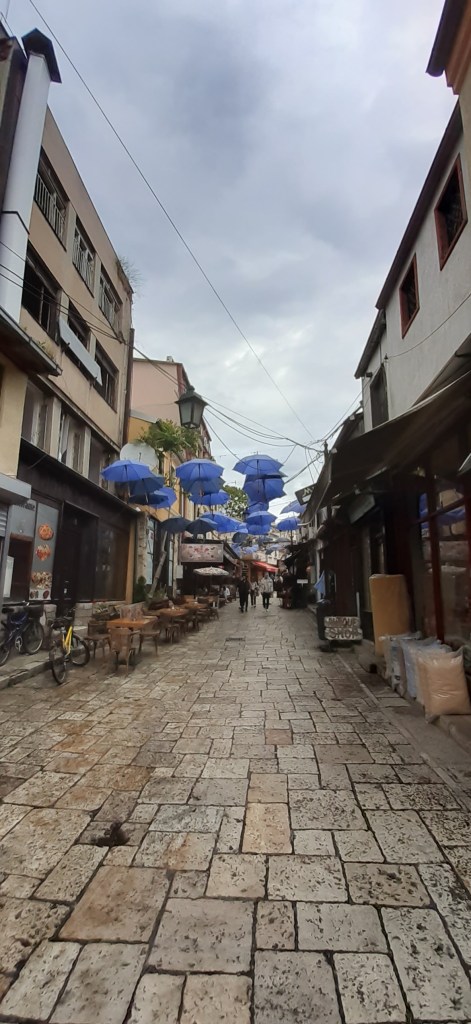
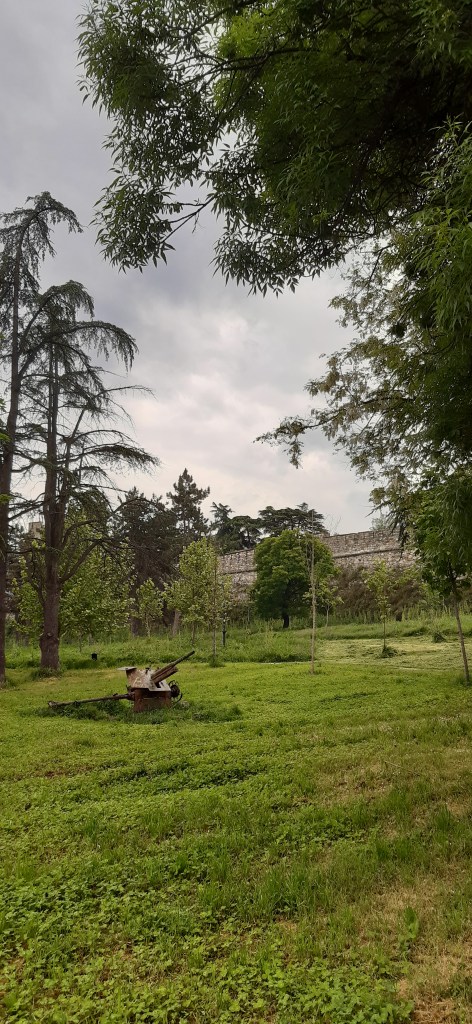
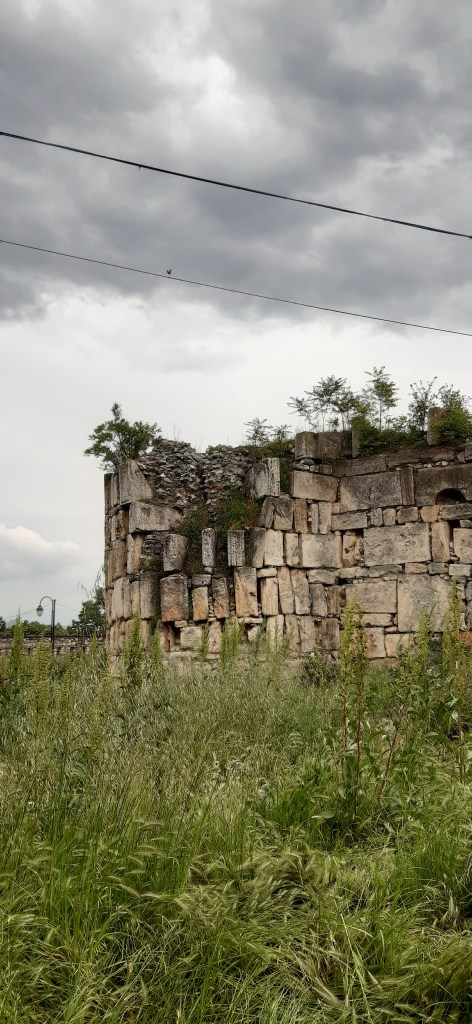
City centre Statue of Alexander the Great The Old Bazaar Fortresses GroundsGreek walls?Veiws from the walls…
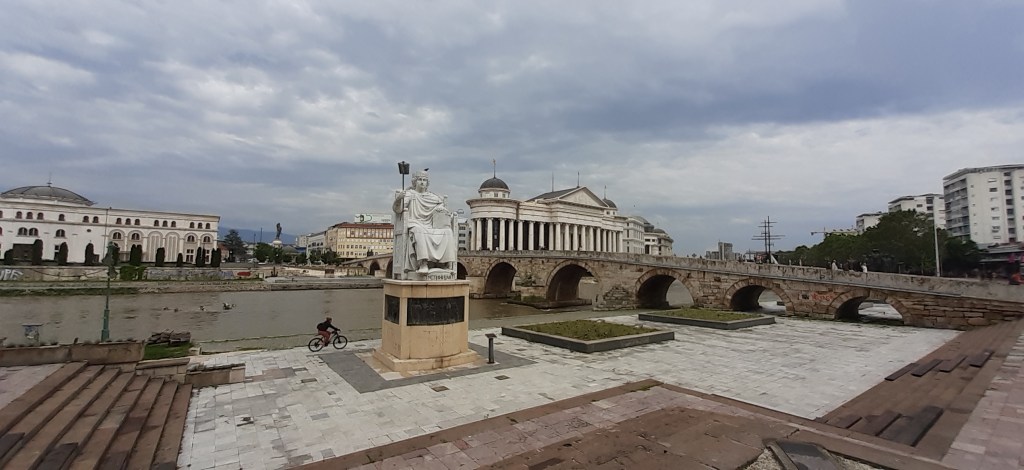
The centre of Skopje is a little weird. A lot of it was flattened in an earthquake in 1963. This means a lot of what you can see is relatively new, with a relatively recent neo-classical facelift. In places this this leans into the uncanny valley where glass facades are fronted by Greek columns. However, overall I think I like this and it is refreshing to see new buildings that are not an amorphous collection of glass steel and concrete.
Also scattered throughout the city are a collection of statues, similar to what you might see while wondering through Vienna. But again these statues are new. They as many statues do they often depict national hero’s of old. A taxi driver later described them to us as a but “kitch”, and while they make good tourist attractions, perhaps they are. To my uniformed eyes it seems somewhat symptomatic of a country attempting to regain a sense of cultural identity after that was oppressed while in the communist block. But then again what do I know?
As we toured through the old bazaar Willie befriend an ancient antique dealer, who refused to sell him a carving of a dog. As well as informing us of Putin’s cloud seeding efforts he told us of the greek-macedonian civil war from which he had once been a refugee. The Brits had supported the Greeks, hence why Greece has become the popular tourist destination. Being Irish Williey gets a free pass on the old colonial oppression front, but Peter and myself offered what little our apologiesare worth.
Pondering history that we knew little of we accended the hill to the fortress. The outside walls are old, ottoman, probably. But the inner walls are older still, roman? Greek? From the parapets we surveyed a city in the process of reinventing itself for the 21st century. We looked out across the sights we had seen, the statues, the old bazaar, the new mall and up the valley to Canyon Matka. Most prominently of all, the sight of our hire car, just as it was about to get towed.
Instantly the sight seeing tour was over and my afternoon of rest was punctured with a brief cardio session as I ran down the hills in an attempt to avoid the inevitable. It was too late. The car was gone.
Peter, Williey and myself regrouped around the location where our car had previously resided. When we parked there, it had been surrounded by other Macedonian cars that we had assumed knew what they were doing. These too were now missing.
In a weird coincidence at this point we bumped into Billy and Jamie driving the bus to try and get the trailer lights fixed. We were able to relay the issue and that we might need rescuing after they’d fixed the lights but all we really succeeded in doing was spreading the panic that we’d lost one of team transports the day before racing commenced.
We assessed our options. Asking the Macedonian team for help? Going back to our friend the the old bazaar? In the end some Willie had the quick thinking to flag down a passing taxi and request that they take us to the police impound.
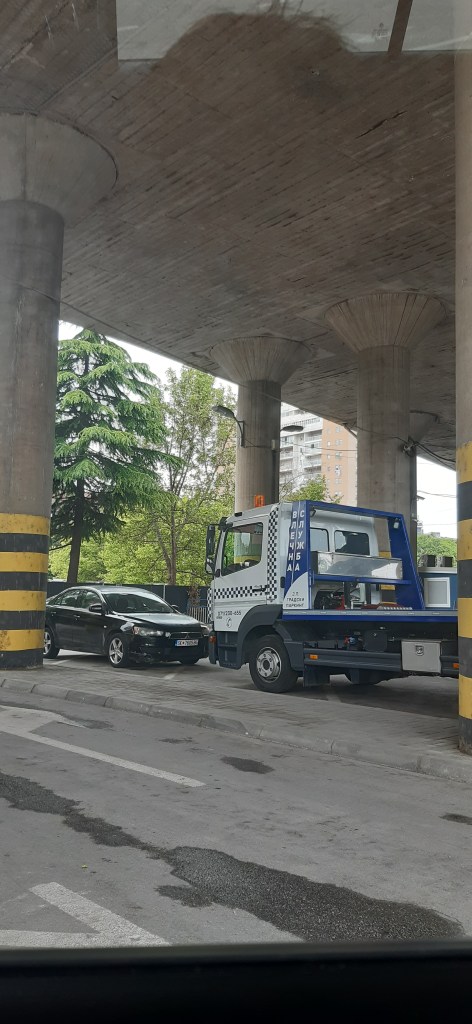
In broken English the taxi driver ‘educated’ us on our choice of parking as well as giving us his thoughts on the statues and recent developments. But in a short journey away from the city centre we were at the police impound, neatly situated bellow a large railway overpass. Have you really expreinced a place until you’ve been to the police station? I think not. A few jumbled conversations and a fine or two late (there is a silly foreigners tax) and we had the vehicle returned.
Views from inside the police impound
Incidentally this wasn’t the first time Peter had a car towed while on an international canoeing event. If you are curious he says that the Macedonian beaurocracy surrounding this issue is far more sensible than the Italian!
Tragically after this little incident we no longer had time to see the aqueduct or grab a coffee in the old bazaar, but to everyone’s relief we did make it home in time for dinner and the opening ceremony… just.
Hello and welcome back to the final installment of drive to survive’s significantly less cool cousin: Canoe to do [yet more canoeing but this time at an international]? The name is a work in progress…
Part 3 was supposed to take place on the Trywern, a terrific but technical river. However this was not to be as the water companies neglected to release any water from their dam. Sometimes it’s hard not to feel jealous of the French paddlers and their amicable relationship with EDF. Could you imagine a British water company not just willing to coordinate dam releases for sensible times but also wanting to sponsor events and athletes. What a fanciful thought. Still we can’t be bitter, it’s not like they are regularly dumping shit into the river. Oh wait…
So instead of the might T, we found ourselves on the slightly less mighty Dee. The Dee is still a lovely river. The main rapid, serpent’s tail offers up an experience similar to that of being fired out of a gun down the death star trench. The boils down the bottom combined with a helpfully overhanging rock pesent an exciting little challenge at speed that often leaves you second guessing your line right up to the point where you make it through (or don’t).
This final selection event would be the decider for the World Cup events. For the World Cup all our points from all the previous selection events would also be counted. WIth a couple of good results in the bag and 6 spots to play for I found myself going into this final even in a relatively safe position, bar some sort of major disaster. Thus, it seems inevitable that just before racing started I kicked my footrest out.
With the river being low, most of the lines revolved around successfully dodging rocks, and on one of my Serpent’s sprint practice run I was slightly less successful than I’d previously been. Applying a touch more speed than on the previous run I was dismayed to discover that the pillow wave I’d normally ride was a lot less pillow-y and a lot more rocky than I’d thought. Fortunately, I was paddling my old ‘bash boat’ but the ensuing collision was forcefully enough to remove some of my beautiful repair work from the bow and send me flying through my previous attached footrest.
Being the clever boy I am, I’d forseen this sort of complication and had brought my repair kit. Unfortunately, there was no way I’d be able to resin the footrest back in before racing started. Cut to me, scrambling around the car park for a screw that I could hammer through the side of my boat to provide a rapid but temporary fix. I was in luck (thank you Ian) and with some brute force to reset the fractured footrest and a little bit of trial and error on the screw positioning I once again had a footrest. And it only creaked a little!
First runs were at 4pm, a late start to racing, taking full advantage of the longer spring evenings. My sprint runs were nothing to write home about. I achieved a 7th place finish. However, I was happy to find some time on my second run and even more pleased that my footrest held.
A traditional post-sprint classic practice lap and subsequent paddle back up the canal put the day’s mileage up to around 20km. Not bad for a sprint day! We retreated to a nearby campsite to eat our body weight in burgers and chips before spending the evening on another classic canoeing activity: lying on the floor and groaning.
Normally I like to follow up a naff sprint result with solid classic performance, but sadly I only managed a 6th on Sunday. Blame it on a bug or not having paddled my bash boat enough recently. Either way it was a bit of dud to end on.
Still 6th was enough and I’m delighted to say that I’ve made the Senior World Cup team alongside the Senior European Championship team. It’s barely two weeks now before we jet off for Skopje so while this is the end of the selection series, it’s just the start of this season’s racing!
“Yeah, I pulled hard and took smart lines”, I replied.
“And how is that different from what you did yesterday?”
The past weekend saw part 2 of the British Wildwater Selection Series. This event would be finalising the team for the Senior Sprint Worlds Championships in Augsburg along with the Junior/U23 teams and contribute towards the selections for the World Cup Series. Oh, and the Sprints were also this year’s British Sprint championships.
Having secured a place on the Senior European Championships team last weekend (YAY!) at least some of the pressure had been lifted and I was relieved that this event was happening at my local spot Nottingham and not another 6 hour drive away. The event followed the same pattern as before, with sprints on Saturday (this time in the evening) and Classic early-ish on the Sunday.
You’d imagine that racing on my home ground (or water) would confer a sizable advantage, however thanks to a small access ‘predicament’ we’d only managed to get on the white water course in wildwater boats a couple of times in the last year. This meant, with additional course configuration changes, everyone found themselves on an equal footing. As such I spent the entire hour of our allotted practice time squeezing in as many practice runs as I could, trying to get to grips with the complex boils and eddy lines that define the Holme Pierrepont course.
Some nice photos from the weekend + my “slightly too close to the groyne face”
Between these practice runs, warm ups and the race runs I manage to rack up an impressive 10km of paddling/walking back up on the Saturday afternoon. Some people would argue that this was maybe not the best sprint preparation. Those people would probably say that you should rest between practice and racing. Those people are probably right, but this was all part of my gamble to get as much time on the course before the Sunday’s Classic (my main target) and because I figured there was a greater danger of haemorrhaging time with a bad line, than there was time to gain from being able to pull slightly harder.
Did this plan pay off? In short, no but also possibly yes? My first sprint run was very clean, however I managed to guff the start which cost me vital seconds. My second run had a much better start but I had to scrub off some speed to avoid piling into a groyne, which screwed up the next bit of the line and also cost me vital seconds. Somehow both runs ended up being roughly the same time. I did manage to slightly improve my position when compared to the previous weekend, and it was a good learning experience, but one that has probably cost the selection for the World Champs this year.
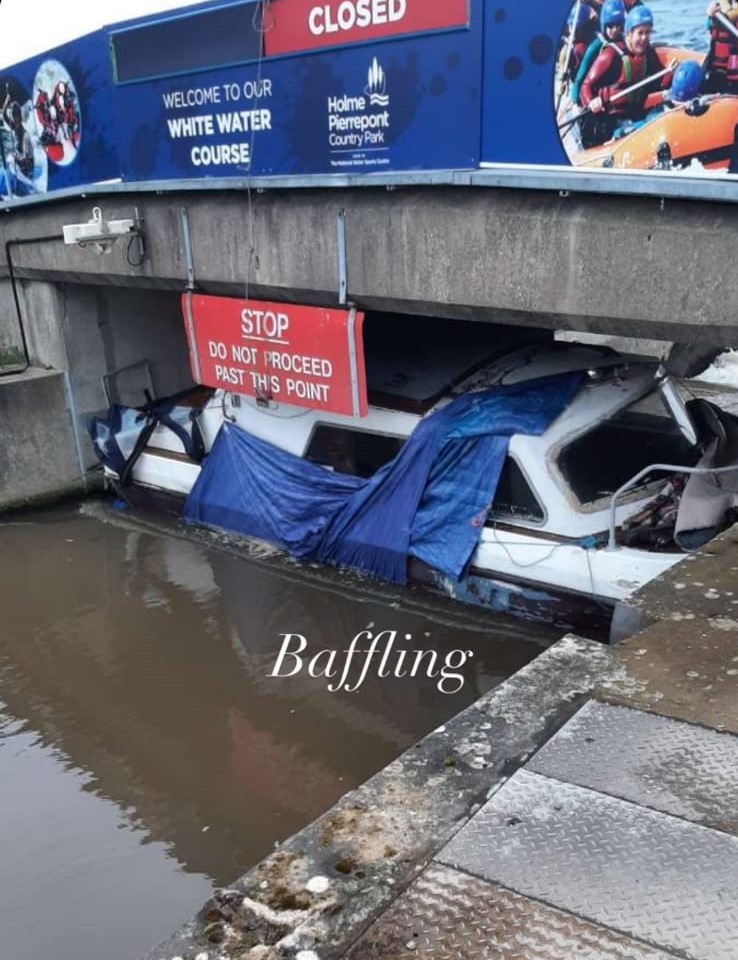
Okay, disappointing. But did the plan pay off for the main target, Sunday’s classic? Well this is where the ‘proverbial’ boat gets lodged across the entrance to the white water course.
Somthing somthing, shit creek
This was somewhat suboptimal. With an entire flock of fire engines descending on the scene and few other options, the decision was made that we would be racing on the flat. While this will probably go down as the worst classic course in wildwater history, after my disappointing sprints and a 2nd place the previous weekend I felt like I had a point to prove.
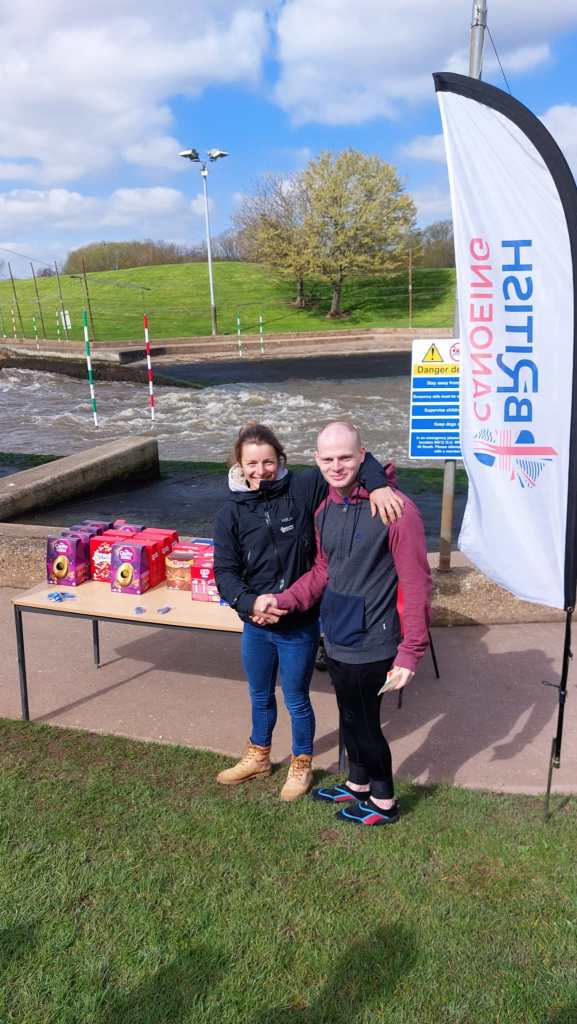
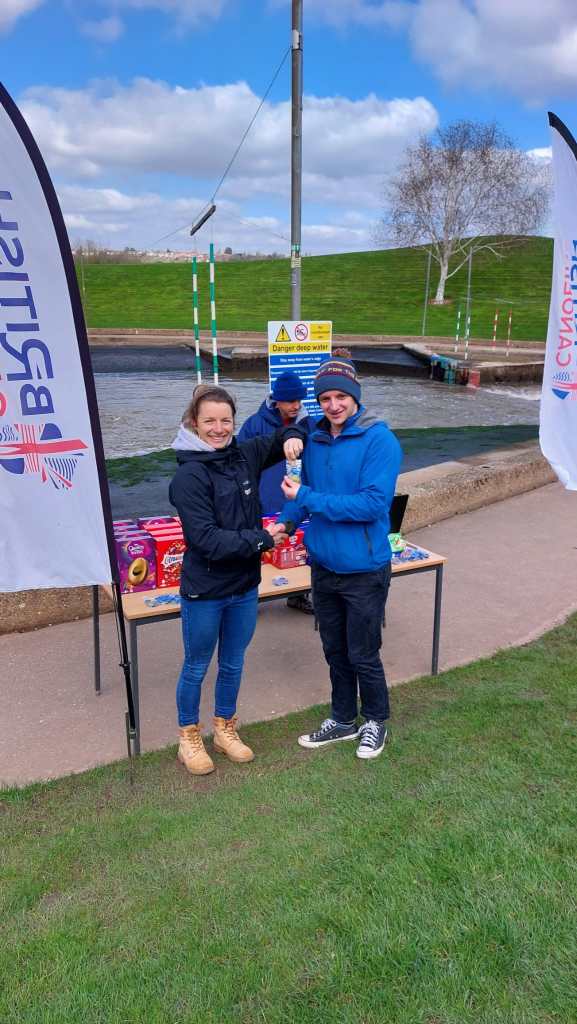
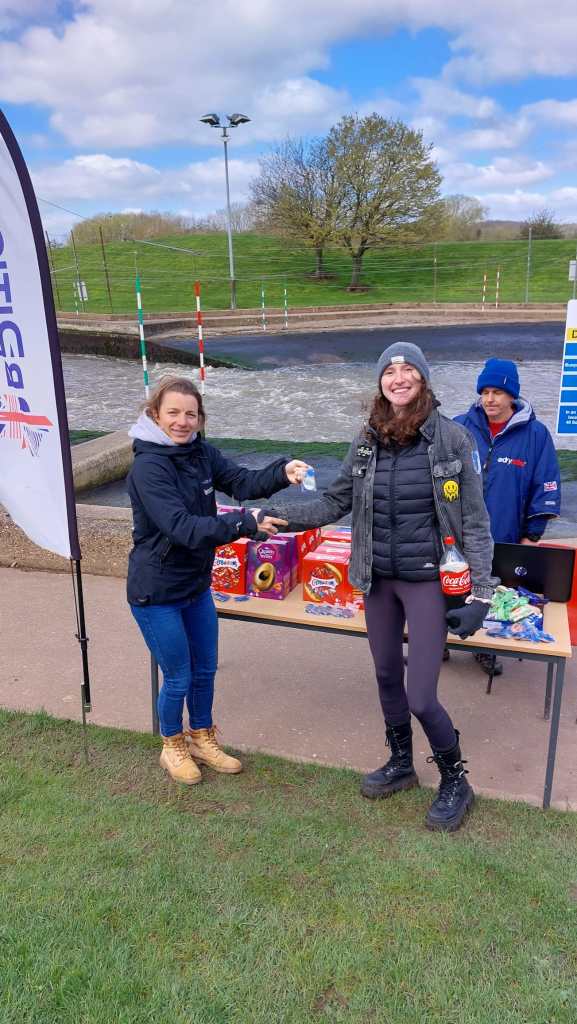
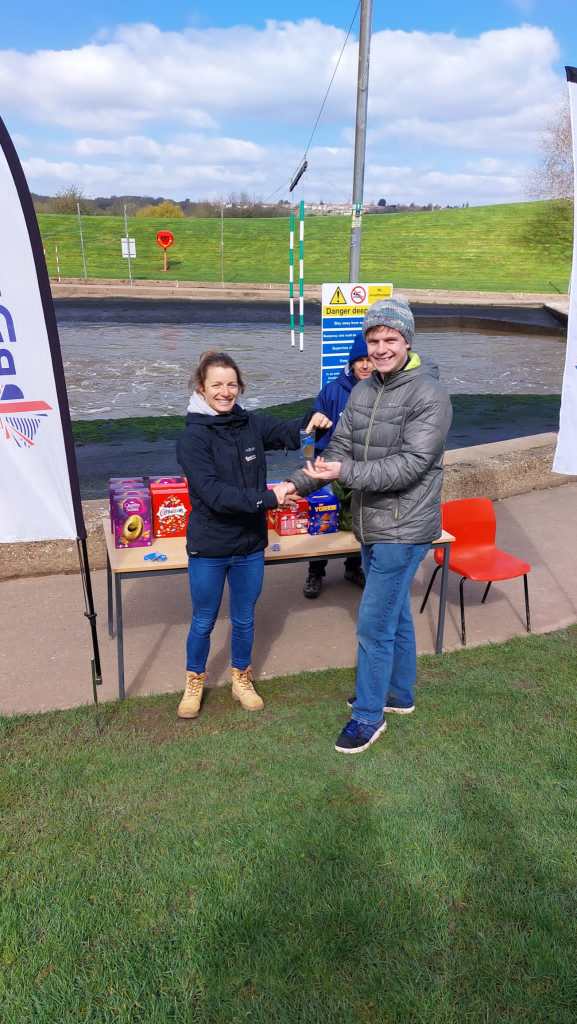
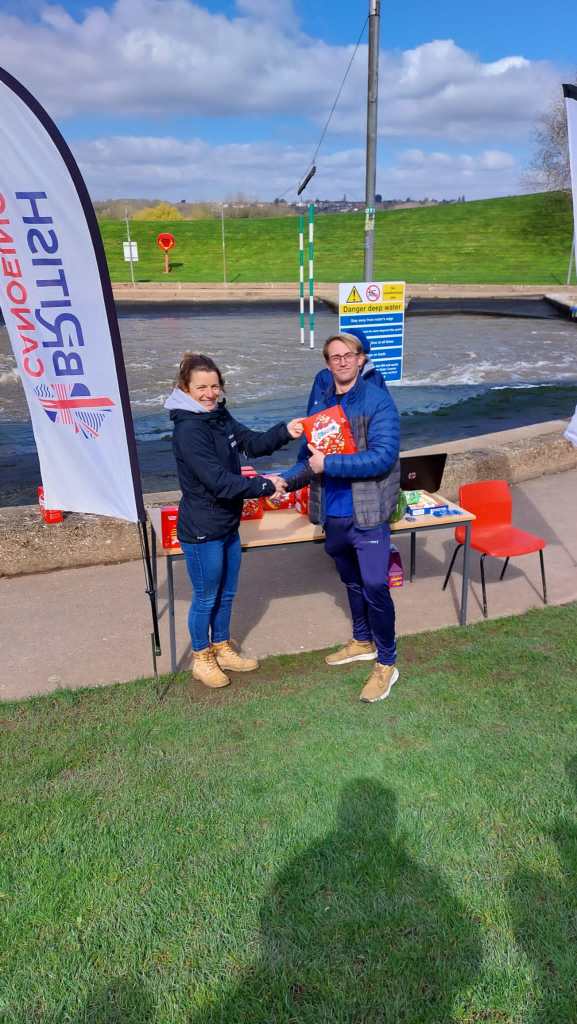
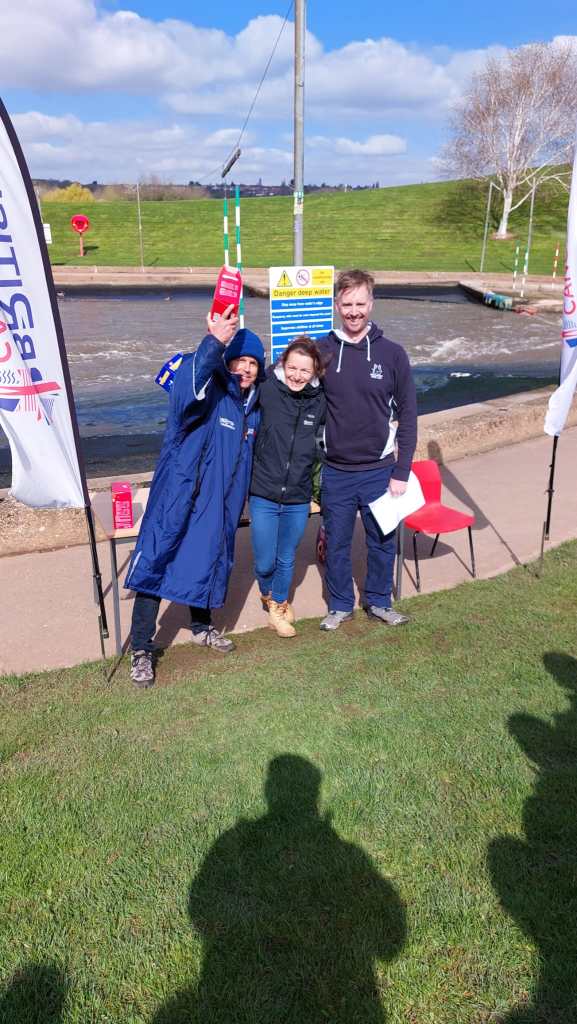
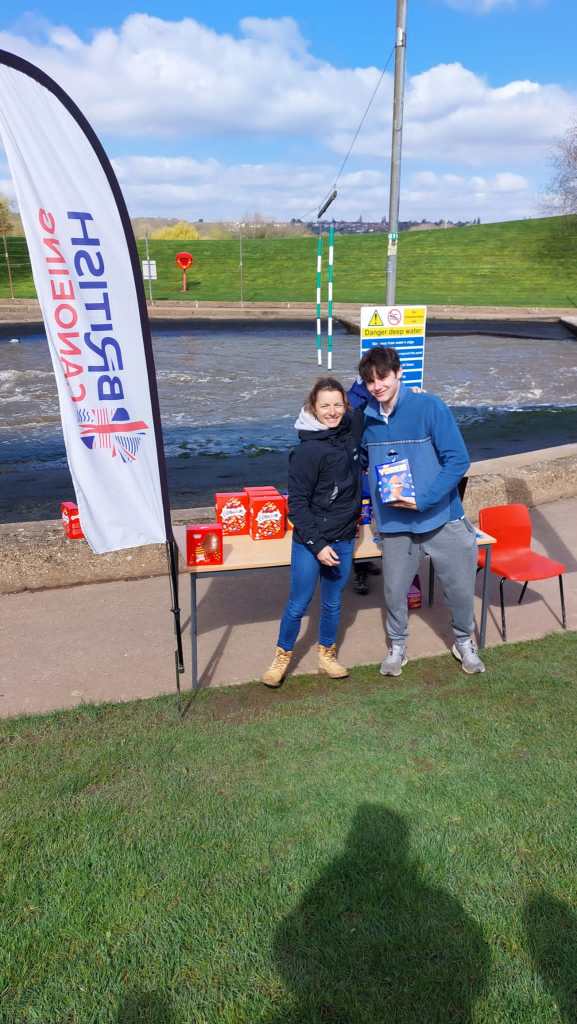
There is arguably one positive of not having anything substantial at the end of the Classic: there is no need to worry about leaving anything in the tank for trivial tasks like controlling the boat. You just pull as hard as you can, safe in the knowledge that if you can see when you cross the finish line you’ve done a bad job. I’m happy to say that I did a very good job and once my vision returned I was rewarded with a 1st place, an Easter Egg and 25 points towards my World Cup bid. A strong finish to a good weekend, but with lots of lessons to learn. (Thanks to Orange for the debrief.)
A selection of atheletes and Easter eggs
While I haven’t done the maths, I’m reasonably confident I’ve missed the selection for Worlds. On reflection I’m in two minds about this. I have a somewhat complex history with Augsburg, a course which was largely responsible for this blog’s hiatus. It would have been a great story to return after everything and enact my revenge, but I’m not a great sprinter and I prefer classic racing. With limited annual leave and money I’d still probably choose Euros and World cups over a purely sprint event. Still, it’s always nice to have the choice.
It’s a slightly weird world in which you compete against your friends to see who gets to go on a ‘holiday’. What often gets left out of these posts are the pre-race board games, chaotic cooking of saturday night dinners and the pungent ‘naughty kids on a sleepover’ vibes that we exude anytime we go anywhere. I’m very excited for Euros. I have never been to North Macedonia before and it looks like we’re going to have a cracking team for it.
Shortly before that we’ll be having the third and final selection race to decide World Cups. With a 1st and a 2nd, I wouldn’t say my selection for in the bag, but it’s definitely bag adjacent. That said it’s not over till its over and racing on the Tryweren can be spicy! (If by spicy you mean, full of rocks!)
Like all good things (and small intestines) this year’s wildwater selections comes in three parts. The first of which was just held this weekend up at Grandtully.
Scenically situated along the river Tay, the Grandtully slalom site is just a little bit too far from almost everywhere in the UK. Nevertheless it is here that the frigid Scottish waters tumble down the valley to form a rare thing in the UK: a whitewater river with barely any rocks! (The exception being the one rather large rock). And it is here that the first third of the 2023 British Wildwater selection races took place.
The startline and Jacob in his camouflage whopper
The selection policy is (almost) simple. There are three selection events, each with a sprint and a longer distance classic race. There are 3 international events, but not all with a classic. For each race you are awarded points for your position, 1st gets 25, 2nd gets 19, and third gets 14 with points declining exponentially-ish as you go on. All the points get added up and the best 4 paddlers for each category (MK1, WK1, MC1, …) are selected. However not all selection races count towards all the international races, and for the world cups 6 people can go. With this in mind I believe the best tactic for selections is to just try as hard as you can in everything and then work out which trips you can afford to go on later.
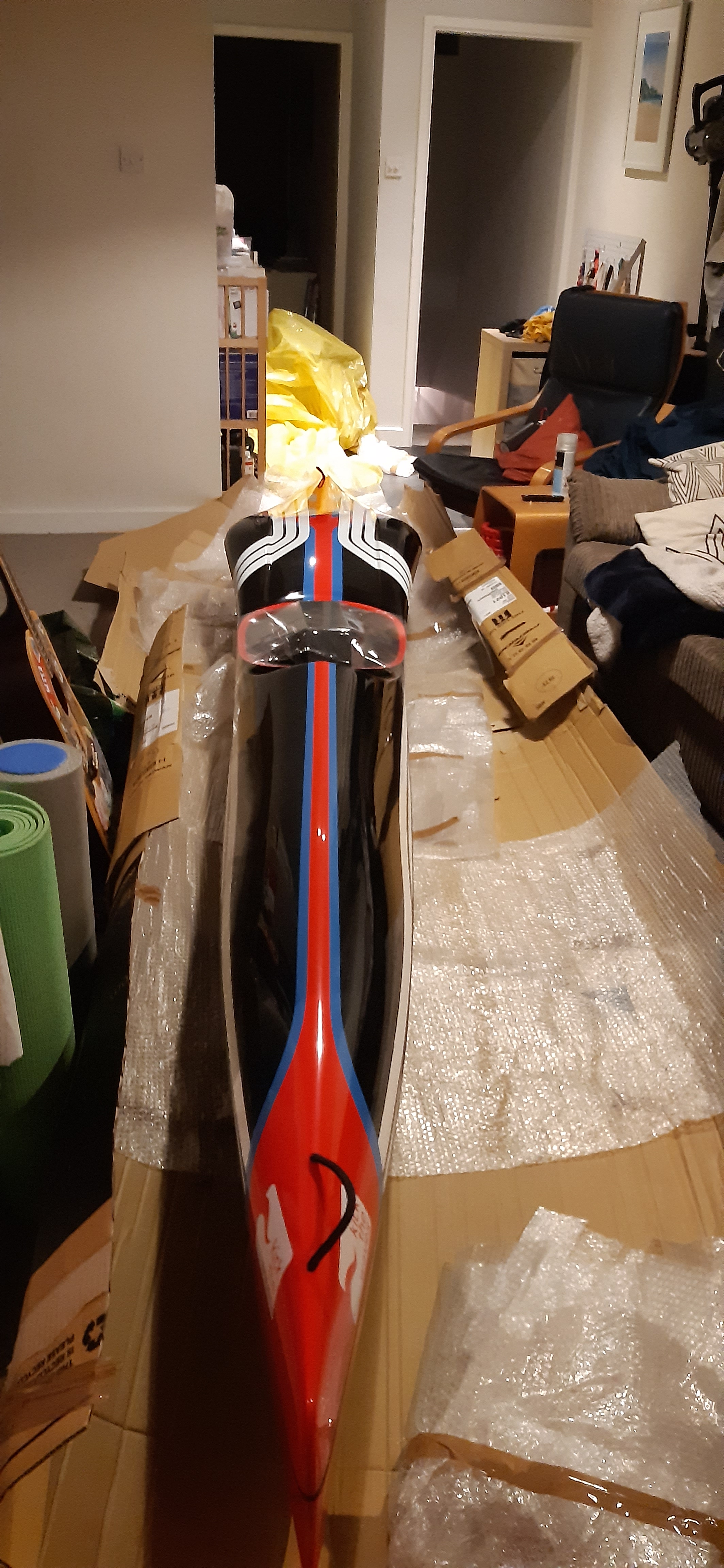
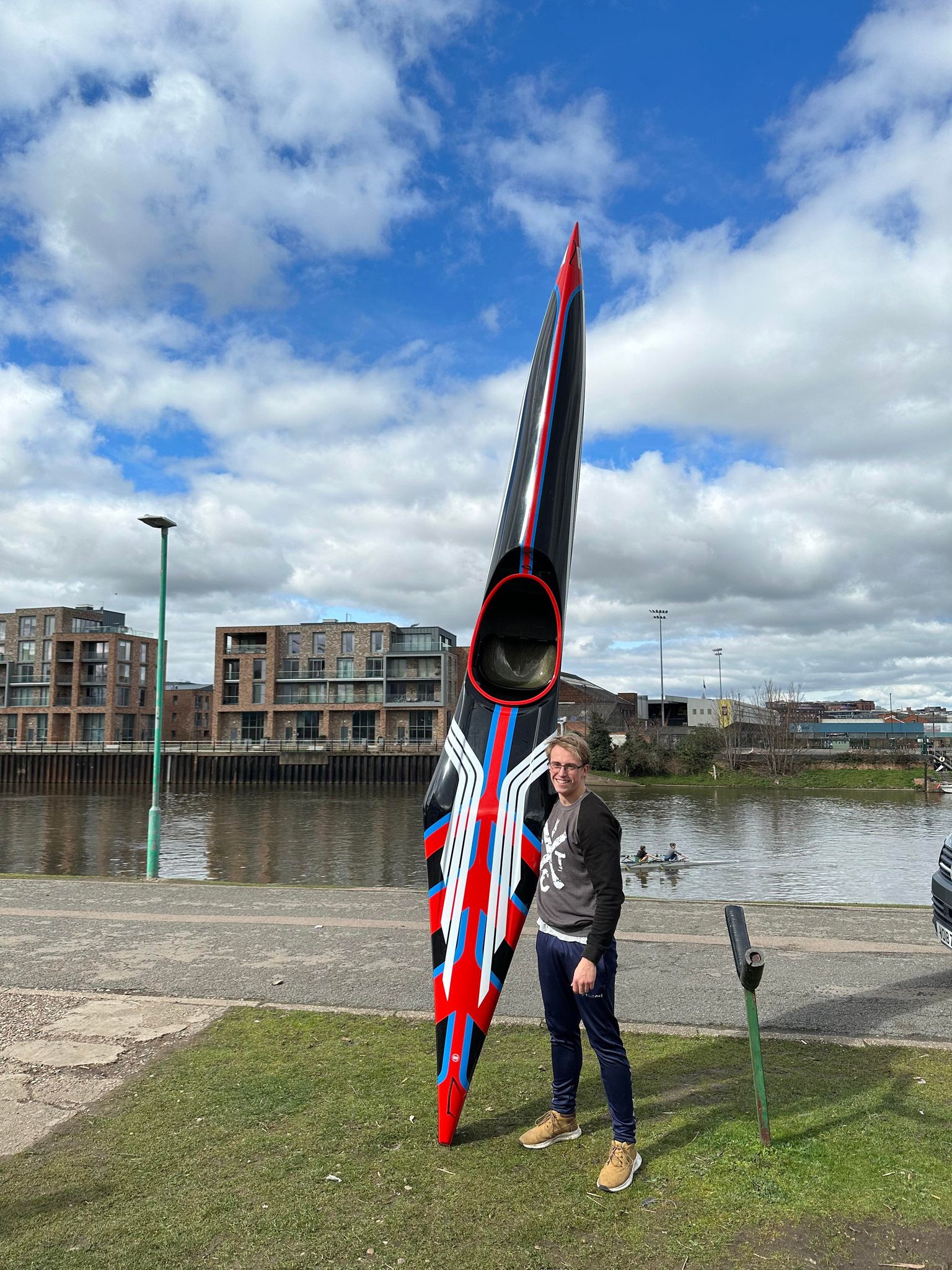
The weekend at Tully followed a familiar format, sprints on Saturday (best of 2 runs) and the Classic on Sunday. I traveled up the Tully Thursday evening to get in some sneaky practice on the Friday, letting Scotland put the ‘remote’ into ‘remote working’. I’d brought with me the new boat, which looks very dashing and is significantly less leaky than my old one. Jealous eyes declared it the ‘spiderman boat’ or ‘naff captain america’. Either way you’ll now hear me shouting ‘Avengers Assemble!’ whenever our team run formation starts falling apart.
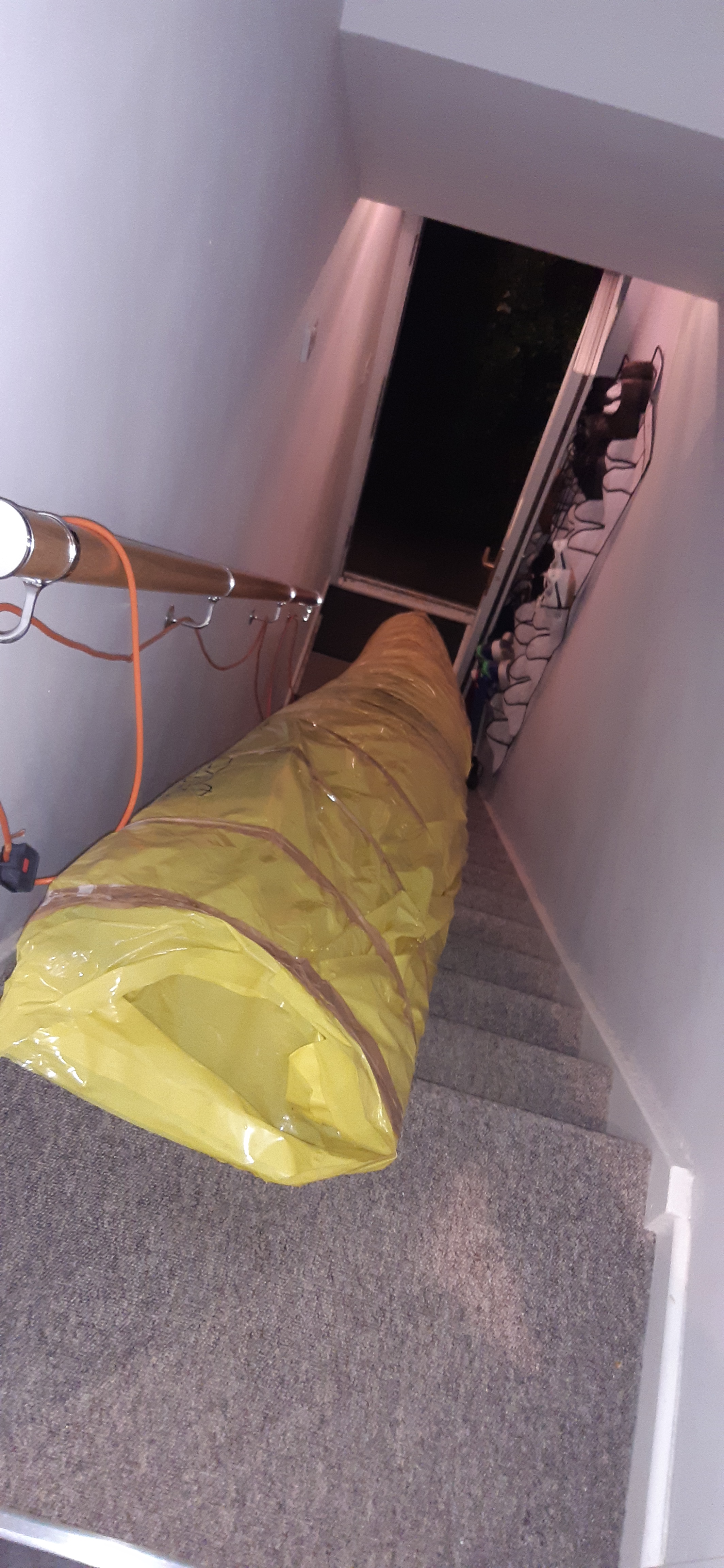
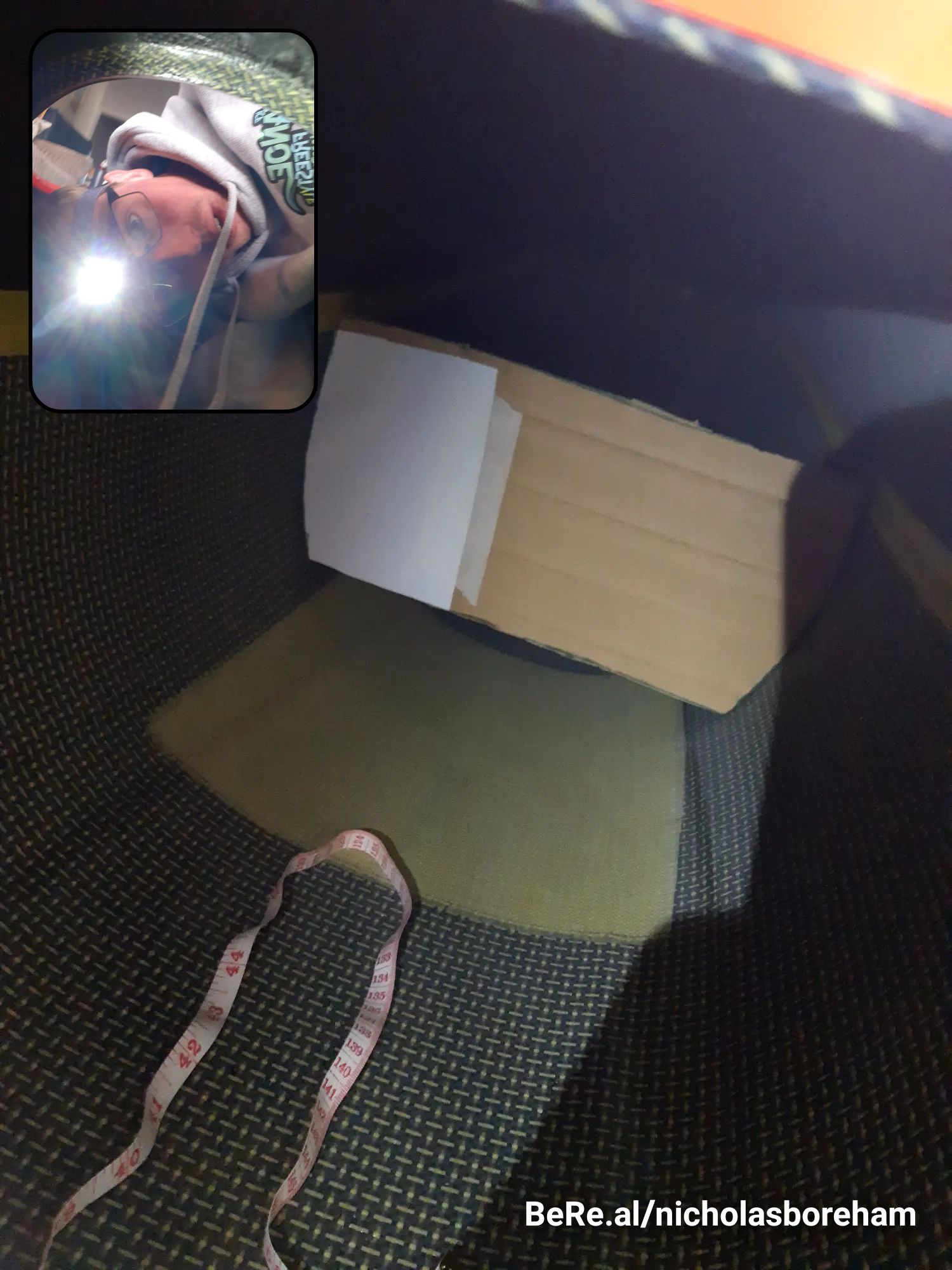
Unfortunately my beautiful Sicario had only arrived in the UK two weeks prior, thanks to a shipping headache created by the “B-that-must-not-be-named”. This led to a fairly manic week of trying to outfit the boat while it dominated my small flat. Fortunately, my panic prevailed and I more or less managed to fit the footrest and knee foam in time for at least a couple of sessions on the flat before I departed for Scotland.
Above, the new boat takes over my flat. (Cardboard was used for templating the footest and was not the final product!)
However, this did mean that the Friday in Scotland was the first day I actually paddled the boat on ‘the rough’. Coincidentally this was also when I discovered that I hadn’t quite gotten everything to how I wanted it. Thus, despite some Friday fiddling, I found myself duct-taping additional foam hip pads into the boat with less than 20 minutes before my first sprint run. This is definitely not the best race prep I’ve ever done, yet it somehow wasn’t the worst or most chaotic pre-race I’ve had.
Unfortunately even with my last minute additions, my sprint results were a little disappointing. This wasn’t all too surprising given I was (or am) still getting used to the handling of the new boat and while I managed to mostly put the boat where I wanted it, I was struggling to find the power throughout the run. Still while it stung to be so far off the pace, I’m sure this will come with some time. Plus, Sunday was the classic, and classics are my jam.
We awoke Sunday fueled with a lovingly cooked family meal and fearful of forecasts of snow and sub-zero temperatures. Daylight savings had cruelly robbed us of an hour of precious sleep, but being as knackered as we were we’d mostly passed out around 9pm anyway. As we loaded kit into cars the weather was not nearly as frightful as forecast, but Scotland by and large had not received the notification that it was now officially Spring. This led to some debate on the shuttle as to what to wear for the race and emboldened by anything above 20C I opted for a shorty kag. Mostly, hoping that the threat of hypothermia would encourage me to get to the finish just that little bit quicker.
Rob looking serious and stylishAlex and the one “rather large” rockKerry en route to beat half the menPhil in the white SkodaMy own beautiful”face melt”
Phtotos from the weekends’ racing
I like classic racing. The longer distance just gives me a bit of time to settle into the race and I can focus on just getting the boat running well. That said I definitely spent the first few minutes of this race cursing Alex as his prophesied tail wind manifested itself as biting head wind, freezing hands and sucking all the speed from the boat. But once I’d dropped further into the rapids I found my ‘happy’ place and began to feel comfortably at home in the new boat. This all seemed to pay off and having navigated the main Tully rapid with an appropriate amount of “face melt” I crossed the line to claim a 2nd place and the 19 points it brings. Hopefully this should be enough to get me to Euros…
Arguably more important than my position was that with a time of 14:31.69 I’d beaten Kerry. This has become a bit of a running joke amongst the senior men but having beaten all the boys at the last couple of events she’s actually a real threat (and a lovely training partner). Honestly, I’m not quite comfortable with my 10s margin on a 14 minute race!
Selections part 2 of 3 comes this weekend at Nottingham’s own HPP, which will be the decider for the Senior, U23 and Junior worlds. Tune in to the next blog post for a slightly delayed recap of events!
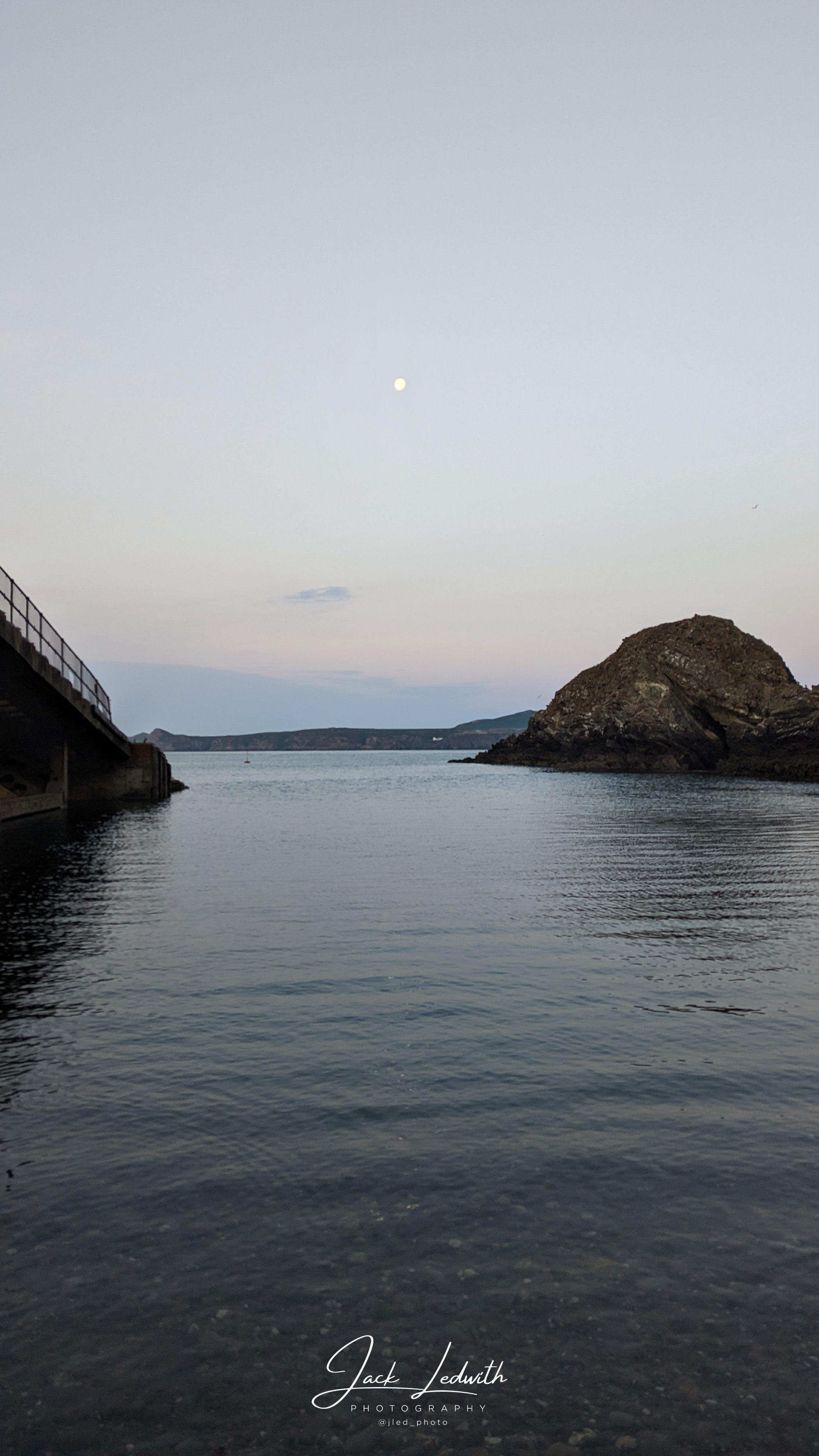
It was 5am when we crawled out of our tents. We’d arrived at 11:30 the night before and did not have nearly enough sleep. Regardless, we clambered down below the lifeboat station with our boats. As we put on our decks the sky had begun to glow but the sun had not yet seen fit to emerge above the horizon.
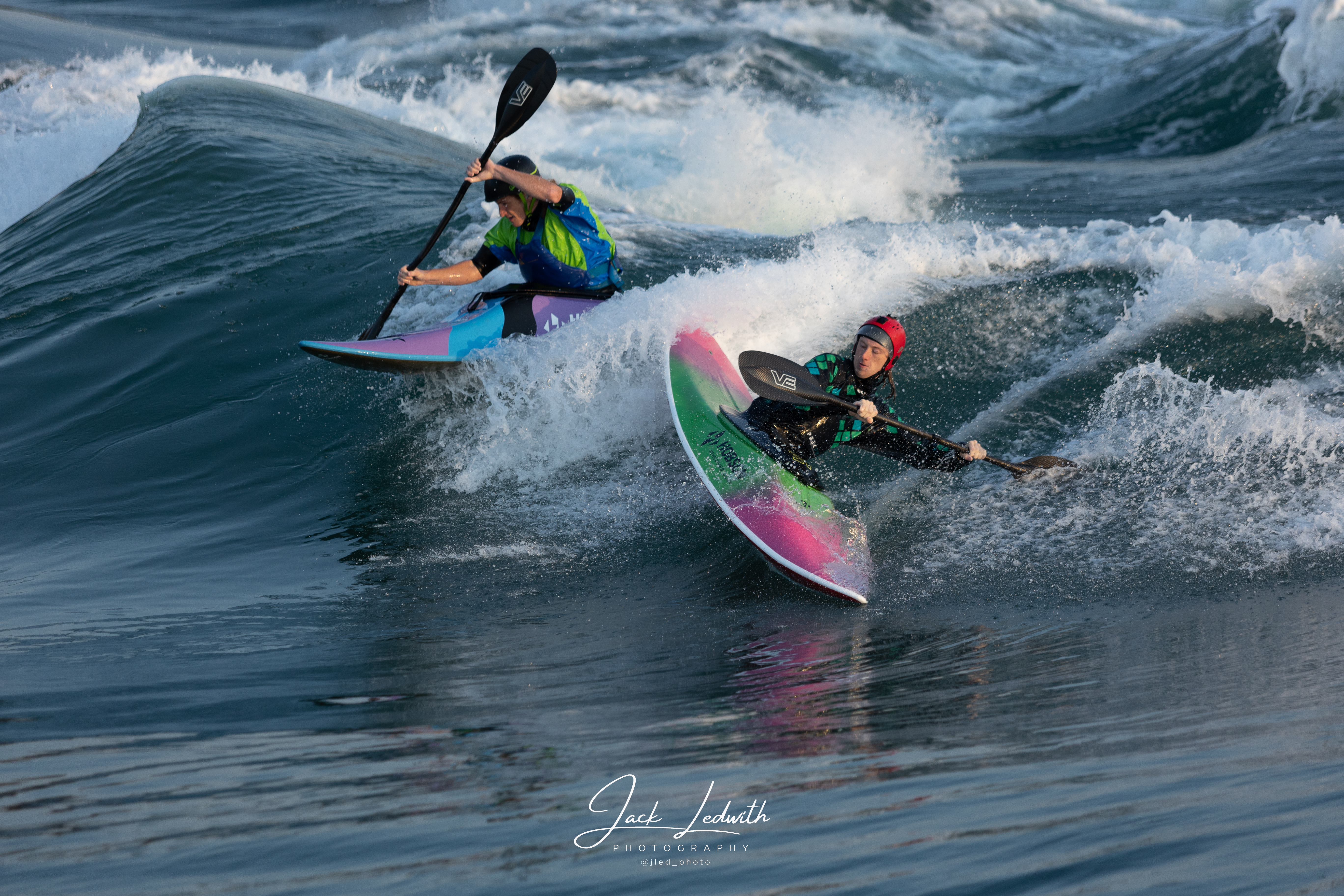
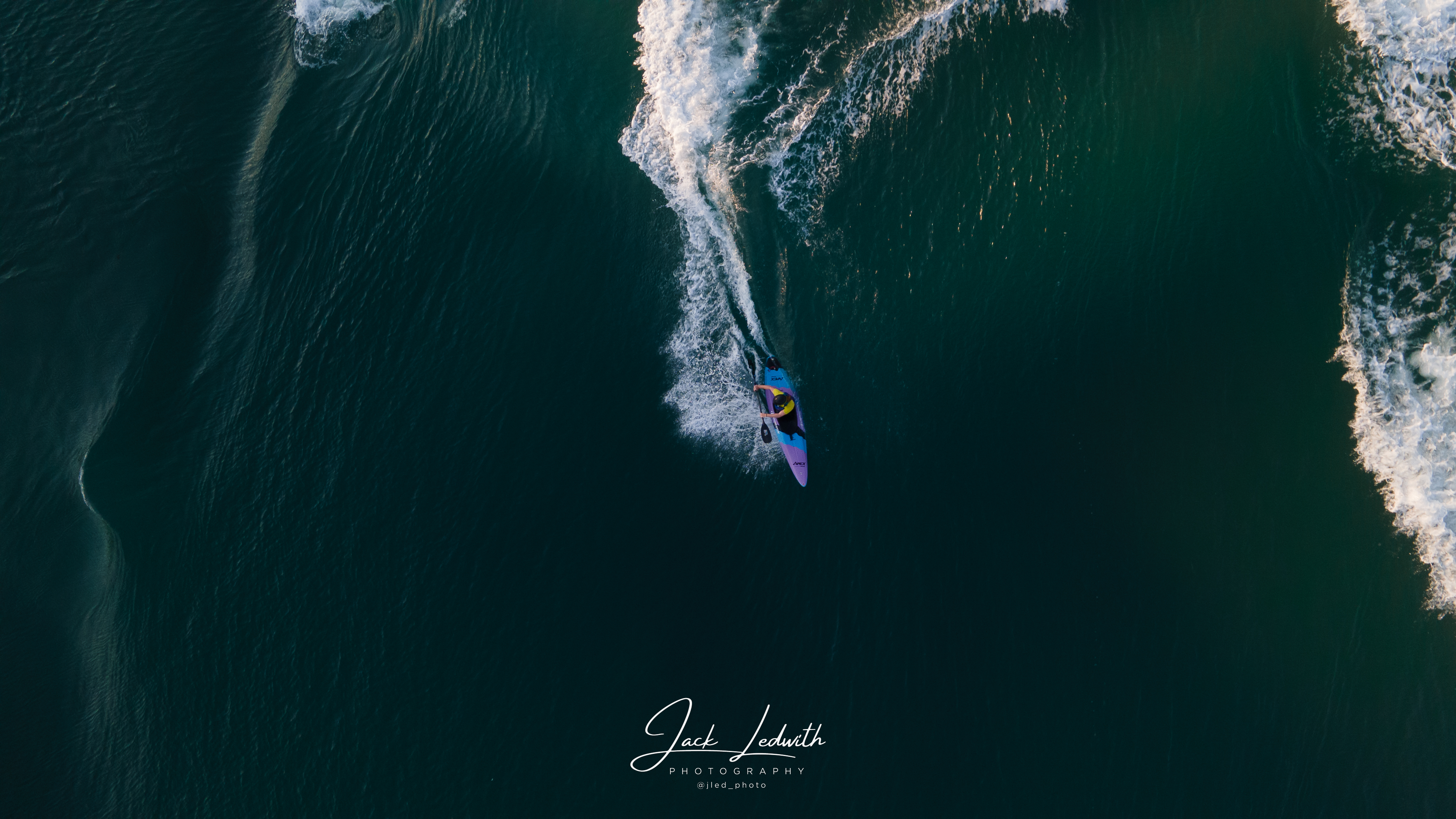
I have a little bucket list for canoeing, and for as long as the list has existed the Bitches has been near the top. For those not in the know, the Bitches is a tidal rapid that forms between the most south west tip of Wales and Ramsey Island. Named by old-timey sailors who swore like old-timey sailors, the Bitches is a formidable stretch of water and has been the ruin of many craft over the years. But, for plucky kayaks the waves formed on this rapid offer some of the best surfing in the UK.
Tidal rapids are something special. They seemingly spawn from nowhere as the moon and sun literally align to haul oceans over otherwise unavailing rocks, and where once sat quiet and calm water emerges a beast foaming at the mouth.
That metaphor may be a slight hyperbole, but fortunately like their werewolf brethren, tidal rapids follow the lunar cycle making them pleasantly predictable (unlike the rest of the UK’s rain fed rivers). Unfortunately today’s ‘pleasant prediction’ was that the bitches would be running around 6am-ish. Thus we found ourselves taking our first paddle strokes somewhat unsure as to whether we were the early birds or the worms.
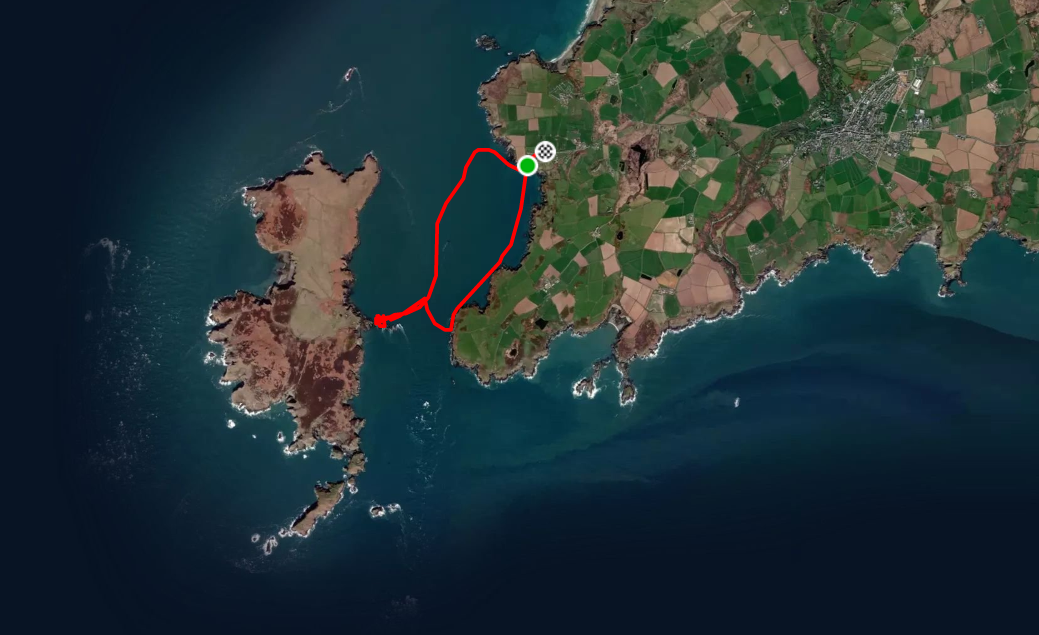
From the get on its roughly a 3km paddle up the coast and across the Channel to the Bitches. This is best done while the water is still fairly slack and it can still be a bit of a slog, particularly in short boats. The paddle adds a small level of jeopardy as it’s impossible to know the form of the feature until you get there. This elevates the Bitches a mere park and play into a propper adventure.
We passed snoozing seals and hugged the coast, eddy hopping up the sea as the tide started to move like a great lumbering freight train beginning to depart the station. Across the channel we could begin to see the white caps around the black needle like rocks that form the Bitches, and so we left the comfort of the mainland and departed into the nearly 1 kilometer ferry.
And it really is a ferry glide. As soon as you pull out into the channel it becomes apparent how fast the water is already moving. It is here that you may start to understand just how exposed you are, floating in a tiny boat in an ambivalent ocean. But stomach that feeling for now, keep paddling and eventually you’ll find yourself in the large swirling eddies below the rapids. It will all be worth it.
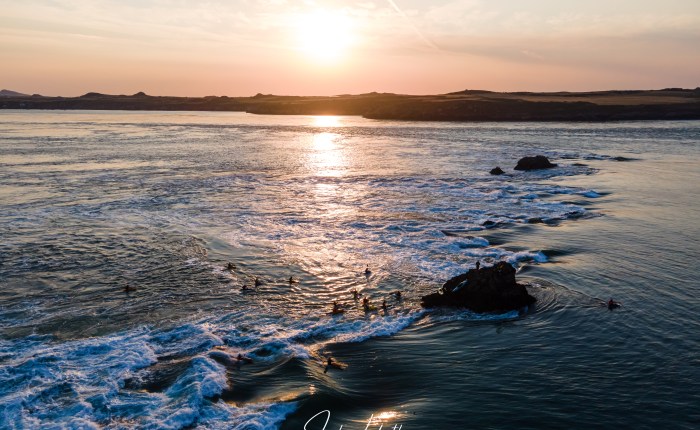
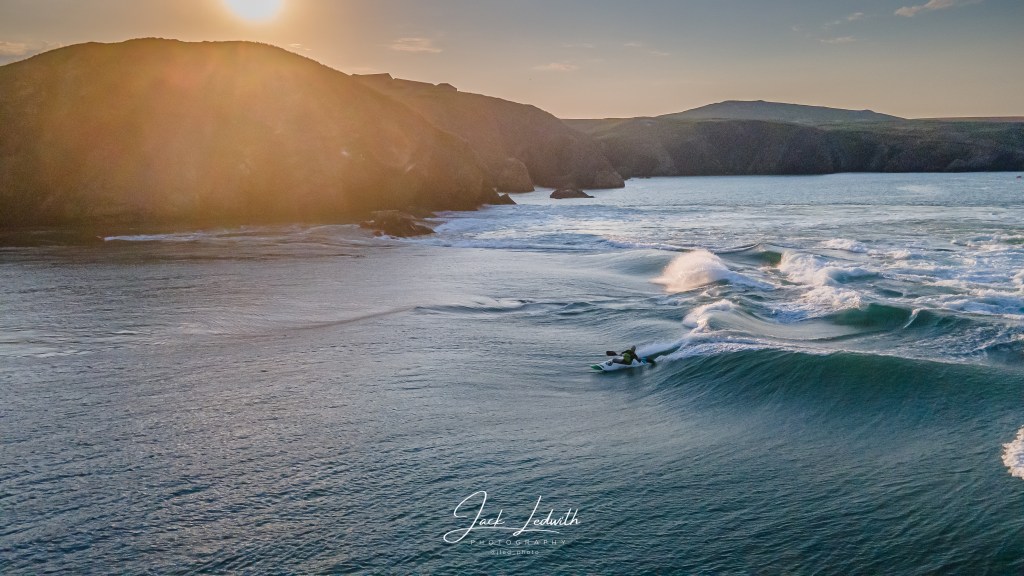
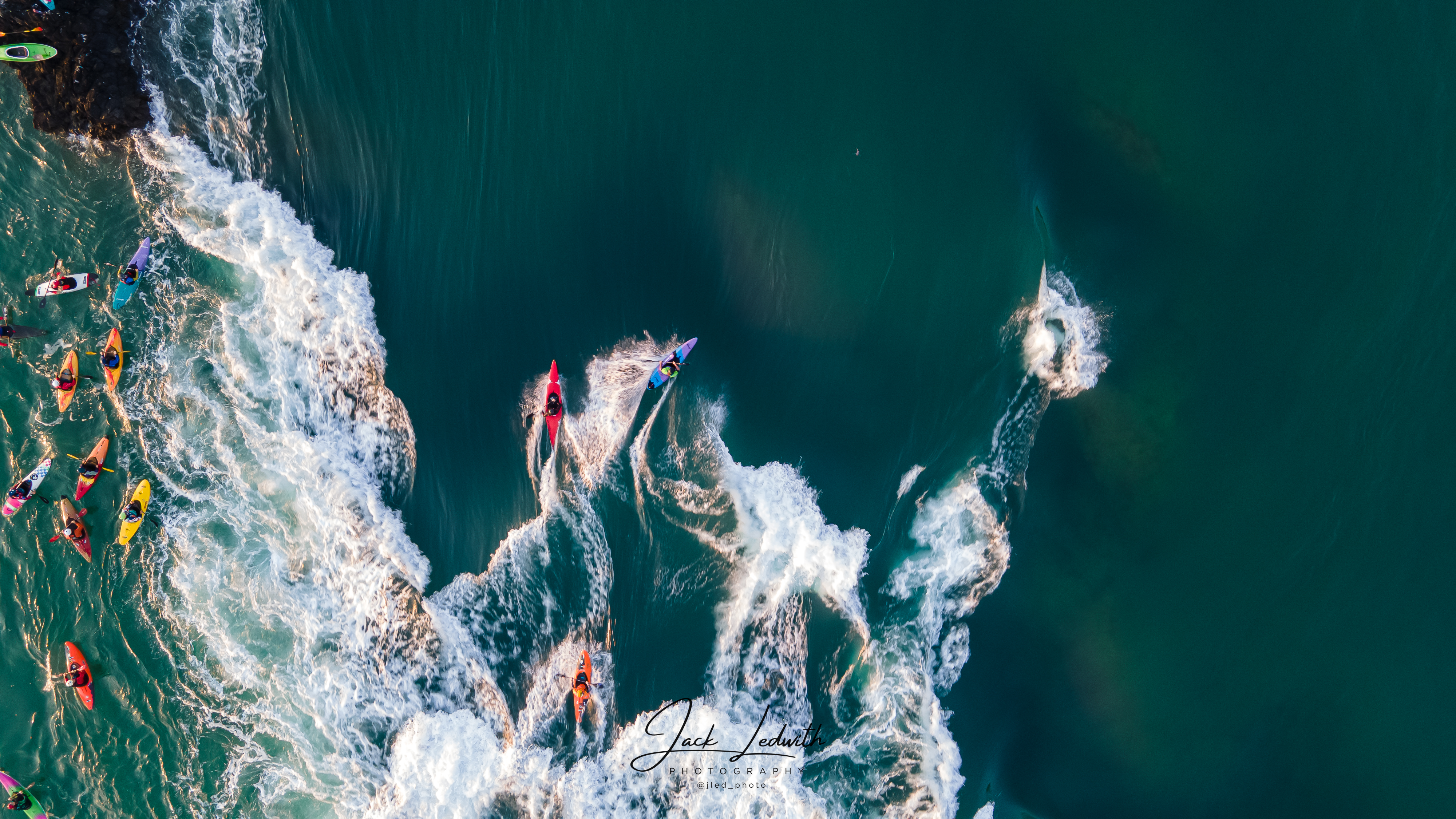
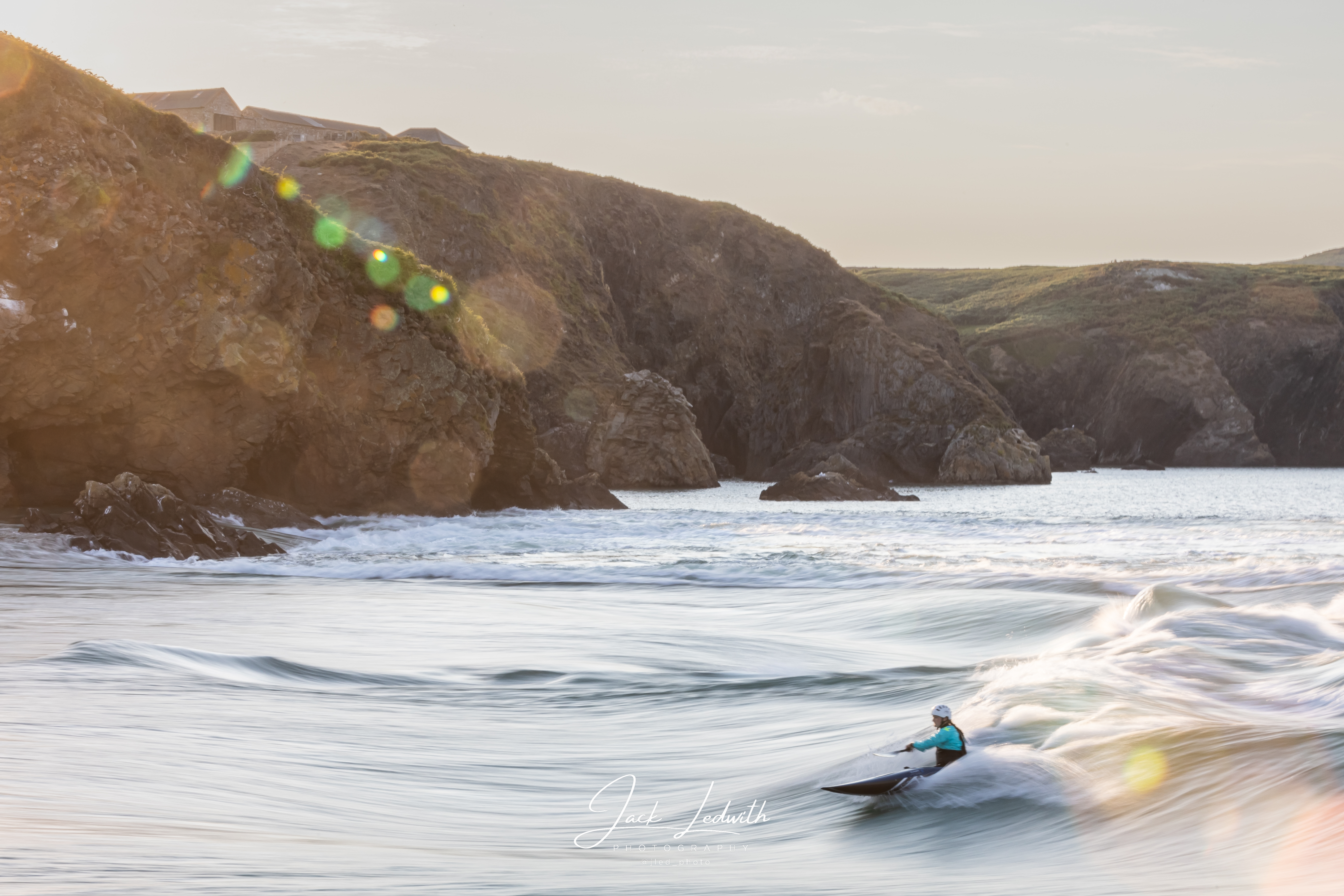
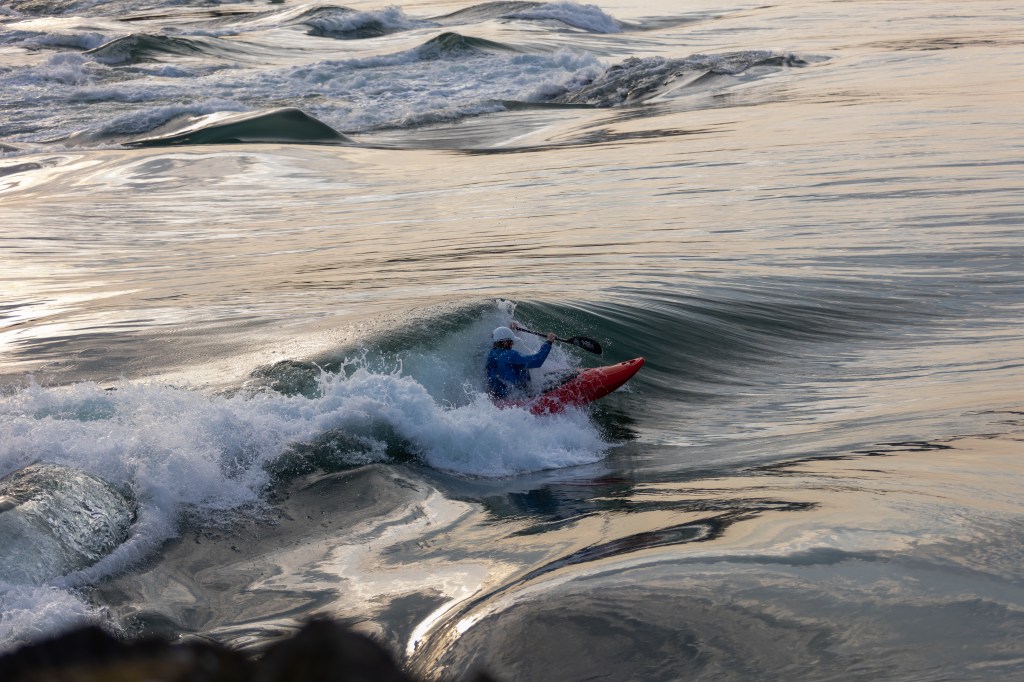
I don’t really know what to say about the surfing. You know, it’s kind of the main event, the reason you’d go. If a bunch of white water paddlers are willing to subject themselves to well in excess of 10 paddle strokes to get anywhere it’s got to be pretty bloody good. And do you know what? The Bitches is really bloody good.
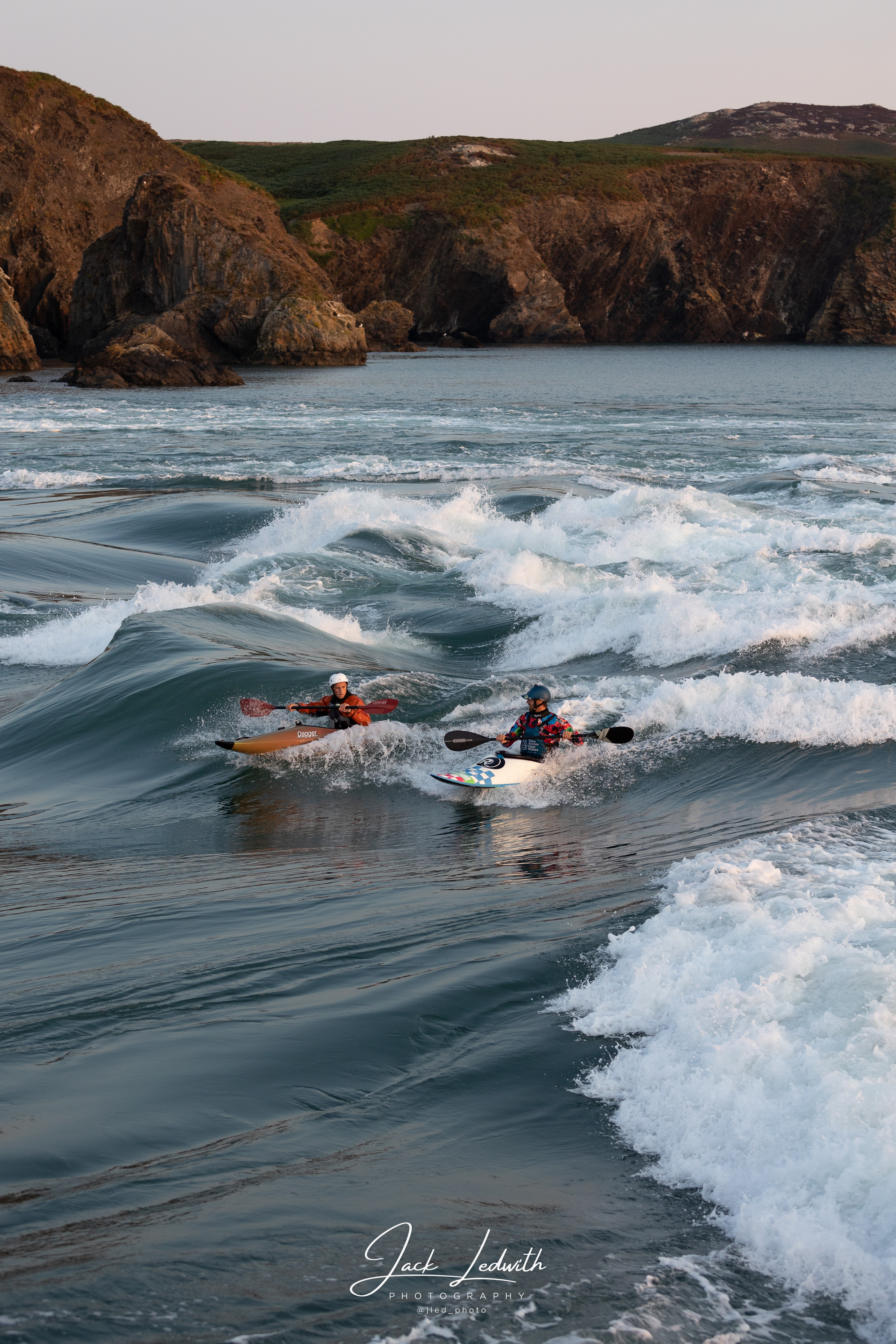
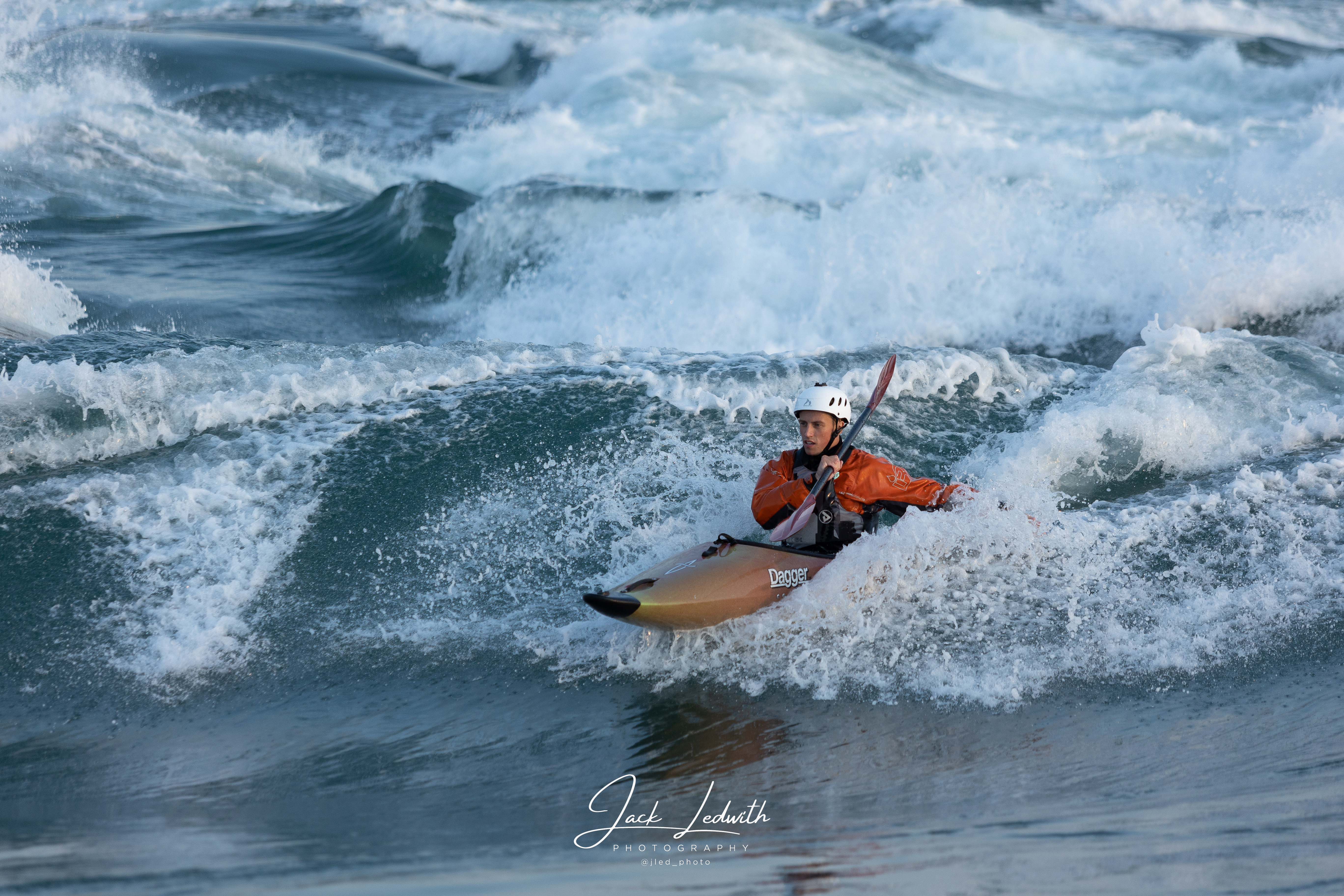
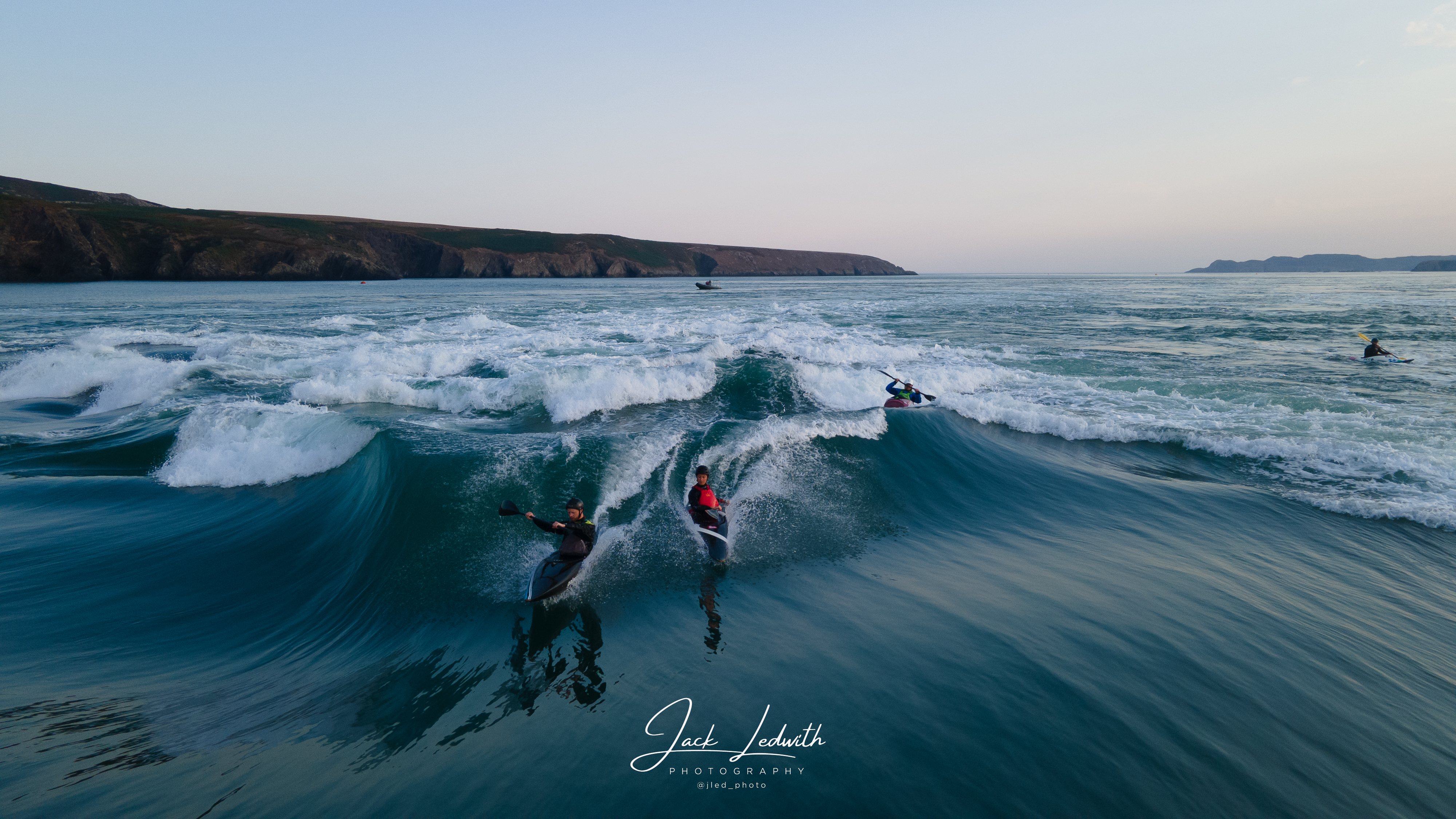
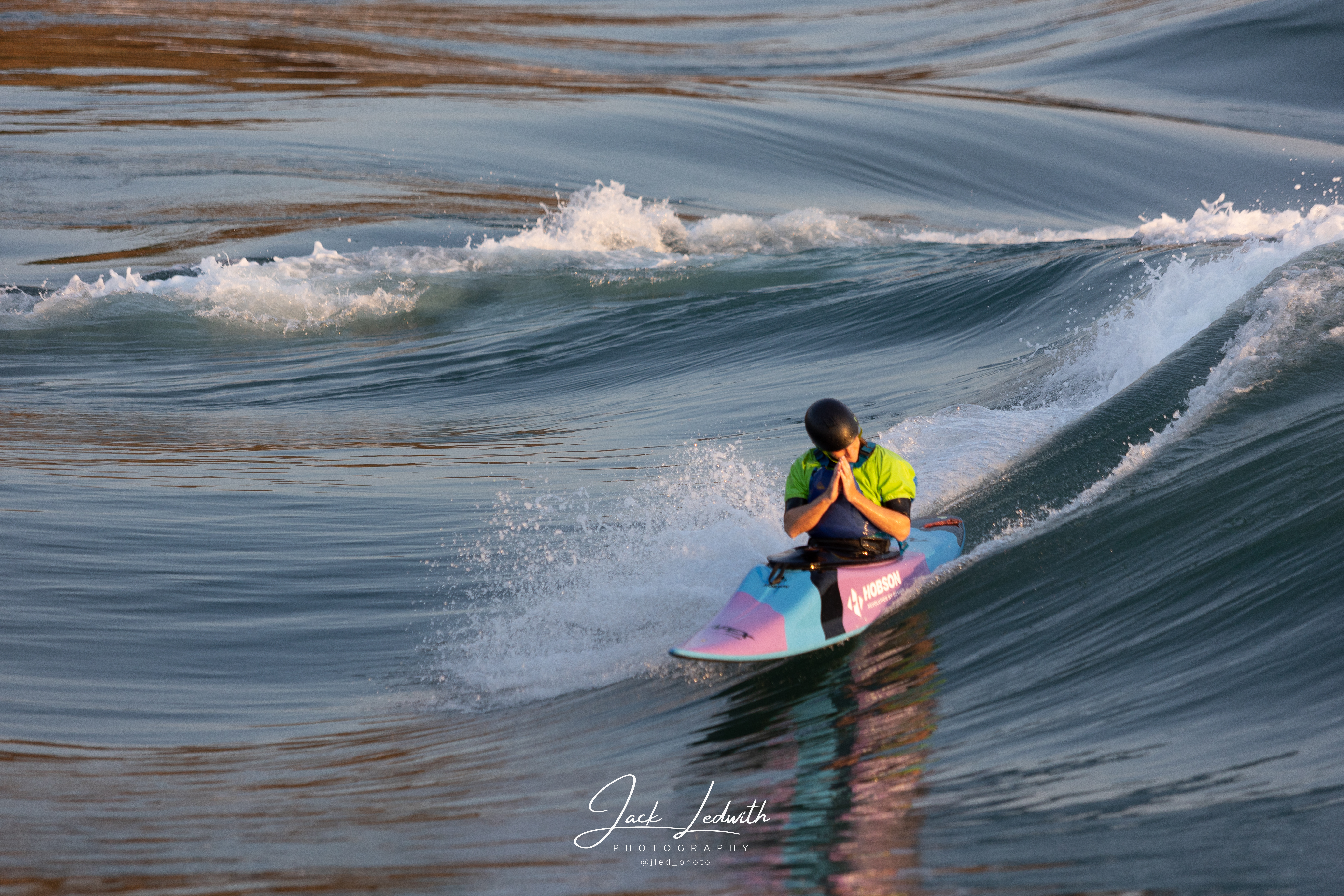
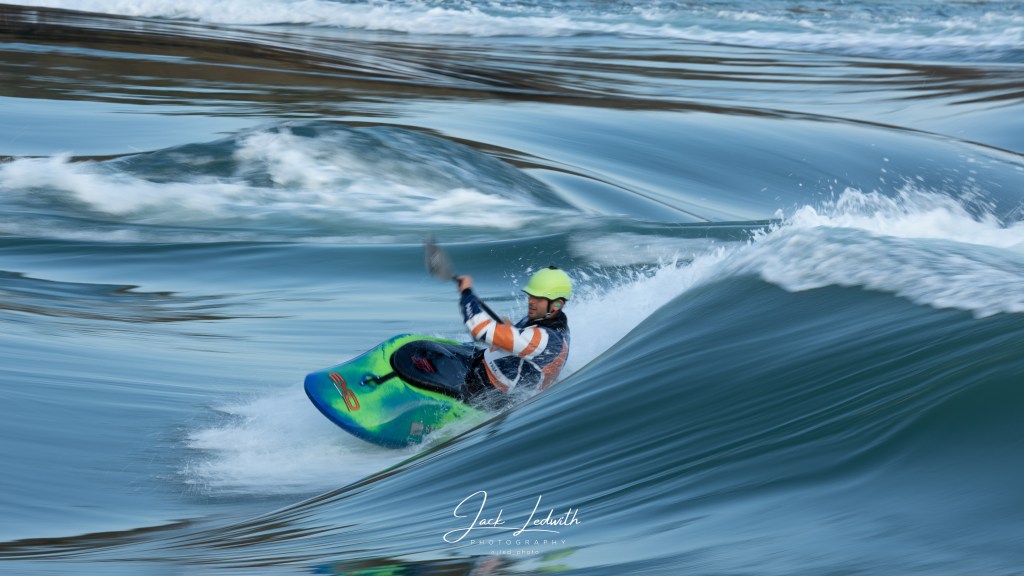
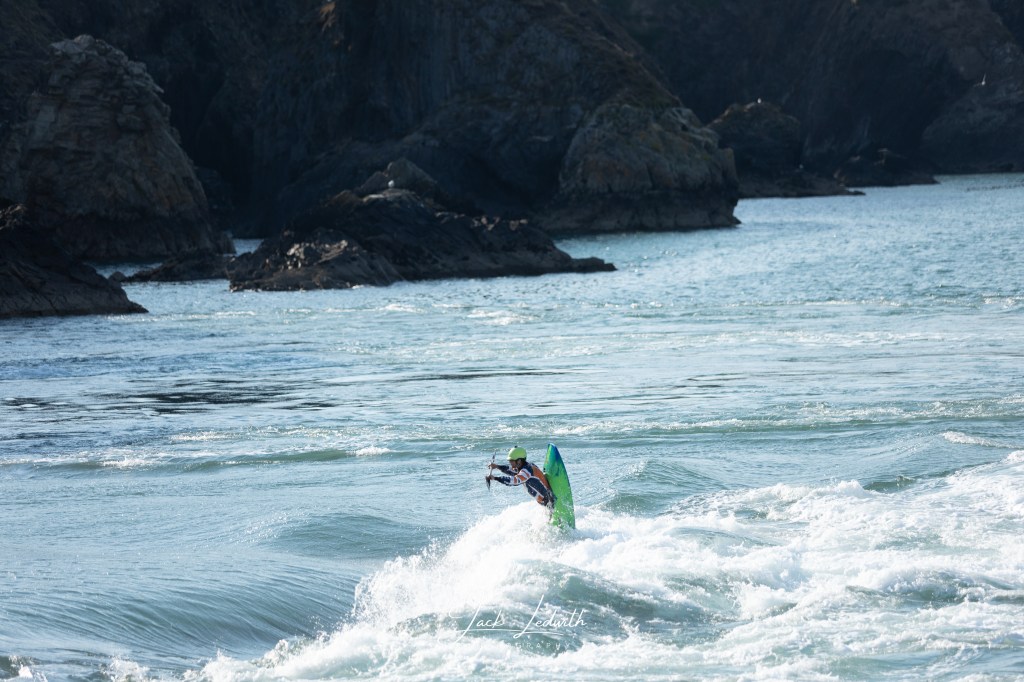
I think Jack’s photos speak louder than any words I could muster. We had hours of gorgeous soul surfing on beautiful glassy waves.
It really is the land of the long boats and I had a great time ripping around in my RPM, hoping over the central shoulder, to crash down in the curler on the far side. Some slightly more competent freestyle paddlers (looking at you Harry & Jack) were even able to pull off some blunts in their long-boats and the slalom boats could tear up even harder than my old plastic with their added speed. But, above all else I was probably most jealous of the surf kayaks.
Curious and reclusive beasts not often spotted in the UK, this was truly their natural habitat. Their flat bottoms, and knife sharp edges seemed to offer an unparalleled amount of fun on the fast green wave, even if it does take an unparalleled amount of concentration to avoid being power flipped into oblivion.
But fear not there are spots for short stumpy boats too, and portaging over one of the rocky outcrops means you’ll always be able to make the wave even if your boat or your biceps are not fast enough to ferry onto the main wave. There are also other features and waves to be found along ridges of rocks. These include, but are not limited to a curling wave that had a tendency to randomly swallow people and one that Harry Price described as ‘interesting’. So, make your own decisions on that one.
The main wave was by far the friendliest although, off the back of it the sea could be a little ‘‘munchy’. I definitely scored one or two mystery moves, and another member of our group actually suffered a deck implosion, so maybe remember those air bags. This was probably the first time most of us had ever had to use an x-rescue in anger. But not me, I was too busy eating sandwiches on a rock.
I’m also reliably told that a little bit of swell makes everything a little spicier and complicates the eddy access, as everything surges up and down several feet. It also increases the likelihood and size of the ‘way-home-whirlpools’, but more on that later.
Harry proving he can paddle short boats anywhere and “Mr Teapot” about to get swallowed.
Once everyone is knackered and the fun is over and done with, your paddle is not over and done with. While the paddle out is a sedate slog, the paddle back is certainly spicier. The route back to St. David’s lifeboat Station looks simple, but by now the tide is pumping even faster than before and will do everything in its power to flush you out into the Irish Sea or drag you towards some inconspicuous looking white caps.
It was just as we were considering these two fates that a certain Mr Teapot mentioned the way home ‘way-home-whirlpools’. “Way-home-whirlpools?”, I answered. “I hate whirlpools” replied jack”. And just like that all three of us were headed round in a big circle as a ‘way-home-whirlpool’ opened beneath us, threatening to suck us all in. These delightful features can form as you pull out of the relative calm behind the bitches into the main current and are certainly something to keep an eye out for. I have long been a believer that swans make the best sprint coaches, but they come second only to large whirlpool spouts that are already grasping at your tail.
Having survived our little ordeal, our attention was drawn back to the whitecaps. In actual fact these are far from inconspicuous and once in the current they barrel up faster than anticipated. As you rapidly draw closer you might make out a suspicious horizon line in the middle of the sea. This is Horse Rock, a series of underwater stacks in the middle of the current that form far less friendly whirlpools big enough to sink actual boats, let alone kayaks. Going through this is not recommended.
Thus there are 2 options. Option 1, a mad ferry above horse rock where you’ll be convinced you’re about to be flushed into it regardless. Or option 2, a mad ferry below the whirlpools where you’ll be convinced you’re about to be flushed out to sea. Personally, having now flirted with both options, I’m an option 2 man. I think the lifeboat will do a much better job of rescuing me if I’ve not been pre-drowned by Horse Rock. Plus, I’ve been meaning to visit Ireland some time regardless.
With only a few brief moments of panic we made it back to the lifeboat station, and clambered back up the steep steps. With the early start we were off the water by 8:30am. Just in time to grab Breakfast in St. Davids and spend the day doing whatever it is normal people do at the beach. Later we bag the evening tide and then a slightly more sociable 7am session the following morning.
With all the hazards and a veritable sea of consequence the Bitches is a highly recommended trip, but only for seasoned paddlers. There are local boat tours of the rapids and wildlife if you want to see the spectacle. If you pick a good tide, you may even see some paddlers out for a play. Or perhaps myself as I will definitely be back.
Thanks to everyone who made this trip.
The best Biteches!
Side Note: If traveling down from the north be sure to swing by Gloucester Services for what can only be described as an enlightening experience.
We live in unprecedented times; a phrase that has been said unprecedentedly often recently. That is because recently an unprecedented pandemic has been sweeping the globe. This unprecedented pandemic has required unprecedented responses from governments around the world, such as properly funding healthcare services and listening to scientific advice. This has led to lockdown around the UK (and the rest of the globe), where people are only allowed to leave their homes for essential reasons such as work, buying more booze, and exercise once per day; As long as that exercise isn’t canoeing.
In the UK nearly all navigations have been closed to slow the spread of the virus and to not overwhelm A&E departments with the truly staggering number of casualties watersports usually produce.
As kayakers, not being able to go kayaking may be our greatest fear of all. Second only to the fear of our friends and families dying alone in overcrowded and under equipped hospitals. However us kayakers are a hardy lot and have been finding innovative new ways to not go kayaking. We at River Stench have compiled our favourite options that are definitely 100% safer than just going kayaking!
1. Lifting heavy stuff
Only try-hards own heavy objects specifically designed for lifting. But fear not, Dave from Sussex has discovered that many people just have random heavy objects scattered around their home! Why not try some nice dynamic lifts with anything you may have around your home. Dave recommends: assorted furniture, priceless family heirlooms and pets/small children.
For a more traditional weight bar exercise you can try duct taping bricks to a broom handle. If you don’t have any bricks lying about, just steal some from your neighbours house; the police will be too busy arresting sunbathers to do anything about it.
Dave also suggested lifting a fridge for a real challenge. Just be sure to lift from the back, you wouldn’t want any of those lovely kayaking muscles getting weak now!
2. Back Yard Rolling
Water is arguably the thing that makes water sports more dangerous than non-water sports. Therefore why not replace that water with some nice firm concrete! There is no way you could drown on that. Arguably nobody has taken this more more to heart than the newly formed back yard rolling community, they’ve even got a facebook page! Determined not to let the pandemic get them down they’re even having a competition to see who can smoosh themselves between their boat and the ground the most times in 30 seconds. We at River Stench believe this may be one of the greatest innovations in not kayaking. Watch this space, this is bound to be the next big thing!
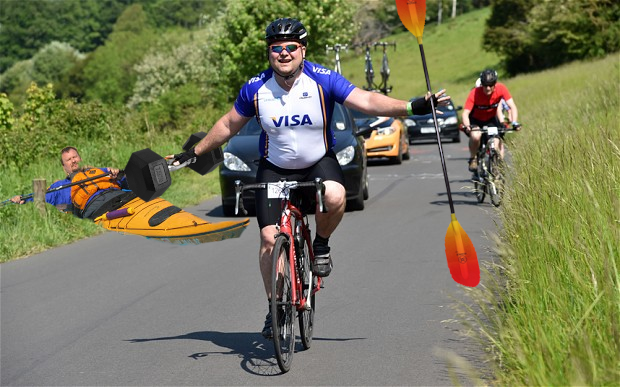
3. Road Cycling
Whoa, slow down there you’re saying; that almost sounds like doing a proper sport! But hear me out, cycling is a great low impact way of building your cardio; at least until you fall off. Sure you may have little experience but now is the perfect time to blow all your budget on a top of the range bike and bomb it down the steepest hill you can find. Canals and rivers are clearly too dangerous in the current situation. However, it’s a well known fact in cycling circles that the faster you go the softer the tarmac. So be sure to only wear your skimpiest lycra body suit and an old battered helmet when sticking it to Chris Froome.
Bonus: If you’re worried cycling may not sufficiently work the shoulders; place your chest on the seat and form a plank with your feet on the handle bars. This should work both your shoulders and your core! It’s probably pretty safe too, right? I mean nobody’s told us not to…
4. Slacklining
Do you wish you were cooler than you are? Why not try slacklining? At least that’s the advice Josie from Nottingham gave us. Don’t happen to have a slackline just kicking about? Just use a roof rack strap or something instead. Pandemics are all about improvisation.
If you master this skill in lockdown you’ll be able to woo everybody at competitions with your off-water antics. If you’re struggling at first just raise the stakes by raising the line. Nature has no better teacher than consequence.
Pro Tip: While the canals and rivers are closed the towpaths aren’t! Sneak back to your natural habitat by stringing up a line between two banks. As long as you don’t fall in the water the rozzers can’t get you, FACT.
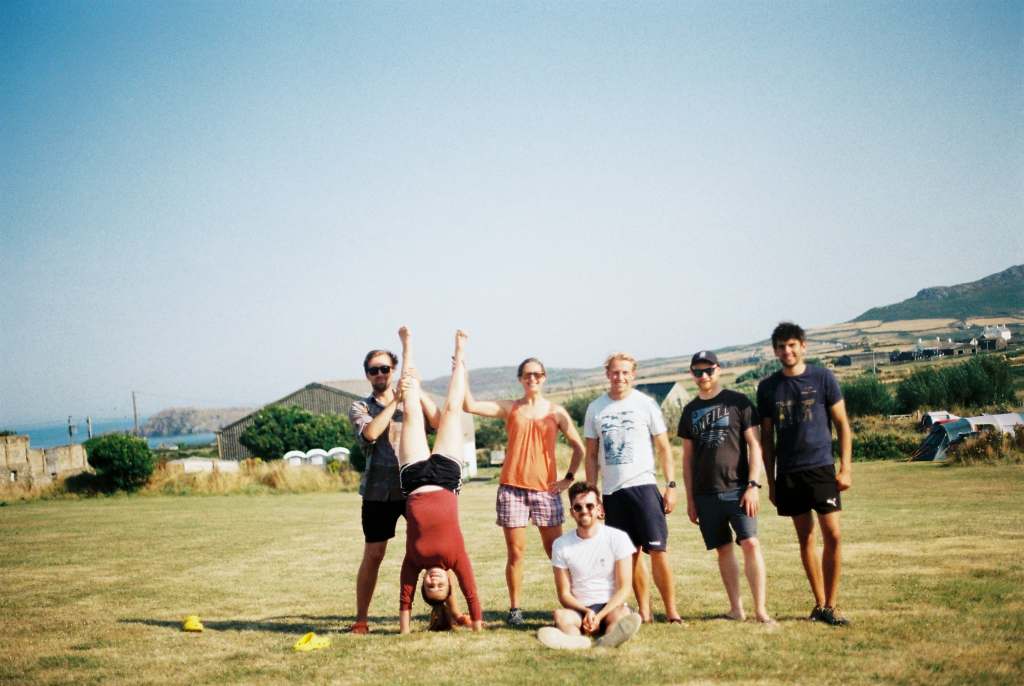
5. Getting changed into kaying kit while hand standing?
We at River Stench don’t fully understand this one. But hey, they seem to be having fun. If you can do it in your own home, how dangerous can contorting into strange shapes while being imminently about to fall over be? And don’t worry if you’ve already locked away all of your kayaking kit, you can just use a plastic bag.
6. Competitive Yoga
In truth I was 50/50 as yoga is notoriously dangerous. Not because of the sport itself but because of its tendency to to make your face more punchable. But with social distancing in force what’s the worst that could happen? Speared by a giant lance? What is this 1536?
Yes, despite its associated hazards, “Yoga is an excellent way to build both strength, stability and flexibility. All useful for kayaking” says Karen from Woking. “However what yoga is really about is mindfulness, the flow of energy and just being better than other people.”
Yes, Yoga has been scientifically proven to be the best way to demonstrate just how well you’re dealing with this whole Pandemic thing. Just be sure to plaster your every pose all over social media like Karen. Otherwise how would people know you’re better than them. While you’re at it, why not go vegan too?
Bonus: once this is all over think how cool you could look doing your zen as balls thing on a SUP board at the next sprint regatta or polo tournament.
7. Homemade Ergo
DIY enthusiast Brian from Leamington Spa is allegedly planning on building a kayaking Ergo for himself. “See all of those random offcuts and rusty metal in that there skip? I reckon I could build a kayaking Ergo from that” a concerned bystander reported him saying.
When questioned on this Brian admitted that he’d “never held a hammer in [his] life”, but was “filled with unjustified confidence” having watched several re-runs of Scrapheap Challenge. “All you really need is the spinny bit at the front, a rope, and an old paddle, right?” said Brian as we hung up.
Best of luck Brian.
8. Just post fake activities on strava
Unable to meet up with our usual club mates, Strava has become a hub for showing off how well you’re coping with the lockdown. But it’s not like anyone’s around to actually see you do or not do the session. You weren’t going that fast at the start of the season, nobody will be going that fast at the end of the season. Next year can be your “big” comeback. Until then it’s just about keeping up appearances.
Did you know there’s a ‘manual activity’ button? We at River Stench are not saying you should, but you definitely could just pretend you’ve done a weight session or something. Lets just all crack open another beer and slam on the next episode of Tiger King.
9. Climbing trees
Okay maybe you do actually want to do some exercise or have already completed Netflix and are just a bit bored? Josh from Basingstoke says “why not climb trees? They’re like nature’s gym equipment!” And we at River Stench agree. Hoisting yourself up to precarious heights is a great way of building upper body strength without having to do anything as tedious as pull-ups.
What’s the worst that could happen? Fall out and break your arm? Sombody’s gotta keep those broken arm doctors busy. They’re probably really jealous of all the fun their buddies are having on those corona wards.
For an added challenge try climbing a tree in a gale force winds. Jumping between moving branches will help improve your coordination. Josh has reassured us that the terrifying swaying motion will take you back to happier days on the river.
Good one Josh!
10. Jousting
Nothing says social distancing like a 10ft lance! Henry from Royal Canoe Club thoroughly recommends this traditional British sport.
We at River Stench hope these exercise tips and ideas make your lockdown a little more bearable. Remeber be safe and stay inside (with the exception of exercise and whatnot). Hopefully we will all see each other again soon on the water. That said I’m still going to remain at least 2m away from you because I don’t like you and you smell.
River Stench is a proud purveyor of ‘Real Fake News’ ™. If you have any comment or death threats please contact us on Facebook, Twitter, or in the comments below.


![Euros ’23: North Macedonia [part 2]](https://riverstench.com/wp-content/uploads/2023/06/img-20230518-wa0002.jpg?w=700&h=430&crop=1)
![Euros ’23: North Macedonia [Part 1]](https://riverstench.com/wp-content/uploads/2023/06/img_20230523_110205_302.webp?w=700&h=430&crop=1)



 River Stench