If I had one word to describe the weather in the UK it would be ‘changeable’. And, after one of the mildest Autumns the paddling community can remember, change the weather did.
The last of the 2024 European Cups Race was to be held on the river Dee, North Wales, and the Czechs had assembled a small invasion force. Their plan had been to arrive early on Tuesday and tour round the UK sampling rivers and campsites. But as they disembarked the ferry they were shocked to find empty rivers and snow blanketing. It was then that they turned to the backup plan: Nottingham, and my apartment floor.
Anyone who has visited my flat may be wondering how I could possibly fit 5 Czechs plus an additional Slovakian. However where there is a will there’s a way and my unannounced house guests proved adept at tessellating themselves into my limited floor space like a bizarre game of human tetris.
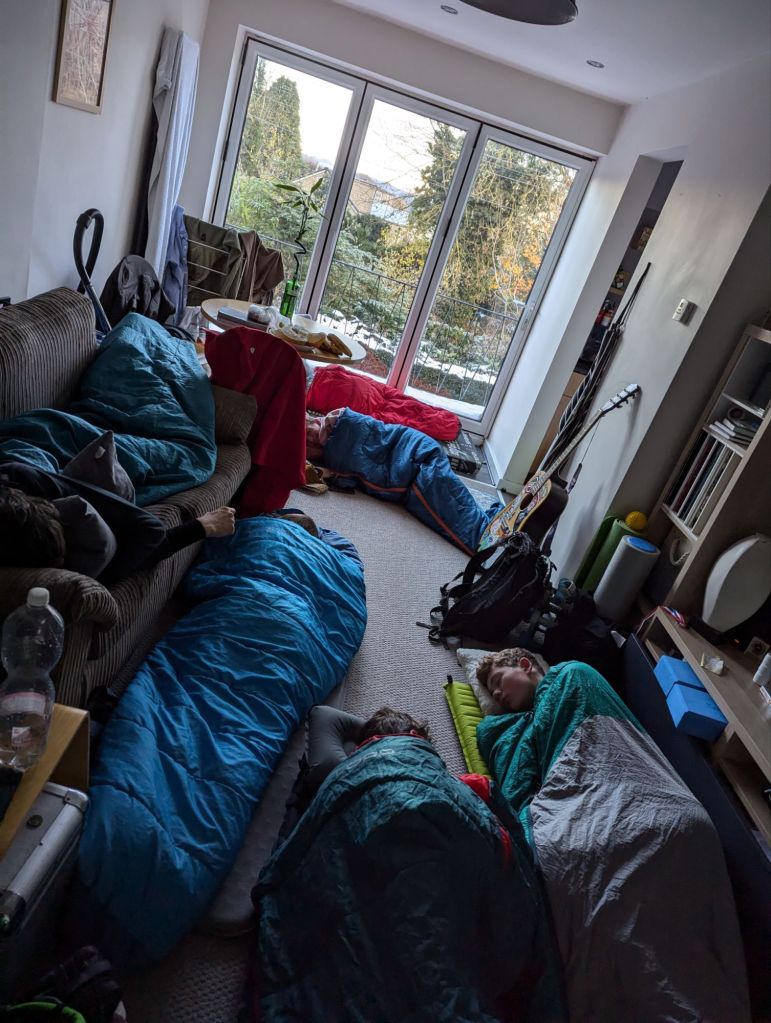
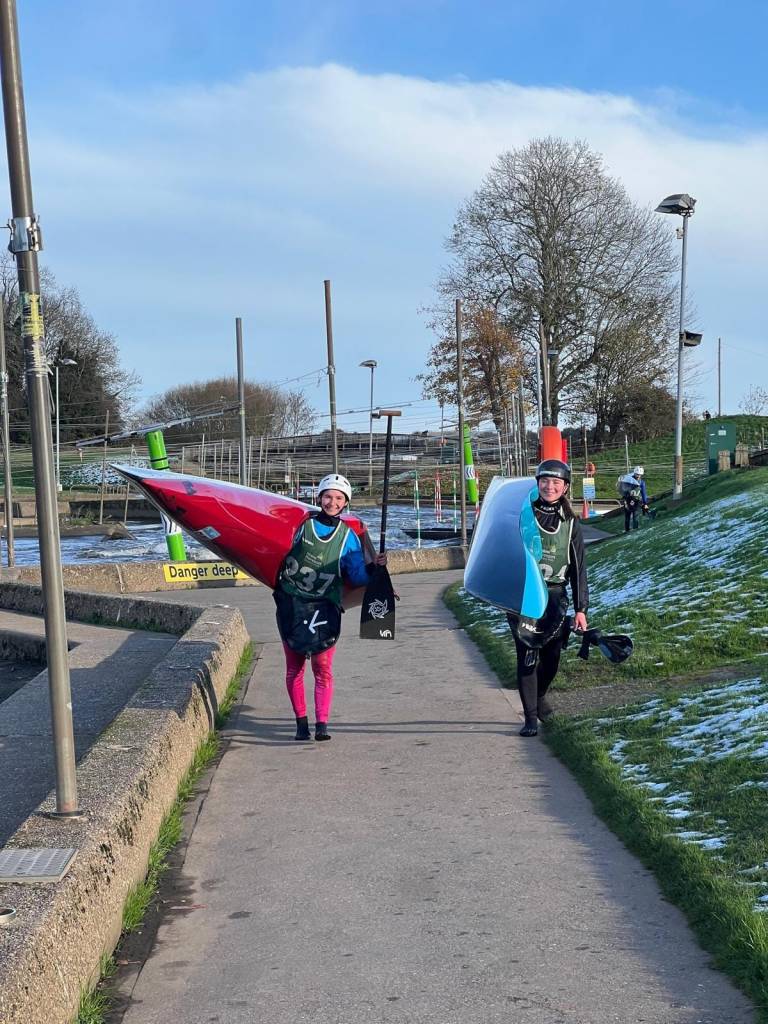
While it might be lacking in warm weather, beautiful scenery or even clean water, Nottingham is surprisingly a paddlers’ paradise. Between the white water course, river, lake, canal and the nearby weirs there is never a day in Nottingham that one can’t go canoeing, and there is rarely a day when we don’t. Something our international friends were a little bit horrified to discover.
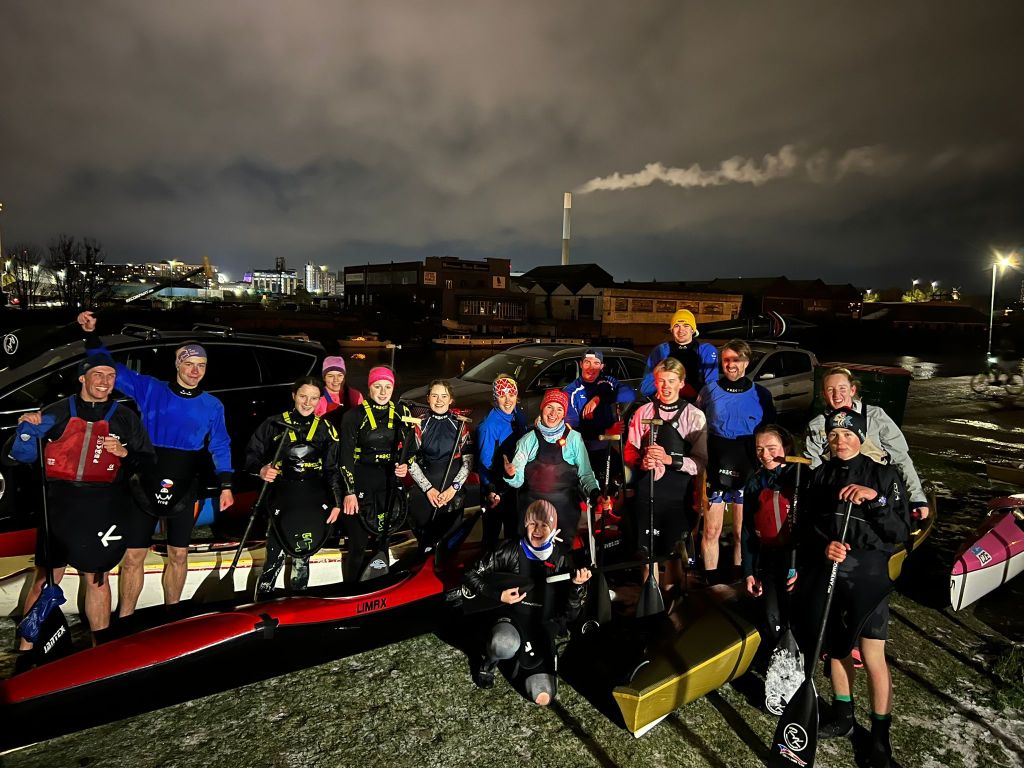
During the day Molly did an excellent job of showing our guests down the white water course, but it was the evening sessions, in the dark and sub-zero temperatures on the Trent that shocked our friends. I’m led to believe that over in Czechia it gets so cold all the rivers freeze and they all take up more appropriate and sensible sports like skiing.In contrast, the UK climate exists in some sort of anti-goldilocks zone where it never gets cold enough to do proper winter sports, but is more than cold enough to be utterly miserable. Yet there is a saying that “there is no such thing as bad weather, only bad clothing”. And in the bleak midwinter, bad clothing consists of anything less than a hat, cag, pogies, and at least two thermals. But we paddle on, as ice forms on our boats and spray decks freeze like concrete. Getting off the water Alexandra turned to us and said “We have a newfound respect for the British, you are very tough!”
Maybe the highlight of their stay was the Canoe Thursdays session. The brainchild of Nicky Cresser; ‘Canoe Thursdays’ is an effort to grow the C1 and C2 classes at Nottingham Kayak Club (and the UK in general). It’s a session that has played no small part in the entire British Teams’ success over the past year, and it was a joy to share it with everyone, particularly Alexandra and Viktoria who’s unbridled love for the canoe class, is at least half of the reason why us Brits climbed into (and then promptly fell out of) C1s in Macedonia last year.
We finished the session with a little pizza party in the NKC clubhouse. For all the geography and waterways that make Nottingham a paddlers paradise, it is really the community here that shines the brightest. Upon the return to my flat I treated everyone to a ‘wee dram’ of Scotch to toast the visit and the weekend’s racing ahead.

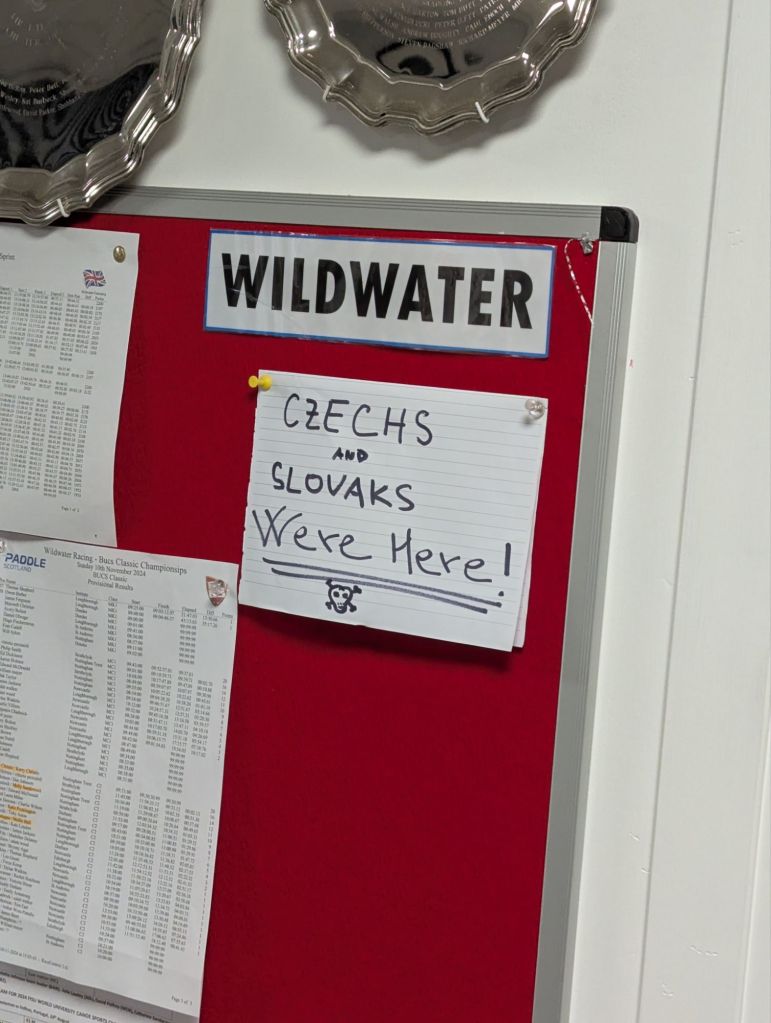
Outside of paddling the Czechs had busied themselves with touristing around Nottingham, visiting the caves and poking around the castle, but there was one major UK tourist attraction they wanted to see above all else: Clarkson’s farm. The mention of this had raised a few eye-brows around Notts, particularly as we tried to explain that it would be quite a detour on the way from Nottingham to North Wales but our visitors were adamant, Diddly Squat is a ‘must see’ on any visit to the UK. Over our whiskey, Alexandra had explained the show had been a big hit (alongside Top Gear) back in Czechia as we rewatched an episode and how the show had gotten everyone talking about the plight of farmers, much as it has here. Plus they explained that they just enjoyed driving around the UK and seeing all the different styles of towns and houses. It’s enlightening to see all that you take for granted through the eyes of others. She then went on to tell us a tale of how she had once told an old lady she looked like Jeremy Clarkson. Somehow, said old lady took a lot of offence to this comment, much to Alexandra’s surprise. For the life of me I can’t think why…


While it was lovely hanging out with everyone for a few days, one thought had persistently troubled me: The low river levels. Rarely are you unable to paddle the Dee but as the water gets lower it certainly becomes more unpleasant. Alex had been over to the racecourse at Llangollen the previous week, and had described the experience as ‘crunchy’. With folks traveling from across Europe to come to our little race it felt embarrassing to show them UK paddling at its absolute worst.
These conditions (cold and empty) persisted on Friday as paddlers from France and the Netherlands joined the practice sessions on the Dee. However I’d spent the week making prayers and sacrifices to the rain gods and fickle as they are, the rain gods answered on with storm Bert.
It had rained heavily through Friday night, and by Saturday morning practice, both the river and temperature had risen to much more comfortable levels, although those of us who know the Dee well knew the river level was unlikely to stop there. All rivers in the UK are extremely rain dependent. Small catchment areas generally means rivers are quick to rise as it rains and then promptly fall off as the weather clears up. The Dee is by no means the worst offender, but with the heavy rain melting the snow that still blanketed the hills we knew there was a lot of water on its way, and yet we still underestimated how much and how quickly the river would rise.
As rivers rise the racing lines down them can change quite dramatically. In the case of Serpents Tail, the rapid we were racing, the line entry to the crux shifts from hard right over towards to left. Both lines converge to fire you through the tight constriction at the bottom, but the change to that entry move is significant. As we sat in the warmth and shelter of the Chain Bridge hotel watching the river rise, the debate in the British Camp was whether it was worth abandoning all of our practice down the right and whether the river had risen enough to do a ‘hail mary’ down the left.
In a standard sprint race, you get two runs and your final time is taken as the best of the two. But with the river rising as it was, we were almost guaranteed to get a faster 2nd run. Therefore we were split between two schools of thought: Play it safe, do the first run down the right then try the 2nd run on the left, or do both runs down the right, with the 1st run acting as a bit of a practice for the 2nd.
By the time I’d made it to the start line the river had risen even further and was starting to lap around the feet of the volunteers on start duty. I decided to go for the 2nd option and when the whistle blew I set off for the left line.
Unfortunately everything went askew quite quickly. Not only does the line down the crux of Serpent’s Tail change with the level, but so does the little lead-in rapid. As the river widened and the waves grew I found myself a little lost and astray from the main tongues of flow that would carry my speed. Still I dug deep and worked myself back online for the drop into the main event of the rapid. The last time I had run the left line was well over a year ago, but my memory served

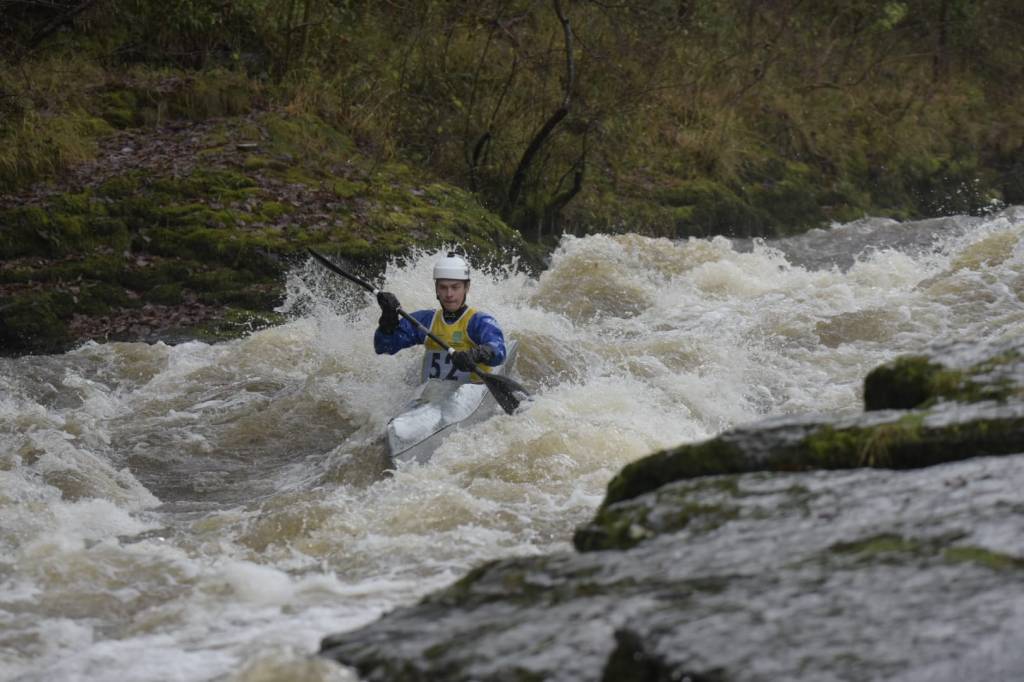
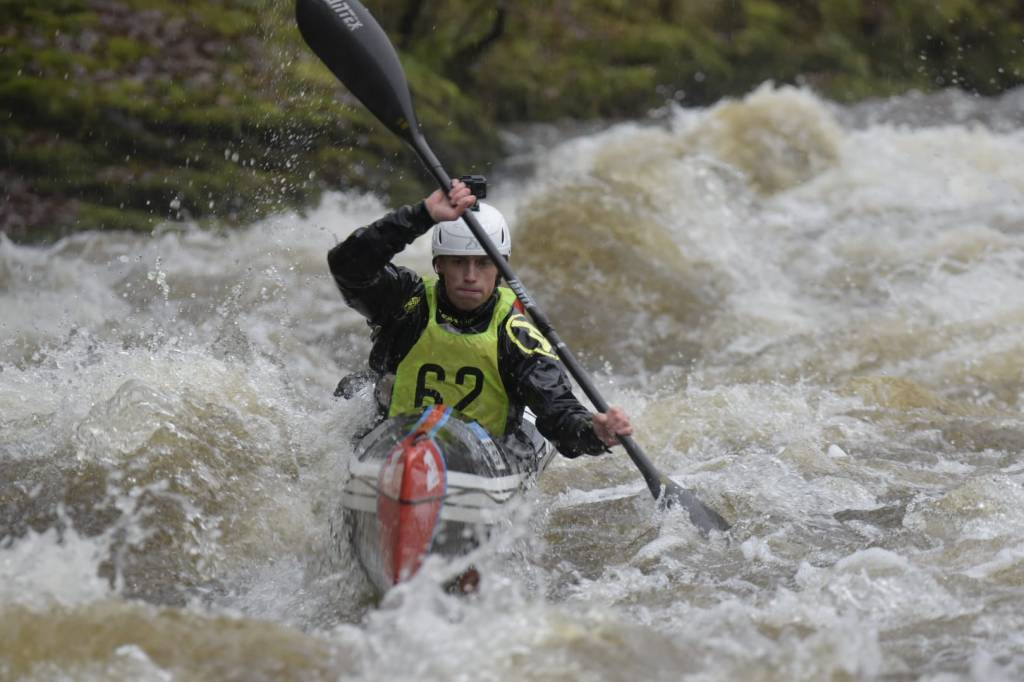

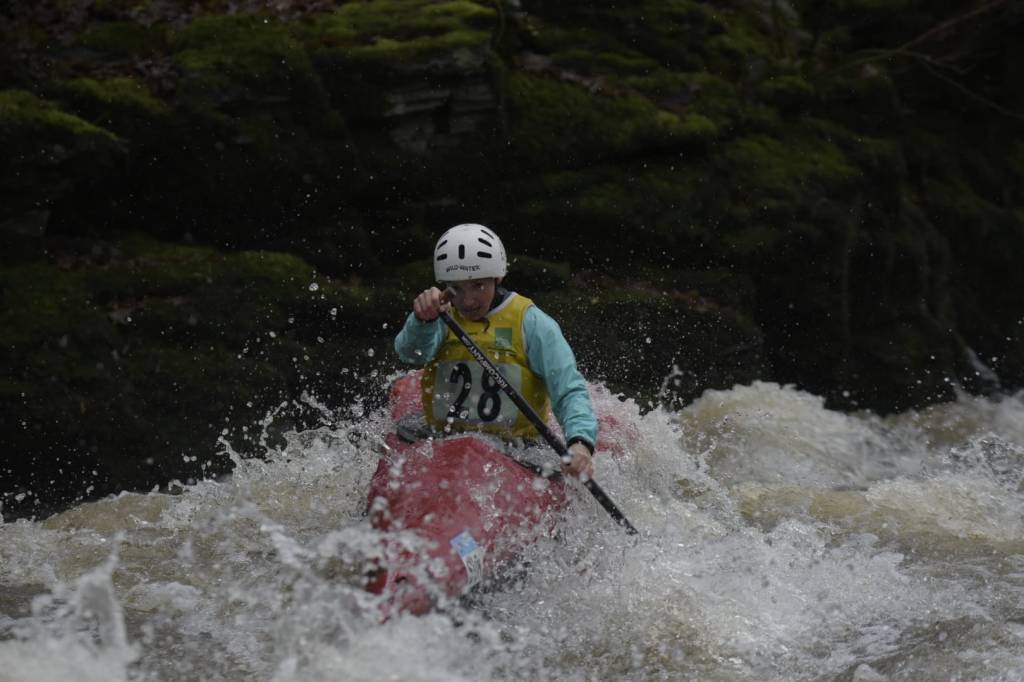
me well, as I skirted the large holes down the main ramp of the rapid. However as I crested the final wave, the river revealed that the end of the rapid, that had previously been the constriction, was now a chunky hole feeding into an undercut on the right. I managed to sneak in a right hand stroke, keeping the bow up and narrowly avoiding the undercut, but my speed stalled out on the boils behind this and I once again found myself fighting to reaccelerate the boat as I headed for the finish. It was far from a perfect run, but I now knew what I could do to fix it on my 2nd.
Alas the second runs were not to be. In the scheduled hour between our first and second runs, the river continued to rise and rise and rise. The river was no longer lapping at the feet of the starters; it was now flooding them. All the timing equipment had to be moved and the second runs abandoned. Our final times for the last of the 2024 ECA cups would now be taken off the first run alone.
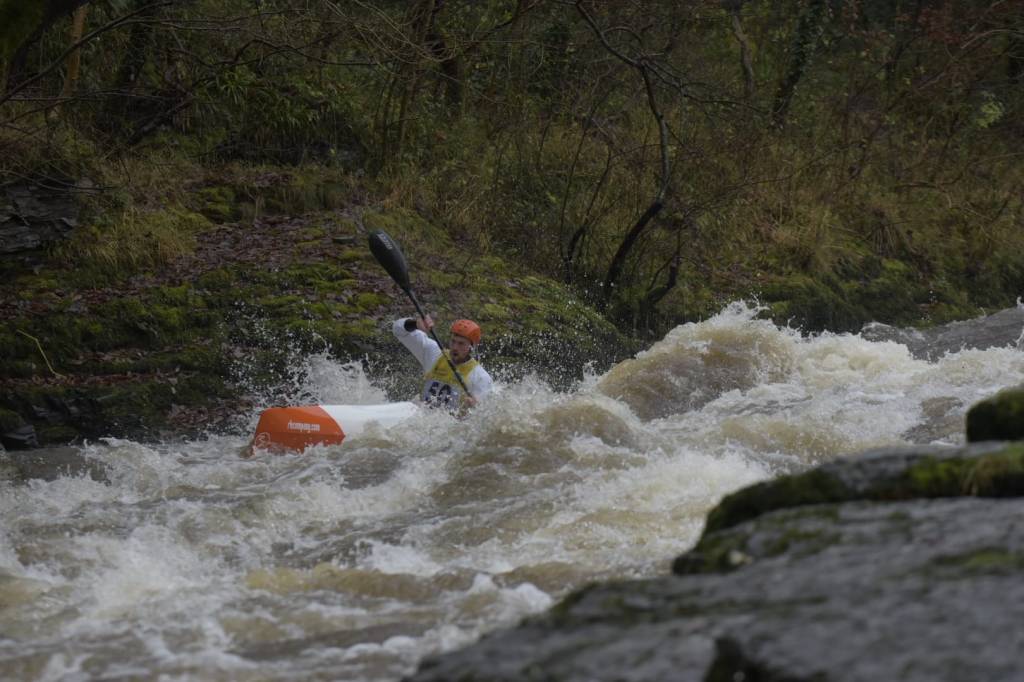

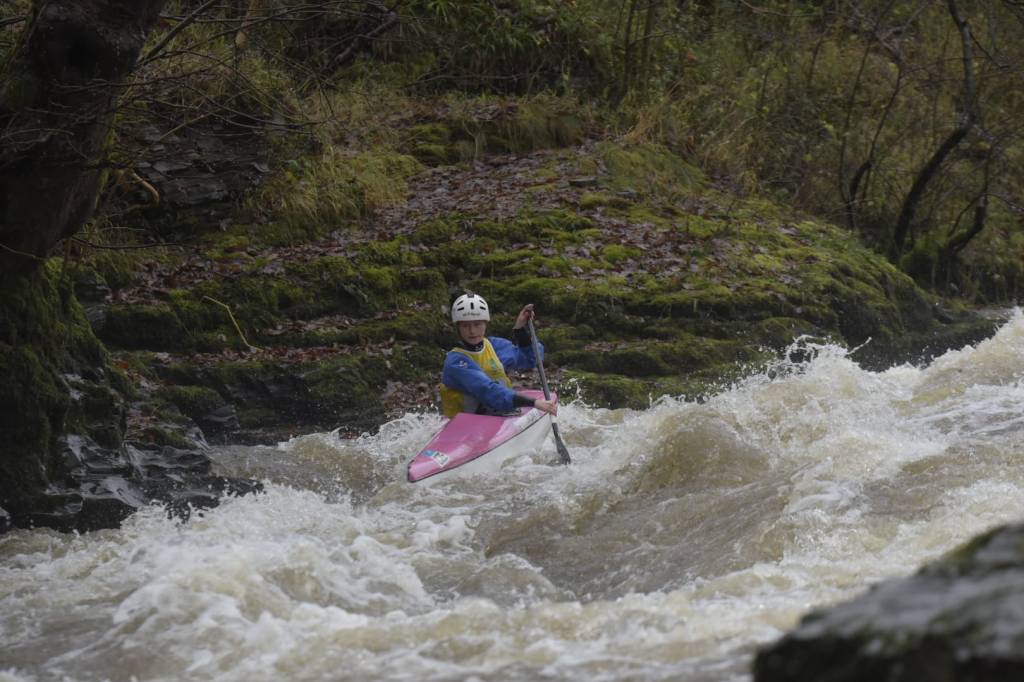
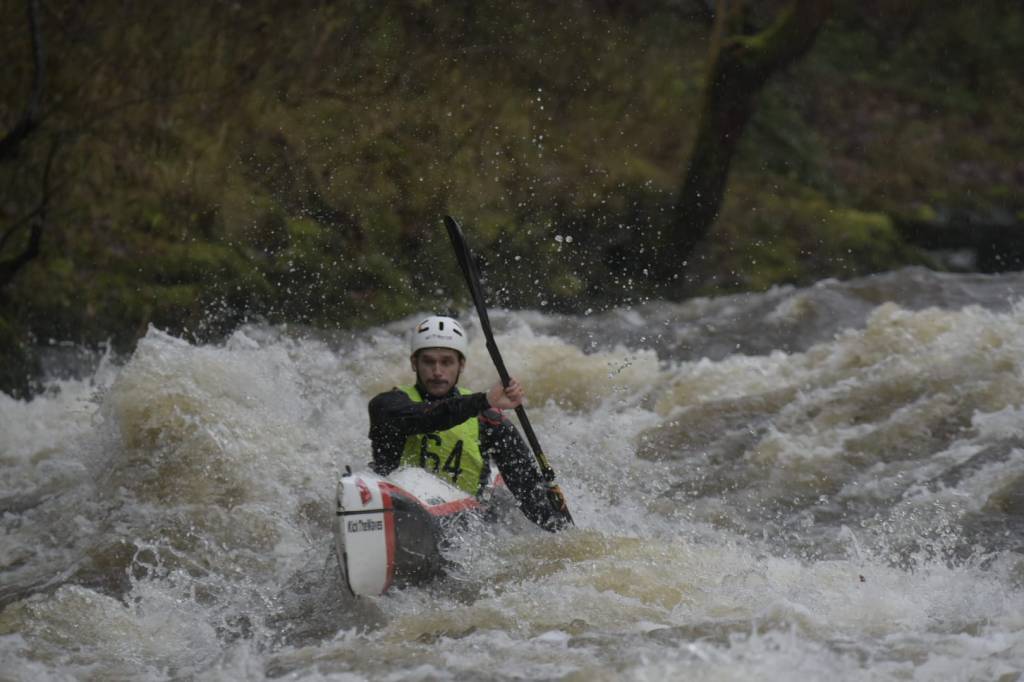
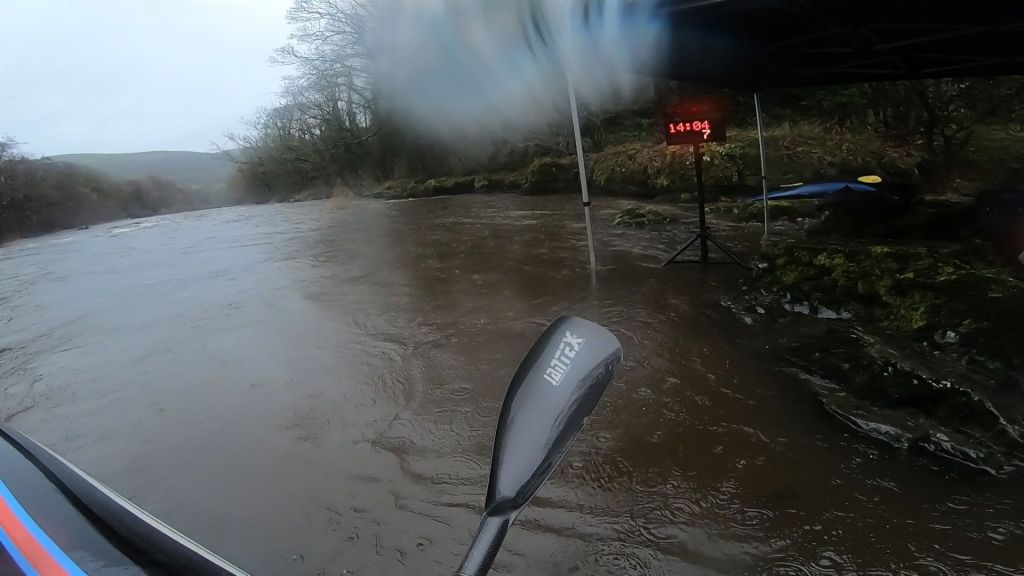
It was a disappointing end to the race series but the mood quickly shifted – just because the racing was over didn’t mean the fun had to be! We quickly assembled a rag-tag group ofBritish, French, Dutch and Czech paddlers to enjoy a rare delicacy: a high-water Dee lap.
We set off in a mega-train so long that it was impossible to see both the start and end of our soggy conga line. It was hard to believe how quickly the river had risen, and the rocks that we had stood on earlier that morning to scout the Serpent’s Tail rapids were now deep under the water. We continued down the river hooting and roaring our way down the full classic course. Now free of any ill-placed rocks the Dee was a fast flowing joy ride down to Town Falls in the heart of Llangollen. Here we jumped out of our boats and went to inspect the final rapid of the river.
Town Falls is the last and largest rapid on the major section of the Dee. Once upon a time it was raced regularly by wildwater paddlers, but in recent years it had fallen out of favour due to some safety concerns and the wish to run more accessible races (plus it doesn’t look particularly pleasant at lower levels). However as we eyed it up from the bridge it looked as if the river levels were on our side and I offered to lead Will Stevely and Jan Sindelar down. It was, in truth, the first time I’d run it in a propper wildwater boat, but the line isn’t too hard and I was feeling confident following our lap of the rest of the classic course.
As we dropped in through the entry waves, I once again got a little lost and took a tail tap through the second stopper, but I quickly got back on track. I paddled straight at the balcony that sits above the smooth line through the falls before hopping the boat onto the shelf, avoiding the slots to either side. It’s here that I realised the ‘smooth’ line we’d scouted from the bridge was in fact much bigger and steeper than I’d anticipated (isn’t that always the way!) but I planted my paddles deep and rode out the frothy rollercoaster. We collected ourselves at the bottom with big grins excitedly swapping the little trials and tribulations we’d experienced during our descents. It was the perfect end to the day and left us frothing at the mouth to race the classic on the river tomorrow!

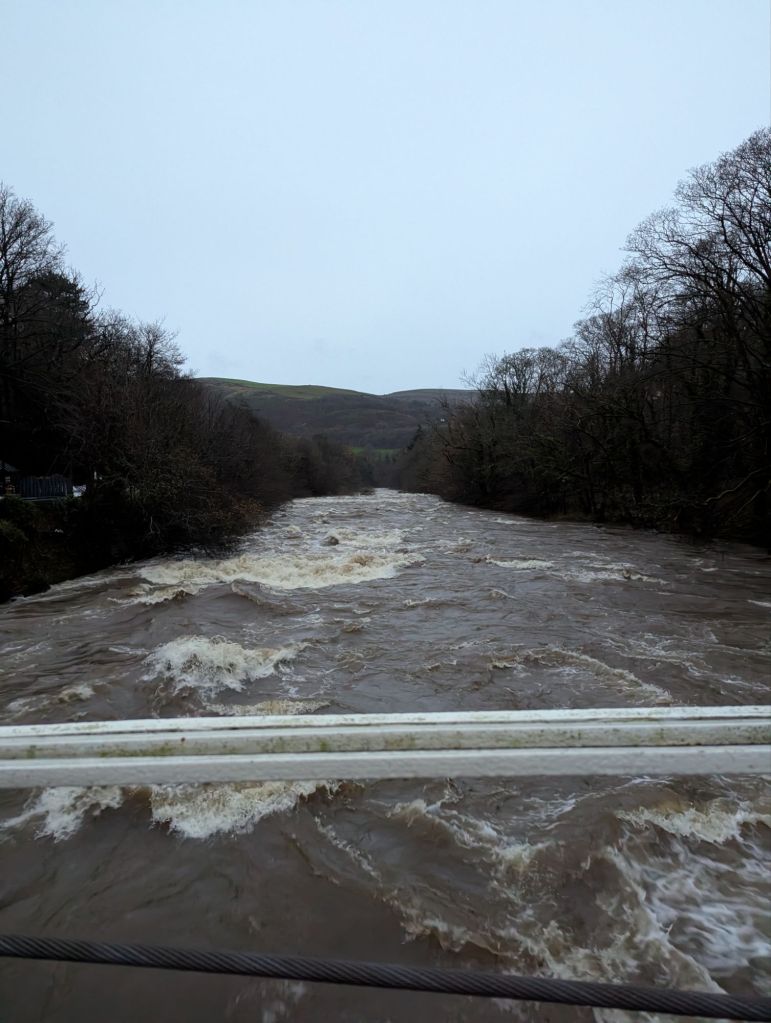
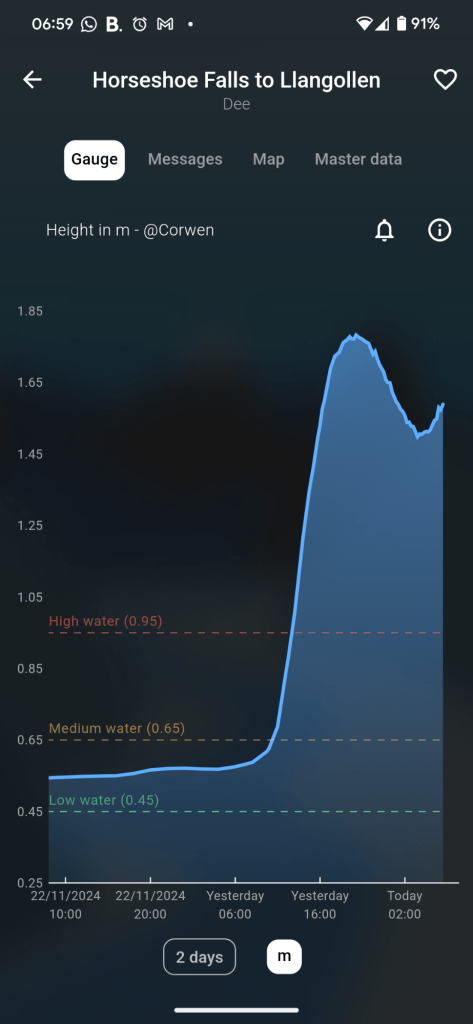
The rain didn’t abate overnight and the river continued to rise. We awoke early on Sunday with the aim to scout the river and squeeze in a practice run before racing commenced. However, by the time we’d made it to the top of the course we received the message from the race organisers that the classic race on the river had been cancelled, the river was now too high and there were no longer any safe, access or egress points from which the race could be run to a reasonable degree of safety. It was a bitter pill to swallow, but at least there was a backup option: to run the race on the canal.
The Llangollen canal was dug around the 1790s to transport coal and iron ore from Welsh mines; the canal is renowned for its beauty (and the Pontcysyllte Aqueduct). But, more importantly it also forms a very convenient loop allowing canoeists to paddle back to the top of the river section. Our race would go down the canal from Horseshoe Falls to the Llangollen Wharf dodging such treacherous obstacles such as bushes, narrow bridges, and a horse drawn barge. It perhaps wasn’t the most exciting ‘wildwater’ course we’ve ever had, but a race is a race and we threw ourselves into it all the same.

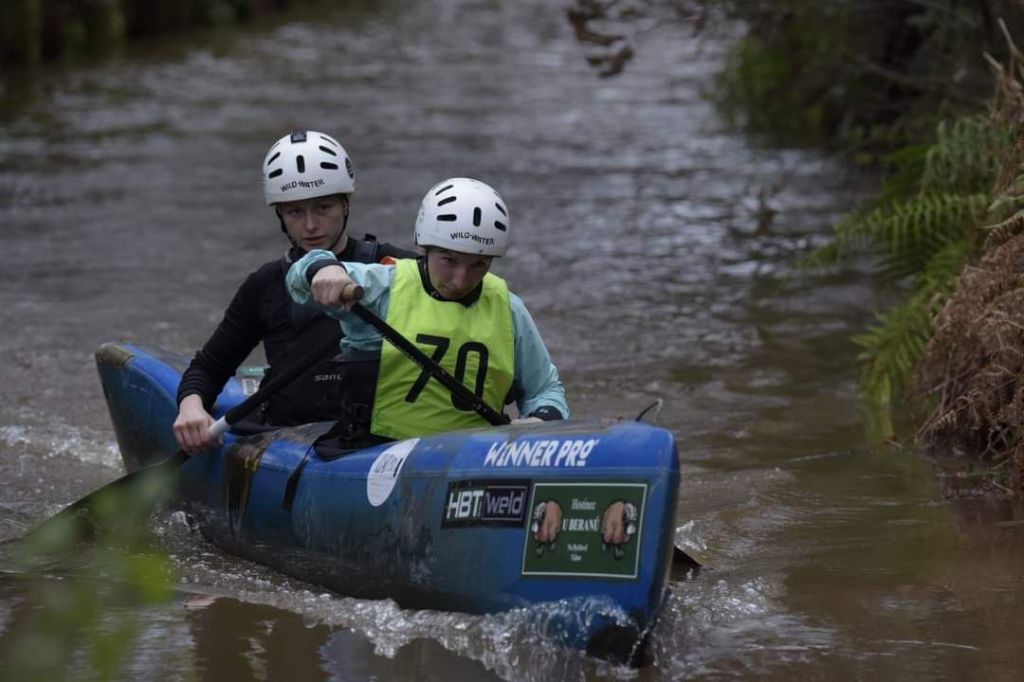

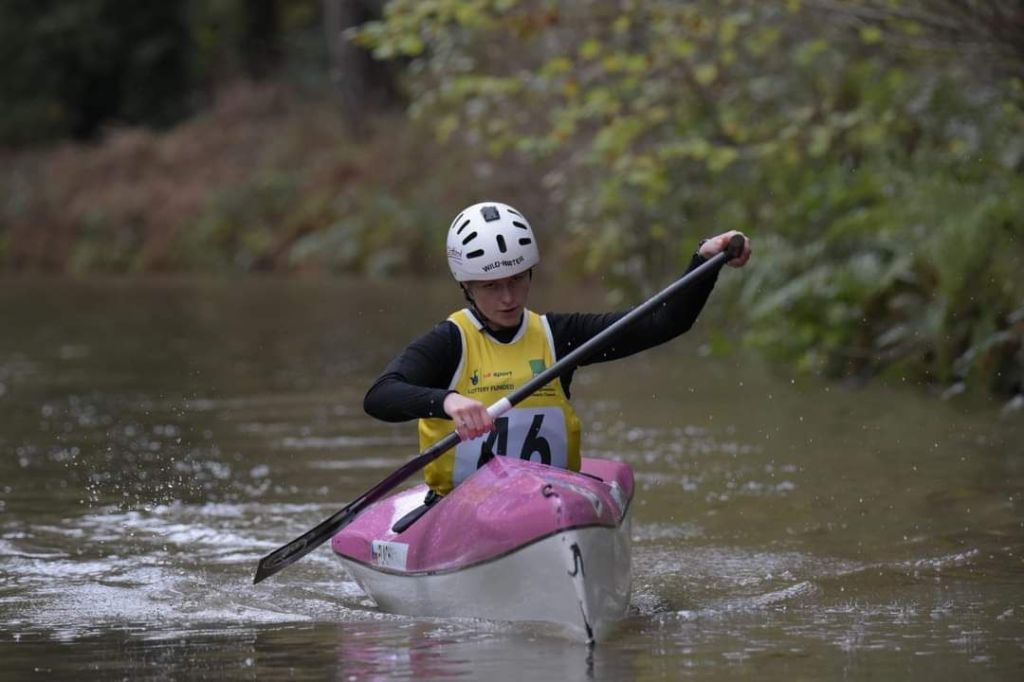
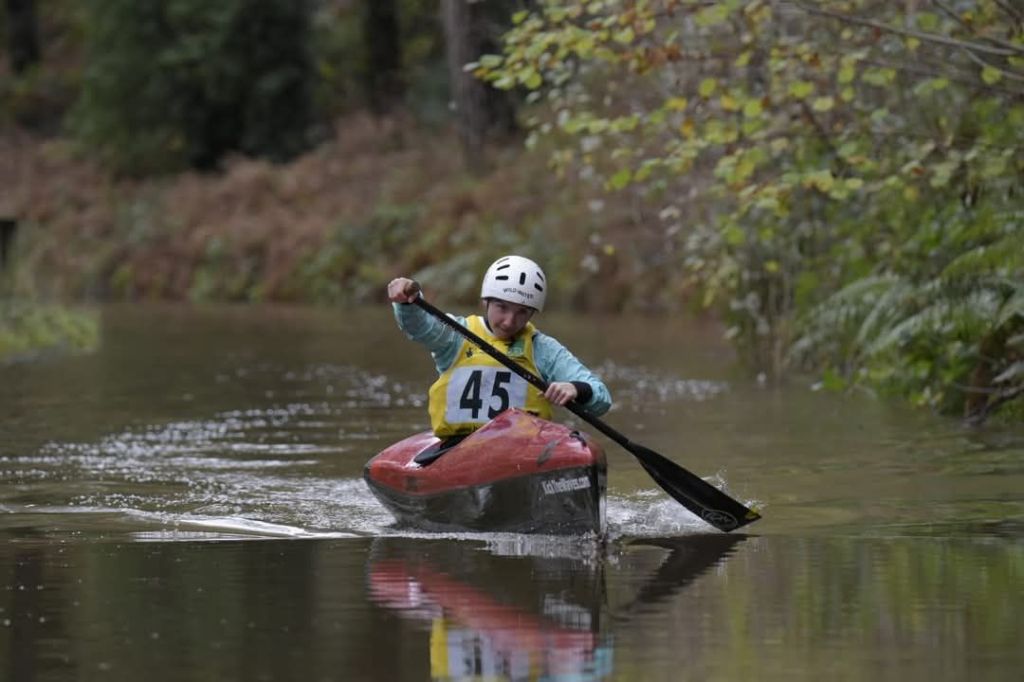
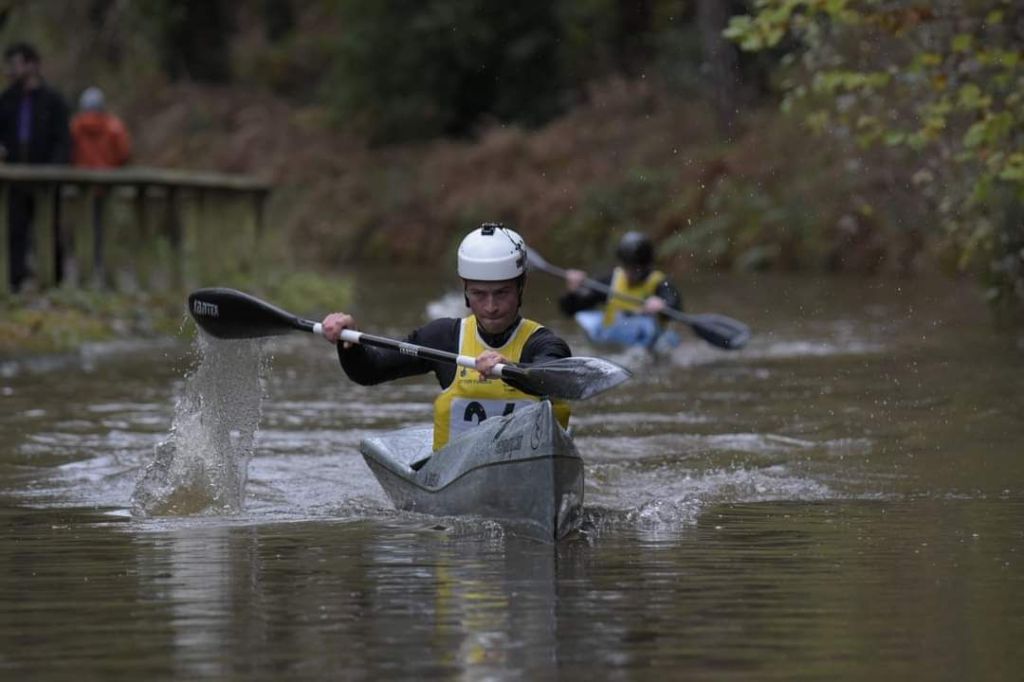
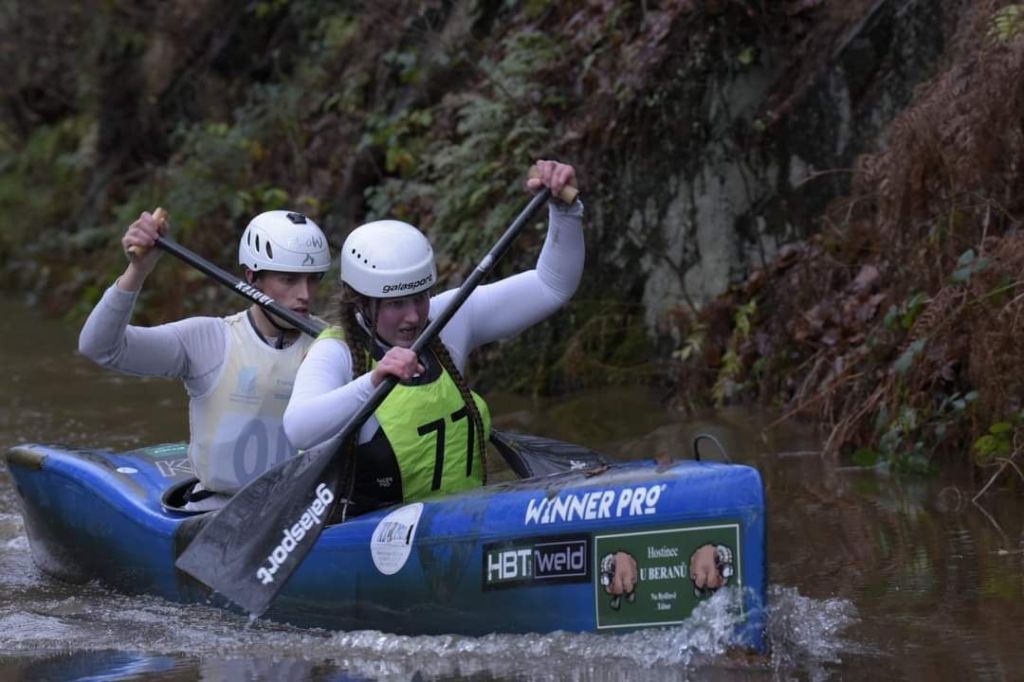
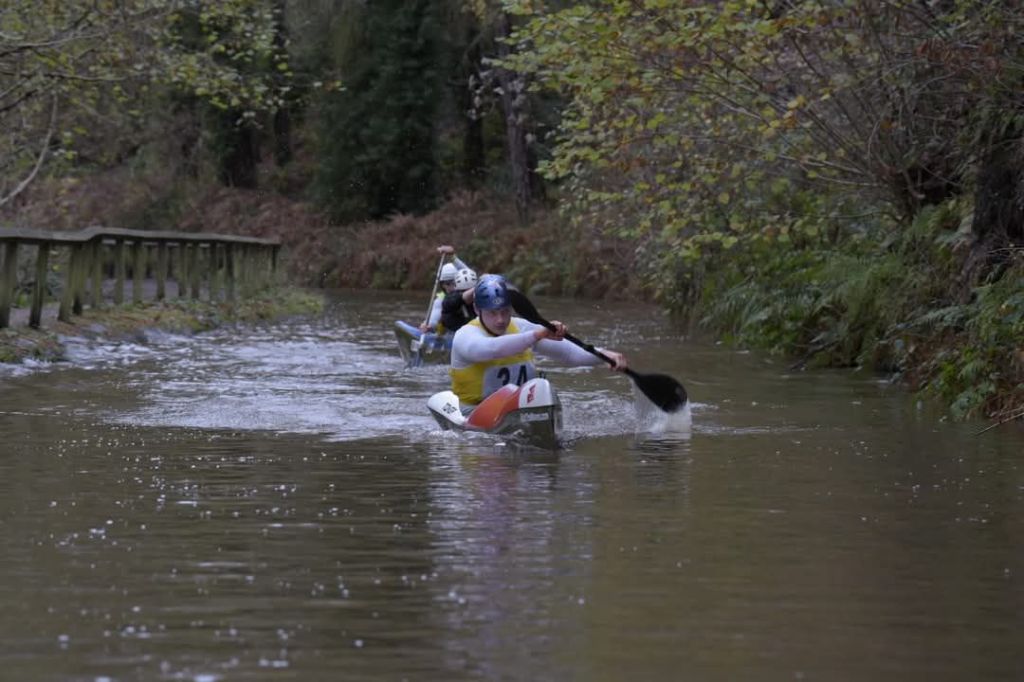
With racing complete there was just enough time to squeeze in a sneaky fun lap of the now extremely high Dee (now at 1.78m on the gauge). We assembled a crack little squad of myself, Nicky, Jacob, Freddie, Huw, Leon and Jan and headed down to the get on. At the start Nicky gave a quick but serious briefing, a rare thing in river racing, but one that served to underline the seriousness of the moment. “This is dangerous, really really dangerous. If you swim you are going to lose your boat. It’s going to be really fun, but we just need to be extra careful”.
We eddied out and blasted down Serpent’s Tail, now transformed into large wave trains and more akin to what we had paddled in Mezzana this year than a small Welsh river. The fun continued downstream with even the flatter sections featuring enjoyable undulating waves. The river was pumping so fast it felt as if we had strapped jet engines to our boats. Perhaps my favorite move was at Mile End Mill, sneaking past stoppers and using the big pillow off the island to make the sharp right hand turn. While I couldn’t quite shake the nervous energy from knowing the full consequences of a swim, I could not hide my utter joy with a big grin plastered across my face.
We eddied out shortly above the Town Falls section. The usual get out (above the falls) was now completely underwater leaving us with little options other than to run the falls blind. For Jacob, Freddie and Huw this would be their first time running the rapid and we briefed them on the line. The decision was made they would follow Nicky down while Jan, Leon and myself would sweep at the back and with that we set off for the final rapid.
With the rising river entry holes to the falls had now transformed into large standing waves. So large that once Leon crested the one in front of me he disappeared out of view behind it. Despite their size, I navigated these waves with ease but then to my alarm I massively underestimated the size of the boil behind them. The boil turned my boat near-sideways to the flow, and in my fight to get the bow back downstream, I didn’t manage to get over to the balcony. Below the jaws of the rapid opened up before me, it was too late. As the river dropped away I used the lip to swing my bow towards the largest breaking wave of the sequence. That brief moment seemed to stretch out in time as the wave loomed above me, and all of a sudden I was engulfed by the water.
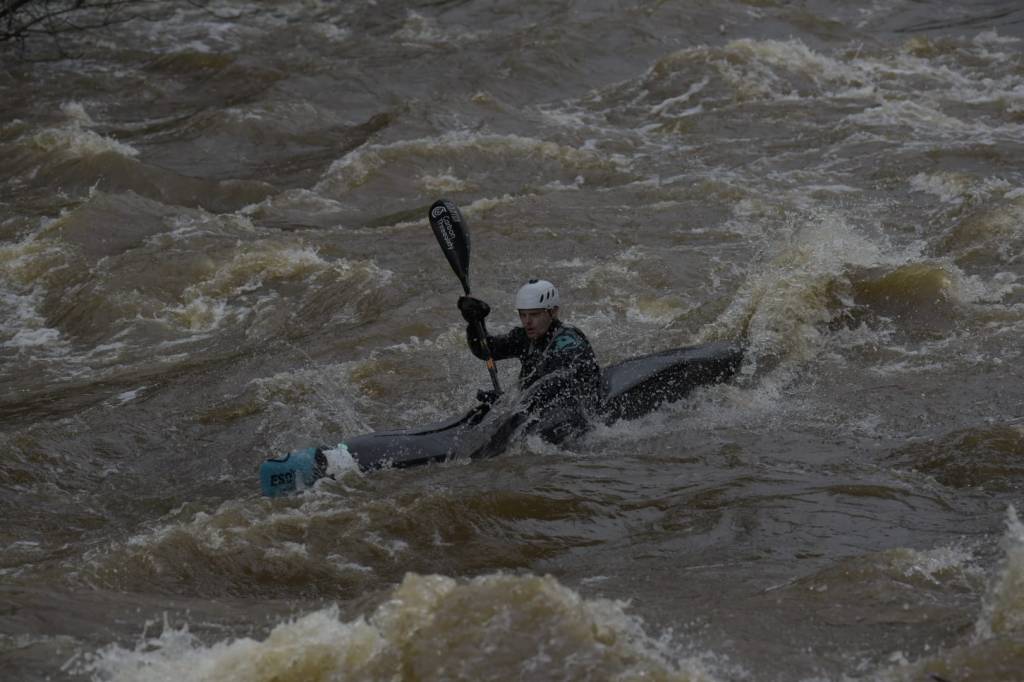
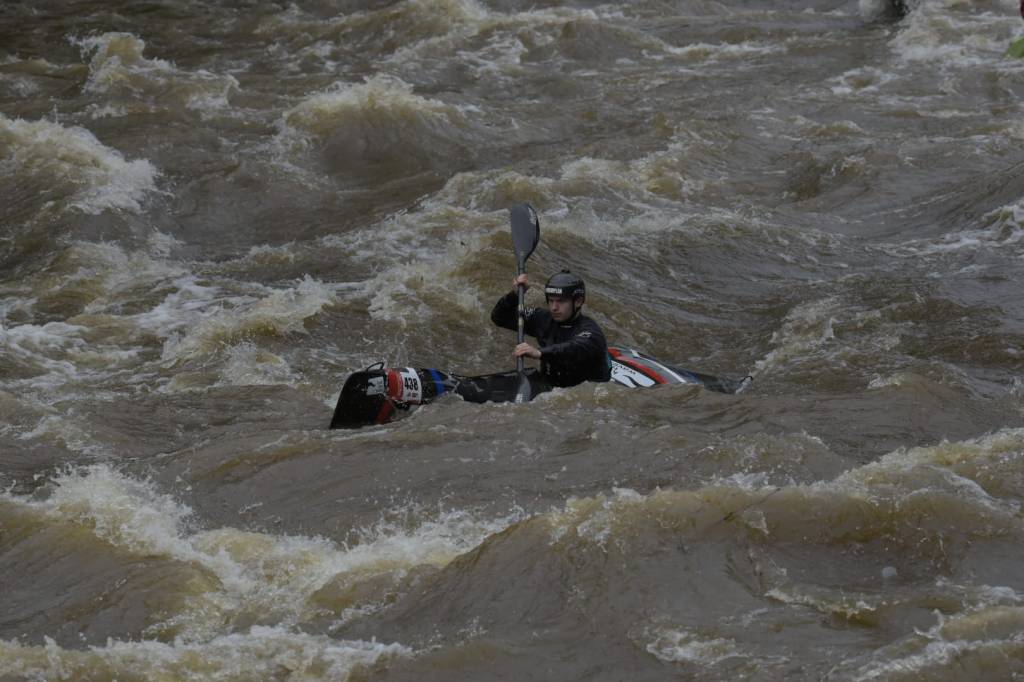

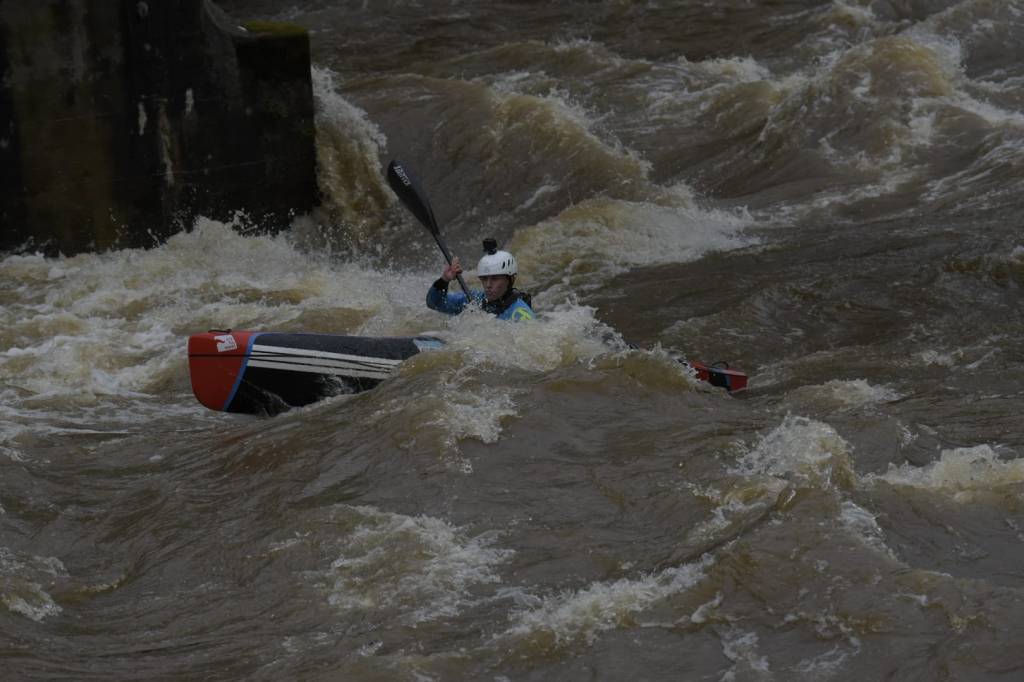
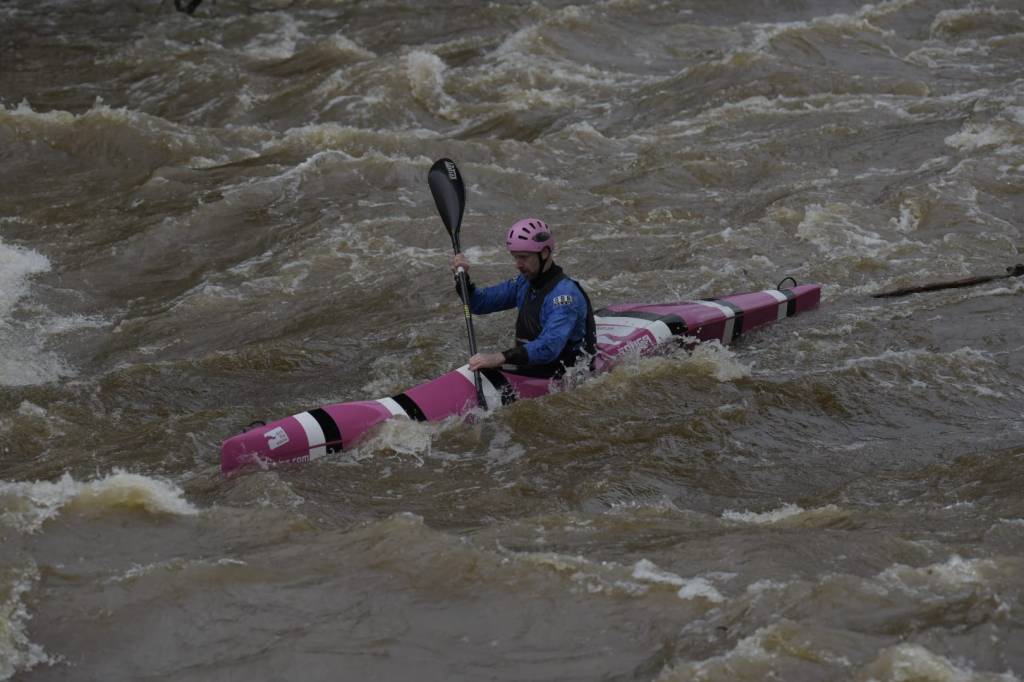
But all was not lost. As the wave bared its teeth, I reached out with my right blade and dug it deep within the bowels of the beast, providing enough purchase to launch myself out the other side. I used the squall of waves behind it to fling my bow into an eddy on the left and regain some composure. In the eddy on the right was Leon, having suffered a similar line. We had a quick laugh together before swinging our boats round to crash through the final wave under the bridge and trundle over to the get-out. We were beaming as we walked up to the car park, and Jan later remarked it was some of the best big water paddling he’s done!
Despite the cancellation of the race the weekend had been a massive success. While Jan had taken the win in both the classic and the sprint. Alex Sheppy racked up enough points to win the overall ECA sprint cups series (in MK1), with Freddie bagging the 3rd place. Even better, in the WK1 Kerry, Molly and Emma had taken 1st, 2nd and 3rd overall, a clean sweep for the Brits! Molly and Kerry continued their ECA cup success in WC1, securing 1st and 2nd places overall. And, of course in WC2 the Christie sisters secured yet another 1st, with Iona Partick and Laura Milne hot on their heels in 2nd. Jacob Holmes and Rob Jefferies also managed to secure a 3rd place finish. Meanwhile in the classic, while I had come 2nd to Jan by 1.11 seconds, I had been the first Brit, making me the 2024 MK1 British National Classic Champion. A lovely end to a fantastic year of paddling.
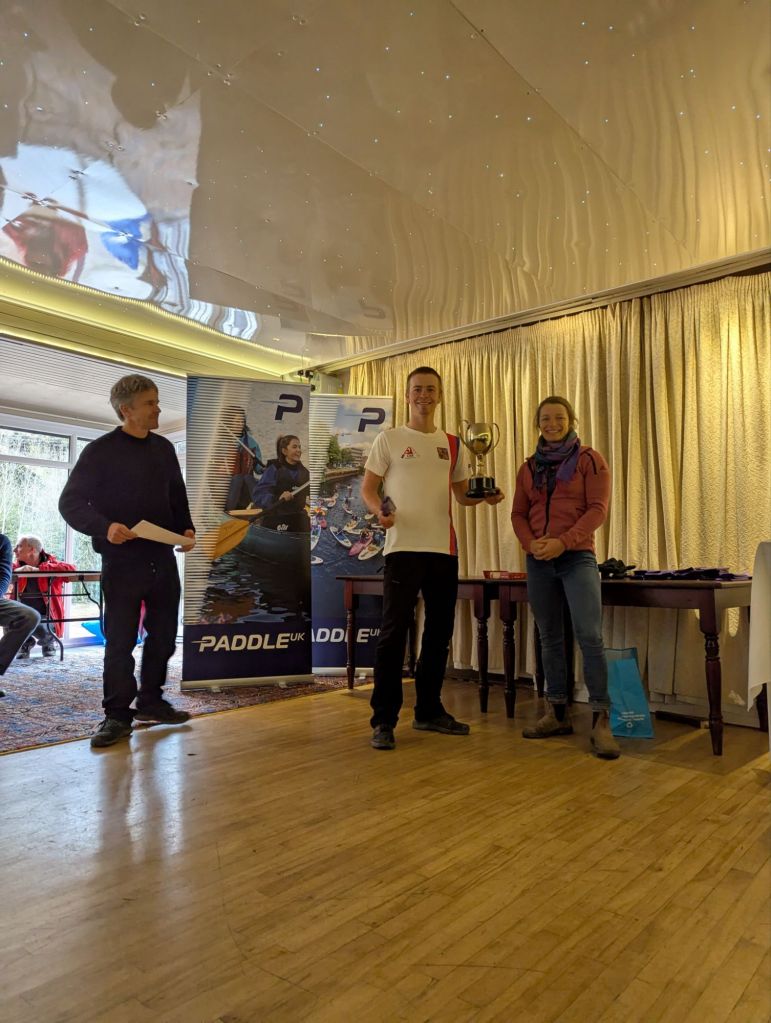
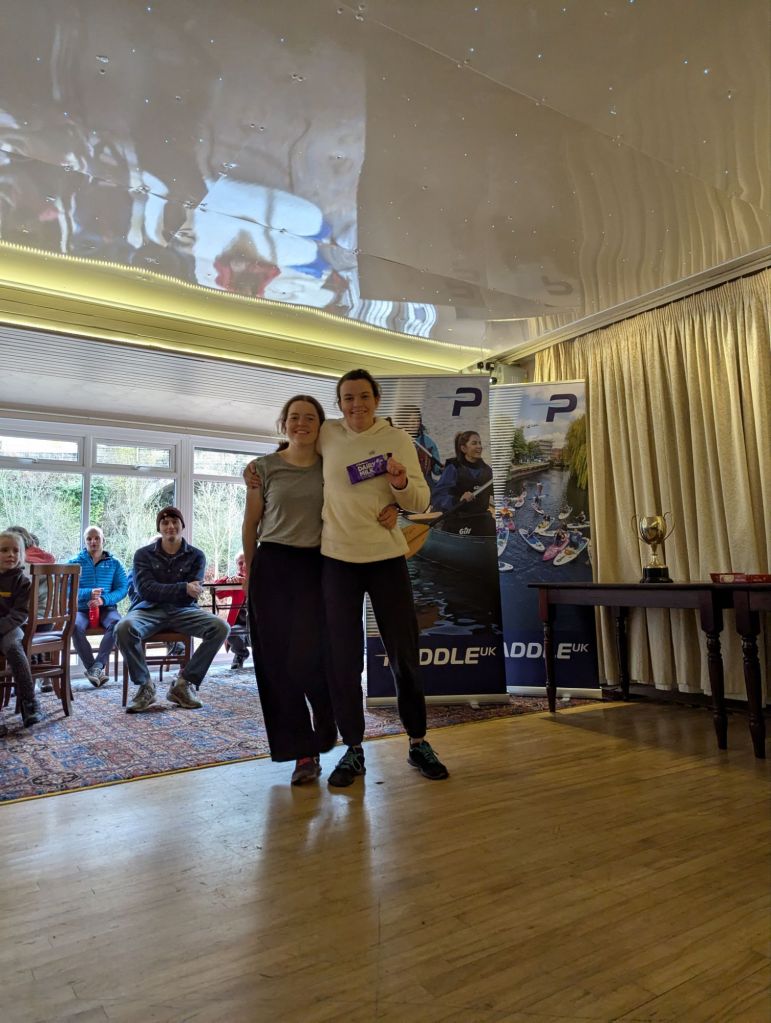
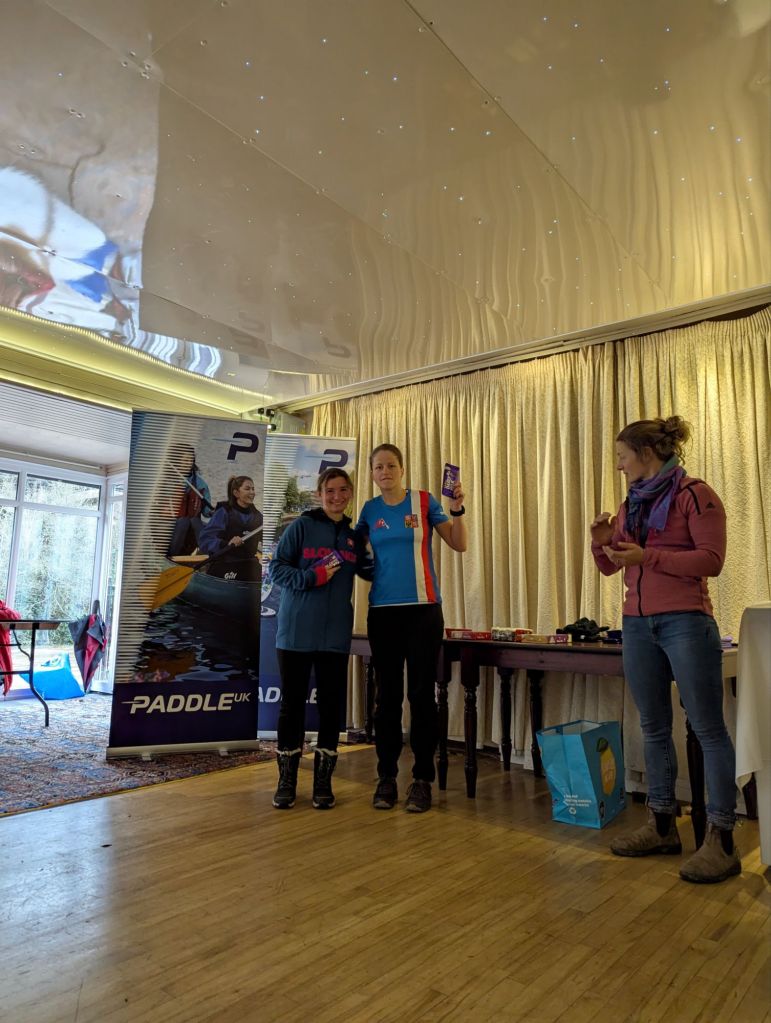
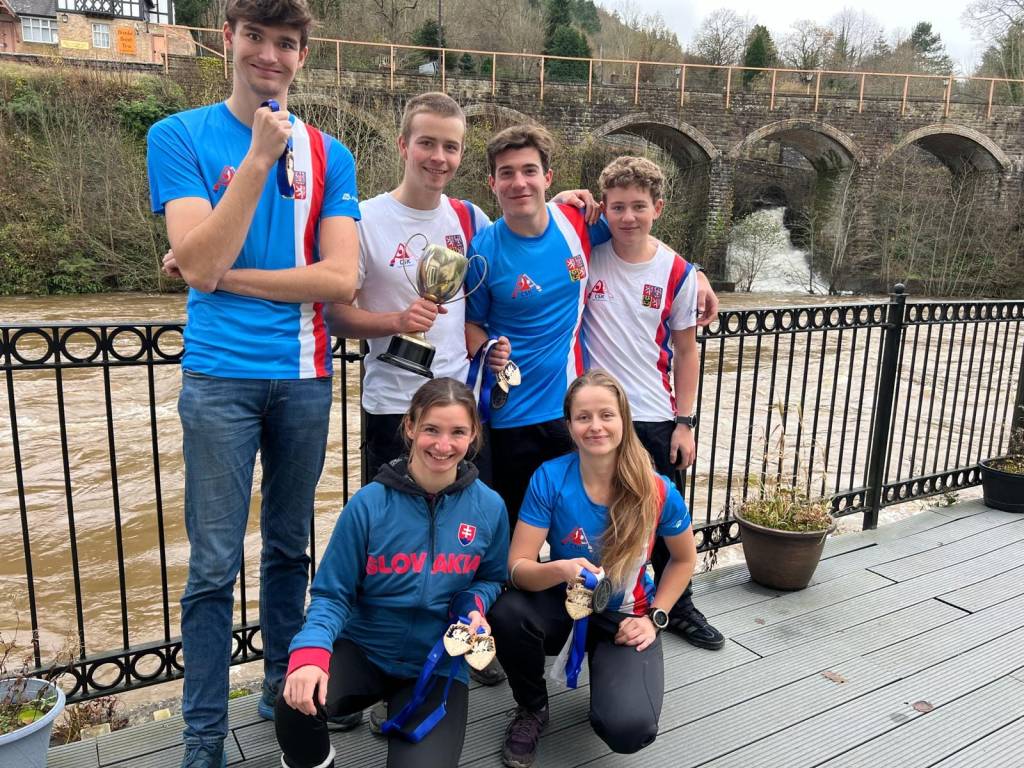
We said our goodbyes, as we left the prize giving at Chain Bridge Hotel. It had been a whirlwind few days but an absolute pleasure showing our friends round (at least a few parts) of our tiny island. In 2025 we will be hosting another two ECA cup races, one in Nottingham and another on the Dee. I for one can’t wait to see everyone for next year’s adventures.
 River Stench